Quick Verdict: The Value Entry to the E-GMP Platform
The 2022 Hyundai Ioniq 5 SE was the launch trim that put Hyundai's dedicated E-GMP electric platform on the map. Available in both Standard Range (RWD) and Long Range (RWD or AWD) configurations, the SE delivers the Ioniq 5's signature 800V architecture, retro-futuristic styling, and spacious cabin at the lowest entry price in the lineup. Now that this model year has moved squarely into the used market, the SE trim is attracting cost-conscious buyers who want ultra-fast DC charging without paying for Limited-tier luxury features. The question is whether the base trim's spec sheet holds up against newer competition — and whether the federal used-EV tax credit makes it a standout deal.
Range, Battery, and Efficiency by Trim
The 2022 Ioniq 5 SE came in two battery configurations, each with distinctly different range profiles. Understanding which one you're looking at on a used lot is critical.
| Specification | SE Standard Range (RWD) | SE Long Range (RWD) | SE Long Range (AWD) |
|---|---|---|---|
| Battery (usable) | 58 kWh | 77.4 kWh | 77.4 kWh |
| Chemistry | NMC (Nickel Manganese Cobalt) | NMC | NMC |
| EPA Range | 220 mi | 303 mi | 256 mi |
| EPA Combined MPGe | 110 MPGe | 114 MPGe | 110 MPGe |
| Efficiency (kWh/100 mi) | 30 | 29 | 30 |
| Drivetrain | Rear-Wheel Drive | Rear-Wheel Drive | Dual-Motor AWD |
The EPA numbers above assume a mix of city and highway driving at moderate temperatures. In real-world highway testing at 70-75 mph, expect the Long Range RWD to deliver approximately 250–270 miles before needing a charge. In cold weather (below 32°F), range can drop 20–30%, bringing the Long Range RWD down to roughly 210–240 miles. The Standard Range RWD, with its smaller 58 kWh pack, is best treated as a 160–180 mile highway vehicle in temperate conditions and closer to 140 miles in deep winter. City driving with regenerative braking engaged can push the Long Range past its EPA sticker, sometimes reaching 320+ miles in stop-and-go traffic at moderate temps.
The 77.4 kWh pack uses NMC (nickel manganese cobalt) chemistry, which offers higher energy density than LFP alternatives but benefits from being kept between 20–80% state of charge for daily use to maximize long-term longevity. Hyundai's battery management system includes a buffer, so the usable capacity is slightly less than the gross pack size. For buyers prioritizing maximum daily range and willing to manage charging habits, the NMC pack is proven and well-suited to the Ioniq 5's thermal management system, which includes a heat pump on most trims to mitigate cold-weather losses.
Charging Speed: The 800V Advantage
The Ioniq 5's 800V electrical architecture remains one of its strongest selling points, enabling DC fast-charge speeds that outpace many competitors even several model years later.
| Charging Level | Max Power | Speed / Time | Notes |
|---|---|---|---|
| Level 1 (120V household) | ~1.4 kW | ~4–5 mi/hr | Emergency/trickle only |
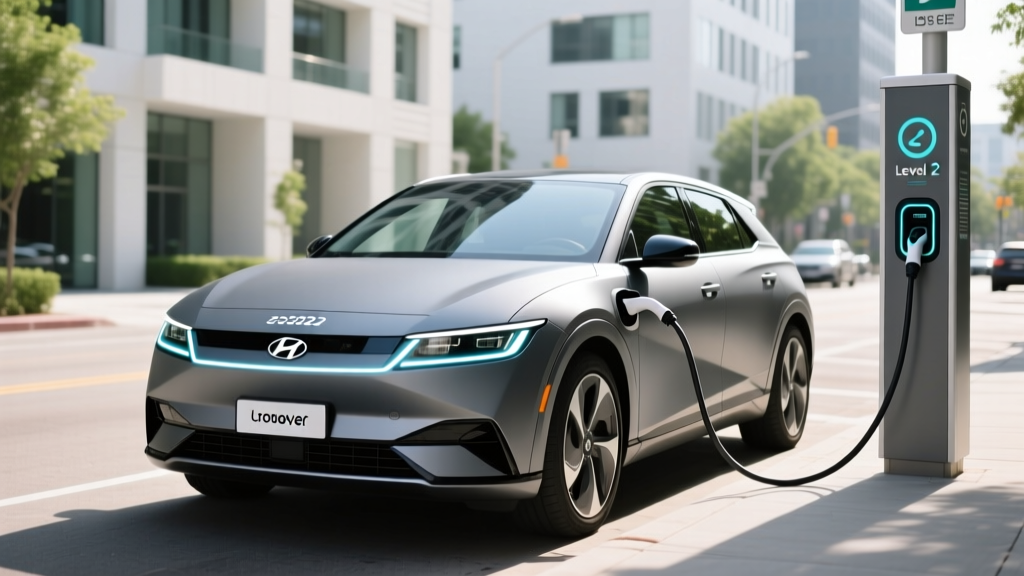
| Level 2 (240V home) | 10.9 kW | ~36–44 mi/hr (full in ~7–8 hr) | Requires 48A circuit / 60A breaker |
| DC Fast Charge (CCS) | 235 kW peak (Long Range) | 10–80% in ~18 min | Requires 350 kW-class station |
| DC Fast Charge (Std Range) | ~175 kW peak | 10–80% in ~20 min | Smaller pack limits peak rate |
The headline 235 kW peak rate on the Long Range is achievable at Electrify America 350 kW dispensers and similar high-power CCS stations. However, real-world charging curves matter: the Ioniq 5 sustains strong power (180–230 kW) from roughly 10% to 55% state of charge, then tapers progressively. From 80% to 100%, charging slows dramatically — a characteristic common to all lithium-ion packs but worth noting if you plan to regularly charge to full. For road trips, the 10–80% sprint is what counts, and 18 minutes at a functioning high-power station is genuinely competitive.
At home on a Level 2 charger, the 10.9 kW onboard charger means a full charge from empty takes roughly 7–8 hours for the Long Range pack. Most owners will plug in overnight and wake to a full battery. The Standard Range charges proportionally faster due to its smaller pack — roughly 5–6 hours from empty on Level 2.
The 2022 Ioniq 5 uses the CCS1 connector for DC fast charging and a J1772 inlet for Level 2 AC. With the industry's shift toward NACS (Tesla's connector), Hyundai has announced adapters and future native NACS ports on newer models, but the 2022 Ioniq 5 will require a CCS-to-NACS adapter if you want access to Tesla Supercharger stations that have opened to non-Tesla vehicles. Hyundai has indicated adapter availability through dealerships.
Performance and Drivetrain
| Metric | Standard Range RWD | Long Range RWD | Long Range AWD |
|---|---|---|---|
| Horsepower | 168 hp | 225 hp | 320 hp |
| Torque | 258 lb-ft | 258 lb-ft | 446 lb-ft |
| 0–60 mph | ~8.5 sec | ~7.0 sec | ~5.0 sec |
| Top Speed | 115 mph | 115 mph | 115 mph |
| Towing Capacity | Not rated (no tow pkg) | Up to 1,650 lb (w/ tow pkg) | Up to 1,650 lb (w/ tow pkg) |
The Long Range AWD's 5.0-second 0–60 time is genuinely quick for a crossover and makes highway merging effortless. The RWD models are adequate for commuting but won't thrill. All trims feature one-pedal driving via steering-wheel-mounted regen paddles, allowing you to dial regenerative braking from level 0 (coast) through level 3 (strong deceleration) and an i-Pedal mode for full one-pedal operation. The ride quality is composed, with the battery pack's low center of gravity contributing to confident handling.
Interior Space, Tech, and Daily Livability
The Ioniq 5's flat floor and stretched wheelbase (118.1 inches) create interior volume that punches well above its compact-crossover class.
- Front headroom: 39.6 inches
- Front legroom: 41.7 inches
- Rear headroom: 38.7 inches
- Rear legroom: 39.4 inches — generous for the class
- Cargo behind rear seats: 27.2 cu ft
- Cargo with rear seats folded: 59.3 cu ft
- Front trunk (frunk): 0.85 cu ft (RWD) / 2.0 cu ft (AWD) — small, best for charging cables
The SE trim includes a 12.3-inch digital instrument cluster and a 12.3-inch infotainment touchscreen running Hyundai's connected navigation system. Wireless Apple CarPlay and Android Auto are standard. The SE also includes Hyundai SmartSense: forward collision-avoidance assist, blind-spot monitoring, lane-keeping assist, rear cross-traffic collision-avoidance, and highway driving assist (HDA). Note that HDA is a Level 2 driver-assistance system — it provides steering and speed support on highways but requires continuous driver attention and hands on the wheel.
Notable SE omissions compared to higher trims: no ventilated front seats, no leather-appointed seating (cloth is standard), no head-up display, no premium audio upgrade, and no 360-degree camera. The center console slides fore and aft, a practical feature for tight parking situations, and the universal "island" armrest design provides flexible storage.
A standout feature is V2L (Vehicle-to-Load), which allows the Ioniq 5 to power external devices through an adapter plugged into the charge port or an interior outlet (on select trims). It can deliver up to 3.6 kW — enough to run a laptop, small appliances, or serve as emergency backup power. On the 2022 SE, the interior V2L outlet availability varies by market; verify with the specific vehicle's window sticker.
Pricing, Tax Credits, and Ownership Costs
| Trim | Original MSRP (2022) | Estimated Used Price (2026) | Federal Credit Eligibility |
|---|---|---|---|
| SE Standard Range RWD | $43,785 | $22,000–$27,000 | Used-EV credit (up to $4,000) |
| SE Long Range RWD | $47,285 | $25,000–$30,000 | Used-EV credit (up to $4,000) |
| SE Long Range AWD | $50,785 | $27,000–$33,000 | Used-EV credit (up to $4,000) |
Since the 2022 model year is now exclusively available as a used vehicle, the relevant federal incentive is the §25E Previously-Owned Clean Vehicle Credit, not the new-vehicle §30D credit. Per IRS guidelines, the used-EV credit provides 30% of the sale price, up to a maximum of $4,000, subject to these requirements:
- Sale price must be $25,000 or below
- Buyer's adjusted gross income must not exceed $75,000 (single) / $112,500 (head of household) / $150,000 (joint)
- Vehicle must be at least 2 model years old (2022 qualifies in 2026)
- Must be purchased from a licensed dealer (private-party sales do not qualify)
- Credit can be transferred to the dealer as a point-of-sale discount
This means the SE Standard Range and possibly some Long Range RWD examples may fall under the $25,000 sale-price cap, making them eligible. The AWD variant will likely exceed the cap in most markets. Always confirm eligibility with your tax professional and the selling dealer, as IRS rules are subject to change.
Warranty Coverage
Hyundai's warranty remains a strong ownership perk, and it transfers to subsequent owners:
- Battery: 10 years / 100,000 miles (original owner); 8 years / 100,000 miles (subsequent owners) — covers capacity below 70% of original
- Powertrain: 10 years / 100,000 miles (original owner); 5 years / 60,000 miles (subsequent owners)
- New vehicle (bumper-to-bumper): 5 years / 60,000 miles — fully transferable
- Roadside assistance: 5 years / unlimited miles
For a 2022 model purchased in 2026, expect roughly 6 years of battery warranty remaining (through 2032) if the original owner maintained it. This is meaningful protection against premature degradation, though the 70% capacity threshold is less generous than some competitors' 65–70% benchmarks.
How It Compares: Ioniq 5 SE vs. Key Rivals
The 2022 Ioniq 5 SE competes in the used market against other early-2020s electric crossovers. Here's how it stacks up on the metrics that matter most:
| Metric | Ioniq 5 SE LR RWD | Kia EV6 Wind RWD | Ford Mustang Mach-E Select RWD | VW ID.4 Pro S RWD |
|---|---|---|---|---|
| EPA Range | 303 mi | 310 mi | 247 mi | 275 mi |
| Battery | 77.4 kWh | 77.4 kWh | 70 kWh | 82 kWh |
| DC Fast Charge Peak | 235 kW | 235 kW | 150 kW | 135 kW |
| 10–80% DC Time | ~18 min | ~18 min | ~35 min | ~34 min |
| 0–60 mph | 7.0 sec | 7.2 sec | 6.1 sec | 7.7 sec |
| Cargo (rear seats up) | 27.2 cu ft | 24.4 cu ft | 29.7 cu ft | 30.3 cu ft |
| 800V Architecture | Yes | Yes | No | No |
The Ioniq 5 and its platform-mate, the Kia EV6, share the E-GMP architecture and its 800V charging advantage. Against the Mach-E and ID.4, the Ioniq 5 charges roughly twice as fast at compatible DC stations — a tangible advantage on road trips. The Mach-E offers slightly more cargo space and quicker acceleration in its base form, while the ID.4 provides a softer ride and a larger cargo area but falls behind on both range and charging speed.
Pros
- Ultra-fast 235 kW DC charging (10–80% in ~18 min)
- Spacious cabin with 39.4" rear legroom
- Class-leading 303-mile EPA range (LR RWD)
- V2L capability for external power
- Strong warranty coverage (transferable)
- Distinctive, award-winning design
- Sliding center console for tight spaces
Cons
- Small frunk (0.85 cu ft on RWD)
- No rear wiper (a common complaint)
- SE lacks ventilated seats, HUD, premium audio
- CCS1 connector requires adapter for Tesla Superchargers
- Standard Range model's 220-mi range limits road-trip utility
- No one-pedal mode by default — must engage i-Pedal
- Infotainment can be laggy vs. newer systems
Who Should Buy the 2022 Ioniq 5 SE?
Best for: Commuters and two-adult households who prioritize fast public charging on occasional road trips, value a roomy rear seat, and want a proven platform with a strong warranty. The Long Range RWD is the sweet spot — 303 miles of EPA range, the fastest charging, and the lowest energy cost per mile.
Think twice if: You regularly need maximum cargo volume (the Mach-E or ID.4 offer more), you live in a region with sparse CCS charging infrastructure and want native NACS access, or you want the latest infotainment and ADAS features found on 2024+ models. The Standard Range SE is best reserved for buyers with reliable home charging and a commute under 80 miles round-trip.
Skip if: You need serious towing (1,650 lb max is light-duty only) or require three rows of seating.
Frequently Asked Questions
What is the real-world range of the 2022 Hyundai Ioniq 5 SE?
The Long Range RWD is EPA-rated at 303 miles, but expect approximately 250–270 miles on the highway at 70–75 mph and 210–240 miles in cold weather below freezing. The Standard Range RWD delivers about 160–180 real-world highway miles in moderate conditions. City driving with regen can exceed EPA estimates.
How fast does the Ioniq 5 SE charge at home and on the road?
At home on a 240V Level 2 charger, the Long Range fills at 10.9 kW — roughly 36–44 miles of range per hour, or a full charge in 7–8 hours. On a 350 kW-class DC fast charger, the Long Range peaks at 235 kW and charges from 10–80% in approximately 18 minutes. The Standard Range peaks at roughly 175 kW.
Does the 2022 Ioniq 5 SE qualify for a federal tax credit?
As a used vehicle, it may qualify for the §25E Previously-Owned Clean Vehicle Credit — up to $4,000 or 30% of the sale price, whichever is less. The sale price must be $25,000 or below, the buyer must meet income caps ($75K single / $150K joint), and the purchase must be from a licensed dealer. Verify current rules at IRS.gov and consult a tax professional.
Is the 2022 Ioniq 5 SE worth buying over the EV6 or Mach-E?
If fast DC charging and rear-seat space are priorities, the Ioniq 5 SE Long Range has a clear edge over the Mach-E (slower charging, shorter range) and ties the EV6 (same platform) while offering slightly more rear headroom. The Mach-E wins on cargo volume and sportier driving dynamics. The ID.4 trails on charging speed and range. For value, the Ioniq 5 SE's used-EV credit eligibility can make it a compelling deal under $25,000.
What is the battery warranty on a used 2022 Ioniq 5?
Hyundai's battery warranty covers capacity below 70% for 10 years/100,000 miles for the original owner. For subsequent owners, coverage is 8 years/100,000 miles. A 2022 model purchased in 2026 should have approximately 6 years of battery warranty remaining, assuming the mileage threshold hasn't been exceeded.
Sources: EPA Fuel Economy — 2022 Hyundai Ioniq 5, IRS Used Clean Vehicle Tax Credit, Hyundai News — 2022 Ioniq 5 Specifications