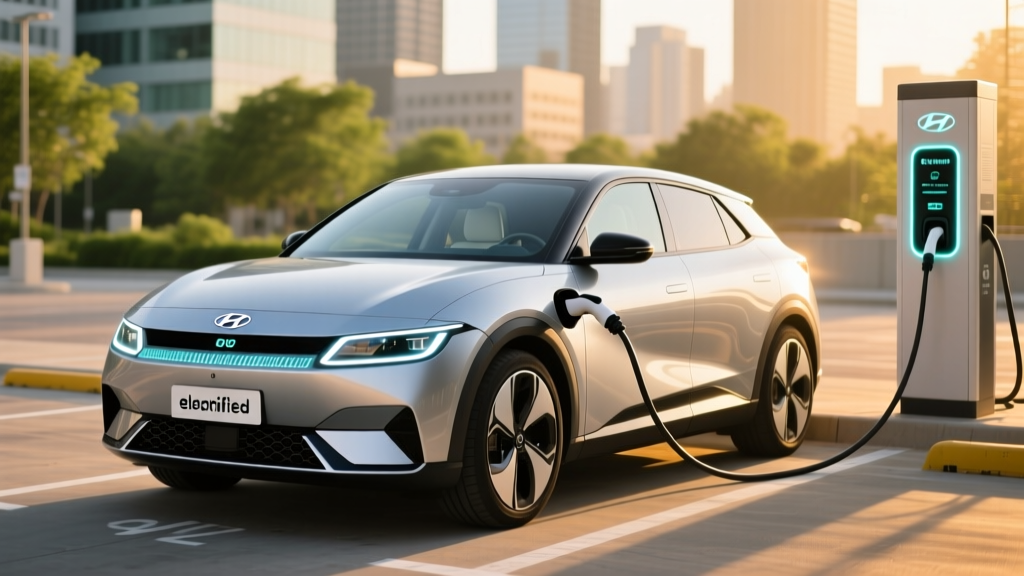
The 2022 Hyundai Ioniq 5 was the first vehicle built on Hyundai Motor Group's Electric-Global Modular Platform (E-GMP), and it arrived with a spec sheet that made legacy automakers take notice. With its 800-volt architecture, retro-futuristic design, and competitive pricing, it quickly became one of the most talked-about EVs on the market. Now that this model year has been on roads for several years, we have robust real-world ownership data to pair with the factory numbers. Here is the definitive, data-driven review of the 2022 Ioniq 5 — covering range, charging curves, ownership costs, and whether it still holds up against newer competitors.
2022 Ioniq 5 Key Specifications at a Glance
| Specification | SE / SEL RWD | Limited RWD | SE / SEL / Limited AWD |
|---|---|---|---|
| EPA Range | 303 mi | 303 mi | 256 mi |
| Battery (usable) | 77.4 kWh | 77.4 kWh | 77.4 kWh |
| Chemistry | NMC (Nickel Manganese Cobalt) | NMC | NMC |
| Horsepower | 168 hp | 168 hp | 320 hp |
| Torque | 258 lb-ft | 258 lb-ft | 446 lb-ft |
| 0-60 mph | ~7.0 sec | ~7.0 sec | ~4.5 sec |
| Drivetrain | Rear-Wheel Drive | Rear-Wheel Drive | Dual-Motor AWD |
| Max DC Fast Charge | ~235 kW (peak) | ~235 kW (peak) | ~235 kW (peak) |
| 10-80% DCFC Time | ~18 min (ideal) | ~18 min (ideal) | ~18 min (ideal) |
| Level 2 Rate | 10.9 kW | 10.9 kW | 10.9 kW |
| MPGe (combined) | 132 MPGe | 132 MPGe | 110 MPGe |
| kWh/100 mi | 25 | 25 | 30 |
| Original Base MSRP | $43,650 | $50,600 | $47,100 |
Real-World Range: What the EPA Sticker Doesn't Tell You
Real-World Expectation: 250-280 miles highway (RWD); 210-240 miles highway (AWD). In freezing temperatures (below 32°F), expect a 20-30% reduction, bringing RWD range down to roughly 210-240 miles and AWD to 180-200 miles without preconditioning.
The EPA rates the 2022 Ioniq 5 RWD at 303 miles on a full charge, while the dual-motor AWD variant drops to 256 miles due to the added weight and front motor losses. These are solid numbers for the class, but real-world highway driving at 70-80 mph typically yields 85-90% of the EPA sticker in moderate temperatures (60-80°F).
The Ioniq 5's NMC battery pack holds 77.4 kWh of usable energy. Hyundai includes a buffer above and below the displayed 0-100% to protect long-term battery health, so the gross capacity is slightly higher. In practice, most owners report averaging 2.8-3.2 miles per kWh in mixed driving, which translates to roughly 217-247 miles from a full charge in the AWD model under real-world conditions.
Cold weather is the equalizer for all EVs, and the Ioniq 5 is no exception. Without using the available heat pump (standard on Limited, optional on SEL), winter range loss can hit 30% in sub-freezing conditions. The heat pump recovers waste heat from the powertrain to warm the cabin, reducing the energy penalty. If you live in a cold-weather state, prioritize a trim with the heat pump or plan for more frequent charging stops on winter road trips.
Charging Performance: The 800-Volt Advantage
The 2022 Ioniq 5's headline feature is its 800-volt electrical architecture — rare at this price point when it launched and still a meaningful advantage. This allows the vehicle to accept peak DC fast-charge rates of approximately 235 kW when connected to a capable 350 kW charger (such as Electrify America or EVgo stations equipped with CCS connectors).
| Charging Level | Power / Voltage | Speed (Miles of Range Added) | Notes |
|---|---|---|---|
| Level 1 (120V household) | ~1.4 kW | ~3-4 mi/hr | Emergency / overnight trickle only |
| Level 2 (240V home) | 10.9 kW (48A) | ~36-40 mi/hr | Full charge in ~7.5 hours (0-100%) |
| DC Fast (350 kW station) | ~235 kW peak | 10-80% in ~18 min | Requires battery preconditioning |
| DC Fast (150 kW station) | ~150 kW peak | 10-80% in ~25 min | More common at public stations |
| DC Fast (50 kW station) | ~50 kW | 10-80% in ~65 min | Older CHAdeMO/CCS stations |
The 18-minute 10-80% claim is achievable but requires specific conditions: a 350 kW-class charger, battery temperature in the optimal window (roughly 77-95°F / 25-35°C), and preconditioning activated via the navigation-based charging route or manual battery heating. Without preconditioning — for example, if you pull into a fast charger after the car has been sitting in cold weather — peak rates may be limited to 80-120 kW initially, stretching the session to 25-35 minutes.
The charging curve is aggressive early and tapers significantly above 80%. Hyundai's strategy is to prioritize the 10-80% window for road-trip speed, which is the practical use case. Charging from 80-100% on DC fast charging can take nearly as long as the 10-80% session, so plan to unplug at 80% on road trips and top off the remainder at your destination on Level 2.
At home on a 48-amp Level 2 charger (requiring a 60-amp circuit), the Ioniq 5 accepts up to 10.9 kW, adding roughly 36-40 miles of range per hour. A full overnight charge from 10% to 100% takes approximately 7-8 hours, making it practical for daily replenishment. Note that the 2022 Ioniq 5 uses the CCS1 connector for DC fast charging and J1772 for Level 2. With the industry's shift to NACS, adapters are available, and Hyundai has since transitioned to NACS on newer model years.
Performance and Driving Dynamics
The RWD Ioniq 5 makes 168 horsepower and 258 lb-ft of torque from its single rear motor. The 0-60 mph sprint takes approximately 7.0 seconds — adequate for merging and passing but not thrilling. The instant torque delivery makes it feel quicker around town than the numbers suggest, and the rear-wheel-drive layout gives it a balanced, slightly playful character that front-wheel-drive EVs lack.
The dual-motor AWD model is the performance pick, with 320 horsepower and 446 lb-ft of combined torque. It hits 60 mph in roughly 4.5 seconds, which puts it in hot-hatch territory. The AWD system can vary torque distribution front-to-rear, and in Sport mode, it biases the rear motor for a more engaging feel. The trade-off is 47 fewer miles of EPA range and roughly $3,500-$4,000 in additional MSRP depending on trim.
Ride quality is a strong point. The E-GMP platform's low center of gravity (battery mounted under the floor) and multi-link rear suspension deliver composed, confident handling with minimal body roll. The steering is light but precise. At 4,400-4,700 lbs depending on configuration, the Ioniq 5 is not a lightweight, but the mass is well-managed. Regenerative braking offers four levels selectable via steering-wheel paddles, including a true one-pedal driving mode (i-Pedal) at level 3 that brings the car to a complete stop without touching the brake pedal.
Interior, Cargo, and Technology
The Ioniq 5's cabin is one of its strongest selling points. Hyundai's "Living Space" design philosophy creates a flat floor (thanks to the E-GMP skateboard platform and the absence of a center console tunnel), a dual-screen dashboard, and an available sliding center console that moves fore and aft by up to 5.5 inches — useful for accessing the rear seat or creating extra front storage.
Passenger space: Front legroom measures 41.7 inches, rear legroom is 39.4 inches — both generous for the compact crossover segment. Headroom is 39.6 inches front and 38.7 inches rear. The flat floor and slim front seats create an airy, spacious feeling that belies the vehicle's exterior footprint.
Cargo volume: 27.2 cubic feet behind the rear seats, expanding to 59.3 cubic feet with the rear seats folded. The front trunk (frunk) adds 0.85 cubic feet on AWD models and 2.1 cubic feet on RWD models — enough for a charging cable bag or small groceries, but not a major storage solution.
Infotainment: A 12.3-inch digital instrument cluster and a 12.3-inch touchscreen infotainment display sit behind a single curved glass panel. The system supports wireless Apple CarPlay and Android Auto, navigation with real-time traffic, and over-the-air (OTA) software updates. Physical buttons for climate control and volume are a welcome usability choice. An available head-up display with augmented-reality navigation overlays directions onto the road view.
Driver assistance: The 2022 Ioniq 5 includes Hyundai SmartSense as standard: forward collision-avoidance assist, lane-keeping assist, blind-spot monitoring, rear cross-traffic collision-avoidance, and highway driving assist (HDA). HDA combines adaptive cruise control with lane-centering and is classified as SAE Level 2 — meaning the driver must remain attentive with hands on the wheel at all times. It is a competent highway companion but not a hands-free or autonomous system.
Pricing, Trims, and Federal Tax Credit Eligibility
The 2022 Ioniq 5 launched with three trims: SE, SEL, and Limited, each available in RWD or AWD. Original MSRP pricing (before destination) ranged from $43,650 to $52,600. Here is how the lineup broke down:
| Trim / Drivetrain | Original MSRP | Est. As-Tested (w/ options) | §30D Credit Eligible (at launch) |
|---|---|---|---|
| SE RWD | $43,650 | $44,645 (w/ dest.) | Yes — $7,500 |
| SEL RWD | $45,900 | $47,895 | Yes — $7,500 |
| Limited RWD | $50,600 | $52,095 | Yes — $7,500 |
| SE AWD | $47,100 | $48,095 | Yes — $7,500 |
| SEL AWD | $49,350 | $51,345 | Yes — $7,500 |
| Limited AWD | $52,600 | $54,095 | Yes — $7,500 |
Federal tax credit (§30D) context: At the time of the 2022 model year's availability under the Inflation Reduction Act (signed August 2022), the Ioniq 5 qualified for the full $7,500 federal tax credit because it met the MSRP cap (under $80,000 for SUVs), buyer income limits applied, and Hyundai's battery sourcing met the transitional requirements. The credit could be claimed on your federal tax return. Starting in 2024, the point-of-sale transfer option became available, allowing buyers to apply the credit directly at the dealership. For current-year eligibility rules — including updated critical-mineral and battery-component sourcing requirements that change annually — always consult the IRS Clean Vehicle Credit page and verify with a tax professional. Hyundai has since moved Ioniq 5 production to the Metaplant America facility in Georgia, which affects sourcing eligibility for newer model years.
Used 2022 Ioniq 5 pricing (2026 market): Pre-owned examples typically trade between $24,000 and $36,000 depending on mileage, trim, and condition. The Used Clean Vehicle Credit (§25E) may provide up to $4,000 (or 30% of the sale price, whichever is less) for qualified buyers purchasing from a licensed dealer, subject to income caps ($75,000 single / $150,000 joint) and a vehicle sale price cap of $25,000.
Warranty Coverage and Battery Longevity
Hyundai backs the 2022 Ioniq 5 with one of the strongest warranty packages in the EV market:
- New Vehicle Limited Warranty: 5 years / 60,000 miles
- Powertrain Warranty: 10 years / 100,000 miles
- EV Battery Warranty: 10 years / 100,000 miles (capacity retention above 70%)
- Complimentary Maintenance: 3 years / 36,000 miles
- Roadside Assistance: 5 years / unlimited miles
The battery warranty guarantees that the high-voltage pack will retain at least 70% of its original capacity over 10 years or 100,000 miles. In practice, NMC batteries in Hyundai/Kia E-GMP vehicles have shown modest degradation — early data from high-mileage owners and fleet testing suggests approximately 5-10% capacity loss over the first 60,000-80,000 miles, with the curve flattening thereafter. This is consistent with industry norms for liquid-cooled NMC packs with active thermal management.
To maximize long-term battery health, Hyundai recommends keeping the state of charge between 20-80% for daily use and limiting DC fast charging to road trips rather than daily routine. The vehicle's built-in charging scheduler and departure preconditioning features support these habits by allowing you to set charge limits and precondition the battery and cabin while plugged in.
2022 Ioniq 5: Pros, Cons, and Who It Suits Best
Pros
- Class-leading DC fast-charge speed (235 kW peak, ~18 min 10-80%)
- Spacious, flat-floor cabin with innovative sliding console
- Strong 10-year/100,000-mile battery and powertrain warranty
- Competitive EPA range (303 mi RWD)
- Vehicle-to-load (V2L) capability — power devices or another EV from the Ioniq 5's battery
- Comfortable ride quality with composed handling
- Standard Hyundai SmartSense driver-assistance suite
Cons
- AWD range drops to 256 mi EPA — a significant penalty
- CCS1 connector (not NACS) — requires adapter for Tesla Supercharger access
- Frunk is small (0.85-2.1 cu ft depending on drivetrain)
- No frunk on early-build AWD models (added in later production runs)
- Infotainment can be sluggish; lacks a dedicated EV route planner rivaling Tesla/TomTom
- Rear wiper absent on initial production — added in later builds after owner complaints
- Cold-weather range loss is notable without the heat pump (standard only on Limited)
Who the 2022 Ioniq 5 suits best: Daily commuters and small families who prioritize cabin space, ride comfort, and fast DC charging for occasional road trips. The RWD model offers the best range-to-price ratio and is ideal for moderate climates. The AWD model suits buyers in snow-belt states or those who want the 4.5-second 0-60 performance, provided they accept the range trade-off. If you regularly tow or need maximum cargo space, consider the larger Kia EV6 (same platform, sportier tuning) or the Hyundai Ioniq 6 (sedan, up to 361 mi EPA).
Frequently Asked Questions
What is the real-world range of the 2022 Ioniq 5?
In moderate temperatures (60-80°F) with mixed city/highway driving, expect roughly 260-280 miles from the RWD model and 220-240 miles from the AWD. Sustained highway driving at 75+ mph reduces this by another 5-10%. In sub-freezing winter conditions without preconditioning, range can drop to 210-240 miles (RWD) or 180-200 miles (AWD).
How fast does the 2022 Ioniq 5 charge at home and on the road?
On a 48-amp Level 2 home charger (10.9 kW), the Ioniq 5 adds about 36-40 miles of range per hour, achieving a full charge in roughly 7.5 hours. On a 350 kW DC fast charger with a preconditioned battery, it peaks at ~235 kW and charges from 10-80% in approximately 18 minutes. On more common 150 kW stations, expect 10-80% in about 25 minutes.
Does the 2022 Ioniq 5 qualify for the federal EV tax credit?
When new, the 2022 Ioniq 5 qualified for the full $7,500 §30D credit for buyers meeting income thresholds (AGI under $150,000 single / $300,000 joint for the year of delivery or prior year). For used purchases in 2026, the §25E Used Clean Vehicle Credit may offer up to $4,000 if the sale price is $25,000 or less and buyer income is within limits. Always verify current rules on IRS.gov before purchasing.
Is the 2022 Ioniq 5 still worth buying vs. newer EVs?
Yes, particularly on the used market where pricing has settled into the $24,000-$36,000 range. The E-GMP platform's 800V architecture, spacious cabin, and strong warranty remain competitive against newer entries like the Tesla Model Y, Ford Mustang Mach-E, and Volkswagen ID.4. The main compromises are the CCS connector (requiring a NACS adapter for Supercharger access) and the modest frunk. If you find a well-maintained example with the heat pump, it represents strong value.
What is the battery warranty on the 2022 Ioniq 5?
Hyundai covers the high-voltage battery for 10 years or 100,000 miles, guaranteeing it will retain at least 70% of its original capacity. Real-world degradation data from E-GMP vehicles suggests 5-10% loss over the first 60,000-80,000 miles under normal use, well within the warranty threshold.
Can the 2022 Ioniq 5 charge at Tesla Superchargers?
The 2022 Ioniq 5 uses the CCS1 connector, which is not natively compatible with Tesla's NACS connector. However, Hyundai provides a NACS-to-CCS adapter (available through dealerships), allowing access to the Tesla Supercharger network. Charging speeds on Superchargers are limited by the station's output and the adapter's throughput — expect peak rates around 150 kW on V3 Superchargers.