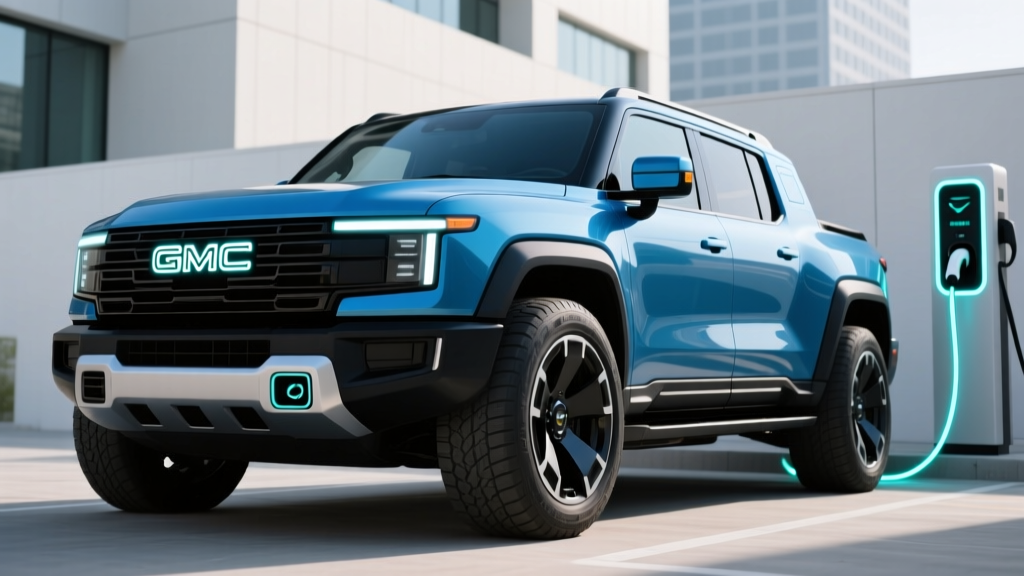
The 2022 GMC Hummer EV arrived as a statement vehicle — a 9,000-pound electric supertruck designed to prove that electrification doesn't mean sacrificing capability. Now that early adopters have logged thousands of miles, we can look past the launch hype and evaluate this EV on its engineering merits. Below is a data-driven breakdown of 2022 GMC Hummer EV specs covering range, charging behavior, performance, pricing, and the practical realities of daily ownership.
2022 GMC Hummer EV Core Specifications at a Glance
| Specification | 2022 GMC Hummer EV Edition 1 |
|---|---|
| EPA Range | 329 miles |
| Battery Capacity (Usable) | ~212.7 kWh (NMC lithium-ion) |
| Drivetrain | Tri-motor AWD (e4WD) |
| Horsepower | 1,000 hp |
| Torque | 1,200 lb-ft |
| 0-60 mph | ~3.0 seconds (Watts to Freedom mode) |
| Max DC Fast Charge Rate | 350 kW (800V architecture) |
| Level 2 Home Charge Rate | 11.5 kW (estimated ~16 mi/hr) |
| Efficiency | 47 MPGe combined / 72 kWh/100 mi |
| Towing Capacity | 7,500 lbs (est.) |
| Ground Clearance | Up to 15.9 in (Adaptive Ride w/ Extract Mode) |
| Curb Weight | ~9,063 lbs |
| Base MSRP (Edition 1) | $112,595 |
| Battery/Powertrain Warranty | 8 years / 100,000 miles |
Range and Efficiency: The Physics of a 9,000-Pound EV
Real-World Expectation: Expect 260–290 miles at sustained highway speeds (70-80 mph). In cold weather (below 32°F), plan for 200–240 miles before needing to charge. City and mixed driving with regenerative braking can approach the EPA figure.
The Hummer EV's 329-mile EPA rating is impressive for a vehicle of this mass, but the laws of physics are unforgiving. At highway speeds, aerodynamic drag dominates, and the Hummer's boxy profile and massive frontal area create substantial resistance. The 72 kWh/100 mi efficiency figure (per fueleconomy.gov) means this truck consumes electricity at roughly 2.5× the rate of a Hyundai Ioniq 5 or Tesla Model Y.
For context, that 212.7 kWh usable battery — one of the largest ever fitted to a production passenger vehicle — uses Ultium-format NMC (nickel manganese cobalt) pouch cells supplied through GM's partnership with LG Energy Solution. The pack operates on an 800-volt architecture, which is essential for its rapid charging capability, but the sheer energy density required to move this mass means heavy cooling demands during both charging and sustained high-speed driving.
Owners who primarily drive in urban or suburban environments with frequent stops will see range figures much closer to the EPA sticker thanks to aggressive regenerative braking (including one-pedal driving mode). Road-trippers should plan charging stops at roughly 200-220 mile intervals to maintain a comfortable buffer and avoid the steep charge-curve taper above 80% State of Charge.
Charging Speed: 350 kW Peak, But Read the Fine Print
| Charging Level | Power / Rate | Time / Range Added |
|---|---|---|
| Level 1 (120V household) | ~1.4 kW | ~2 miles per hour — impractical for this battery |
| Level 2 (240V home) | 11.5 kW | ~16 miles per hour; full charge in ~18+ hours |
| DC Fast Charge (peak) | Up to 350 kW | 10-80% in approximately 30-35 minutes on a capable charger |
| DC Fast Charge (50 kW station) | 50 kW | 10-80% in approximately 3 hours |
The 800V architecture allows the Hummer EV to accept up to 350 kW at compatible DC fast chargers — the kind of peak rate you'll find at the newest Electrify America or EVgo stalls. However, peak rate is not sustained rate. The charge curve tapers significantly above 60% SoC, and thermal management of a 212.7 kWh pack generates substantial heat. In real-world testing, expect an average charge rate closer to 150-200 kW across the 10-80% window, yielding a 30-35 minute session.
At home, the 11.5 kW onboard charger means a Level 2 session from near-empty to full takes roughly 18-20 hours. Most owners will plug in nightly and rarely charge from below 20%, making this manageable — but you'll want a dedicated 60-amp circuit with a quality Level 2 station (such as a ChargePoint Home Flex or Emporia Vue) professionally installed. A panel upgrade to 200A service may be necessary in older homes; budget $500-$2,000 for installation beyond the charger hardware cost.
Preconditioning note: Always use the Hummer EV's navigation-based battery preconditioning when routing to a DC fast charger. Cold batteries charge far slower, and preconditioning warms the pack to optimal temperature before you arrive, protecting your charge speed.
Performance: 1,000 Horsepower in a Supertruck
The tri-motor e4WD powertrain produces a combined 1,000 horsepower and 1,200 lb-ft of torque. In Watts to Freedom (WTF) launch mode — which preconditions the powertrain, lowers the adaptive air suspension, and provides haptic and audio feedback — the Hummer EV hits 60 mph in approximately 3.0 seconds. That puts it in supercar territory, which is surreal for a vehicle weighing over 9,000 pounds.
Beyond straight-line speed, the rear-wheel steering system (up to 10 degrees) enables two party tricks: CrabWalk, which diagonally shifts the truck for tight off-road obstacles, and a dramatically reduced turning circle for a vehicle with a 135.6-inch wheelbase. The Adaptive Air Ride suspension offers up to 15.9 inches of ground clearance in Extract Mode, making it genuinely capable on off-road trails.
On paved roads, the Hummer EV rides with surprising composure given its mass, though you'll feel that mass in corners and during emergency maneuvers. This is a grand-touring truck, not a sports car — and that's the point.
Pricing, Trims, and Federal Tax Credit Eligibility
| Trim / Edition | MSRP (at launch) | Federal Tax Credit (§30D) |
|---|---|---|
| Hummer EV Edition 1 (2022) | $112,595 | Not eligible — exceeds $80,000 MSRP cap for trucks |
| Hummer EV 2X (later availability) | ~$99,995 | Not eligible — exceeds $80,000 MSRP cap for trucks |
| Hummer EV 3X (later availability) | ~$104,995 | Not eligible — exceeds $80,000 MSRP cap for trucks |
The 2022 GMC Hummer EV was sold exclusively as the Edition 1 launch model at $112,595 (plus destination). Under current IRS §30D rules, the federal EV tax credit caps eligible trucks at an $80,000 MSRP limit. Every Hummer EV trim exceeds this threshold, meaning no Hummer EV variant qualifies for the $7,500 federal purchase credit.
Additionally, §30D imposes buyer income caps ($150,000 single / $300,000 joint filing for new EVs) and battery critical-mineral sourcing requirements that tighten annually. Even if a future lower-priced trim existed, buyers should verify current-year eligibility at irs.gov or consult a tax professional before assuming credit availability.
For the used market, the §25E used EV credit offers up to $4,000 (30% of sale price, capped) on vehicles priced at $25,000 or below — a threshold the Hummer EV won't reach for many years given its depreciation curve from six figures.
Interior Space, Cargo, and Technology
The Hummer EV is a five-passenger crew-cab pickup with a five-foot bed. Key dimensions:
- Front legroom: ~45.6 inches
- Rear legroom: ~43.4 inches
- Bed length: ~5 feet (with MultiPro tailgate extending load floor)
- Front trunk (frunk): Available with the Infinity Roof panels removed — provides weather-sealed lockable storage
- Towing: 7,500 lbs rated capacity
The removable Infinity Roof panels (stored in the frunk) transform the cabin into an open-air experience — one of the Hummer EV's most distinctive features. The 13.4-inch diagonal infotainment touchscreen runs GM's latest Ultifi software platform with embedded Google built-in (Maps, Assistant, Play Store), and a 12.3-inch driver information center handles gauges and vehicle status.
Driver-assistance technology includes GM's Super Cruise on compatible mapped highways — a hands-off, eyes-on SAE Level 2 system that requires continuous driver attention. Super Cruise is not self-driving; you must remain engaged and ready to take over at any time. The system covers over 400,000 miles of compatible roads in North America and includes automatic lane changes on supported routes.
Notable drawbacks: The Hummer EV's width (over 96 inches including mirrors) makes it challenging in tight parking structures and urban environments. Visibility is compromised by thick A-pillars and the high hood line, though camera systems help. The sheer weight accelerates tire wear — expect replacement intervals shorter than typical light-duty trucks. And at 72 kWh/100 mi, charging costs on public DC networks can rival or exceed gasoline costs per mile in some regions.
Battery Longevity, Warranty, and Ownership Costs
GM backs the Hummer EV's battery pack and electric powertrain with an 8-year / 100,000-mile warranty, covering defects and capacity loss below a specified retention threshold (typically 60-70% of original capacity, per GM's warranty documentation). Given the NMC chemistry and the pack's robust thermal management system — liquid-cooled with active heating — degradation should be manageable for typical ownership cycles.
However, replacement cost for a 212.7 kWh pack outside of warranty is substantial — industry estimates for packs of this size range from $25,000 to $40,000+ including labor, though prices are expected to decline as battery manufacturing scales. NMC chemistry offers higher energy density than LFP (lithium iron phosphate) at the cost of slightly faster calendar degradation and higher raw-material exposure, which is the trade-off required for this vehicle's range and performance targets.
Insurance premiums for the Hummer EV are significantly above average for the EV segment, reflecting its six-figure MSRP, repair complexity, and performance capability. Owners report annual premiums in the $3,000–$5,000 range depending on location and driving history. Always obtain quotes before purchasing.
Who Should Buy the 2022 GMC Hummer EV?
- You need genuine off-road capability with electric instant torque and CrabWalk
- You want a statement vehicle with supercar-level acceleration in a truck form factor
- You have reliable home Level 2 charging and can accommodate the long full-charge time
- You value open-air driving with the Infinity Roof system
- Budget is not a primary constraint (purchase price, insurance, charging costs, tires)
- You prioritize efficiency and low cost-per-mile (consider Rivian R1T, Ford F-150 Lightning, or Tesla Cybertruck)
- You need federal tax credit eligibility — no Hummer EV trim qualifies under §30D
- You drive primarily in dense urban areas where the vehicle's width and length are impractical
- Fast public charging turnaround is critical to your road-trip routine (the massive battery takes longer to fill)
Pros and Cons
- 329-mile EPA range despite extreme mass
- 350 kW peak DC charging via 800V architecture
- 1,000 hp / 3.0-second 0-60 — absurd performance for a truck
- CrabWalk and rear-wheel steering enhance off-road and parking maneuverability
- Super Cruise hands-off highway driving (SAE Level 2)
- Removable Infinity Roof panels for open-air experience
- Up to 15.9 inches of ground clearance in Extract Mode
- No federal tax credit eligibility — all trims exceed $80,000 MSRP cap
- 72 kWh/100 mi efficiency makes public charging expensive
- 9,063-lb curb weight accelerates tire wear and limits payload
- 18+ hour full Level 2 charge requires disciplined nightly plug-in
- Extreme width problematic in tight parking and drive-throughs
- Premium insurance costs ($3,000–$5,000+ annually)
- Real-world highway range drops to ~260 miles at 75+ mph
Frequently Asked Questions
What is the real-world range of the 2022 GMC Hummer EV?
The EPA rates the 2022 Hummer EV Edition 1 at 329 miles. In real-world highway driving at 70-80 mph, expect 260–290 miles. Cold weather (below freezing) can reduce range to 200–240 miles. City driving with regenerative braking returns figures closer to the EPA estimate.
How fast does the Hummer EV charge at home and on the road?
At home on Level 2 (240V, 11.5 kW), the Hummer EV adds roughly 16 miles of range per hour, meaning a full charge from near-empty takes 18+ hours. On a 350 kW DC fast charger, the 10-80% session takes approximately 30-35 minutes, though sustained rates average 150-200 kW due to charge-curve taper and thermal management.
Does the 2022 Hummer EV qualify for the $7,500 federal EV tax credit?
No. Under IRS §30D rules, trucks must have an MSRP at or below $80,000 to qualify. The Hummer EV Edition 1 launched at $112,595, and all subsequent trims also exceed this cap. Always verify current rules at irs.gov or consult a tax professional.
How does the Hummer EV compare to the Rivian R1T or Ford F-150 Lightning?
The Rivian R1T (quad-motor, ~328-mile EPA range, ~$87,000+) is lighter, more efficient, and more practical for daily use while still offering serious off-road capability. The Ford F-150 Lightning (up to 320-mile EPA range, starting ~$55,000) is far more affordable and efficient, though less powerful. The Hummer EV wins on raw performance and presence but loses on efficiency, practicality, and tax credit eligibility. The R1T and lower-trim Lightning variants may qualify for partial or full federal credits depending on current sourcing rules and MSRP.
Is the Hummer EV's battery NMC or LFP chemistry?
The 2022 Hummer EV uses GM's Ultium NMC (nickel manganese cobalt) pouch cells. NMC provides the energy density required for this vehicle's range targets but degrades slightly faster over calendar life than LFP chemistry and carries higher raw-material cost exposure.
Is Super Cruise on the Hummer EV self-driving?
No. Super Cruise is an SAE Level 2 driver-assistance system. It allows hands-off driving on mapped compatible highways, but you must keep your eyes on the road and remain ready to take control immediately. It does not handle all driving scenarios, construction zones, or unmapped roads autonomously.
Sources: fueleconomy.gov (EPA range and efficiency data), irs.gov (§30D tax credit rules), gmc.com (manufacturer specifications). Specifications reflect the 2022 model year Edition 1 trim. Verify current pricing, credit eligibility, and model availability with your local dealer and a qualified tax professional.