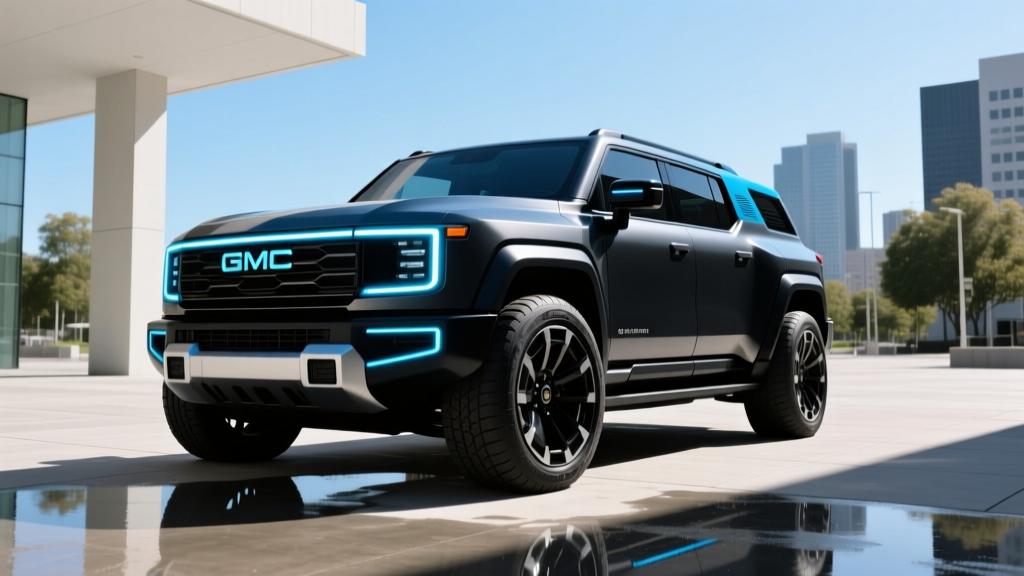
The 2022 GMC Hummer EV debuted as GM's halo electric truck — a 9,000-pound, tri-motor beast promising supercar acceleration wrapped in a body wider than most suburban garages. For buyers researching the MSRP of the 2022 GMC Hummer EV on the used market today, the numbers tell a story of extreme capability matched by extreme ownership trade-offs. This profile covers every spec a prospective buyer needs: real-world range, charging behavior, tax-credit eligibility under current IRS §30D rules, and how the Hummer EV stacks up against the Rivian R1T, Ford F-150 Lightning, and Tesla Cybertruck in 2026.
2022 GMC Hummer EV MSRP and Trim Pricing
The 2022 model year launched exclusively in the Edition 1 trim, making the pricing structure straightforward but steep. GMC positioned this truck well above mainstream electric pickups, targeting buyers who want presence and performance over efficiency.
| Configuration | Base MSRP | Destination | Total MSRP |
|---|---|---|---|
| Edition 1 Pickup (Tri-Motor) | $110,295 | $1,595 | $111,890 |
| Edition 1 SUV (Tri-Motor) | $110,295 | $1,595 | $111,890 |
Later model years introduced the EV2x, EV3x, and EV2 trims, dropping the entry price to roughly $84,650 for the base dual-motor EV2 pickup. But for the 2022 model year specifically, every unit left the Factory ZERO plant in Detroit as an Edition 1 with the full tri-motor Watt to Freedom powertrain, 24-module Ultium battery, and the $110,295 sticker.
Used-market reality in 2026: Depreciation on early Hummer EVs has been significant. Well-maintained 2022 Edition 1 pickups now trade between $68,000 and $85,000 depending on mileage and condition — a 25-38% drop from original MSRP. That depreciation actually opens up tax-credit opportunities (more on that below).
Range, Efficiency, and the Real-World Reality Check
The 2022 Hummer EV Pickup carries an EPA-estimated range of 329 miles on its massive 212.7 kWh gross (approximately 205 kWh usable) Ultium battery pack. The SUV variant, shorter in wheelbase and slightly heavier in certain configurations, rates at 314 miles EPA. These are remarkable numbers for a vehicle this heavy — but efficiency is a different story.
Pickup (Edition 1 Tri-Motor): EPA 329 miles. Expect 265–290 miles in mixed highway driving at 70+ mph. Cold-weather (below 32°F) highway range drops to approximately 210–240 miles due to cabin heating demands and increased battery resistance. City/regenerative driving can push closer to 310–330 miles.
SUV (Edition 1 Tri-Motor): EPA 314 miles. Expect 250–275 miles highway; 195–225 miles in freezing conditions.
At roughly 47–53 kWh per 100 miles depending on conditions, the Hummer EV is among the least efficient EVs sold. For comparison, the Rivian R1T (Dual-Motor, Large Battery) achieves around 41 kWh/100mi, and the Ford F-150 Lightning (Extended Range) sits near 43 kWh/100mi. The Hummer's weight — approximately 9,063 pounds for the Edition 1 pickup — is the primary culprit. That mass demands enormous energy to accelerate and sustain speed, even with aggressive regenerative braking.
The EPA rates the 2022 Hummer EV Pickup at 47 MPGe combined (51 city / 43 highway), per fueleconomy.gov. That translates to roughly $0.09–$0.14 per mile on home Level 2 charging (at $0.16/kWh national average) and $0.18–$0.28 per mile on DC fast charging (at $0.35–$0.55/kWh public rates). For context, a gas F-150 at 20 MPG combined costs roughly $0.17–$0.21 per mile at $3.50/gallon.
Battery Chemistry, Capacity, and Long-Term Degradation
GM's Ultium platform uses nickel-cobalt-manganese-aluminum (NCMA) cathode chemistry — a variant of NMC optimized for higher nickel content and reduced cobalt. The 2022 Hummer EV's pack contains 24 pouch-style modules stacked in a double-stacked configuration, yielding the 212.7 kWh gross capacity. This is roughly double the usable capacity of most long-range EVs and remains the largest battery pack in any production passenger vehicle.
Degradation expectations: NMC/NCMA chemistry typically loses 8–12% capacity over the first 100,000 miles before leveling off. GM's battery management system is conservative, maintaining generous top and bottom buffers to protect long-term health. Owners reporting on forums through 2025 indicate 3–5% degradation at 30,000–50,000 miles — in line with expectations for liquid-cooled NMC packs.
Warranty coverage: GMC provides an 8-year/100,000-mile battery and powertrain warranty, covering defects and capacity loss below 70% of original capacity. This matches the industry standard set by federal mandate and is consistent across the Rivian R1T and Ford F-150 Lightning.
Charging Speed: DC Fast, Level 2, and the Charge Curve
The Hummer EV's 800-volt architecture enables peak DC fast-charging rates up to 350 kW on compatible chargers. However, as with all large batteries, sustained rates and the charge curve tell the real story.
| Charging Level | Max Power (kW) | Rate / Time | Notes |
|---|---|---|---|
| DC Fast Charge (800V) | 350 kW peak | 10–80% in ~35 min | Peak rate sustained to ~40% SoC; tapers significantly above 60% |
| DC Fast Charge (50 kW) | 50 kW | 10–80% in ~3.5 hrs | Typical older CCS station speed |
| Level 2 (Home, 11.5 kW) | 11.5 kW | ~14 mi/hr added | Full charge in ~18–20 hours from near-empty |
| Level 2 (19.2 kW capable) | 19.2 kW | ~23 mi/hr added | Requires 100A circuit; full charge ~11 hours |
| Level 1 (120V) | ~1.4 kW | ~2 mi/hr added | Emergency/trickle only; full charge takes days |
Charge curve reality: On a 350 kW CCS charger, the Hummer EV will pull close to peak rate from roughly 10% to 40% state of charge. Beyond 50%, the curve tapers to ~200 kW, and above 80%, it drops to under 80 kW. This means a 10–80% session takes approximately 35 minutes — respectable given the 205 kWh usable pack, but far slower than smaller-battery EVs that complete the same session in 18–22 minutes.
Home charging is a critical consideration. The 212.7 kWh pack is so large that a standard 11.5 kW Level 2 home charger requires nearly 20 hours for a full charge from empty. Most owners will rarely deplete fully, but even a 50% to 100% top-up takes 9–10 hours. Upgrading to a 19.2 kW home charger (requiring a dedicated 100-amp circuit and likely a panel upgrade to 200A or 400A service) cuts this substantially. Budget $2,500–$5,000 for a full 19.2 kW home installation including panel work, per licensed electrician quotes.
The 2022 Hummer EV uses the CCS1 connector for DC fast charging and the J1772 connector for AC Level 2. GM has committed to NACS (Tesla-style) adoption for future models, and a GM-approved NACS adapter is available for access to Tesla Supercharger V3 and V4 stalls (up to 150–250 kW depending on the stall).
Performance: Watt to Freedom and the 3-Second Truck
The tri-motor Edition 1 produces 1,000 horsepower and a claimed 1,200 lb-ft of wheel torque (measured at the wheels, not the motor output — a distinction GM has faced criticism for emphasizing). In Watt to Freedom mode, which preconditions the battery and stiffens the adaptive air suspension, the 2022 Hummer EV Pickup achieves a 0–60 mph time of approximately 3.0 seconds, per Car and Driver testing.
That makes it quicker to 60 than a Porsche 911 Carrera — in a truck that weighs as much as two Porsche Cayennes combined. The physics are extraordinary: the Hummer EV's tri-motor AWD system vectors torque across all three motors (one front, two rear), enabling launch control that minimizes wheelspin despite the vehicle's mass.
Drivetrain: The Edition 1 is exclusively tri-motor AWD. Later trims (EV2, EV2x) introduced dual-motor AWD configurations with 625 hp, but those were not available for the 2022 model year.
Towing and payload: Maximum towing capacity is 7,500 pounds for the pickup — competitive with mid-duty gas trucks but below the F-150 Lightning's 10,000-pound rating. Payload capacity is approximately 1,300 pounds. Towing at max capacity reduces range by roughly 40–50%, bringing real-world towing range to approximately 130–160 miles.
Interior, Cargo, Tech, and Standout Features
The Hummer EV's cabin matches its exterior excess: enormous, tech-laden, and unapologetically bold. The Edition 1 includes a 13.4-inch infotainment touchscreen running GM's Ultifi platform, a 12.3-inch driver display, and a 6-inch diagonal secondary touchscreen for climate and terrain controls.
Cargo dimensions (Pickup):
- Bed length: 5 feet (standard)
- Cargo bed volume: ~41.1 cu ft
- Front trunk (frunk): ~11.3 cu ft (with power-operated eTrunk lid)
- Total cargo: ~52.4 cu ft
- Rear-seat legroom: ~38.9 inches
- Front-seat legroom: ~45.6 inches
Standout features:
- Infinity Roof: Removable transparent roof panels stored in the frunk — an open-air experience unique to the Hummer EV and the Jeep Wrangler 4xe in this segment.
- CrabWalk: Four-wheel steering enables diagonal movement at low speeds (up to ~25° rear-wheel angle), useful for tight trail obstacles and an undeniable party trick.
- Extract Mode: The adaptive air suspension raises the ride height by nearly 6 inches for extreme off-road clearance (up to 15.9 inches of ground clearance).
- Super Cruise: GM's hands-off Level 2 driver-assistance system is included on the Edition 1, operating on over 400,000 miles of mapped highways in the US and Canada. Note: Super Cruise is SAE Level 2 — the driver must remain attentive and keep eyes on the road at all times.
- UltraVision: Up to 18 camera views, including underbody cameras for off-road obstacle visibility.
Notable drawbacks:
- The truck is 86.7 inches wide (excluding mirrors) — wider than a Ford F-250. Many standard parking spaces, urban garages, and narrow suburban driveways are a poor fit.
- Rear visibility is severely compromised; the camera-based rearview mirror is essentially mandatory.
- The sheer weight accelerates tire wear — expect replacement intervals 20–30% shorter than a comparable gas truck.
- At 9,000+ pounds, the Hummer EV exceeds the weight limits of some parking structures and residential flooring.
Federal Tax Credit Eligibility for the 2022 Hummer EV
Tax credit rules for electric trucks are nuanced, and the Hummer EV's pricing creates specific complications under IRS §30D.
- MSRP cap for trucks/vans/SUVs: $80,000. The 2022 Hummer EV Edition 1 at $110,295 exceeds this cap, making it ineligible for the new-vehicle §30D credit when purchased new.
- Buyer income limits: AGI must not exceed $300,000 (married filing jointly), $225,000 (head of household), or $150,000 (single).
- Battery sourcing: Critical minerals and battery components must meet escalating domestic-content thresholds — less relevant here since the MSRP cap disqualifies the truck.
- Used EV credit (§25E): A used 2022 Hummer EV purchased for $25,000 or less from a dealer may qualify for a credit equal to 30% of the sale price, up to $4,000. However, used Hummer EVs currently trade well above $25,000, making this credit unavailable in practice for most buyers.
Bottom line: The 2022 Hummer EV Edition 1 does not qualify for the $7,500 new-vehicle federal tax credit due to its MSRP exceeding the $80,000 truck cap. Buyers should not factor a federal credit into their purchase calculation. Consult a tax professional and review current rules at IRS.gov for the latest guidance, as regulations evolve.
How the 2022 Hummer EV Compares to Key Rivals
| Spec | 2022 Hummer EV Pickup (Ed. 1) | Rivian R1T (Dual-Motor Max) | Ford F-150 Lightning (Ext. Range) | Tesla Cybertruck (Cyberbeast) |
|---|---|---|---|---|
| Original MSRP | $111,890 | ~$99,900 | ~$71,990 | ~$99,990 |
| EPA Range | 329 mi | 328 mi | 320 mi | 320 mi |
| Battery (usable kWh) | ~205 (NCMA) | ~141 (NMC) | ~131 (NMC) | ~123 (NMC) |
| Horsepower | 1,000 hp | 665 hp | 580 hp | 845 hp |
| 0–60 mph | ~3.0 sec | ~3.5 sec | ~3.8 sec | ~2.6 sec |
| Max DC Charge (kW) | 350 kW | 200 kW | 150 kW | 250 kW |
| 10–80% DC Time | ~35 min | ~40 min | ~41 min | ~30 min |
| Towing Capacity | 7,500 lb | 11,000 lb | 10,000 lb | 11,000 lb |
| Bed Length | 5 ft | 4.5 ft | 5.5 ft | 6 ft |
| Weight | ~9,063 lb | ~7,148 lb | ~6,893 lb | ~6,843 lb |
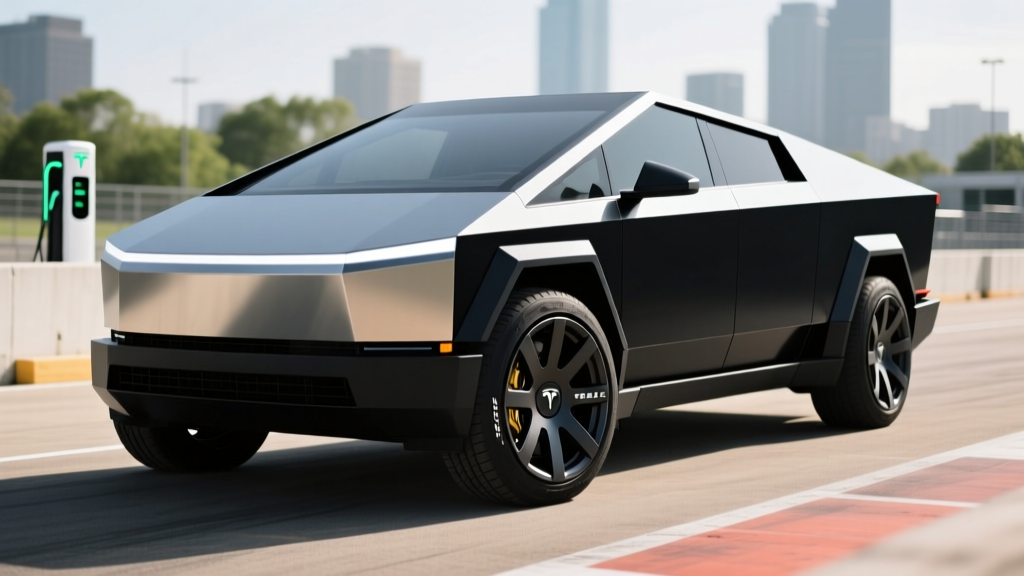
The Hummer EV wins on raw power, battery capacity, and peak charge rate. But it loses on efficiency, towing, practicality, and price. The F-150 Lightning delivers 90% of the utility at 65% of the price. The Rivian R1T offers superior build quality, better trail manners, and more practical dimensions. The Cybertruck beats it on acceleration and undercuts it on price by roughly $12,000.
Who Should Buy the 2022 GMC Hummer EV?
This truck serves a narrow, specific buyer profile:
- You want the most powerful, most visually commanding electric truck available and budget is secondary.
- Off-road showmanship (CrabWalk, Extract Mode, Infinity Roof) matters more than daily practicality.
- You have a garage or driveway that accommodates an 86.7-inch-wide, 18-foot-long vehicle.
- You primarily drive in urban or suburban settings where the 329-mile range provides ample buffer.
- Towing capacity is a priority — the F-150 Lightning and Rivian R1T both tow significantly more.
- You need a practical daily driver for tight urban environments or standard parking structures.
- Efficiency and charging cost per mile are important — the Hummer's 47 MPGe is the worst in its class.
- You're counting on a federal tax credit to offset the purchase price.
Frequently Asked Questions
What is the real-world range of the 2022 GMC Hummer EV?
The EPA rates the 2022 Hummer EV Pickup at 329 miles and the SUV at 314 miles. In real-world highway driving at 70+ mph, expect 265–290 miles (pickup) and 250–275 miles (SUV). Cold weather (below freezing) reduces highway range by an additional 15–25%, bringing winter highway range to approximately 210–240 miles for the pickup.
How fast does the 2022 Hummer EV charge?
On a 350 kW DC fast charger, the Hummer EV charges from 10–80% in approximately 35 minutes, peaking near 350 kW at low states of charge and tapering above 60% SoC. At home on an 11.5 kW Level 2 charger, it adds about 14 miles of range per hour, requiring roughly 18–20 hours for a full charge from near-empty. A 19.2 kW Level 2 setup cuts full-charge time to about 11 hours.
How much does the 2022 GMC Hummer EV cost after tax credits?
The original MSRP was $111,890 including destination. The truck does not qualify for the $7,500 federal new-vehicle tax credit because its MSRP exceeds the $80,000 cap for trucks under IRS §30D. On the used market in 2026, prices typically range from $68,000 to $85,000. The used-EV credit (§25E) requires a sale price of $25,000 or less, which Hummer EVs do not meet in practice. Factor in the full purchase price plus state/local incentives where available.
Does the 2022 Hummer EV qualify for the federal EV tax credit?
No. Under current IRS §30D rules, new clean vehicles classified as trucks must have an MSRP of $80,000 or less to qualify. The 2022 Hummer EV Edition 1 at $110,295 exceeds this cap. Always verify current rules at IRS.gov and consult a tax professional, as regulations may change.
Is the 2022 Hummer EV worth buying vs. the Rivian R1T or F-150 Lightning?
It depends on priorities. The Hummer EV offers unmatched power (1,000 hp), the largest battery pack in any production EV (~205 kWh usable), and features like CrabWalk and Infinity Roof that no competitor matches. But the Rivian R1T is more practical, better built, and more capable off-road in real trail use. The F-150 Lightning offers comparable utility at $40,000 less. For most electric-truck buyers, the Lightning or R1T is the rational choice. The Hummer EV is a statement purchase — justifiable if you value exclusivity and spectacle over efficiency and value.
What are the biggest pros and cons of the 2022 Hummer EV?
Pros: 1,000 hp with 3.0-second 0–60; 329-mile EPA range; 350 kW peak DC charging; CrabWalk four-wheel steering; Infinity Roof open-air driving; Super Cruise hands-off highway assist; unmatched road presence.
Cons: $110,290+ MSRP with no federal tax credit; 47 MPGe is class-worst efficiency; 9,063-lb weight stresses tires, brakes, and infrastructure; 86.7-inch width won't fit many garages; 7,500-lb towing trails competitors; 5-foot bed is short for a full-size truck; 20-hour full charge on standard Level 2.
How long will the Hummer EV battery last?
GM covers the battery with an 8-year/100,000-mile warranty guaranteeing at least 70% capacity retention. Based on NMC/NCMA degradation patterns and early owner reports, expect 8–12% capacity loss over 100,000 miles. With proper care (avoiding frequent 100% charges, minimizing DC fast-charging in extreme heat), the pack should deliver 200,000+ miles before reaching the 70% threshold. Full battery replacement, if needed out of warranty, would likely cost $25,000–$40,000 given the pack's extraordinary size.