Quick Answer: Is the 2022 Electric Mustang Mach-E Worth Buying Used in 2026?
The 2022 Ford Mustang Mach-E remains one of the best-used EV values in 2026. Expect to pay between $22,000 and $38,000 depending on trim and battery. The Select trim with the Standard Range battery delivers an EPA-estimated 230 miles of range, while the California Route 1 with Extended Range reaches 314 miles EPA. Real-world highway driving typically yields 200–270 miles depending on climate and speed. DC fast charging peaks at 115 kW (Standard Range) or 150 kW (Extended Range), adding 10–80% in roughly 38–45 minutes. The available §25E used EV tax credit can knock up to $4,000 off the purchase price if you and the vehicle qualify.
What Exactly Is the 2022 Electric Mustang?
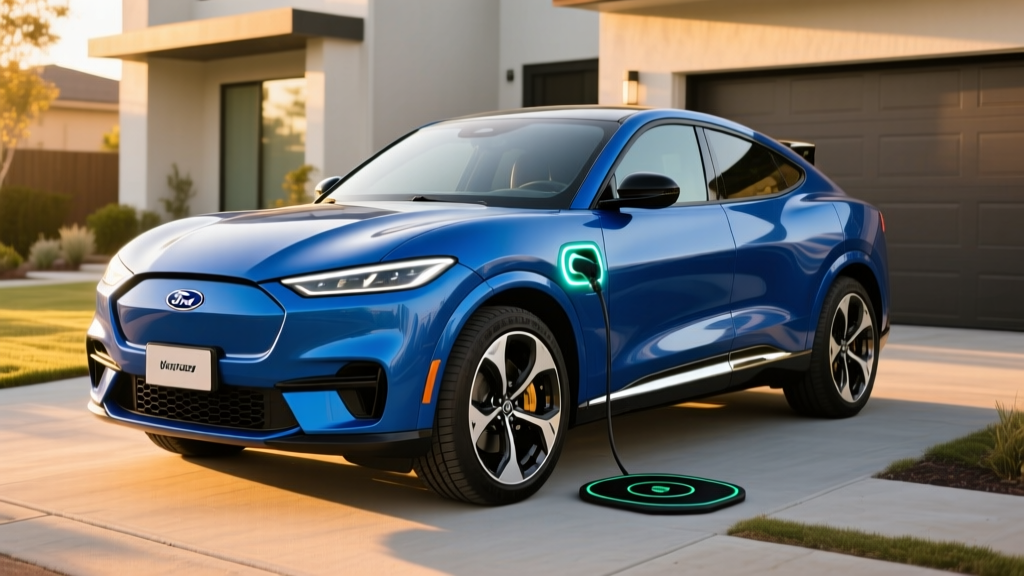
Ford applied the Mustang nameplate to an all-electric crossover for the 2021 model year, and the 2022 Mustang Mach-E carried over with minor updates. It is not a sports coupe — it's a two-row electric SUV competing directly with the Tesla Model Y, Hyundai Ioniq 5, and Volkswagen ID.4. The 2022 model year is significant because it was the first to offer the GT Performance Edition (480 hp, 0–60 in 3.5 seconds) and introduced Ford's BlueCruise hands-free highway driving system as an available feature.
For the 2022 model year, Ford offered four trims: Select, Premium, California Route 1, and GT. Battery options included a 68 kWh usable Standard Range pack (LFP chemistry on later builds) and a 91 kWh usable Extended Range pack (NMC chemistry). Rear-wheel drive and all-wheel drive were available depending on trim.
Range, Efficiency, and Real-World Expectations
The EPA range figures for the 2022 Mach-E vary significantly by configuration. Here's what the sticker says versus what you'll actually experience:
| Trim / Config | Battery (kWh usable) | EPA Range | Real-World Highway | Cold Weather (20°F) | MPGe Combined |
|---|---|---|---|---|---|
| Select RWD (Std Range) | 68 | 230 mi | 195–210 mi | 160–180 mi | 101 |
| Premium AWD (Ext Range) | 91 | 270 mi | 230–250 mi | 190–210 mi | 93 |
| CA Route 1 RWD (Ext Range) | 91 | 314 mi | 265–285 mi | 220–245 mi | 104 |
| GT AWD (Ext Range) | 91 | 270 mi | 225–245 mi | 185–205 mi | 84 |
Data sourced from fueleconomy.gov. Real-world figures reflect 70–80 mph highway driving at moderate temperatures. Cold-weather estimates assume no preconditioning and cabin heating active. If you garage your Mach-E and use preconditioning while plugged in, you can recover 10–15% of cold-weather range loss.
The Extended Range models use Samsung SDI NMC (nickel manganese cobalt) cells, which offer higher energy density but are more sensitive to sustained high states of charge. Ford recommends daily charging to 90% for NMC packs and reserving 100% for road trips. Some later Standard Range builds switched to LFP (lithium iron phosphate) chemistry, which tolerates 100% daily charging without accelerated degradation — always verify the specific battery chemistry on the vehicle you're considering.
Charging Speeds: Home and DC Fast Charging
Understanding the difference between kW (power, or how fast energy flows) and kWh (energy, or how much the battery holds) is essential for evaluating any EV's charging capability.
| Charging Level | Power | Standard Range (68 kWh) | Extended Range (91 kWh) | Miles Added/Hour |
|---|---|---|---|---|
| Level 1 (120V household) | ~1.4 kW | ~30 hours (0–100%) | ~40 hours (0–100%) | 3–5 mi/hr |
| Level 2 (240V, 32A) | 7.7 kW | ~10 hours (0–100%) | ~13 hours (0–100%) | 20–26 mi/hr |
| Level 2 (240V, 48A) | 10.5 kW | ~7.5 hours | ~10 hours | 28–36 mi/hr |
| DC Fast (peak) | 115 kW / 150 kW | 10–80% in ~38 min | 10–80% in ~45 min | N/A |
The 2022 Mach-E's DC fast charging is its weakest competitive point. While the Hyundai Ioniq 5 from the same era peaks at 240 kW on 800V architecture (10–80% in ~18 minutes), the Mach-E tops out at 150 kW and sustains that rate only briefly before tapering. On a road trip, expect to spend 40–50 minutes at a DC fast charger for a meaningful charge. The charging curve drops sharply above 80% state of charge — charging from 80–100% can take nearly as long as 10–80%, so plan to unplug and drive at 80%.
The Mach-E uses a CCS1 connector for DC fast charging and a J1772 inlet for Level 2 AC charging. Ford has since adopted NACS (Tesla's connector) for newer models, but the 2022 Mach-E requires an adapter (Ford provides a Tesla Supercharger adapter for eligible vehicles) to access the Tesla Supercharger network. Confirm adapter availability and FordPass app activation for the specific VIN you're evaluating.
Used Pricing, Tax Credits, and Total Cost of Ownership
Current Used Market Pricing (Early 2026)
| Trim | Typical Used Price Range | Original MSRP (2022) |
|---|---|---|
| Select (Std Range, RWD) | $22,000–$26,000 | $44,995 |
| Premium (Ext Range, AWD) | $28,000–$33,000 | $56,575 |
| CA Route 1 (Ext Range, RWD) | $29,000–$34,000 | $55,995 |
| GT (Ext Range, AWD) | $34,000–$38,000 | $67,495 |
The §25E Used EV Tax Credit
As a used EV buyer in 2026, you may qualify for the federal §25E used clean vehicle credit — up to $4,000 or 30% of the sale price (whichever is less). Per IRS guidelines, eligibility requires:
- Sale price of $25,000 or less (this eliminates most GT and Premium AWD listings)
- Buyer income below $75,000 (single), $112,500 (head of household), or $150,000 (joint)
- Vehicle must be at least two model years old (2022 qualifies in 2026)
- You haven't claimed the used EV credit in the prior three years
- Purchase from a licensed dealer (private-party sales do not qualify)
A Select trim at $24,500 from a qualifying dealer could yield a $4,000 credit, bringing your net cost to $20,500. Consult a tax professional to confirm your personal eligibility.
Five-Year Cost Comparison: Mach-E vs. Comparable Gas SUV
| Cost Category | 2022 Mach-E (Select, RWD) | 2022 Gas Crossover (25 MPG combined) |
|---|---|---|
| Purchase Price (after credit) | $20,500 (with §25E) | $28,000 |
| Fuel / Energy (5 yrs, 60k mi) | $3,200 (home charging, $0.14/kWh) | $8,400 ($3.50/gal avg) |
| Maintenance (5 yrs) | $900 (tires, cabin filter, fluid top-offs) | $3,500 (oil, brakes, filters, belts) |
| Insurance (5 yrs avg) | $8,500 | $6,800 |
| Estimated Depreciation (5 yrs) | $8,000 | $11,000 |
| Total 5-Year Cost | $41,100 | $57,700 |
The Mach-E saves roughly $16,600 over five years in this scenario, primarily through lower energy and maintenance costs. However, insurance runs 15–25% higher for EVs on average — get quotes before purchasing. If you rely entirely on public DC fast charging at $0.35–$0.50/kWh, your energy cost rises to $5,500–$7,800 over five years, significantly narrowing the gap.
Common Misconceptions About the 2022 Mach-E
| Myth | Fact |
|---|---|
| "The battery will need replacement within a few years." | Ford warranties the battery for 8 years/100,000 miles with a minimum 70% capacity retention threshold. Real-world data from 2021–2022 Mach-E fleets shows average degradation of 4–7% over the first 60,000 miles. |
| "It's a real Mustang." | It shares no platform or mechanical components with the gas Mustang coupe. It's a purpose-built electric crossover on Ford's Global Electrified Platform (GE1). The name is a branding decision. |
| "You can't drive it in cold weather." | Cold reduces range by 20–30% (see table above), but the Mach-E includes a heat pump on Extended Range models that mitigates cabin energy draw. Preconditioning while plugged in is essential in sub-40°F climates. |
| "BlueCruise is self-driving." | BlueCruise is an SAE Level 2 driver-assistance system. It allows hands-free driving on pre-mapped divided highways, but you must remain attentive. The cabin camera monitors your eyes. It does not handle construction zones, unmapped roads, or adverse weather autonomously. |
| "Charging at home requires a $10,000 electrical upgrade." | A basic Level 2 installation (240V/48A hardwired charger) typically costs $800–$2,000 including equipment and electrician labor, assuming your panel has capacity. A panel upgrade to 200A adds $2,000–$4,000 — but many homes already have sufficient capacity. |
What First-Time EV Buyers Must Know Before Purchasing
Home Charging Access Is Non-Negotiable for Most Owners
Over 80% of EV charging happens at home. If you live in an apartment without charging access or park exclusively on the street, the Mach-E's 150 kW peak DC charging speed means regular public charging will be slow and expensive compared to competitors like the Ioniq 5 or Tesla Model Y. Before buying, confirm you can install at least a 240V/32A Level 2 outlet (NEMA 14-50 or hardwired) at your residence. A licensed electrician can assess your panel capacity for $100–$200.
Battery Health Check
When evaluating a used 2022 Mach-E, request a battery state-of-health (SoH) report. Ford dealers can pull this via diagnostic scan. Look for SoH above 90% on vehicles under 40,000 miles. Also check whether the vehicle has any open recalls — the 2022 model year had a high-voltage battery contactor recall (Ford recall 22S41) affecting certain build dates. Verify completion via the NHTSA recall lookup.
Software Updates and Modem
The 2022 Mach-E receives over-the-air (OTA) updates via an embedded modem. Confirm the modem is active and the vehicle has received recent updates — some features like BlueCruise require active subscription and current software. A lapsed Ford Connected Services subscription doesn't affect driving but disables remote features and may pause OTA updates.
Decision Framework: Should You Buy the 2022 Mach-E?
Buy the 2022 Mach-E Select (Std Range) if:
- Your budget is under $25,000 and you want to maximize the §25E used credit
- Your daily commute is under 80 miles round-trip
- You have home Level 2 charging and rarely road-trip over 200 miles
- You value a comfortable ride and practical cargo space (29.7 cu ft rear, 59.7 cu ft folded)
Buy the 2022 Mach-E CA Route 1 (Ext Range, RWD) if:
- Range is your top priority — 314 miles EPA is the best in the lineup
- You live in a warm climate (RWD efficiency advantage, no cold-weather AWD needs)
- You take road trips 3–5 times a year and want fewer charging stops
Buy the 2022 Mach-E GT if:
- You want 480 hp and 3.5-second 0–60 performance
- You accept 270 miles EPA range (real-world ~225–245 highway) as a trade-off
- Budget allows $34,000+ and you won't qualify for the §25E credit at that price
Look elsewhere if:
- You need DC fast charging above 200 kW for frequent road trips (consider a used Ioniq 5 or Model Y)
- You need three rows of seating (look at the Kia EV9 or used Model X)
- You have no home charging access and public infrastructure in your area is sparse
Frequently Asked Questions
Does the 2022 Mach-E qualify for the $7,500 federal EV tax credit?
No. The §30D new clean vehicle credit applies only to new purchases. As a used vehicle in 2026, the 2022 Mach-E may qualify for the §25E used EV credit of up to $4,000, but only if the sale price is $25,000 or less and you meet income requirements. Check IRS.gov for current rules.
How much does it cost to charge a Mach-E at home?
At the US average residential rate of ~$0.16/kWh (early 2026), fully recharging the 91 kWh Extended Range battery from 10% to 100% costs approximately $13.10. For the 68 kWh Standard Range pack, it's about $9.80. Over a month of average driving (1,200 miles), expect $45–$65 in home electricity costs versus $140–$180 for a gas equivalent.
Can I tow with the 2022 Mach-E?
The Mach-E has a maximum towing capacity of 1,500 pounds with the factory-installed tow hitch — sufficient for a small utility trailer or a pair of dirt bikes, but not a boat or camper. Towing significantly reduces range, typically by 30–50% depending on trailer weight and aerodynamics.
What happens if the battery degrades past 70%?
If your battery falls below 70% state of health within the 8-year/100,000-mile warranty period, Ford will repair or replace it at no cost. Out-of-warranty replacement costs are estimated at $14,000–$20,000 depending on battery size and labor, though prices are expected to decline as the supply chain matures.
Is the 2022 Mach-E safe?
The 2022 Mach-E earned a 5-Star Overall Safety Rating from NHTSA and was an IIHS Top Safety Pick when equipped with specific headlights. Standard safety features include automatic emergency braking, blind-spot monitoring, rear cross-traffic alert, and lane-keeping assist.