Quick Verdict: The Work Truck That Plugs In
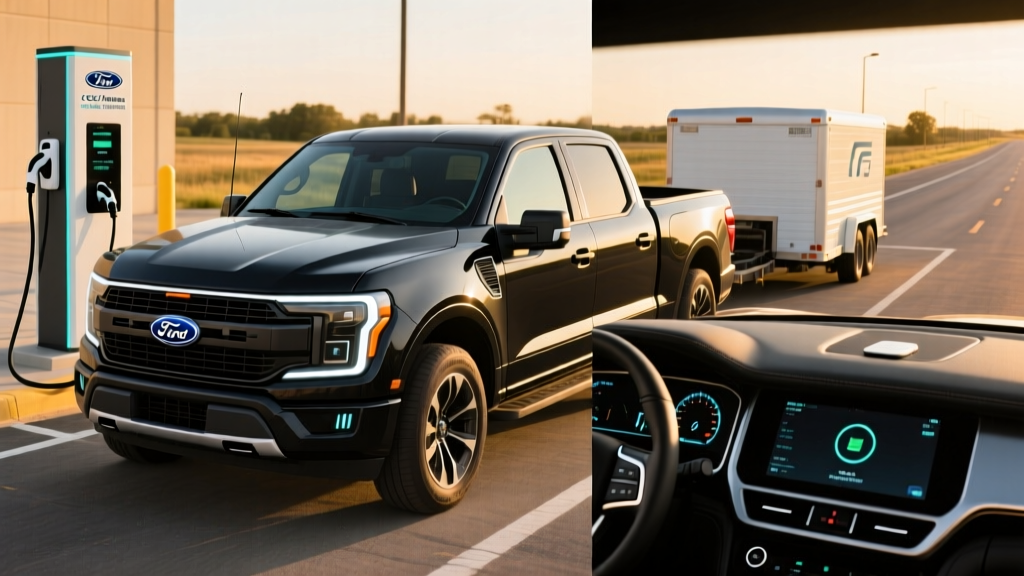
The 2022 Ford F-150 Lightning Pro was the entry point into Ford's electric full-size pickup lineup — a no-frills, fleet-oriented trim that still packed dual-motor all-wheel drive, a 98 kWh usable battery, and a 230-mile EPA range. For contractors, municipal fleets, and budget-conscious buyers who needed a zero-tailpipe-emissions work truck without paying for the Lariat or Platinum's luxury add-ons, the Pro trim delivered the core Lightning hardware at the lowest MSRP. From a 2026 vantage point, the 2022 model year remains relevant on the used-EV market and as a benchmark for how Ford's electric truck strategy has evolved.
This review covers the Standard Range Pro specifically — the most affordable Lightning configuration Ford offered at launch — with exact specs, charging data, real-world range expectations, and total cost of ownership figures that matter to actual buyers and fleet managers.
Range, Battery, and Efficiency: What the EPA Number Doesn't Tell You
Real-World Expectation: Plan for 190–210 miles on highway-heavy trips at 70+ mph. In freezing temperatures (below 32°F / 0°C), expect a 20–30% reduction, dropping effective range to roughly 160–185 miles. City and mixed driving with regenerative braking can match or slightly exceed the EPA sticker.
The 2022 F-150 Lightning Pro Standard Range uses a 98 kWh usable lithium-ion battery pack built with NMC (nickel manganese cobalt) chemistry. This is the smaller of two packs Ford offered — the Extended Range variant bumped capacity to 131 kWh usable and pushed the EPA range to 320 miles, but that pack was not available on the Pro trim in 2022.
The NMC chemistry provides higher energy density than LFP (lithium iron phosphate), which matters in a full-size truck where packaging space for cells is constrained by the frame rails. The trade-off is that NMC degrades slightly faster over time and is more sensitive to sustained high state-of-charge storage. Ford recommends daily charging to 80–90% for routine use and saving 100% charges for road trips — a practice that extends long-term battery health.
| Specification | Value |
|---|---|
| EPA Range (Standard Range) | 230 miles |
| Battery Capacity (Usable) | 98 kWh (NMC) |
| Drivetrain | Dual-motor AWD |
| Horsepower | 563 hp |
| Torque | 775 lb-ft |
| 0–60 mph | ~4.0 seconds |
| Max Towing (w/ Max Tow Pkg) | 7,700 lbs |
| Max Payload | 2,235 lbs |
| Efficiency (Combined) | 68 MPGe / 49 kWh/100 mi |
| Cargo Bed Length | 5.5 ft (Styleside) |
| Frunk Volume | 14.1 cu ft (400 lbs payload) |
| Base MSRP (at launch) | $39,974 |
| Battery Warranty | 8 years / 100,000 miles (70% retention) |
Efficiency lands at 68 MPGe combined (49 kWh per 100 miles) per EPA data on fueleconomy.gov. That translates to roughly 2.0–2.2 miles per kWh in mixed driving. Highway efficiency drops to about 1.7–1.8 mi/kWh at sustained 75 mph speeds, which is where the real-world range falls short of the sticker. The Lightning's 6,500+ lb curb weight and brick-like aerodynamics are the physics working against it — no amount of software optimization fully overcomes that frontal area at highway speed.
Charging Speed: DC Fast Charge and Home Level 2 Breakdown
Charging infrastructure compatibility was one of the Lightning Pro's strongest selling points at launch, and it remains competitive. Here's what the hardware actually delivers:
| Charging Level | Power / Rate | Speed (Miles Added) | Notes |
|---|---|---|---|
| Level 1 (120V / 12A) | ~1.4 kW | ~3 mi/hr | Emergency/trickle only; 77+ hours for full charge |
| Level 2 (240V / 48A) | 11.5 kW | ~23 mi/hr | Ford Mobile Charger included; ~10 hr for 10–100% |
| Level 2 (240V / 80A) | 19.2 kW | ~38 mi/hr | Requires Ford Charge Station Pro (hardwired); ~5 hr 10–100% |
| DC Fast Charge (CCS) | 150 kW peak | ~140 mi in 20 min (15–80%) | 10–80% in ~36 min; tapers sharply above 85% |
DC fast charging on the Standard Range model peaks at 150 kW via the CCS1 connector. In real-world testing at Electrify America and similar 350 kW-capable stations, the Lightning Pro sustains roughly 130–145 kW from 15% to about 55% state of charge, then tapers progressively. The 10–80% charge takes approximately 36 minutes under ideal thermal conditions. If the battery is cold (below ~60°F / 15°C) and you haven't preconditioned via the FordPass app or in-truck navigation routing, expect that time to stretch to 45+ minutes.
Preconditioning — warming the battery pack before a fast-charge session — is critical for the Lightning. Use the FordPass app to set a departure time, or let the built-in navigation system automatically precondition when you route to a DC fast charger. Skipping this step in winter can cut peak charge rate by 30–40%.
For home Level 2 charging, the included Ford Mobile Power Cord delivers 11.5 kW on a 240V / 48A circuit (NEMA 14-50 outlet or hardwired). That's about 23 miles of range per hour of charging — enough to replenish a full day's driving overnight for most users. The optional Ford Charge Station Pro (80A hardwired, $1,300+ for equipment) pushes Level 2 to 19.2 kW, adding roughly 38 miles per hour. Note: the 80A station requires a 100A dedicated circuit, which may necessitate a panel upgrade in older homes — budget $500–$2,000 for electrical work depending on your panel's capacity and distance from the garage.
As of 2025, Ford has adopted the NACS (Tesla Supercharger) connector on new Lightnings, and owners of 2022 CCS-equipped models can access Tesla Superchargers using a Ford-provided NACS adapter. This significantly expanded the Lightning's road-trip charging network.
Performance and Capability: Dual-Motor AWD as Standard
Every 2022 Lightning Pro came with dual-motor all-wheel drive — no rear-wheel-drive base model existed. The twin motors produce 563 horsepower and 775 lb-ft of torque on the Standard Range pack. (The Extended Range bumped output to 580 hp, but again, that wasn't available on the Pro trim.)
The 0–60 mph sprint clocks in at approximately 4.0 seconds — remarkably quick for a 6,500-lb truck and faster than any gas F-150 short of the Raptor. Instant torque delivery makes the Lightning feel even quicker in real-world stoplight-to-stoplight driving, and the low center of gravity (battery pack under the floor) reduces body roll compared to the gas F-150.
Towing is rated at 7,700 lbs with the optional Max Trailer Tow Package (standard on the Pro trim was 5,000 lbs). However, towing at or near max capacity cuts range roughly in half — plan on 100–120 miles between charges when hauling a heavy trailer. The onboard scales feature (available on higher trims, not standard on the Pro) estimates payload weight via suspension sensors, but Pro owners can use the FordPass app for basic range-with-trailer estimates.
Payload capacity is 2,235 lbs in the 5.5-foot bed, and the 14.1 cu ft Mega Power Frunk (front trunk) adds 400 lbs of lockable, weather-sealed cargo space where the engine bay used to be. The frunk includes four 120V outlets and two USB-C ports — a genuine job-site power source.
Interior, Tech, and Driver Assistance
The Pro trim is the fleet-grade interior: cloth seats, manual adjustments, and a functional but plain aesthetic. What it does include is the 12-inch touchscreen running SYNC 4, wireless Apple CarPlay and Android Auto, and a built-in modem with FordPass Connect (4G LTE Wi-Fi hotspot for up to 10 devices).
The Ford Co-Pilot360 2.0 suite is standard and includes:
- Automatic emergency braking with pedestrian detection
- Lane-keeping assist and lane-departure warning
- Blind-spot monitoring with trailer coverage
- Rearview camera with dynamic hitch assist
- Auto high-beam headlamps
Notably absent on the Pro trim (available on Lariat and above): BlueCruise hands-free highway driving, the 15.5-inch vertical touchscreen, leather seats, and the B&O audio system. BlueCruise is Ford's SAE Level 2 driver-assistance system — it can manage steering, acceleration, and braking on pre-mapped divided highways, but the driver must remain attentive and is monitored by an infrared camera. This is not autonomous driving; it is an engaged hands-off-capable assist system.
One standout feature across all Lightning trims: Pro Power Onboard. The Pro trim includes the 2.4 kW version (two 120V bed outlets), which can run power tools, a job-site radio, or tailgate appliances. Higher trims offer up to 9.6 kW with 240V outlet capability — enough to power a small home during an outage for limited periods.
Pricing, Tax Credits, and Total Cost of Ownership
At launch, the 2022 F-150 Lightning Pro carried a base MSRP of $39,974 (including destination charge). By the time production ended and pricing adjusted through 2023–2024, the Pro trim had climbed above $55,000 before Ford discontinued it in favor of the refreshed Lightning lineup. On the used market in 2026, expect to find 2022 Pro models in the $28,000–$38,000 range depending on mileage and condition.
| Item | Amount |
|---|---|
| Original Base MSRP (2022) | $39,974 |
| As-Tested (w/ Max Tow Pkg, floor liners) | ~$42,500 |
| Federal §30D Tax Credit (new purchase, 2022–2023) | Up to $7,500 |
| Used EV Credit (§25E, 2026 rules) | Up to $4,000 (30% of sale price, capped) |
| Estimated 2026 Used Price | $28,000–$38,000 |
Federal tax credit eligibility requires careful attention. When purchased new in 2022–2023, the Lightning Pro could qualify for the full $7,500 §30D credit, subject to the buyer's tax liability. Under current IRS rules, the credit has MSRP caps ($80,000 for trucks/vans), buyer income caps ($300,000 joint / $150,000 single for new vehicles), and battery critical-mineral and component sourcing requirements that have tightened significantly since 2023. Always verify current eligibility at IRS.gov's clean vehicle credit page or consult a tax professional before relying on credit amounts in your purchase decision.
For used buyers in 2026, the §25E used clean vehicle credit offers up to $4,000 (30% of the sale price, capped at $4,000) on vehicles priced under $25,000 with income caps of $150,000 joint / $75,000 single. A 2022 Lightning Pro purchased for $24,000 could yield a $4,000 credit — making it one of the most affordable full-size electric trucks on the market.
Total cost of ownership favors the Lightning Pro over a gas F-150 in many scenarios. At national-average electricity prices of ~$0.16/kWh and gas at ~$3.40/gallon, the Lightning costs roughly $0.08–$0.10 per mile to fuel (home charging) versus $0.17–$0.20 per mile for a gas F-150 at 18 MPG combined. Over 15,000 miles annually, that's $1,200–$1,500 in fuel for the Lightning versus $2,550–$3,000 for gas — a savings of $1,300+ per year. Maintenance savings (no oil changes, fewer brake replacements due to regen) add another $400–$600 annually.
Pros, Cons, and Who Should Buy
Pros
- Lowest entry price in the Lightning lineup (especially on used market)
- Dual-motor AWD standard — no RWD penalty
- Quick 0–60 (~4.0 sec) with 775 lb-ft instant torque
- Pro Power Onboard (2.4 kW) standard for job-site utility
- 14.1 cu ft frunk with 120V outlets
- Competitive DC fast charging at 150 kW peak
- 8-year / 100,000-mile battery warranty
- Ford dealer network for service and warranty claims
Cons
- 230-mile EPA range is tight for road trips or heavy towing
- No BlueCruise or upgraded tech on Pro trim
- Cloth interior and basic 12-inch screen feel dated vs. competitors
- Towing at max capacity cuts range to ~100–120 miles
- Cold-weather range loss of 20–30% without preconditioning
- 5.5-foot bed is shorter than many gas F-150 configurations
- Extended Range pack was unavailable on the Pro trim
- Insurance premiums 15–25% higher than gas F-150 equivalents
Who this EV suits best: The 2022 Lightning Pro is ideal for fleet operators, contractors, and commuters who drive under 150 miles daily, have reliable home or depot Level 2 charging, and want full-size truck capability with lower per-mile operating costs. It's a purpose-built work truck, not a luxury cruiser — buyers who want premium interiors or 300+ mile range should look at the Lariat Extended Range or consider the Chevrolet Silverado EV or Rivian R1T as alternatives.
Warranty and Long-Term Battery Outlook
Ford backs the Lightning's high-voltage battery with an 8-year / 100,000-mile warranty guaranteeing at least 70% capacity retention. The powertrain (motors, inverters, reduction gear) carries the same coverage. This is competitive with the industry standard and aligns with EPA/DOE battery longevity research.
Real-world degradation data on the Lightning is still accumulating, but early fleet reports and owner forums suggest roughly 3–5% capacity loss in the first 30,000 miles, with the curve flattening significantly afterward. NMC chemistry typically retains 85–90% capacity at 100,000 miles under normal use patterns (avoiding frequent 100% charges and DC fast-charge-only routines). A full battery replacement, if ever needed out of warranty, is estimated at $15,000–$22,000 based on current Ford parts pricing — though module-level repairs may be possible at lower cost.
Frequently Asked Questions
What is the real-world range of the 2022 F-150 Lightning Pro?
The EPA rates it at 230 miles, but real-world highway driving at 70+ mph typically yields 190–210 miles. In freezing weather, expect 160–185 miles. City driving with regenerative braking can match or slightly exceed the EPA number.
How fast does the Lightning Pro charge?
DC fast charging peaks at 150 kW, achieving 10–80% in roughly 36 minutes under ideal conditions. Home Level 2 at 48A (11.5 kW) adds about 23 miles per hour; the optional 80A Charge Station Pro adds ~38 miles per hour.
Does the 2022 Lightning Pro qualify for the federal EV tax credit?
When purchased new, it was eligible for up to $7,500 under §30D, subject to income limits and tax liability. In 2026, used buyers may qualify for the §25E credit of up to $4,000 if the sale price is under $25,000 and income caps are met. Verify current rules at IRS.gov.
Is the Lightning Pro worth buying versus competitors?
For buyers prioritizing value, dealer service access, and work-truck utility, the Lightning Pro remains competitive on the used market. The Rivian R1T offers more range and tech but at a higher price. The Chevrolet Silverado EV provides longer range in some trims. If 230 miles covers your daily needs and you charge at home, the Pro is a strong value proposition.
What are the biggest drawbacks?
The 230-mile range is the primary limitation — road trips require planning, and towing heavy trailers cuts range roughly in half. The Pro trim also lacks BlueCruise and premium interior features. Cold-weather range loss is significant without battery preconditioning.
Can the Lightning Pro power my home during an outage?
The Pro trim includes 2.4 kW Pro Power Onboard (120V bed outlets only), which can run essential devices but cannot back-feed a home panel. The 9.6 kW system with 240V outlet and Ford Intelligent Backup Power (home integration) was available only on higher trims with the Extended Range battery.