The Bottom Line on the 2022 Ford F-150 Lightning
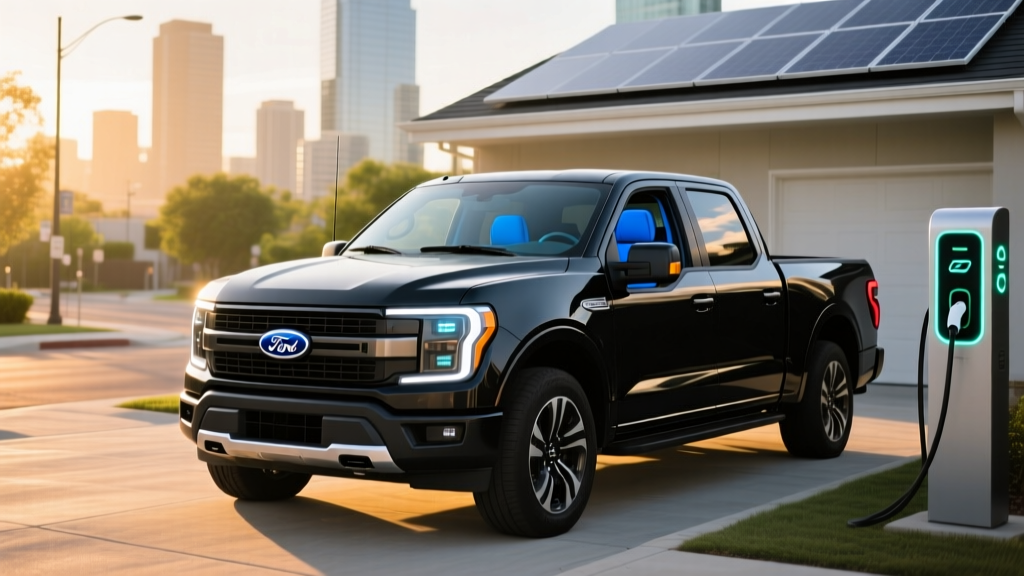
The 2022 Ford F-150 Lightning delivers 230–320 miles of EPA range depending on battery pack, peaks at 150 kW DC fast charging (10–80% in roughly 41 minutes on the extended-range pack), and costs $0.04–$0.06 per mile to fuel at home versus $0.18–$0.22 for a comparable gas F-150. As a used purchase in 2026, expect to pay $32,000–$52,000 depending on trim and mileage. The federal used-EV credit (§25E) may knock $4,000 off the price at point of sale if you meet income and vehicle-price caps. It remains one of the most practical electric trucks for buyers who need towing, bed utility, and daily-driver comfort — but cold-weather range loss and highway-speed efficiency drops are real factors you must plan around.
Range and Efficiency: EPA Numbers vs Real-World Driving
The 2022 Lightning launched with two battery options. The Standard Range pack (98 kWh usable, NMC chemistry) powers the Pro and XLT trims to an EPA-estimated 230 miles. The Extended Range pack (131 kWh usable, also NMC) bumps the XLT, Lariat, and Platinum trims to 300–320 miles, depending on wheel size and drivetrain config. Ford quotes these on fueleconomy.gov, and they hold up reasonably well in mixed suburban driving at moderate temperatures.
Real-World Range Reality Check
EPA Sticker: 230 mi (Standard Range) / 300–320 mi (Extended Range)
Highway (70–75 mph, 75°F): Expect ~190 mi / ~260 mi — aerodynamic drag hammers full-size trucks at speed
Cold Weather (20°F, highway): Expect ~155 mi / ~210 mi — a 30–35% reduction is typical for NMC packs without aggressive preconditioning
Towing (5,000-lb trailer, flat terrain): Expect ~120 mi / ~170 mi — towing cuts range roughly in half regardless of powertrain
The Lightning's efficiency sits at 66–70 MPGe combined for Extended Range models and roughly 68 MPGe for Standard Range, translating to about 47–50 kWh per 100 miles. That is thirsty by EV sedan standards but competitive for a 6,500-lb truck. The heat pump on Extended Range trims helps preserve cabin comfort in winter without gutting range as badly as resistive heating, though you will still see meaningful winter degradation.
Charging Speed and Infrastructure
The 2022 Lightning uses the CCS1 connector for DC fast charging. Peak charge rate tops out at 150 kW on Extended Range models and 120 kW on Standard Range. Ford's published 10–80% time is approximately 41 minutes for the Extended Range pack and 36 minutes for the Standard Range pack — but those times assume a functioning 150+ kW station and a preconditioned battery.
| Level | Power (kW) | Connector | Miles Added per Hour | Typical Use Case |
|---|---|---|---|---|
| Level 1 (120V) | ~1.4 kW | J1772 adapter | ~3 mi/hr | Emergency top-off only |
| Level 2 (240V, 32A) | 7.7 kW | J1772 | ~20 mi/hr | Standard home charging |
| Level 2 (240V, 48A) | 11.5 kW | J1772 | ~30 mi/hr | Upgraded home charger |
| Level 2 (240V, 80A dual) | 19.2 kW | J1772 (dual charger) | ~50 mi/hr | Full overnight replenishment of Extended Range pack |
| DC Fast Charge | 120–150 kW peak | CCS1 | ~150–200 mi in 30 min | Road trips, highway corridors |
The charge curve tapers significantly above 80% state of charge. You will see peak 150 kW only between roughly 15–45% SoC on the Extended Range pack; from 80–100%, the rate drops below 30 kW. Plan road-trip stops around the 10–80% window to avoid wasting time at the top end.
Ford's BlueOval Charge Network aggregates access to Electrify America, EVgo, and other providers. As of 2026, Ford EVs also have access to Tesla Superchargers via a NACS adapter (included with newer models, available as a retrofit accessory for 2022 Lightnings). This roughly doubles available DC fast-charger locations on common road-trip corridors.
2022 Lightning vs Gas F-150: Cost of Ownership
The purchase decision comes down to your driving volume, electricity access, and how long you plan to keep the truck. Here is a five-year cost comparison based on 15,000 miles per year:
| Category | F-150 Lightning (Extended Range, Lariat) | F-150 Gas (Lariat, 3.5L EcoBoost 4WD) |
|---|---|---|
| Used Purchase Price (2026 avg) | $44,000 | $38,000 |
| Federal Used EV Credit (§25E) | –$4,000 (if eligible) | $0 |
| Effective Purchase Price | $40,000 | $38,000 |
| Fuel/Energy (5 yrs, 75k mi) | $5,250 (home charging, $0.14/kWh) | $13,500 ($3.60/gal, 18 MPG combined) |
| Maintenance (5 yrs) | $1,800 (tires, cabin filter, brake fluid) | $4,500 (oil, filters, plugs, brakes) |
| Insurance (5 yrs, avg) | $9,500 | $7,500 |
| Estimated Depreciation | $14,000 | $12,000 |
| Total 5-Year Cost | $70,550 | $75,500 |
The Lightning saves roughly $4,950 over five years in this scenario, driven almost entirely by fuel and maintenance savings. Those savings widen if you have rooftop solar or access to cheaper overnight electricity rates (some utilities offer $0.08–$0.10/kWh off-peak). They narrow or disappear if you rely exclusively on public DC fast charging at $0.35–$0.50/kWh.
Insurance costs are the Lightning's hidden tax. EVs carry higher premiums due to repair complexity, battery replacement cost, and specialized labor. Expect 20–30% higher annual premiums versus a comparable gas F-150. Always get quotes before purchasing.
What First-Time EV Truck Buyers Must Know
If you are transitioning from a gas truck, the Lightning will surprise you with its instant torque (775 lb-ft on Extended Range models), quiet highway cruising, and one-pedal driving around town. But it also introduces logistical considerations that gas trucks do not have.
Should You Buy a Used 2022 F-150 Lightning?
Buy the Lightning if:
- You have Level 2 home charging (240V, 40A+ circuit) or can install one for $800–$2,000
- Your daily driving is under 150 miles round-trip with occasional longer road trips
- You tow under 7,700 lbs (Extended Range max) and plan routes with charging stops
- You value jobsite power (Pro Power Onboard delivers 2.4–9.6 kW from the bed and cabin outlets)
- You want lower per-mile fueling costs and reduced maintenance
Stick with gas or hybrid if:
- You cannot install home charging and public infrastructure is sparse in your area
- You regularly tow over 8,000 lbs or drive 300+ miles daily in rural areas
- You operate in sustained sub-zero climates where range loss compounds with towing demands
- You need maximum resale liquidity in a market still adjusting to used EV valuation
Home charging is the linchpin. The Lightning's 131 kWh Extended Range battery takes roughly 11 hours on an 11.5 kW Level 2 charger from empty — perfectly suited to overnight replenishment. Without home charging, you will spend 2–3 hours per week at public stations, and your per-mile energy cost doubles or triples.
Performance, Payload, and Towing Specs
| Spec | Standard Range | Extended Range |
|---|---|---|
| Battery (usable) | 98 kWh, NMC | 131 kWh, NMC |
| EPA Range | 230 mi | 300–320 mi |
| Horsepower | 563 hp | 580 hp |
| Torque | 775 lb-ft | 775 lb-ft |
| 0–60 mph | ~4.2 sec | ~3.8 sec |
| Max Towing | 7,700 lbs | 10,000 lbs (w/ Max Tow Pkg) |
| Max Payload | 2,235 lbs | 1,952 lbs |
| DC Fast Charge Peak | 120 kW | 150 kW |
| 10–80% DCFC Time | ~36 min | ~41 min |
| Level 2 Onboard Charger | 11.5 kW (single) | 19.2 kW (dual, 80A capable) |
| Battery Warranty | 8 yr / 100,000 mi (≥70% capacity retention) | |
| Used Price Range (2026) | $32,000–$42,000 | $40,000–$52,000 |
For context, the gas F-150 with the 3.5L EcoBoost V6 produces 400 hp and 500 lb-ft of torque, runs 0–60 in about 5.8 seconds, and tows up to 14,000 lbs with the right package. The Lightning sacrifices maximum towing capacity but delivers dramatically stronger acceleration and near-silent operation. Payload is comparable for most real-world bed loads.
Tax Credits and Incentives for Used Lightnings in 2026
Because the 2022 Lightning is now a used vehicle, the relevant federal incentive is the §25E Used Clean Vehicle Credit, not the §30D new-vehicle credit. Key rules:
- Credit Amount: 30% of the sale price, capped at $4,000
- Vehicle Price Cap: Sale price must not exceed $25,000 (this is a hard limit — many well-equipped Lightnings exceed this)
- Buyer Income Cap: AGI must not exceed $75,000 (single), $112,500 (head of household), or $150,000 (joint)
- Vehicle Requirements: Must be a qualified clean vehicle (battery ≥7 kWh), purchased from a licensed dealer, model year at least 2 years older than the current calendar year (2022 qualifies in 2026)
- Point-of-Sale: You can transfer the credit to the dealer for an immediate price reduction
- Frequency Limit: One used-EV credit per buyer every 3 years
The $25,000 vehicle price cap is the dealbreaker for most Lightning shoppers. A well-equipped Lariat Extended Range typically sells for $40,000–$48,000 on the used market in 2026, well above the cap. You may find high-mileage Pro Standard Range models near or below $25,000, but inventory is thin. Always verify eligibility on the IRS site and consult a tax professional before relying on the credit.
State incentives vary widely. Some states offer additional used-EV rebates or HOV-lane access; others offer nothing. Check your state's energy office for current programs.
Common Misconceptions About the Lightning
| Myth | Fact |
|---|---|
| "It can't tow anything useful." | Extended Range models with Max Tow Package rate at 10,000 lbs — sufficient for most boat, horse, and equipment trailers. Range drops significantly while towing, but the capability is real. |
| "The battery will need expensive replacement soon." | Ford warranties the pack for 8 years/100,000 miles at ≥70% capacity. Real-world degradation data from 2022 models shows roughly 5–8% loss at 40,000–50,000 miles. Out-of-warranty replacement is estimated at $18,000–$25,000, but most packs outlast the vehicle's useful life. |
| "You can't take it on road trips." | With CCS and NACS (adapter) access, the Lightning can use Electrify America, EVgo, and Tesla Supercharger networks. Plan 30–40 minute stops every 180–220 highway miles and road trips are entirely feasible. |
| "It's just a compliance truck with no real capability." | The Lightning posted a 0–60 time of 3.8 seconds (Extended Range), carries 1,952 lbs of payload, and powers a full jobsite with Pro Power Onboard. It is one of the most capable trucks Ford has ever built. |
| "Home charging requires a full panel upgrade." | Many homes with 200A service can support a 48A Level 2 charger on a 60A circuit without a panel upgrade. A licensed electrician should evaluate your specific panel, but the $800–$2,000 typical install cost covers most straightforward setups. |
Frequently Asked Questions
What is the real-world range of a 2022 F-150 Lightning on the highway?
At 70–75 mph in moderate temperatures, expect approximately 190 miles from the Standard Range pack and 260 miles from the Extended Range pack. Cold weather (below 30°F) reduces those figures by 25–35%. The EPA stickers of 230 and 320 miles reflect mixed city/highway driving at moderate speeds.
How much does it cost to install a Level 2 charger at home for the Lightning?
A typical Level 2 installation (48A charger on a 60A dedicated circuit) costs $800–$2,000 including equipment, electrician labor, and permits. If your home has older 100A electrical service and you want an 80A charger for the 19.2 kW dual-charger option, a panel upgrade to 200A can add $2,000–$4,000.
Is the 2022 Lightning eligible for the $7,500 federal tax credit?
No. The §30D new-vehicle credit applies only to new purchases. As a used vehicle in 2026, the Lightning qualifies for the §25E used-EV credit, which is capped at $4,000 and requires the sale price to be $25,000 or less — a threshold most Lightnings exceed.
How does the Lightning compare to the Rivian R1T?
The Rivian R1T offers more off-road capability, a quad-motor option with up to 1,025 hp, and 270–410 miles of EPA range depending on pack. But it costs significantly more on the used market ($55,000–$75,000+), lacks the Lightning's Pro Power Onboard jobsite utility, and has a smaller service network. The Lightning is the workhorse; the R1T is the adventure rig.
Does the F-150 Lightning qualify for HOV lane access?
This varies by state. California's Clean Air Vehicle decal program has capped and expired for new applicants; other states like Colorado and Virginia have offered HOV access for EVs. Check your state's DMV for current rules, as these programs change annually.
What happens if the battery degrades below 70% capacity?
If the battery falls below 70% of original capacity within 8 years or 100,000 miles, Ford's warranty covers repair or replacement. Beyond the warranty window, out-of-pocket replacement is estimated at $18,000–$25,000, though industry data suggests most NMC packs retain 80–85% capacity at 150,000 miles with proper care (avoiding repeated 100% charges and extreme-heat DC fast charging).