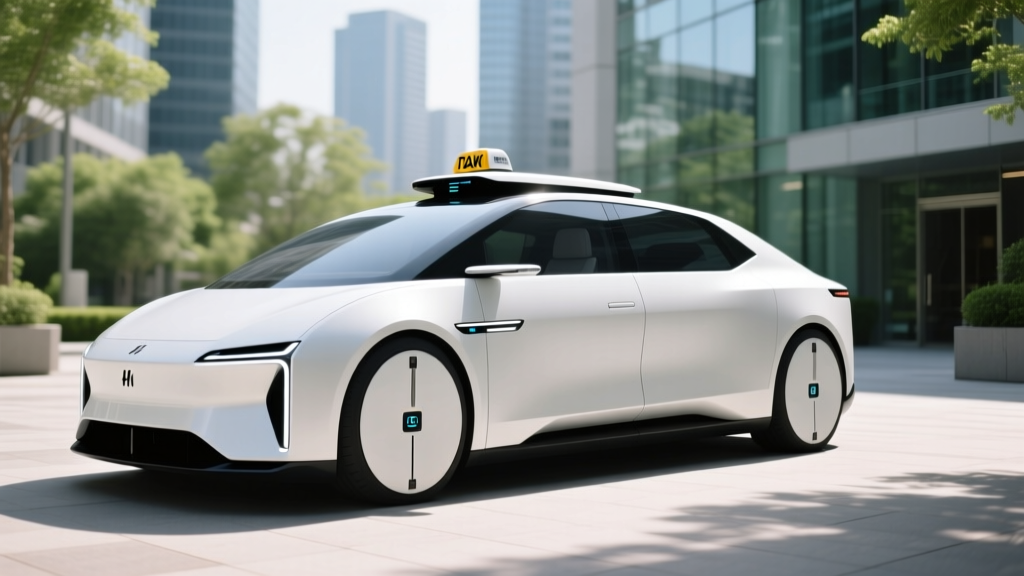
The 2022 Cruise Origin is not a car you can buy. It is a purpose-built, Level 4 autonomous vehicle (AV) designed exclusively for ride-hail fleets — and its specifications read like nothing else on the road. If you've been searching for 2022 Cruise Origin AV dimensions, battery specs, or charging details, you've likely noticed how little hard data exists outside of GM and Cruise press releases. This profile consolidates every confirmed figure, explains what they mean for real-world fleet operations, and clarifies why this vehicle matters for the future of autonomous mobility — even if you'll never own one.
The Cruise Origin operates at SAE Level 4 — meaning it can perform all driving tasks without human intervention within its defined operational design domain (mapped urban areas under specific conditions). There is no steering wheel, no pedals, and no option for human driving. This is fundamentally different from Level 2 driver-assist systems like GM Super Cruise or Tesla Autopilot, which require continuous driver supervision.
2022 Cruise Origin AV Dimensions and Exterior Footprint
The Origin's dimensions are dictated by its mission: maximize interior passenger volume while maintaining a compact urban footprint suitable for dense city streets. Cruise and GM have been deliberate about releasing only select measurements, but here is what has been confirmed or reliably estimated from prototype sightings and regulatory filings.
| Attribute | Value |
|---|---|
| Vehicle Class | Level 4 Autonomous Shuttle / Robotaxi |
| Length (estimated) | ~175–180 inches |
| Width (estimated) | ~75–78 inches |
| Height (estimated) | ~68–72 inches |
| Wheelbase | Extended (BEV3 skateboard platform) |
| Curb Weight (estimated) | ~4,500–5,500 lbs (sensor suite adds mass) |
| Seating Capacity | 6 passengers (bench-style, facing each other) |
| Doors | Power-sliding, dual-side, extra-wide opening |
| Platform | GM BEV3 (Ultium-based dedicated EV skateboard) |
| Steering Wheel / Pedals | None |
The box-on-wheels proportions are intentional. By eliminating the engine bay, dashboard, steering column, and front-row seat structure, Cruise reallocates nearly the entire vehicle length to passenger space. The result is an interior volume comparable to a full-size minivan packed into a footprint closer to a midsize crossover. The extra-wide sliding doors are designed for ADA accessibility and easy entry in tight urban curbside stops — a critical operational requirement for fleet deployment.
Battery, Range, and Efficiency: What We Know
The Cruise Origin rides on GM's BEV3 platform, which is part of the broader Ultium battery architecture. However, Cruise has not published a specific battery capacity (kWh) or EPA range figure for the Origin — and it likely never will in the traditional sense. Here's why, and what we can reasonably infer.
The Origin is not EPA-rated because it is not a consumer vehicle. Based on the BEV3 platform and comparable GM Ultium vehicles, industry analysts estimate a battery capacity in the 80–110 kWh range (NMC chemistry), yielding an estimated operational range of ~150–200 miles per charge under urban stop-and-go conditions. For a robotaxi that returns to a depot for opportunity charging, this is sufficient for a full shift.
The Ultium platform supports NMC (nickel manganese cobalt) pouch cells manufactured by the LG Energy Solution–GM joint venture, Ultium Cells. These cells offer high energy density suited to the Origin's heavy sensor payload — the vehicle carries a roof-mounted array of LiDAR units, cameras, and radar modules that add several hundred pounds and continuous electrical draw.
Efficiency in the traditional MPGe sense is less relevant here. The Origin's energy consumption is dominated not just by propulsion but by its compute stack — multiple redundant computers processing sensor data in real time consume several kilowatts continuously. Fleet operators optimize around cost-per-mile rather than kWh-per-mile, and the Origin's depot-charging model means range is a scheduling variable, not a consumer anxiety point.
Charging Specs: Fleet Depot DC Fast Charging
The Origin is designed for controlled depot charging, not public charging networks. It will not pull up to an Electrify America or Tesla Supercharger stall. Here's how its charging profile works:
| Charge Level | Power (kW) | Use Case |
|---|---|---|
| DC Fast Charge (CCS) | ~150–200 kW (estimated peak) | Depot charging between shifts; 10–80% in ~30–40 min |
| Level 2 (240V) | ~11.5–19.2 kW | Overnight depot top-off |
| Level 1 (120V) | N/A | Not applicable for fleet operations |
The BEV3 platform natively supports up to 200 kW DC fast charging via CCS1 connector. In fleet operations, the Origin is expected to charge at depot stations during shift changes and overnight. Cruise's parent company GM has invested heavily in Ultium Charge 360, its commercial charging ecosystem, which includes depot-scale installations for fleet vehicles. The charge curve on Ultium batteries is relatively flat through 80% SoC before tapering — advantageous for fleet scheduling where predictable charge times matter more than peak speed.
Autonomous Driving System: The Sensor and Compute Stack
The Origin's defining feature is not its battery or dimensions — it's the fifth-generation Cruise autonomous driving system. This is what separates it from every consumer EV on the market.
The Cruise Origin has no steering wheel, pedals, or mirrors. It cannot be driven manually under any circumstances. If the autonomous system encounters a scenario it cannot handle, the vehicle will execute a controlled stop and request remote assistance from Cruise's operations center. Passengers have no ability to take control.
The sensor suite includes:
- LiDAR: Multiple roof-mounted spinning and solid-state units providing 360° 3D point-cloud mapping out to ~200+ meters
- Cameras: Dozens of high-resolution cameras covering overlapping fields of view for redundancy
- Radar: Long- and short-range radar units for velocity detection and adverse-weather operation
- Ultrasonic sensors: Close-range object detection for low-speed maneuvers and docking
The compute stack runs Cruise's proprietary AI driving software, which was trained on millions of miles of real-world driving data collected by Cruise's earlier fleet of Chevrolet Bolt-based test vehicles in San Francisco, Phoenix, and Austin. The system handles unprotected left turns, construction zones, emergency vehicle detection, and pedestrian prediction — all without human input.
However, the Origin's operational design domain (ODD) is limited to mapped urban environments under specific weather and road conditions. Heavy snow, unmapped construction, or extreme weather may require the vehicle to pull over and await remote guidance or trip cancellation.
Interior and Passenger Experience
Step through the Origin's wide sliding doors and you enter a space that looks more like a lounge than a car. Six passengers sit on two facing bench seats — no forward-facing rows, no driver's seat. The interior design prioritizes:
- Accessibility: Flat floor, no step-up, wide door openings compliant with ADA standards
- Symmetry: The vehicle is bilaterally symmetrical — the front and rear are visually identical, since there is no "driver's end"
- Climate and lighting: Individual HVAC zones and ambient lighting controlled via an in-vehicle screen
- Ride status display: A central screen shows the planned route, current location, and ETA — building passenger trust in the autonomous system
Cargo space is limited. There is no traditional trunk. A small rear cargo area behind one of the bench seats accommodates groceries or a couple of carry-on bags, but the Origin is optimized for people, not hauling. Think of it as closer to a transit shuttle than an SUV.
Production, Pricing, and Availability
The Cruise Origin is manufactured at GM's Factory ZERO (Detroit-Hamtramck Assembly) in Michigan. It is not available for consumer purchase — Cruise retains ownership of all Origin vehicles and operates them as part of its ride-hail fleet.
| Attribute | Detail |
|---|---|
| Consumer MSRP | Not available for purchase |
| Estimated Per-Unit Build Cost | ~$100,000+ (industry estimate, including sensor suite) |
| Federal Tax Credit (§30D) | Not applicable — not a consumer vehicle |
| Ride Cost to Passenger | Comparable to Uber/Lyft pricing; Cruise has offered promotional rates |
| Production Facility | GM Factory ZERO, Detroit-Hamtramck, MI |
| Fleet Operator | Cruise LLC (majority-owned by General Motors) |
For context on Cruise's operational history: Cruise launched its commercial driverless ride-hail service in San Francisco in 2022 using modified Chevrolet Bolts, with the Origin intended as the next-generation replacement vehicle. However, following a serious incident in October 2023 in San Francisco, Cruise's California DMV permit was suspended and the company significantly scaled back operations nationwide. As of 2026, Cruise has been gradually resuming limited testing operations with safety drivers in select cities, and the Origin's deployment timeline has been extended. GM continues to invest in the program, but the path to large-scale Origin fleet deployment remains uncertain.
How the Origin Compares to Other Robotaxis
The Cruise Origin competes in the Level 4 robotaxi space alongside vehicles from Waymo and Zoox. Here's how the landscape compares:
| Vehicle | Platform | Seats | Status (2026) | Key Markets |
|---|---|---|---|---|
| Cruise Origin | GM BEV3 / Ultium | 6 | Limited testing / pre-commercial | TBD |
| Waymo (Jaguar I-PACE) | Jaguar I-PACE EV | 3–4 | Commercial operations active | Phoenix, SF, LA, Austin |
| Zoox | Purpose-built (Amazon) | 4 | Limited commercial (Vegas, SF) | Las Vegas, San Francisco |
Waymo, operating Alphabet's autonomous driving division, has the clear lead in commercial deployment with thousands of daily paid rides across multiple cities using modified Jaguar I-PACE vehicles. Zoox's purpose-built carriage-style vehicle is closest in concept to the Origin but smaller (4-passenger). Cruise's advantage with the Origin was always intended to be manufacturing scale — GM's Factory ZERO can produce vehicles at volumes no startup can match — but regulatory and safety setbacks have delayed that advantage from materializing.
Frequently Asked Questions
Can I buy a 2022 Cruise Origin?
No. The Cruise Origin is not available for consumer purchase at any price. It is built exclusively for Cruise's autonomous ride-hail fleet. GM and Cruise have no announced plans to sell the vehicle to individuals or third-party fleet operators.
What is the real-world range of the Cruise Origin?
Cruise has not published an official range figure. Based on the BEV3/Ultium platform and the vehicle's estimated weight and sensor power draw, industry estimates place usable range at approximately 150–200 miles under urban driving conditions. In fleet operations, the Origin charges at depots between shifts, so single-charge range is managed through scheduling rather than being a user-facing concern.
How fast does the Cruise Origin charge?
The BEV3 platform supports DC fast charging at an estimated peak of 150–200 kW via CCS1 connector. In a depot environment, a 10–80% charge would take approximately 30–40 minutes. Overnight Level 2 charging at 11.5–19.2 kW handles full battery replenishment between daily shifts.
Is the Cruise Origin self-driving?
Yes — in the truest sense. The Origin operates at SAE Level 4, meaning it handles all driving tasks without any human input within its operational design domain (mapped urban streets under approved conditions). There is no steering wheel, no pedals, and no option for a passenger to take control. This is categorically different from Level 2 systems like GM Super Cruise or Tesla FSD (Supervised), which require an attentive driver at all times.
Does the Cruise Origin qualify for the federal EV tax credit?
No. The IRS §30D clean vehicle credit applies only to new qualified plug-in electric vehicles purchased by individual taxpayers for personal use. Since the Origin is not sold to consumers, it is ineligible. For consumer EVs that do qualify, the credit is up to $7,500 but is subject to MSRP caps ($55,000 for sedans, $80,000 for SUVs/trucks/vans), buyer income limits ($150K single / $300K joint AGI), and strict battery component and critical mineral sourcing requirements. Always consult a tax professional and check current IRS guidance before making a purchase decision based on credit eligibility.
What are the biggest pros and cons of the Cruise Origin?
- True Level 4 autonomy — no driver needed
- Spacious 6-passenger interior in a compact footprint
- ADA-accessible design with flat floor and wide doors
- Built on proven GM Ultium/BEV3 platform
- Purpose-built for ride-hail (not a retrofitted consumer car)
- Not available for purchase — fleet-only
- Deployment timeline uncertain after 2023 safety incidents
- Limited to mapped urban ODD — no highway or rural use
- No manual override if system fails
- Limited cargo capacity
- Heavy sensor suite reduces efficiency
How does the Cruise Origin's safety record compare to human drivers?
Cruise published safety data from its San Francisco operations showing its driverless vehicles were involved in fewer police-reported collisions per million miles than human benchmarks in the same environment. However, the October 2023 incident — in which a pedestrian was struck by a human-driven vehicle and then run over by a Cruise robotaxi that failed to properly detect the grounded person — raised serious questions about edge-case handling. The National Highway Traffic Safety Administration (NHTSA) and California DMV both took action, and Cruise voluntarily suspended nationwide operations. As of 2026, Cruise is rebuilding trust through phased re-entry with safety drivers before returning to fully driverless operations.
Who the Cruise Origin Serves
The Cruise Origin is not designed for a buyer — it's designed for a rider. Its target user is anyone in a Cruise-operated city who needs a point-A-to-point-B ride without a human driver. The vehicle's 6-passenger capacity, ADA accessibility, and compact footprint make it suited for:
- Urban commuters replacing Uber/Lyft/taxi rides
- Airport travelers needing reliable, fixed-route shuttle service
- Mobility-impaired riders who benefit from step-free entry and no driver interaction
- Cost-conscious riders — Cruise has historically priced rides below human-driven competitors to gain market share
If you're a consumer shopping for an EV to own, the Origin is not for you. But if you're tracking the trajectory of autonomous transportation, the Origin represents GM's most ambitious bet that the future of urban mobility is shared, electric, and driverless — even if that future has been delayed by hard-learned safety lessons.