The 2022 Cruise AV — often referenced in search queries as the "Cruise Cruise AV Cruz Ave" vehicle due to its frequent sightings along San Francisco's Cruz Avenue corridors and the brand's naming overlap — is not a car you can buy. It is a purpose-built, Level 4 autonomous robotaxi operated exclusively by Cruise LLC (majority-owned by General Motors). This review profiles the 2022 model-year Origin-class platform: its battery specs, charging behavior, real-world range, sensor suite, and what its operational history tells us about the robotaxi sector heading into 2026.
What the 2022 Cruise AV Actually Is (And Isn't)
The 2022 Cruise AV is a modified Chevrolet Bolt EV chassis retrofitted with Cruise's fifth-generation autonomous driving hardware. It was never sold to consumers. Instead, Cruise deployed these vehicles in its ride-hail robotaxi service across San Francisco, Phoenix, and Austin. The vehicle has no steering wheel, no pedals in its later Origin iterations, and no driver — it operates at SAE Level 4 within geofenced urban zones.
Spec Table: 2022 Cruise AV Platform (Bolt-Based Generation)
| Spec | Value |
|---|---|
| Base Platform | Chevrolet Bolt EV (2022 MY) |
| EPA Range (stock Bolt) | 259 miles |
| Real-World Robotaxi Range | ~150-180 miles (sensor/compute load + urban stop-start) |
| Battery Capacity | 65 kWh usable (NMC lithium-ion) |
| Max DC Fast Charge | 55 kW (CCS1 connector) |
| 10-80% DC Charge Time | ~60 minutes |
| Level 2 Home/Depot Charge | 11.5 kW (~39 miles/hr) |
| Motor Output | 200 hp / 266 lb-ft (front-wheel drive) |
| 0-60 mph | ~6.5 sec (stock); heavier with AV hardware |
| Efficiency (EPA) | 120 MPGe combined / 28 kWh/100mi (stock) |
| Sensor Suite | 5 LiDAR, 16 cameras, 21 radars (Gen 5) |
| Consumer Availability | Not for sale — ride-hail only |
Real-World Range: What 259 EPA Miles Means in Robotaxi Duty
Real-World Robotaxi Estimate: 150-180 miles per charge cycle
Why the gap? The Cruise AV carries ~500+ lbs of sensor and compute hardware, runs high-draw LiDAR and GPU arrays continuously, and operates in stop-start urban traffic with aggressive acceleration/deceleration profiles. Cruise typically dispatches vehicles on ~120-mile service loops before returning to depot for charging.
For context, the stock 2022 Chevrolet Bolt EV achieves its 259-mile EPA rating under mixed driving conditions. In real-world highway testing at 70 mph, the Bolt typically delivers 220-235 miles. Cold-weather operation (below 40°F) further reduces this by 15-25%, which is why Cruise historically limited its San Francisco and Chicago operations during winter months or adjusted dispatch ranges accordingly.
The energy overhead of the autonomous stack — the LiDAR units, camera processing, and redundant compute modules — draws an estimated 1.5-2.5 kW continuously. Over a 10-hour service shift, that's 15-25 kWh consumed by sensors alone, equivalent to 50-70 miles of driving range sacrificed to computation.
Charging: 55 kW Peak Is Slow by 2026 Standards
| Charging Level | Power (kW) | Rate | Notes |
|---|---|---|---|
| Level 1 (120V) | ~1.4 kW | ~4 mi/hr | Not used in fleet ops |
| Level 2 (240V depot) | 11.5 kW | ~39 mi/hr | Primary overnight depot charging |
| DC Fast (CCS1) | 55 kW peak | 10-80% in ~60 min | Mid-shift top-up; charge curve tapers sharply above 80% |
The 2022 Cruise AV inherits the Bolt EV's charging architecture, which was widely criticized even at launch for its 55 kW DC fast-charge ceiling. By 2026 standards — where vehicles like the Hyundai Ioniq 5 peak at 240 kW and the Tesla Model Y at 250 kW — this is painfully slow for public charging. However, for Cruise's fleet operation, it mattered less: vehicles returned to dedicated depots with Level 2 chargers overnight, and mid-shift DC top-ups were planned around the 60-minute window during driver (passenger) demand lulls.
The Bolt's NMC battery exhibits a typical charge curve: it sustains near-peak 50-55 kW from 10-50% State of Charge (SoC), then tapers to ~38 kW through 65%, and drops to under 20 kW above 80%. Cruise's fleet management software typically capped charges at 80% to preserve battery longevity and avoid the slow taper region entirely — a practice that extends cycle life significantly for high-utilization fleet vehicles.
Sensor Suite and Autonomous Driving Hardware (Gen 5)
The 2022 Cruise AV ran Cruise's fifth-generation autonomous driving system, a substantial upgrade from the Gen 4 used in 2020-2021 test vehicles:
- 5 LiDAR units: Roof-mounted and fender-positioned for 360° coverage with overlapping fields of view, providing redundancy for object detection out to ~200 meters.
- 16 cameras: High-resolution units covering all directions, used for lane detection, traffic signal recognition, pedestrian classification, and construction-zone parsing.
- 21 radar modules: Short- and long-range radar for velocity tracking of surrounding vehicles, particularly in rain or fog where LiDAR and cameras degrade.
- Redundant compute: Dual independent processing stacks — if one fails, the other can execute a safe pullover maneuver.
The total sensor and compute payload adds roughly 400-600 lbs to the vehicle, directly impacting the range reduction noted above. The power draw of this stack — estimated at 1.5-2.5 kW continuous — is equivalent to running a space heater non-stop, which is why thermal management of the compute modules is a critical engineering challenge in robotaxi design.
Safety Record and the October 2023 Incident
Any honest review of the 2022 Cruise AV must address the October 2, 2023 incident in San Francisco, where a Cruise AV struck and dragged a pedestrian who had been thrown into its path by a human-driven vehicle. The NHTSA investigation and subsequent California DMV permit suspension revealed gaps in the vehicle's post-impact behavior — specifically, the pullover maneuver did not account for a person underneath the vehicle.
Key safety data points:
- Prior to the suspension, Cruise reported over 2.5 million driverless miles completed in San Francisco alone.
- Cruise's safety reports claimed a lower crash rate per million miles than human benchmarks in their ODD, though direct comparison methodologies were debated by researchers.
- The October 2023 incident led to a nationwide operational pause, executive departures, and a restructuring of Cruise's safety protocols.
- As of 2026, Cruise has resumed limited operations in select cities (Phoenix, Dallas, Houston) with enhanced remote-assist staffing and revised post-collision protocols, operating under phased permits with caps on fleet size.
For context, Waymo (Alphabet's robotaxi subsidiary) continued operating throughout this period with a comparatively cleaner safety record, completing over 20 million autonomous miles by early 2025 with no equivalent pedestrian-drag incident. This competitive dynamic is essential for anyone evaluating the robotaxi sector.
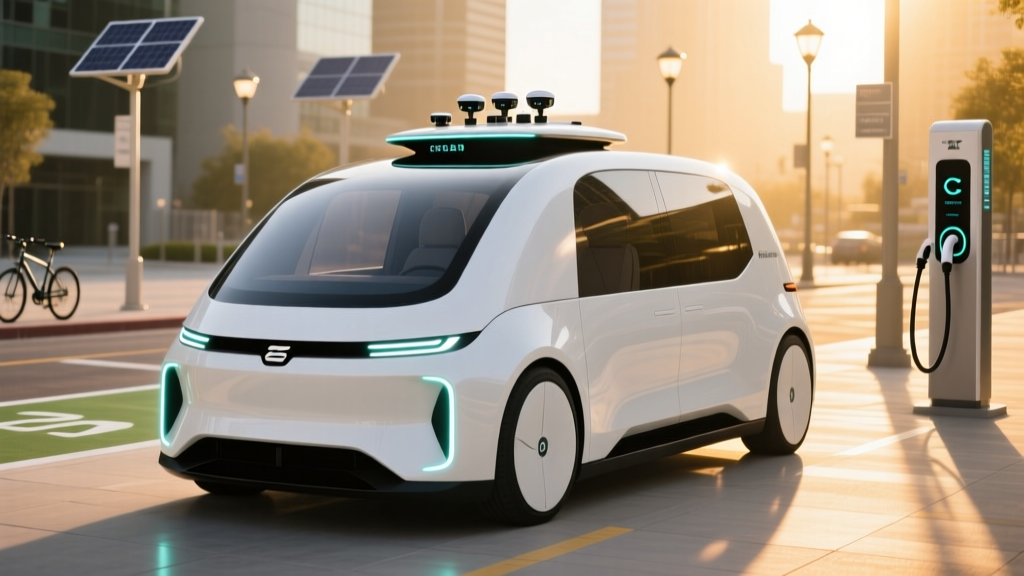
The Cruise Origin: What Was Supposed to Replace the Bolt-Based AV
Cruise had planned to transition from the modified Bolt EV to the Cruise Origin — a purpose-built, steering-wheel-free, symmetric shuttle designed jointly with Honda. The Origin was designed for higher passenger capacity (6 seats), easier wheelchair access, and a lower floor. However, following the 2023 suspension and GM's strategic pivot, the Origin program was indefinitely paused in mid-2024. GM redirected Cruise's efforts toward integrating its autonomous technology into consumer vehicles (like Super Cruise and Ultra Cruise on GM's Ultium platform) and a slower, more cautious robotaxi relaunch.
As of 2026, the Bolt-based AV remains the primary platform in Cruise's active (but reduced) fleet, and the Origin remains an announced-but-not-deployed vehicle. We will not treat it as available.
2022 Cruise AV vs. Waymo's Jaguar I-PACE: Robotaxi Platform Comparison
| Attribute | 2022 Cruise AV (Bolt) | Waymo (Jaguar I-PACE) |
|---|---|---|
| Base Vehicle | Chevy Bolt EV | Jaguar I-PACE |
| EPA Range (stock) | 259 mi | 234 mi |
| Battery | 65 kWh NMC | 90 kWh NMC |
| DC Fast Charge | 55 kW | 100 kW |
| Real-World Fleet Range | ~150-180 mi | ~160-190 mi |
| LiDAR Units | 5 | 5 (custom Hesai/proprietary) |
| Service Status (2026) | Limited — phased relaunch | Active — SF, LA, Phoenix, expanding |
| Autonomous Miles (cumulative) | ~3M+ | 20M+ |
| Consumer Purchase | No | No |
Who This Platform Matters To (And Who Should Look Elsewhere)
- Are researching the robotaxi industry's technical foundations and fleet economics.
- Live in Phoenix, Dallas, or Houston and may encounter Cruise AVs in ride-hail service as operations scale through 2026.
- Are evaluating autonomous vehicle safety records for policy, academic, or investment purposes.
- Want to understand how consumer EV platforms (Bolt) are adapted for Level 4 autonomy.
- Want to purchase an EV — this vehicle is not for sale to consumers.
- Need a personal vehicle for commuting, family duty, or road trips — see our reviews of consumer EVs.
- Are looking for a Level 2 driver-assist system for your own car — that's GM Super Cruise or Tesla Autopilot, not Cruise.
Frequently Asked Questions
Can I buy a 2022 Cruise AV?
No. The 2022 Cruise AV was built exclusively for Cruise LLC's robotaxi fleet. It is not available for consumer purchase, lease, or any form of private ownership. If you want the underlying platform, the 2022 Chevrolet Bolt EV was available new (now discontinued) and remains on the used market.
What is the real-world range of the Cruise AV during robotaxi service?
Approximately 150-180 miles per charge cycle, down from the stock Bolt EV's 259-mile EPA rating. The reduction comes from sensor/compute power draw (~1.5-2.5 kW continuous), added vehicle weight (400-600 lbs of AV hardware), and the aggressive urban stop-start driving profile typical of ride-hail duty.
How fast does the Cruise AV charge?
At a DC fast charger (CCS1), it peaks at 55 kW, achieving a 10-80% charge in roughly 60 minutes. At a Level 2 depot charger (240V, 11.5 kW), it adds about 39 miles of range per hour, which is how Cruise primarily charged its fleet overnight. By 2026 consumer EV standards, 55 kW DC charging is considered slow — most new EVs peak between 150-350 kW.
Does the Cruise AV qualify for the federal EV tax credit?
The question is moot for consumers since you cannot purchase one. However, the underlying 2022 Chevrolet Bolt EV did qualify for the full §30D federal tax credit ($7,500) when purchased new by eligible consumers, as it met battery sourcing and MSRP cap requirements. The Bolt's MSRP was well under the $55,000 sedan cap, and GM's battery sourcing at the time satisfied critical mineral thresholds.
Is the Cruise AV safe compared to human drivers?
This is debated. Cruise's own safety reports (pre-2023 suspension) claimed lower rates of certain crash types per million miles versus San Francisco human-driver benchmarks. However, the October 2023 pedestrian-drag incident exposed gaps in post-collision response logic. Independent researchers have noted that comparing robotaxi safety data to human benchmarks is methodologically complex due to different ODDs (robotaxis avoid highways, night driving in some cases, and severe weather). Waymo's larger cumulative mileage (20M+ vs ~3M) provides a more statistically robust dataset as of 2026.
What happened to Cruise after the 2023 suspension?
Following the October 2023 incident and California DMV permit revocation, Cruise paused all nationwide operations. GM invested an additional $850 million in late 2024 to restructure Cruise with enhanced safety protocols, increased remote-assist staffing, and a phased city-by-city relaunch. As of 2026, Cruise operates reduced fleets in Phoenix, Dallas, and Houston under phased permits with fleet-size caps. The purpose-built Origin vehicle remains paused indefinitely.
How does the Cruise AV compare to Waymo's vehicle?
Waymo uses the Jaguar I-PACE (90 kWh battery, 100 kW DC charging, ~160-190 mile real-world fleet range) and has been developing its own custom 6th-generation sensor suite. Waymo has maintained continuous operations, completed significantly more autonomous miles, and is expanding to new cities through 2026. Cruise's Bolt-based platform is older, slower-charging, and carries the reputational burden of the 2023 incident, though its Gen 5 sensor suite was technically competitive at launch.
Bottom Line: A Pioneering Platform With a Complicated Legacy
The 2022 Cruise AV — the Bolt-based robotaxi platform behind those "Cruise Cruise AV Cruz Ave" search queries — represents one of the most ambitious attempts to deploy Level 4 autonomous vehicles at scale. Its technical specifications (65 kWh NMC battery, 55 kW DC charging, Gen 5 sensor suite) were adequate for urban robotaxi duty but not class-leading even at launch. Its real-world range of 150-180 miles under autonomous operation was sufficient for shift-based fleet use but would be uncompetitive for consumer EV buyers.
The October 2023 incident and subsequent operational pause fundamentally altered Cruise's trajectory. As of 2026, the platform is back in limited service, but Waymo holds a commanding lead in operational miles, public trust, and geographic expansion. For EV buyers, the Cruise AV is not a purchase option — it's a case study in how consumer EV platforms are adapted for autonomy, and how quickly safety incidents can reshape an entire industry's timeline.