Quick Verdict: The Budget EV That Still Punches Above Its Weight
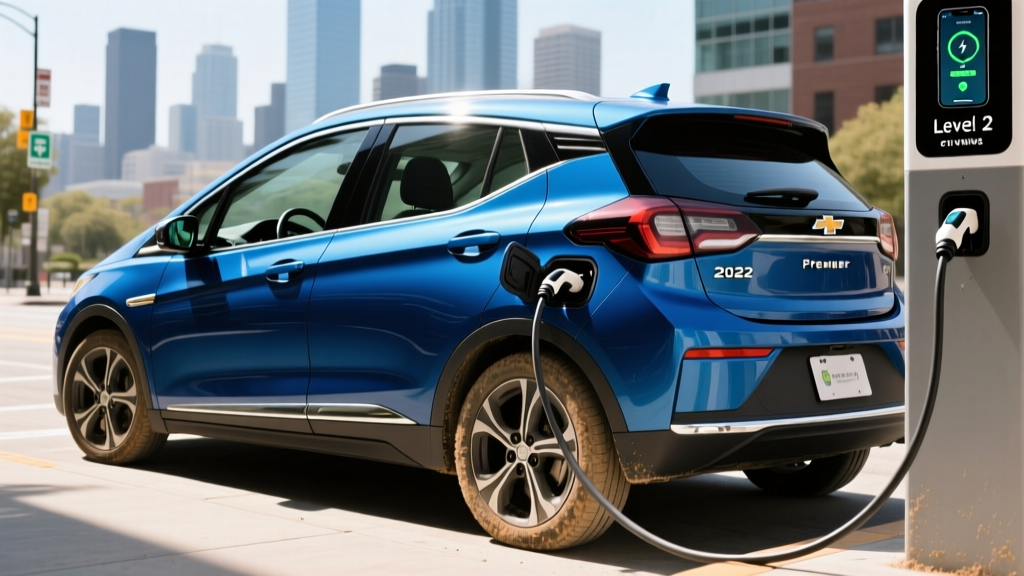
If you're shopping the used EV market in 2026, the 2022 Chevy Bolt Premier remains one of the most compelling value propositions available. With 259 miles of EPA-estimated range, a comfortable interior loaded with tech, and eligibility for the up-to-$4,000 used-EV federal tax credit (IRS §25E), the Bolt Premier delivers practicality that belies its original sub-$30,000 MSRP. But its DC fast-charging limitations and compact cargo area are trade-offs every buyer should understand before signing.
Chevrolet discontinued the Bolt EV and Bolt EUV after the 2023 model year to retool for next-generation Ultium-based EVs. That means the 2022 Bolt Premier is available exclusively on the used market — and its depreciation curve makes it an exceptional entry point for first-time EV buyers, urban commuters, and second-car households.
| Spec | Value |
|---|---|
| EPA Range | 259 miles |
| Battery (usable) | 65 kWh (NMC lithium-ion) |
| Motor | 200 hp / 266 lb-ft, FWD |
| 0–60 mph | ~6.5 seconds |
| DC Fast Charge (peak) | 55 kW (CCS) |
| 10–80% DC Charge | ~62 minutes |
| Level 2 Charge Rate | 11.5 kW (48A) |
| MPGe (combined) | 120 MPGe |
| EPA Efficiency | 28 kWh/100 mi |
| Cargo Volume (behind rear seats) | 16.6 cu ft |
| Cargo Volume (rear seats folded) | 57.0 cu ft |
| Battery Warranty | 8 yr / 100,000 mi |
| Original MSRP (Premier) | $38,300 (before incentives) |
Range and Efficiency: 259 Miles EPA, but Plan for Real-World Conditions
The 2022 Bolt Premier carries a 65 kWh usable NMC (nickel manganese cobalt) battery pack — an upgrade from the pre-2020 Bolt's 60 kWh pack that pushed the EPA range from 238 to 259 miles. For a compact hatchback, this remains competitive even against newer entries in the sub-$35,000 segment.
Real-World Range Expectations
EPA sticker: 259 miles
City/suburban mixed driving (55–75°F): 250–270 miles — the Bolt's strong regen braking and low-speed efficiency often let you approach or slightly exceed the EPA number in stop-and-go conditions.
Highway driving (70–80 mph sustained): 205–225 miles. The Bolt's upright hatchback shape creates more aerodynamic drag than sleeker EVs, and highway efficiency drops noticeably above 70 mph.
Cold weather (below 32°F, no preconditioning): 165–195 miles. Expect a 25–35% range loss in freezing temperatures. The Bolt's resistive cabin heater draws significant energy — unlike heat-pump-equipped rivals such as the Hyundai Ioniq 5 or Tesla Model Y.
Efficiency is rated at 120 MPGe combined (28 kWh per 100 miles) per fueleconomy.gov. In real-world commuting, owners typically report 26–30 kWh/100 mi depending on climate and terrain. The Bolt's one-pedal driving mode — activated via a steering-wheel paddle — enables aggressive regenerative braking that recaptures energy effectively in urban environments.
Charging Speed: The Bolt's Most Significant Limitation
Charging is where the 2022 Bolt Premier shows its age most clearly. While the onboard Level 2 charger is competitive, DC fast-charging performance falls well behind modern standards.
| Charging Level | Power / Rate | Time / Range Added |
|---|---|---|
| Level 1 (120V household) | ~1.4 kW | ~4 miles per hour of charging |
| Level 2 (240V, 48A) | 11.5 kW | ~39 miles per hour; full charge in ~7 hours |
| DC Fast Charge (CCS) | 55 kW peak | 10–80% in ~62 min; ~140 mi added in 30 min |
The 55 kW peak DC rate is the Bolt's biggest ownership friction point. Most 2022-era competitors (VW ID.4 at 125 kW, Hyundai Kona Electric at 100 kW) charge roughly twice as fast on DC. On a road trip, that 62-minute 10–80% session feels considerably longer at a busy charging plaza. The Bolt uses the CCS1 connector standard — still widely supported at Electrify America, EVgo, and ChargePoint stations, though the industry is migrating toward NACS (Tesla's connector). CCS adapters for NACS Superchargers are available but add a step.
At home, the 11.5 kW Level 2 rate is genuinely good. A full overnight charge from 10% to 100% takes about 7 hours on a 48-amp Level 2 station (such as a ChargePoint Home Flex or Emporia Vue). For daily commuting, a 30-minute top-up each evening is more than sufficient to replenish 100+ miles of driving.
Charging-curve reality: The Bolt sustains near-peak 55 kW from roughly 10% to 50% state of charge, then tapers to ~40 kW through 70%, and drops to ~20 kW above 85%. If you're road-tripping, plan to charge to 80% and move on — the final 20% adds disproportionately long wait times.
Performance and Drivetrain: Peppy FWD Commuter, Not a Track Car
A single front-mounted permanent-magnet motor produces 200 horsepower and 266 lb-ft of torque, driving the front wheels. The instant torque delivery makes the Bolt feel quicker than its 6.5-second 0–60 mph time suggests — around-town acceleration and merging are effortless.
However, this is strictly a front-wheel-drive platform. There is no AWD option, and torque steer is noticeable under hard acceleration from a stop. The suspension tuning is comfort-oriented, absorbing potholes and rough pavement well, but body roll is pronounced in aggressive cornering. The low center of gravity from the under-floor battery pack keeps the Bolt planted, though.
At highway speeds, cabin noise is reasonable but not class-leading. Wind noise around the A-pillars and tire roar on coarse pavement are more noticeable than in the Tesla Model 3 or Volkswagen ID.4. For its intended role as a commuter and city car, the ride quality is excellent.
Interior, Tech, and Cargo: Surprisingly Well-Equipped
The Premier trim was the Bolt's top-tier offering, and it shows in the equipment list:
- 10.2-inch touchscreen with wireless Apple CarPlay and Android Auto
- Wireless phone charging pad
- Heated front seats and heated steering wheel
- Leather-appointed seating surfaces
- Bose premium 7-speaker audio system
- 360-degree surround-view camera
- Adaptive cruise control (stop-and-go capable)
- Lane-keep assist with lane-departure warning
- Automatic emergency braking with pedestrian detection
- Blind-spot monitoring with rear cross-traffic alert
The infotainment system uses Chevrolet's proven interface — responsive, logically organized, and free of the lag that plagues some competitor screens. Physical buttons for climate control and volume are a welcome ergonomic choice.
Passenger space is adequate for four adults. Front legroom is generous at 42.2 inches; rear legroom is tighter at 35.4 inches — fine for average-height passengers but snug for taller riders on long trips. The elevated seating position (due to the under-floor battery) gives an SUV-like view of the road, which many buyers appreciate.
Cargo volume is the Bolt's practicality weak point: 16.6 cu ft behind the rear seats and 57.0 cu ft with the 60/40 rear seatback folded. That's enough for weekly groceries, two carry-on suitcases, or a medium dog crate — but it falls short of crossover-style EVs like the Kia Niro EV (18.5 cu ft) or the VW ID.4 (30.3 cu ft). There is no front trunk (frunk).
Pricing, Tax Credits, and Ownership Economics in 2026
The 2022 Bolt Premier originally carried an MSRP of $38,300 (including destination). The base Bolt EV LT started at $26,500 — making it the most affordable 250+ mile EV in the U.S. market at the time. Chevrolet also offered significant dealer discounts in 2022–2023 as the model was being phased out.
In the 2026 used market, expect to find 2022 Bolt Premier examples priced between $16,000 and $22,000 depending on mileage, condition, and region. Depreciation has been steep, which is excellent news for second buyers.
| Item | Estimated Cost |
|---|---|
| Used vehicle price (avg. ~30k mi) | $18,500 |
| Federal used-EV tax credit (IRS §25E, up to $4,000) | −$4,000 |
| Effective purchase price | ~$14,500 |
| Home Level 2 charger installation (if needed) | $500–$1,500 |
| Total all-in estimate | ~$15,000–$16,000 |
Does the 2022 Bolt Premier Qualify for a Federal Tax Credit?
Not the new-vehicle §30D credit — that applies only to new purchases. However, the Bolt Premier may qualify for the IRS §25E used-EV tax credit, which provides up to $4,000 (30% of the sale price, capped at $4,000) for eligible used electric vehicles. Key eligibility requirements per irs.gov:
- Sale price must be $25,000 or less
- Buyer income caps: $75,000 single / $112,500 head of household / $150,000 joint
- Vehicle must be purchased from a licensed dealer (private-party sales do not qualify)
- Vehicle must be at least 2 model years old (2022 qualifies in 2024+)
- Buyer cannot have claimed the used-EV credit in the prior 3 years for a different vehicle
- Must be purchased for personal use in the United States
At typical 2026 used pricing ($16k–$22k), most Bolt Premier sales fall under the $25,000 cap — making the full $4,000 credit achievable for income-eligible buyers. This is a significant value lever that makes the Bolt one of the cheapest ways into a 250+ mile EV in America.
Pros and Cons at a Glance
Pros
- 259 mi EPA range is excellent for the price point
- Strong Level 2 home charging (11.5 kW / 48A)
- Premier trim is feature-rich: heated seats, Bose audio, 360° camera, adaptive cruise
- Up to $4,000 used-EV federal tax credit eligibility
- Low cost of ownership — minimal maintenance, cheap home charging
- One-pedal driving with strong regen is intuitive for city commuting
- Compact footprint makes parking and urban maneuvering easy
Cons
- DC fast charging limited to 55 kW — painfully slow for road trips
- No heat pump — significant cold-weather range loss (25–35%)
- Tight rear legroom (35.4 in) and modest cargo space (16.6 cu ft)
- CCS connector requires adapter for Tesla Supercharger access
- Discontinued model — long-term parts/service uncertainty
- FWD only — no AWD option for snow-belt buyers
- Resistive cabin heater draws heavy energy in winter
Who Should Buy the 2022 Chevy Bolt Premier?
Choose the Bolt Premier if:
- You primarily commute 40–80 miles round-trip and can charge at home
- You want the most affordable 250+ mile EV on the used market
- You value premium features (heated leather seats, Bose audio, adaptive cruise) at a budget price
- Road trips are occasional, not weekly
- You live in a mild-to-moderate climate where cold-weather range loss is manageable
Look elsewhere if:
- You take frequent 200+ mile road trips (the 55 kW DC rate will frustrate you)
- You need AWD for snow or mountain driving
- You regularly carry rear-seat passengers or bulky cargo
- You live in a climate with extended sub-freezing winters and no garage charging
Warranty and Long-Term Battery Outlook
Chevrolet covers the Bolt's battery and powertrain with an 8-year / 100,000-mile warranty (whichever comes first), with a capacity-retention threshold of 60%. For a 2022 model, that factory coverage extends through 2030 or 100,000 miles — meaning most used buyers in 2026 still have substantial protection remaining.
The 65 kWh NMC pack has demonstrated solid longevity in real-world use. Bolt owners reporting on forums and EV-tracking databases typically see 5–8% degradation after 60,000–80,000 miles — consistent with NMC chemistry expectations. Chevrolet's battery management system includes active liquid cooling and heating, which helps preserve cell health across temperature extremes.
One note: in 2021–2022, GM issued recalls for certain Bolt batteries related to manufacturing defects that could cause fires. Affected vehicles received replacement battery modules. When buying a used 2022 Bolt Premier, confirm via the VIN on nhtsa.gov that all recall work has been completed.
Frequently Asked Questions
What is the real-world range of the 2022 Chevy Bolt Premier?
The EPA rates it at 259 miles. In real-world mixed driving at moderate temperatures, expect 250–270 miles in city conditions and 205–225 miles on the highway. In freezing weather without preconditioning, range can drop to 165–195 miles.
How fast does the 2022 Bolt Premier charge?
On a Level 2 home charger (240V, 48A), it charges at 11.5 kW — adding about 39 miles per hour, or a full charge in ~7 hours. On DC fast charging, it peaks at 55 kW (CCS), taking roughly 62 minutes from 10–80%. That DC rate is slow by 2026 standards.
How much does a used 2022 Bolt Premier cost after tax credits?
Used prices in 2026 average $16,000–$22,000. Eligible buyers (income under $75k single / $150k joint, purchased from a dealer at ≤$25,000) can claim the up-to-$4,000 §25E used-EV credit, bringing effective cost to roughly $14,500–$18,000.
Is the 2022 Bolt Premier worth buying vs. competitors?
Against used rivals like the Nissan Leaf (shorter range, CHAdeMO connector), VW ID.4 (more cargo, faster DC charging but higher price), and Tesla Model 3 (faster charging, Supercharger access, but higher used prices), the Bolt Premier wins on pure value-per-mile-of-range. If DC charging speed matters to you, the ID.4 or Model 3 is a better fit at a higher cost.
Does the 2022 Bolt Premier qualify for the federal EV tax credit?
Not the new-vehicle §30D credit. It may qualify for the §25E used-EV credit (up to $4,000) if purchased from a licensed dealer for $25,000 or less and the buyer meets IRS income caps. Consult a tax professional to confirm eligibility for your situation.
Can I charge the Bolt Premier at Tesla Superchargers?
Yes, but only with a CCS-to-NACS adapter. GM has confirmed adapter compatibility for Bolt models. Tesla's Open Supercharger network supports CCS-equipped vehicles at many (but not all) locations. Check the Tesla app for station compatibility before relying on Superchargers for travel.