Quick Verdict: The Budget-Range Benchmark of Its Era
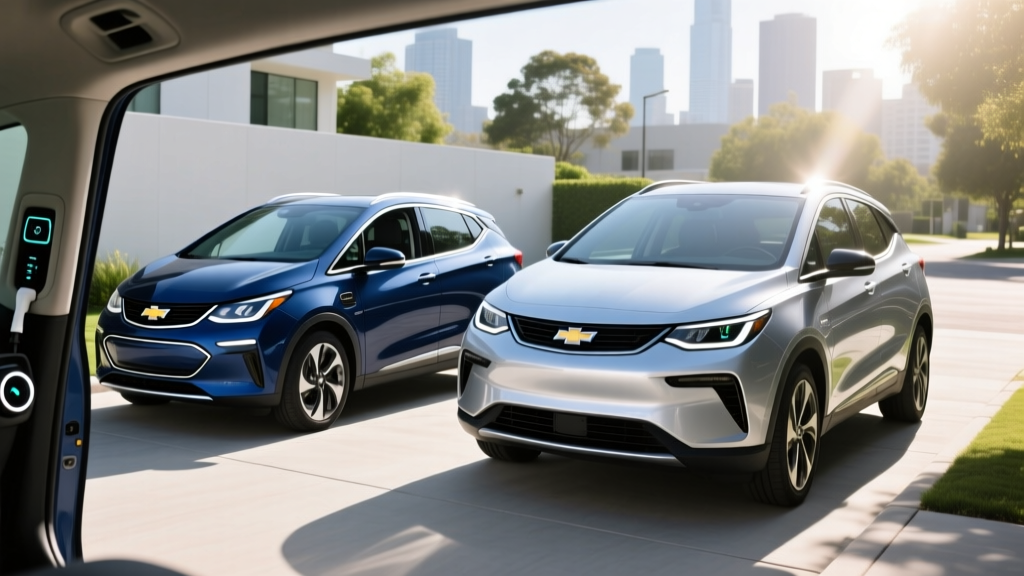
The 2022 Chevy Bolt EV and its stretched sibling, the Bolt EUV, represent a pivotal moment in affordable electric vehicles. When GM slashed MSRPs mid-cycle and paired the Bolt with a refreshed 65 kWh (usable) battery pack, it became the least expensive EV in America offering over 250 miles of EPA range. For used-EV shoppers in 2026, the 2022 Bolt remains a compelling daily driver — provided you understand its charging limitations and the nuances of federal tax credit eligibility on the pre-owned market.
This review covers both the standard Bolt EV hatchback and the longer Bolt EUV crossover, breaking down real-world range, charging behavior, ownership costs, and whether either model still holds up against newer competitors.
Range, Battery & Efficiency: What the EPA Number Doesn't Tell You
| Spec | Bolt EV (1LT / 2LT) | Bolt EUV (LT / Premier) |
|---|---|---|
| EPA Range | 259 miles | 247 miles |
| Battery (Usable) | ~65 kWh | ~65 kWh |
| Battery Chemistry | NMC (Nickel Manganese Cobalt) | NMC |
| Efficiency (Combined) | 120 MPGe / 28 kWh/100 mi | 115 MPGe / 29 kWh/100 mi |
| Motor Output | 200 hp / 266 lb-ft torque | 200 hp / 266 lb-ft torque |
| Drivetrain | FWD (single motor) | FWD (single motor) |
| 0–60 mph | ~6.5 seconds | ~7.0 seconds |
| Max DC Fast Charge | 55 kW (CCS) | 55 kW (CCS) |
| Level 2 Charge Rate | 11.5 kW (48A) | 11.5 kW (48A) |
| Battery Warranty | 8 yr / 100,000 mi | 8 yr / 100,000 mi |
Real-World Range Reality Check
EPA sticker: 259 mi (Bolt EV) / 247 mi (Bolt EUV)
Expect in practice: 220–240 mi on mixed highway/city driving at 70 mph. In winter conditions (below 30°F), plan for 180–200 mi due to cabin heating demands and increased battery resistance. City-only driving with regenerative braking engaged can push the Bolt EV past 270 mi in mild weather — its efficiency shines in stop-and-go traffic.
The Bolt's 65 kWh NMC lithium-ion pack is thermally managed via an active liquid cooling and heating system, which helps mitigate extreme degradation but does consume some energy when preconditioning in cold weather. Unlike some competitors that switched to LFP (lithium iron phosphate) chemistry for cost and longevity, GM stuck with NMC for higher energy density — a trade-off that gives the Bolt its impressive range-per-kWh but means you should avoid habitually charging to 100% or letting it sit at very low states of charge for extended periods.
Charging: The Bolt's Biggest Compromise
If there's one area where the 2022 Bolt shows its age, it's DC fast charging. The CCS1 inlet accepts a peak rate of just 55 kW — a figure that was modest in 2022 and feels dated against the 150–350 kW rates common on 2025–2026 models.
| Charging Level | Power | Speed (Approx.) | Notes |
|---|---|---|---|
| Level 1 (120V household) | ~1.4 kW | ~4 mi/hr | Emergency/top-up only |
| Level 2 (240V, 48A) | 11.5 kW | ~39 mi/hr | Full charge in ~6.5 hours |
| DC Fast Charge (CCS) | Peak 55 kW | ~100 mi in 30 min | 10–80% in ~55–65 min |
The charging curve matters: The Bolt doesn't sustain its 55 kW peak for long. In real-world DC fast-charging sessions, you'll see 50–55 kW from roughly 10–40% state of charge, then a taper to 38–40 kW through the 60s, and further reduction above 80%. A 10–80% session typically takes 55 to 65 minutes depending on battery temperature and ambient conditions.
This means road trips are viable but require patience. On a 300-mile drive, you'll likely need one 45–60 minute stop at a DC fast charger — manageable, but noticeably slower than competitors like the Hyundai Ioniq 5 (which can do 10–80% in ~18 minutes at 240 kW). For daily use, however, Level 2 home charging at 11.5 kW is excellent — you'll wake up to a full battery every morning with a standard 240V/48A home charger installation.
NACS adapter note: The 2022 Bolt has a CCS1 port natively. As GM transitions to NACS (Tesla's connector), adapters are available through GM dealers to access Tesla Supercharger V2 stations (which provide CCS-compatible charging via adapter). Supercharger V3/V4 stalls are not directly compatible without future adapter solutions — check Chevrolet's official charging page for the latest adapter availability.
Performance & Driving Dynamics
The Bolt's single front-mounted permanent-magnet motor delivers 200 horsepower and 266 lb-ft of torque — all available instantly from 0 RPM. The result is a 0–60 mph time of approximately 6.5 seconds for the hatchback and 7.0 seconds for the heavier EUV. That's brisk enough for confident highway merging and genuinely fun in city driving.
Ride quality is a pleasant surprise. The Bolt sits on a dedicated BEV2 platform (not a converted gas car), giving it a low center of gravity thanks to the under-floor battery pack. Body roll is well-controlled, and the one-pedal driving mode with aggressive regen braking makes city commuting nearly brake-pedal-free.
What it doesn't do: There's no AWD option, no towing rating to speak of (not recommended for towing), and the 17-inch wheels with low-rolling-resistance tires prioritize efficiency over grip. The Bolt is a commuter car, and it excels in that role.
Interior, Cargo & Technology
The cabin is where GM clearly kept costs down to hit that sub-$30,000 MSRP. Materials are mostly hard plastics, though the layout is intuitive and the seats are comfortable for long stints.
Cargo volume:
- Bolt EV: 16.6 cu ft behind rear seats; 57.0 cu ft with seats folded
- Bolt EUV: 16.3 cu ft behind rear seats; 56.9 cu ft with seats folded
Rear legroom: The Bolt EV offers 36.0 inches, while the EUV stretches that to 39.1 inches — a meaningful difference for taller passengers or rear-facing child seats.
Tech highlights:
- 10.2-inch diagonal touchscreen with wireless Apple CarPlay and Android Auto
- 8-inch digital driver display with energy flow and regen indicators
- Available Super Cruise (EUV Premier only) — GM's hands-free Level 2 driver-assist on pre-mapped divided highways
- Chevy Safety Assist suite: automatic emergency braking, lane-keep assist, following distance indicator, front pedestrian braking
Super Cruise Is Level 2 — Not Self-Driving
GM's Super Cruise is a SAE Level 2 driver-assistance system. It allows hands-free driving on over 400,000 miles of compatible divided highways in the US and Canada, but the driver must remain attentive at all times. An infrared camera monitors your eyes, and the system will disengage with escalating alerts if you look away. This is not autonomous driving (Level 4) — you are always responsible for the vehicle.
Notable drawbacks: No heat pump (resistive cabin heating reduces winter range), no front trunk (frunk), no vehicle-to-load (V2L) capability, and the rear-seat USB ports are only on higher trims. The infotainment system, while functional, lacks the responsiveness and resolution of competitors like Tesla's or Hyundai's setups.
Pricing, Trims & Federal Tax Credit Eligibility
At launch, the 2022 Bolt EV started at an MSRP of $26,595 (1LT) after GM's mid-year price cut — making it the most affordable long-range EV on the market. The Bolt EUV began at $28,195 (LT). Here's the trim breakdown:
| Model / Trim | Original MSRP | Key Features |
|---|---|---|
| Bolt EV 1LT | $26,595 | Base: 10.2" screen, Chevy Safety Assist, 17" wheels |
| Bolt EV 2LT | $29,795 | Leather, heated seats/steering, 360° camera, Bose audio |
| Bolt EUV LT | $28,195 | Extra legroom, roof rails, SUV styling |
| Bolt EUV Premier | $33,295 | Super Cruise capable, leather, panoramic sunroof, ventilated seats |
Federal Tax Credit: The Used-EV Path (§25E) and New-EV Rules (§30D)
Since the 2022 Bolt is no longer sold new, buyers in 2026 are purchasing on the used market. Here's how the federal incentives apply:
- Used EV Credit (§25E): Up to $4,000 or 30% of the sale price (whichever is less) on a qualifying pre-owned EV purchased from a licensed dealer. The vehicle must be at least 2 model years old (2022 Bolts qualify in 2026).
- Income caps (§25E): AGI must not exceed $75,000 (single), $112,500 (head of household), or $150,000 (joint filers).
- Vehicle price cap: The used sale price must be $25,000 or less to qualify for the §25E credit.
- Point-of-sale transfer: The credit can be applied at the dealership at the time of purchase, reducing your out-of-pocket cost immediately.
- One use per buyer: The §25E credit can only be claimed once every 3 years per taxpayer.
Verify current rules at IRS.gov — Used Clean Vehicle Credit. Eligibility depends on your specific tax situation; consult a tax professional.
Ownership Costs, Warranty & Longevity
Battery & Powertrain Warranty: GM covers the Bolt's battery pack and electric drive unit for 8 years or 100,000 miles (whichever comes first), with a capacity retention threshold of 60% or greater. If the battery degrades below 60% of its original capacity within the warranty period, GM will repair or replace it.
Battery recall context: In 2021, GM issued a major recall for 2017–2019 Bolt EVs due to fire risk from battery cell manufacturing defects. The 2022 model year uses a revised battery pack with updated LG cells and is not subject to that recall. However, GM replaced battery packs in many earlier Bolts under the recall program, which means some used 2017–2019 models on the market now have newer packs — worth verifying via the VIN.
Estimated 5-year ownership cost:
| Category | Estimated Cost |
|---|---|
| Purchase price (after §25E credit) | ~$16,000–$20,000 |
| Home charging (electricity, 12,000 mi/yr) | ~$2,700–$3,600 total |
| Insurance (5-year average) | ~$6,000–$8,000 |
| Maintenance (tires, cabin filter, wipers) | ~$1,200–$1,800 |
| Estimated depreciation (5 years) | ~$5,000–$7,000 |
| Total (approx.) | ~$31,000–$40,000 |
For comparison, a similarly priced used gas compact car (e.g., 2022 Honda Civic) would cost roughly $8,000–$10,000 more in fuel alone over 5 years at 12,000 miles/year, though the Bolt's insurance premiums tend to run 10–15% higher than non-EV equivalents.
Pros & Cons at a Glance
Pros
- 259 mi EPA range at a bargain used-market price
- Excellent efficiency: 120 MPGe combined
- Strong 11.5 kW Level 2 home charging
- Spunky 200 hp motor, great city driving feel
- Wireless Apple CarPlay / Android Auto
- EUV offers class-leading rear legroom (39.1 in)
- Super Cruise available on EUV Premier
- Low maintenance costs vs. gas vehicles
Cons
- Slow DC fast charging (55 kW peak, ~1 hr for 10–80%)
- No heat pump — winter range loss is significant
- Interior quality feels budget-tier
- No frunk (front trunk) for additional storage
- FWD only — no AWD option for snow-belt buyers
- CCS port only; NACS adapter needed for Superchargers
- No V2L capability for powering devices/camping
- Discontinued after 2023 model year (limited future support uncertainty)
How the 2022 Bolt Stacks Up Against Competitors
Shopping a used 2022 Bolt means cross-referencing against other used EVs in the $18,000–$28,000 range. Here's how it compares:
| Spec | 2022 Bolt EV | 2022 Nissan Leaf SV Plus | 2022 Hyundai Kona Electric |
|---|---|---|---|
| EPA Range | 259 mi | 212 mi | 258 mi |
| Battery (usable) | ~65 kWh (NMC) | ~60 kWh (NMC) | ~64 kWh (NMC) |
| DC Fast Charge | 55 kW (CCS) | 100 kW (CHAdeMO) | ~50 kW (CCS) |
| 0–60 mph | ~6.5 sec | ~6.8 sec | ~6.4 sec |
| Horsepower | 200 hp | 214 hp | 201 hp |
| Level 2 Charging | 11.5 kW | 7.2 kW | 7.2 kW |
| Liquid Thermal Mgmt | Yes | No (passive air) | Yes |
| Connector | CCS1 | CHAdeMO | CCS1 |
The Bolt wins on Level 2 home charging speed (11.5 kW vs. 7.2 kW for both competitors) and ties on range with the Kona Electric. The Leaf's CHAdeMO connector is a significant liability in 2026, as the vast majority of US DC fast-charging infrastructure has standardized on CCS and NACS. The Bolt's lack of a heat pump is a notable disadvantage versus the Kona Electric, which includes one for better winter efficiency.
Who Should Buy the 2022 Chevy Bolt?
Choose the Bolt EV if: You want maximum range per dollar on the used market, primarily commute in mild-to-moderate climates, have access to home Level 2 charging, and rarely take road trips longer than 200 miles.
Choose the Bolt EUV if: You need more rear-seat space for children or passengers, want available Super Cruise for highway commuting, and prefer a crossover ride height.
Look elsewhere if: You regularly road-trip (the 55 kW DC charging will frustrate you), live in extreme cold climates (no heat pump), need AWD, or want the latest infotainment and interior refinement.
Frequently Asked Questions
What is the real-world range of the 2022 Chevy Bolt EV?
The EPA rates the 2022 Bolt EV at 259 miles and the Bolt EUV at 247 miles. In real-world mixed driving at highway speeds, expect 220–240 miles in moderate temperatures. In winter (below 30°F), range drops to approximately 180–200 miles due to resistive cabin heating and increased battery impedance. City driving with regenerative braking can exceed the EPA estimate in mild weather.
How fast does the 2022 Bolt charge at home and on DC fast chargers?
At home on a 240V Level 2 charger (48 amps), the Bolt accepts up to 11.5 kW, adding roughly 39 miles of range per hour — a full charge takes about 6.5 hours. On DC fast chargers, the Bolt peaks at just 55 kW via its CCS port, meaning a 10–80% charge takes approximately 55–65 minutes. This is the Bolt's most significant weakness for road-trip use.
Does the 2022 Chevy Bolt qualify for a federal EV tax credit in 2026?
Since the 2022 Bolt is no longer sold new, it does not qualify for the §30D new-vehicle credit. However, it may qualify for the §25E Used Clean Vehicle Credit — up to $4,000 or 30% of the sale price (whichever is less). Requirements include: purchase from a licensed dealer, sale price at or below $25,000, buyer AGI within limits ($75K single / $150K joint), and the vehicle must be at least 2 model years old. The credit can be transferred at the point of sale. Always verify current rules at IRS.gov and consult a tax professional.
Is the 2022 Bolt EV still worth buying vs. newer EVs?
For budget-conscious buyers who prioritize range and home-charging convenience, the used 2022 Bolt remains one of the best value propositions in the EV market. You get 259 miles of EPA range, a well-proven powertrain, and strong efficiency for $18,000–$22,000 on the used market (before any §25E credit). The trade-offs are slow DC fast charging, a basic interior, and no heat pump. If you road-trip frequently or want modern tech, consider a used Hyundai Ioniq 5 or Tesla Model 3 instead — but expect to pay $8,000–$15,000 more.
What is the battery warranty on the 2022 Chevy Bolt?
GM covers the Bolt's battery pack and electric drive unit for 8 years or 100,000 miles, whichever comes first. The warranty guarantees that the battery will retain at least 60% of its original capacity. Given that the 2022 model year is now 4 years old, remaining warranty coverage varies by mileage — a Bolt with 40,000 miles still has roughly 4 years / 60,000 miles of battery warranty remaining.
Was the 2022 Bolt affected by the battery fire recall?
No. The battery fire recall (NHTSA recall 21V-650 and related campaigns) affected 2017–2019 Bolt EVs equipped with LG Chem cells manufactured at a specific plant. The 2022 Bolt uses a redesigned battery pack with revised cells and was not part of the recall. Always check a specific vehicle's recall status using its VIN at NHTSA.gov/recalls.
Can the 2022 Bolt use Tesla Superchargers?
The 2022 Bolt has a CCS1 port. GM has made a NACS-to-CCS adapter available for Bolt owners, enabling access to Tesla Supercharger V2 stalls that support CCS communication. However, compatibility with V3 and V4 Superchargers varies, and charging speeds will still be limited by the Bolt's 55 kW maximum acceptance rate. Check Chevrolet's official resources for the latest adapter availability and Supercharger compatibility maps.