Quick Verdict: A Spacious, Budget-Friendly Used EV
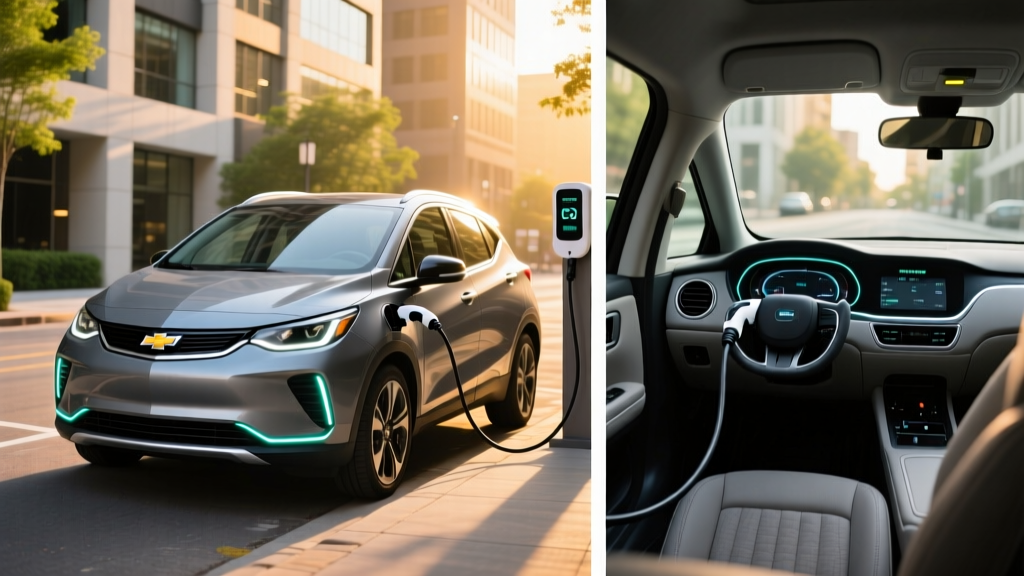
The 2022 Chevy Bolt EUV LT occupies a specific niche in the used EV market: it's one of the most affordable ways to get a crossover-shaped electric vehicle with over 250 miles of EPA-rated range. Built on GM's older BEV2 platform, the Bolt EUV (Electric Utility Vehicle) stretches the standard Bolt hatchback's wheelbase to deliver genuine rear-seat legroom and a more upright, SUV-like profile — without the SUV price tag. For 2026 shoppers browsing the used-EV market, the LT base trim represents a compelling value proposition, especially if you qualify for the IRS §25E used-EV tax credit.
But the Bolt EUV's age shows in one critical area: DC fast-charging speed. Its 55 kW peak charge rate is a significant limitation for road-trippers. If your driving is primarily commuting and city errands with home Level 2 charging, the Bolt EUV LT is hard to beat on cost-per-mile. If you regularly drive 300+ miles between charges, you'll want to look at newer platforms with 150+ kW charging capability.
Range & Efficiency: EPA vs. Real-World
Real-World Expectation: ~210–230 miles in mixed driving; ~185–200 miles sustained highway at 70+ mph; ~150–175 miles in freezing temperatures (below 32°F) with cabin heating.
The 2022 Bolt EUV LT carries a 65 kWh usable lithium-ion battery pack using NMC (nickel-manganese-cobalt) chemistry. The EPA rates it at 247 miles of combined range for the LT trim. The Premier trim with larger 18-inch wheels drops slightly to 243 miles due to increased rolling resistance.
In real-world use, the Bolt EUV's efficiency shines in city and suburban driving, where regenerative braking recaptures energy at every stop. Expect to see 120–130 MPGe (roughly 26–28 kWh/100 miles) in warm-weather city conditions. Highway efficiency drops noticeably — the Bolt EUV's tall, blunt crossover profile creates more aerodynamic drag than a sleek sedan or hatchback, and at 70–80 mph you'll consume closer to 32–35 kWh/100 miles, bringing effective range down to roughly 200 miles.
Cold weather is the Bolt EUV's biggest range vulnerability. The BEV2 platform uses a resistance heater rather than a heat pump, which draws substantial battery energy for cabin warmth. In sustained sub-freezing temperatures, plan for a 25–35% range reduction. Preconditioning the battery and cabin while plugged in at home mitigates this, but it cannot eliminate the physics of cold-weather battery chemistry and resistive heating loads.
| Specification | Value |
|---|---|
| EPA Range (LT trim) | 247 miles |
| Battery Capacity (usable) | 65 kWh |
| Battery Chemistry | NMC (Nickel-Manganese-Cobalt) |
| Efficiency (combined) | 115 MPGe / 29 kWh/100 mi |
| Motor Output | 200 hp / 266 lb-ft torque |
| Drivetrain | FWD (single front motor) |
| 0–60 mph | ~7.0 seconds |
| Max DC Fast Charge Rate | 55 kW (CCS) |
| 10–80% DC Charge Time | ~55–60 minutes |
| Level 2 AC Charge Rate | 11.5 kW (48A) |
| Cargo Volume (rear seats up) | 16.3 cu ft |
| Cargo Volume (rear seats folded) | 56.9 cu ft |
| Rear Legroom | 39.1 inches |
| Battery/Powertrain Warranty | 8 years / 100,000 miles |
| Original Base MSRP (LT) | $33,500 |
Charging: The Bolt EUV's Biggest Limitation
The 2022 Bolt EUV uses a CCS1 (Combined Charging System) connector for DC fast charging and a standard J1772 inlet for Level 1 and Level 2 AC charging. Here's the honest breakdown of what charging looks like across all three levels:
| Charging Level | Power | Miles of Range Added per Hour | Notes |
|---|---|---|---|
| Level 1 (120V household) | ~1.2 kW | ~4 miles/hr | Emergency/trickle only; full charge takes ~55 hours |
| Level 2 (240V home/public) | 11.5 kW (48A) | ~37 miles/hr | Full charge in ~6 hours; ideal for overnight home charging |
| DC Fast Charge (CCS) | 55 kW peak | ~175 miles/hr (at peak) | 10–80% in ~55–60 min; tapers significantly above 80% |
The 11.5 kW Level 2 onboard charger is a genuine strength. Most competitors in this price range offer 7.2 kW or 10 kW onboard chargers, meaning the Bolt EUV replenishes faster at home and at public Level 2 stations than many rivals. A full 0–100% charge at 11.5 kW takes approximately 6 hours — easily achievable overnight on a home Level 2 setup.
The DC fast-charging story is less encouraging. The Bolt EUV's 55 kW peak charge rate was already behind the curve in 2022, and it's even more conspicuous in 2026 when competitors routinely achieve 150–350 kW. At a 50–55 kW CCS station, a 10–80% session takes roughly 55–60 minutes. The charge curve holds relatively steady from 10% to about 55% SoC, then tapers progressively. Above 80%, the rate drops to under 25 kW, making the last 20% painfully slow — a common trait across EVs, but more pronounced here due to the low peak rate.
For daily commuting with home charging, this limitation is irrelevant. For road trips requiring multiple DC fast-charge stops, plan for roughly one hour per charge session and factor that into your route planning. According to fueleconomy.gov, the Bolt EUV's charging profile is best suited to drivers who can charge at home and use DC fast charging only occasionally.
Performance & Driving Impressions
The Bolt EUV LT uses a single permanent-magnet electric motor driving the front wheels, producing 200 horsepower and 266 lb-ft of torque. The 0–60 mph time of approximately 7.0 seconds is adequate for merging and passing, though it won't pin you to your seat like dual-motor EVs from Tesla or Hyundai.
What the Bolt EUV delivers is smooth, linear, and quiet acceleration — the hallmark EV experience. Torque is available instantly from a stop, making it feel quicker around town than the 7.0-second number suggests. The single-speed reduction gear means no shift interruptions, and regenerative braking offers two modes: standard (mild regen, coast-friendly) and one-pedal driving (aggressive regen that can bring the car to a complete stop without touching the brake pedal).
Ride quality is comfortable and compliant, tuned more for comfort than sportiness. The longer wheelbase compared to the standard Bolt hatchback improves ride composure over bumps. Steering is light and easy, ideal for parking lots but lacking the precision that driving enthusiasts prefer. There is no AWD option — the Bolt EUV is strictly front-wheel drive, which is fine for most climates but worth noting if you deal with heavy snow and prefer the traction of all-wheel drive.
Interior, Cargo & Technology
The Bolt EUV's cabin is functional rather than luxurious, which is expected at its price point. The LT trim comes with cloth seating, a 10.2-inch diagonal color touchscreen infotainment system, wireless Apple CarPlay and Android Auto, and a 6-speaker audio system. The digital instrument cluster is an 8-inch diagonal display showing speed, range, power usage, and regen information.
Where the EUV earns its "Utility Vehicle" badge is rear-seat space. With 39.1 inches of rear legroom, the Bolt EUV comfortably fits adults in the back — a meaningful advantage over the standard Bolt hatchback's tighter 35.8 inches. Headroom is generous thanks to the upright roofline. The rear seatbacks fold in a 60/40 split to expand cargo from 16.3 cu ft (behind the rear seats) to 56.9 cu ft (seats folded), which handles groceries, luggage, or a weekend's worth of camping gear without issue.
Driver-assistance technology on the LT includes Chevy Safety Assist: automatic emergency braking with pedestrian detection, forward collision alert, lane keep assist with lane departure warning, following distance indicator, and IntelliBeam automatic high beams. Super Cruise — GM's hands-off, SAE Level 2 driver-assistance system for compatible highways — was available as an option on the Premier trim but not on the LT. Note that Super Cruise, despite its "hands-off" capability, is still an SAE Level 2 system requiring driver attention and engagement at all times.
Notable drawbacks include the absence of a front trunk (frunk) — the space under the hood houses power electronics — and the LT trim's lack of a DC fast-charge indicator light on the exterior, making it harder to check charge status from outside the vehicle. The infotainment system, while responsive, uses GM's older interface generation rather than the newer Ultifi platform found in current GM EVs.
Pricing, Tax Credits & Used-EV Value
When new, the 2022 Bolt EUV LT carried a base MSRP of $33,500 (destination included). The higher Premier trim started at $38,100. Chevrolet aggressively discounted the Bolt EUV lineup in its final model years, and some 2022 buyers paid well below sticker.
In the 2026 used-EV market, expect to find 2022 Bolt EUV LT models priced between $16,000 and $22,000 depending on mileage, condition, and region. This is where the IRS §25E used-EV tax credit becomes highly relevant.
- Credit Amount: 30% of the sale price, up to a maximum of $4,000
- Vehicle Eligibility: Must be at least 2 model years old (2022 qualifies in 2026), MSRP when new must have been under $25,000 — the Bolt EUV's original MSRP was $33,500, which exceeds this cap
- Buyer Income Caps: AGI must not exceed $75,000 (single), $112,500 (head of household), or $150,000 (joint filers)
- Sale Price Cap: Vehicle must sell for $25,000 or less to qualify
- Dealer Requirement: Must purchase from a licensed dealer; private-party sales do not qualify
- Transfer Option: Credit can be transferred to the dealer at point of sale for an immediate price reduction
Source: IRS.gov §25E Used Clean Vehicle Credit. Eligibility rules are subject to legislative changes. Consult a tax professional before relying on credit availability.
Critical caveat: The §25E credit's original-MSRP-under-$25,000 requirement means the 2022 Bolt EUV — with an original MSRP of $33,500 — does not qualify for the used-EV credit, even if the current sale price is under $25,000. This is a common point of confusion. Some buyers conflate the sale-price cap with the MSRP cap; both must be satisfied, and the Bolt EUV fails the MSRP test. If the used-EV credit is essential to your budget, consider a used Chevrolet Bolt EV hatchback (which had a lower original MSRP on base trims) or a used Nissan Leaf — though always verify the specific vehicle's original MSRP with the dealer.
The Bolt EUV's battery and powertrain carry GM's standard electrified-vehicle warranty: 8 years or 100,000 miles (whichever comes first), with a capacity retention threshold of 60% — meaning GM will repair or replace the battery if it degrades below 60% of original capacity within the warranty period. For a 2022 model, this warranty extends through the 2030 model year or until 100,000 miles, providing meaningful coverage for a used-EV purchase.
Who the 2022 Bolt EUV LT Is For
- 247-mile EPA range at a bargain used price
- Excellent 11.5 kW Level 2 charging for fast home replenishment
- Spacious rear seat (39.1 in legroom) for a compact crossover
- Smooth, quiet, one-pedal-friendly driving experience
- Chevy Safety Assist driver aids included standard
- Remaining GM battery warranty coverage on low-mile examples
- Wireless Apple CarPlay and Android Auto standard
- 55 kW DC fast charging is slow — ~1 hour for 10–80%
- No heat pump — significant cold-weather range loss
- Does not qualify for the §25E used-EV tax credit (original MSRP too high)
- FWD only — no AWD option for snow-belt drivers
- Older infotainment generation; no frunk
- Super Cruise not available on LT trim
- CCS connector (not NACS) — may need adapter for Tesla Supercharger access
The Bolt EUV LT is ideal for: Budget-conscious commuters and small families who charge at home, drive under 150 miles round-trip daily, and want crossover practicality without the premium price. It's an excellent second car, a strong first EV for apartment-dwellers with workplace charging access, and a practical choice for Uber/Lyft drivers in metro areas.
Look elsewhere if: You take frequent road trips over 250 miles, live in a region with extreme cold and limited charging infrastructure, need AWD, or want access to the Tesla Supercharger network without an adapter. The 55 kW charge rate is the dealbreaker for high-mileage road-trippers.
Competitor Check: Bolt EUV LT vs. Key Alternatives
On the used-EV market at similar price points, the Bolt EUV competes with the Hyundai Kona Electric (239-mile EPA range, 100 kW DC charging), the Kia Niro EV (239-mile range, 77 kW DC charging), and the Volkswagen ID.4 (250–275 mile range, 125–170 kW DC charging). The Bolt EUV wins on interior space and Level 2 charge speed but loses on DC fast-charging performance. If road-trip charging speed matters, the ID.4 or Kona Electric are stronger choices. If value and daily usability are paramount, the Bolt EUV LT remains hard to beat.
Frequently Asked Questions
What is the real-world range of the 2022 Chevy Bolt EUV LT?
The EPA rates it at 247 miles combined. In real-world mixed driving, expect 210–230 miles. Sustained highway driving at 70+ mph reduces this to roughly 185–200 miles. In freezing temperatures with cabin heat, plan for 150–175 miles due to the resistance heater and cold battery chemistry.
How fast does the Bolt EUV charge at home and on the road?
At home on a 240V Level 2 charger, the 11.5 kW onboard charger adds roughly 37 miles of range per hour, with a full charge taking about 6 hours. On DC fast chargers, the 55 kW peak rate means a 10–80% session takes approximately 55–60 minutes — significantly slower than newer EVs with 150+ kW capability.
Does the 2022 Bolt EUV qualify for the federal EV tax credit?
Not anymore. When sold new, the Bolt EUV qualified for the full $7,500 §30D credit. On the used market, the §25E credit has an original-MSRP cap of $25,000, and the Bolt EUV's $33,500 MSRP disqualifies it. Some state and utility incentives may still apply — check your local programs.
Is the Bolt EUV LT worth buying in 2026 vs. competitors?
If your priority is maximum range and interior space per dollar and you charge primarily at home, the Bolt EUV LT is among the best used-EV values available. If you need fast DC charging for road trips, consider the Hyundai Kona Electric or VW ID.4 instead. Test the CCS charging infrastructure in your area before committing.
What is the battery warranty on a used 2022 Bolt EUV?
GM covers the battery and powertrain for 8 years or 100,000 miles from the original in-service date, with a 60% capacity retention threshold. A 2022 model's warranty runs through approximately 2030. Always request the vehicle's in-service date and check for any open recalls — the Bolt EUV was subject to a major battery recall and replacement campaign in 2021–2022 that affected earlier model years; confirm with the dealer that any recall work was completed.
Can I charge the Bolt EUV at Tesla Superchargers?
The 2022 Bolt EUV has a native CCS1 connector. As GM has transitioned to the NACS standard for newer models, Tesla has opened some Supercharger stations to CCS-equipped EVs via an adapter. Check Tesla's current adapter availability and compatible station list before relying on Supercharger access.