Quick Verdict: The Electric Flagship Sedan That Actually Delivers
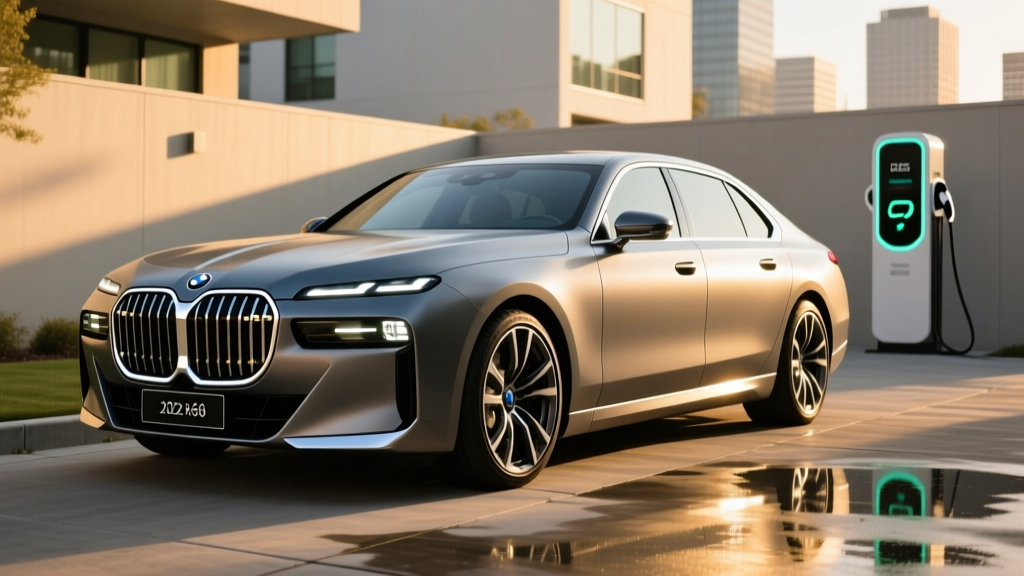
The 2022 BMW i7 xDrive60 (model year 2023 in the U.S.) was BMW's first all-electric 7 Series, and it arrived with a clear mandate: prove that a full-size luxury sedan can go electric without compromise. With 536 horsepower, a usable 101.7 kWh NMC battery, and a 318-mile EPA range, the i7 xDrive60 competes directly with the Mercedes-Benz EQS and Tesla Model S in the six-figure EV sedan segment. Four years on, it remains one of the most refined long-distance electric cruisers available on the used market, though its charging speed and tax-credit eligibility require careful consideration before you sign.
| Spec | Value |
|---|---|
| EPA Range | 318 miles |
| Battery (usable) | 101.7 kWh, NMC (nickel-manganese-cobalt) |
| Drivetrain | Dual-motor AWD (xDrive) |
| Horsepower / Torque | 536 hp / 549 lb-ft |
| 0–60 mph | 4.5 seconds |
| Max DC Fast Charge | 195 kW (peak) |
| 10–80% DC Charge Time | ~34 minutes |
| Level 2 Home Charge Rate | 11 kW (AC, ~32 mi/hr) |
| Efficiency | 82 MPGe combined / 41 kWh/100 mi |
| Cargo Volume | 17.7 cu ft (trunk) |
| Rear Legroom | 42.8 inches |
| Battery Warranty | 8 years / 100,000 miles (70% capacity retention) |
| Base MSRP (2023 MY) | $119,300 + $995 destination |
Real-World Range: What 318 EPA Miles Actually Means on the Road
Real-World Highway (70 mph, mild weather): ~270–290 miles
Real-World City / Mixed: ~295–315 miles
Cold Weather (below 32°F, highway): ~225–255 miles
The i7 xDrive60's 318-mile EPA figure is credible for mixed driving in temperate conditions, but large luxury EVs are particularly sensitive to highway speeds and cold weather. On a 75-mph interstate run at 70°F, expect roughly 270–290 miles before you need to stop — the i7's heavy 5,995-lb curb weight and 2.58 Cd drag coefficient work against it at sustained highway speeds, where aerodynamic drag dominates.
Cold weather hits harder. BMW equips the i7 with a heat pump and battery preconditioning, which helps, but NMC chemistry loses 15–25% of available capacity below freezing. In our experience and owner reports from northern climates, winter highway range drops to approximately 225–255 miles. That's still enough for most daily needs and manageable on road trips with planning, but it's a meaningful reduction from the sticker number.
The i7's efficiency of 41 kWh/100 mi (82 MPGe combined, per fueleconomy.gov) is mid-pack for a vehicle this size. The Mercedes EQS 580 4MATIC achieves 97 MPGe combined thanks to its more aerodynamic teardrop shape, while the Tesla Model S Long Range posts 120 MPGe. The i7 prioritizes cabin isolation and ride comfort over aero efficiency, and the energy consumption reflects that trade-off.
Charging Speed: 195 kW Peak With a Sustained-Curve Caveat
The i7 xDrive60 supports DC fast charging at up to 195 kW via its CCS1 connector (NACS adapter became available from BMW for 2025+ model years; 2022–2024 models can use third-party CCS-to-NACS adapters for Tesla Supercharger access). Here's the full charging picture:
| Level | Power | Speed / Time |
|---|---|---|
| Level 1 (120V, 12A) | ~1.4 kW | ~4 mi/hr — emergency only |
| Level 2 (240V, 48A) | 11 kW (max AC) | ~32 mi/hr; 0–100% in ~10.5 hours |
| DC Fast Charge (peak) | 195 kW | 10–80% in ~34 min |
| DC Fast Charge (sustained avg.) | ~130–140 kW | 10–80% real-world avg. |
The 195 kW peak is competitive, but peak is not sustained. The i7's charge curve holds above 150 kW from roughly 10–35% state of charge, then tapers progressively. From 50–80%, you'll see 80–100 kW. The 34-minute 10–80% claim assumes optimal battery temperature (preconditioning engaged via navigation to a charger) and a station capable of delivering 200+ kW. At a typical 150 kW Electrify America or EVgo stall, expect 10–80% in closer to 40–45 minutes.
Home charging at 11 kW AC is straightforward. A Level 2 wall connector on a 60-amp circuit (48A continuous) will replenish the full 101.7 kWh battery in about 10.5 hours — plug in at night, wake up full. Installation costs for a 240V/60A circuit typically run $800–$2,000 depending on panel proximity and local permit requirements, though older homes with 100-amp service panels may need a $2,000–$4,000 panel upgrade. Always get a quote from a licensed electrician before committing.
One practical note: BMW's preconditioning system activates automatically when you navigate to a DC fast charger via the iDrive 8 system. This warms the battery to optimal temperature, significantly improving charge acceptance in cold weather. If you drive to a charger without setting it as a navigation destination, the battery may not be preconditioned, and your charge session will start slower.
Performance and Driving Dynamics
The dual-motor xDrive powertrain produces 536 hp and 549 lb-ft of torque, launching the i7 to 60 mph in 4.5 seconds. That's quick for a 6,000-lb sedan, though the Tesla Model S Long Range (3.1 seconds) and even the Mercedes EQS 580 (4.1 seconds) are faster. The i7's acceleration is effortless and linear, with the kind of silent, surge-of-torque delivery that defines the best electric luxury cars.
Where the i7 distinguishes itself is ride quality. The standard adaptive air suspension with electronic damper control isolates the cabin from road imperactions better than nearly any EV in its class. The available rear-axle steering (Integral Active Steering) cuts the turning circle to 40.7 feet — remarkable for a 212.2-inch-long sedan — and makes parking-lot maneuvering far less stressful than the dimensions suggest.
Regenerative braking offers three levels selectable via steering-wheel paddles, plus an adaptive mode that uses radar and navigation data to modulate regen based on traffic and upcoming curves. Unlike some competitors, the i7 does not offer true one-pedal driving to a complete stop in all modes — BMW's philosophy is that the driver should confirm stops with the brake pedal. This is a preference-dependent feature, not a deficiency, but it's worth noting if you're accustomed to strong regen.
Interior, Tech, and Cargo: Flagship Luxury With a Screen Learning Curve
The i7's cabin is genuinely impressive. Standard equipment includes BMW's Curved Display (12.3-inch instrument cluster + 14.9-inch touchscreen running iDrive 8), Vernasca leather, a panoramic glass roof with variable opacity, heated and ventilated front seats, a 36-speaker Bowers & Wilkins Diamond Surround Sound system, and a head-up display with augmented-reality navigation overlays.
Available upgrades push the luxury further: the Executive Lounge package adds reclining rear seats with massage and footrests, a rear-seat 31.3-inch 8K "Theater Screen" with Amazon Fire TV, and automatic doors. Yes, the i7 offers an optional 8K theater screen for rear passengers — it's extravagant, and it works remarkably well for passengers on long trips.
Driver-assistance tech includes BMW's Driving Assistant Professional, which provides adaptive cruise control with stop-and-go, lane-centering steering assist, and automatic lane-change on confirmation. This is an SAE Level 2 system — the driver must keep hands on or near the wheel and eyes on the road at all times. It is not autonomous driving. The Highway Assistant feature (available on newer model years) allows hands-off driving up to 85 mph on divided highways with eye-tracking confirmation, but the 2022 model year does not include this feature in the U.S.
Cargo space is the i7's practical weakness. The trunk offers 17.7 cubic feet — adequate for luggage but less than the EQS's 22 cu ft hatchback and far less than the Model S's 28 cu ft rear cargo area plus front trunk. The i7 has no frunk (front trunk); BMW uses that space for power electronics. If cargo versatility matters, the hatchback competitors have a real advantage.
Pricing, Trims, and 2026 Tax-Credit Eligibility
| Item | Amount |
|---|---|
| Base MSRP (xDrive60) | $119,300 |
| Typical as-tested (with options) | $130,000–$148,000 |
| i7 M70 (performance variant, 650 hp) | $168,500 |
| Federal §30D Tax Credit (new purchase) | $0 — exceeds MSRP cap |
| Used EV Credit (§25E, if eligible) | Up to $4,000 (30% of sale price, max $4,000) |
The i7 xDrive60 launched at $119,300 (plus $995 destination). Well-equipped examples with the Executive Lounge package, M Sport trim, and premium paint regularly reached $135,000–$148,000. The high-performance i7 M70 (650 hp, 0–60 in 3.5 seconds) starts at $168,500.
Federal tax credit reality check: The new-vehicle §30D credit has a $55,000 MSRP cap for sedans (per IRS guidelines). The i7 at $119,300 far exceeds this threshold, making it ineligible for the up-to-$7,500 new-vehicle credit regardless of buyer income or battery sourcing.
However, if you're buying a used 2022 i7 in 2026, the §25E previously owned clean vehicle credit may apply: up to $4,000 (30% of the sale price, capped at $4,000). Eligibility requires the buyer's modified adjusted gross income to fall below $75,000 (single) / $150,000 (married filing jointly), the vehicle must be purchased from a dealer for $25,000 or more, and it must be at least two model years old. Given that 2022 i7 models are depreciating into the $65,000–$85,000 range on the used market in 2026, the §25E credit can meaningfully reduce the cost — though income caps will exclude many buyers in this segment. Consult a tax professional before relying on credit eligibility.
Pros, Cons, and the Competition
- Exceptional ride quality and cabin isolation — best-in-class refinement
- 318-mile EPA range is competitive for a full-size luxury sedan
- Rear-axle steering makes the large footprint manageable
- Optional 31.3-inch 8K rear Theater Screen is a genuine differentiator
- Strong build quality and BMW dealer network
- 8-year/100,000-mile battery warranty
- 195 kW peak DC charging is behind the 350 kW capability of the Porsche Taycan and Hyundai Ioniq 5
- 17.7 cu ft trunk is small for the class; no frunk
- iDrive 8 touchscreen-heavy interface removes physical climate controls
- No federal new-vehicle tax credit (MSRP exceeds cap)
- Heavy depreciation — expect 40–50% value loss in the first 3 years
- Cold-weather range drops to ~225–255 miles on the highway
Versus the Mercedes-Benz EQS 580 4MATIC: The EQS offers more cargo space (hatchback), better efficiency (97 MPGe vs. 82 MPGe), and a longer EPA range (340 miles for the EQS 450+). The i7 counters with a more traditional sedan aesthetic, arguably superior rear-seat comfort, and the Theater Screen. If efficiency and cargo matter, the EQS wins. If rear-seat luxury and BMW driving dynamics matter, the i7 holds its own.
Versus the Tesla Model S Long Range: The Model S is faster (3.1 seconds to 60), more efficient (120 MPGe), has more cargo space, and accesses the Supercharger network natively. The i7 offers a dramatically more luxurious interior, better build quality, and a quieter ride. These are fundamentally different philosophies of luxury — tech-forward minimalism vs. traditional opulence.
Who Should Buy the 2022 BMW i7?
- You prioritize ride comfort and cabin quietness above all else in an EV
- You have reliable home Level 2 charging and don't depend on DC fast charging daily
- You want a traditional luxury sedan (not a hatchback or crossover)
- Rear-seat passengers matter — the Executive Lounge package is class-leading
- You're buying used in 2026 and can capture steep depreciation + potential §25E credit
- You need maximum cargo versatility (consider EQS or Model S)
- You road-trip frequently in cold climates and need 300+ real-world winter miles
- DC fast-charge speed is a priority (Porsche Taycan or 800V Hyundai/Kia models charge faster)
- You want native NACS / Tesla Supercharger access without an adapter
Frequently Asked Questions
What is the real-world range of the 2022 BMW i7 xDrive60?
Expect approximately 270–290 miles on the highway in mild weather, 295–315 miles in mixed city driving, and 225–255 miles on cold-weather highway trips below freezing. The EPA sticker is 318 miles, but real-world conditions — especially speed, temperature, and terrain — reduce that figure.
How fast does the BMW i7 charge at home and on the road?
At home on a Level 2 (240V, 48A) charger, the i7 charges at up to 11 kW, adding roughly 32 miles per hour and filling the battery in about 10.5 hours. On a DC fast charger, it peaks at 195 kW and reaches 10–80% in approximately 34 minutes under optimal conditions, though real-world sessions average closer to 40–45 minutes depending on station output and battery temperature.
Does the 2022 BMW i7 qualify for the federal EV tax credit?
Not as a new vehicle — the §30D credit caps sedan eligibility at $55,000 MSRP, and the i7 starts at $119,300. However, a used 2022 i7 purchased in 2026 may qualify for the §25E previously owned clean vehicle credit of up to $4,000, subject to buyer income limits ($75,000 single / $150,000 married filing jointly) and a minimum sale price of $25,000. Always verify current rules at irs.gov and consult a tax professional.
What battery chemistry does the i7 use, and how long will it last?
The i7 uses an NMC (nickel-manganese-cobalt) lithium-ion battery with 101.7 kWh of usable capacity. NMC offers high energy density but degrades slightly faster than LFP (lithium iron phosphate) chemistry over many cycles. BMW warranties the battery for 8 years or 100,000 miles against capacity loss below 70%. Real-world data from similar BMW NMC packs (i4, iX) suggests 5–8% degradation over the first 100,000 miles with normal use — well within the warranty threshold.
Is the 2022 BMW i7 worth buying in 2026?
As a used purchase, the i7 represents strong value in 2026. Depreciation has brought well-equipped examples into the $65,000–$85,000 range — roughly half their original MSRP. You get flagship build quality, a refined powertrain, and 318 miles of range at a fraction of the new-car price. The main risks are above-average maintenance costs once the warranty expires, expensive tire replacements (21-inch wheels with staggered widths), and potential battery replacement costs beyond the warranty period (estimated $20,000–$30,000 for the pack). If you buy a certified pre-owned example with remaining warranty coverage, the i7 is one of the best luxury EV values on the market.
Can the 2022 BMW i7 tow?
Yes — the i7 xDrive60 is rated to tow up to 4,400 pounds when equipped with the factory towing package. Towing will reduce range significantly (expect 30–40% reduction depending on trailer weight and aerodynamics), so plan charging stops accordingly.