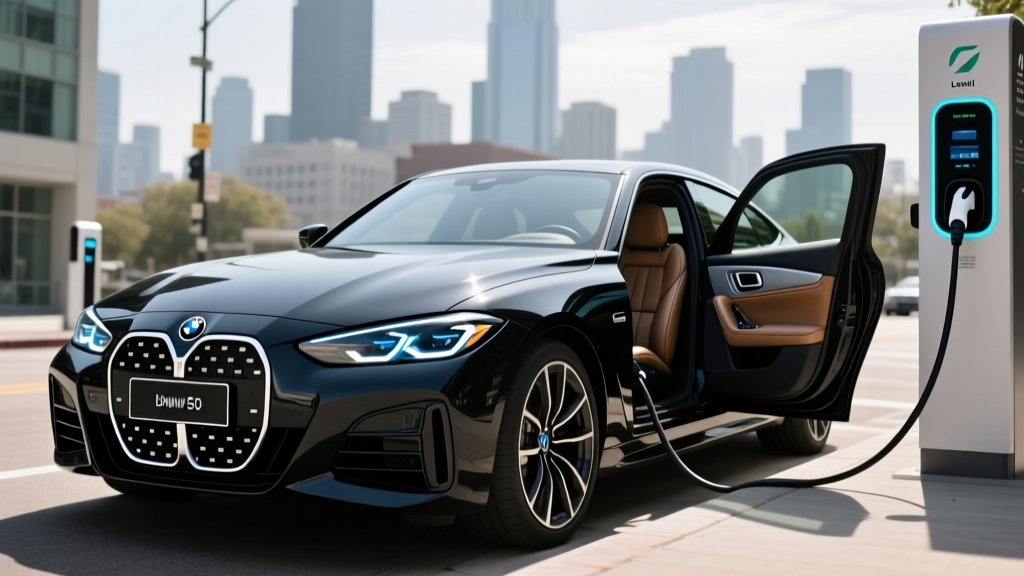
The 2022 BMW i4 M50 arrived as BMW's first fully electric M Performance model — a dual-motor, all-wheel-drive gran coupe that promised sports-sedan thrills without a tailpipe. Built on the same CLAR platform as the 4 Series Gran Coupe, the i4 M50 blends familiar BMW dynamics with an 81.5 kWh battery pack and up to 536 horsepower. Now that the model has been on the road for several years, we have a clear picture of what ownership actually looks like: real-world range, charging behavior, long-term battery health, and whether it still holds up against newer rivals in 2026.
This review covers the 2022 model year specifically — the launch year for the i4 lineup — with notes on how it compares to the updated i4 variants BMW has since introduced.
Range, Battery, and Real-World Efficiency
The 2022 BMW i4 M50 carries an 81.5 kWh battery pack (76.3 kWh usable) using NMC (nickel manganese cobalt) lithium-ion chemistry housed in a slim underfloor module. BMW opted for NMC over LFP to prioritize energy density and performance output, which aligns with the M50's sporty positioning.
The EPA rates the i4 M50 with the standard 19-inch wheels at 270 miles of combined range. Step up to the optional 20-inch wheels and that drops to 227 miles — a significant 43-mile penalty driven by increased rolling resistance and weight.
The EPA's 270-mile figure assumes mixed driving. In our experience and owner reports, expect ~240–255 miles on highway-heavy trips at 70–75 mph, and closer to 200–220 miles in sustained cold weather (below 30°F) without preconditioning. The i4 M50's heat pump (standard equipment) helps mitigate winter losses compared to resistive heating, but physics still wins. City driving with heavy regen can push range toward or slightly above the EPA sticker.
Efficiency comes in at 97 MPGe combined (19-inch wheels) per fueleconomy.gov, translating to roughly 35 kWh per 100 miles. That's respectable for a 4,800-pound performance sedan but trails lighter rivals like the Tesla Model 3 Performance.
Charging Speed: DC Fast and Home Level 2
Charging capability is where the i4 M50 shows its 2022 engineering vintage — competent but not class-leading by today's standards.
| Charging Level | Power | Speed / Time | Connector |
|---|---|---|---|
| Level 1 (120V) | ~1.4 kW | ~3–4 mi/hr | J1772 |
| Level 2 (240V, 48A) | 11 kW (onboard charger) | ~25–30 mi/hr; 0–100% in ~8.25 hr | J1772 / CCS |
| DC Fast Charge | Up to 200 kW peak | 10–80% in ~31 min | CCS1 |
The 200 kW peak DC charge rate is the headline number, but as with all EVs, the charge curve matters more than the peak. The i4 M50 sustains roughly 150–180 kW up to about 50% State of Charge, then tapers progressively. From 80% to 100%, charging slows dramatically to protect the NMC cells — a pattern common across the industry. On a 350 kW Electrify America or EVgo station, you won't use anywhere near the stall's maximum capacity.
At home on a Level 2 wallbox, the 11 kW onboard charger is a strong point — it refills the pack faster overnight than many competitors limited to 7.2 or 9.6 kW. A full charge from near-empty takes about 8 hours, making a standard overnight top-up trivial.
The i4 M50 uses the CCS1 connector. BMW has since adopted NACS (Tesla's charging standard) for newer models, but the 2022 i4 M50 will require a CCS-to-NACS adapter for Tesla Supercharger access — something BMW has made available through dealerships.
Performance: 0–60, Horsepower, and Drivetrain
This is where the M50 badge earns its keep. The dual-motor all-wheel-drive powertrain produces 536 horsepower and 586 lb-ft of torque when using the Sport Boost function (a 10-second burst mode). In standard driving, output is 469 hp.
| Specification | 2022 BMW i4 M50 |
|---|---|
| Drivetrain | Dual-motor AWD |
| Horsepower (Sport Boost) | 536 hp |
| Torque | 586 lb-ft |
| 0–60 mph | 3.7 seconds |
| Top Speed | 140 mph (electronically limited) |
| Battery (Usable) | 76.3 kWh (NMC) |
| EPA Range (19" wheels) | 270 miles |
| EPA Efficiency | 97 MPGe / 35 kWh/100mi |
| Curb Weight | ~4,874 lbs |
| Cargo Volume | 10.3 cu ft (rear hatch) |
| Rear Legroom | 34.9 inches |
| Battery Warranty | 8 years / 100,000 miles |
| Base MSRP (2022) | $65,900 |
The 3.7-second 0–60 time puts the i4 M50 firmly in sports-sedan territory — quicker than a gasoline M340i xDrive and trailing only the full M3 in BMW's lineup. The instant torque delivery and low center of gravity (battery pack under the floor) make it feel even quicker in real-world passing situations.
BMW's adaptive M suspension, variable sport steering, and M Sport brakes are all standard on the M50. The result is a car that handles its nearly 5,000-pound mass with surprising agility, though you'll feel that weight during aggressive direction changes compared to lighter competitors.
Interior, Cargo, and Daily Practicality
The i4 M50 shares its interior with the 4 Series Gran Coupe, which means BMW's curved display setup: a 12.3-inch instrument cluster merged with a 14.9-inch touchscreen running iDrive 8. The system is responsive, supports wireless Apple CarPlay and Android Auto, and includes a head-up display with EV-specific readouts like range and charge status.
Practicality is the i4's mixed bag. The liftback/hatch design gives a wide cargo opening, but the 10.3 cubic feet of trunk space is modest for a car this size — less than a Model 3's 23 cu ft and without any front trunk (frunk). The battery pack eats into underfloor storage that the gas 4 Series Gran Coupe offers.
Passenger space is adequate for four adults, though the 34.9 inches of rear legroom is tight for taller passengers on longer trips. The transmission tunnel hump (a carryover from the shared CLAR platform) further compromises the middle rear seat. This is a driver-focused car, not a family hauler.
Driver-assistance technology includes BMW's Driving Assistant Professional package, which bundles adaptive cruise control with stop-and-go, lane-keeping assist, and automatic emergency braking. This is a SAE Level 2 system — it requires continuous driver supervision and does not enable hands-off or self-driving operation. BMW's Highway Assistant (hands-off up to 85 mph on divided highways) was not available on the 2022 model year; it arrived with later i4 updates.
Pricing, Tax Credits, and Value in 2026
The 2022 BMW i4 M50 launched with a base MSRP of $65,900, before a $995 destination charge. Well-optioned examples with the Premium Package, larger wheels, and M Carbon exterior bits pushed as-tested prices into the $72,000–$78,000 range.
| Cost Factor | Amount |
|---|---|
| Base MSRP (2022) | $65,900 |
| Typical As-Tested Price | $72,000–$78,000 |
| Federal §30D Credit (New) | $0 (MSRP cap: sedans capped at $55,000) |
| Used EV Credit (§25E, if eligible) | Up to $4,000 (30% of sale price, max $4,000) |
| Est. Used Price (2026) | $35,000–$48,000 |
The 2022 i4 M50 never qualified for the $7,500 federal EV tax credit as a new vehicle. Under IRS §30D rules, sedans are subject to a $55,000 MSRP cap, and the M50's $65,900 starting price blew past that threshold. This remains one of the biggest financial disadvantages compared to the i4 eDrive40 (which also exceeded the cap) and competitors like the Tesla Model 3 or Hyundai Ioniq 6.
However, buyers purchasing a used 2022 i4 M50 in 2026 may qualify for the §25E used clean vehicle credit — up to $4,000 or 30% of the sale price, whichever is less. Income caps apply ($75,000 single / $150,000 joint), and the vehicle must be purchased from a licensed dealer. Always verify current rules at IRS.gov and consult a tax professional.
How It Compares: i4 M50 vs. Key Rivals
In the used market in 2026, the i4 M50 competes against several compelling alternatives at similar price points:
- Tesla Model 3 Performance (2022–2023): Quicker (3.1s 0–60), longer range (~315 mi EPA), vastly better charging speed (250 kW), and Supercharger access. The trade-off: a less refined interior, firmer ride, and no traditional luxury badge.
- Polestar 2 (dual-motor, 2022): More distinctive design, Google-based infotainment, and similar build quality. But it offers less range (~249 mi), slower DC charging (150 kW), and a tighter back seat.
- BMW i4 eDrive40 (2022): The single-motor, RWD sibling trades the M50's 270 miles for an EPA-estimated 301 miles, a lower starting price ($55,400 — though still above the credit cap for sedans), and a more relaxed driving character. Better range-per-dollar for most commuters.
- Hyundai Ioniq 6 (2023+): Significantly more efficient (up to 140 MPGe), faster 800V charging (~18 min 10–80%), and eligible for the full $7,500 credit when new. Less premium inside, but a compelling value proposition.
The i4 M50 wins on build quality, ride refinement, and brand cachet. It loses on range efficiency, charging speed, and tax-credit access. If driving dynamics and interior luxury matter more than maximizing range per dollar, the M50 still holds up well.
Warranty, Battery Health, and Long-Term Ownership
BMW covers the i4 M50's high-voltage battery with an 8-year / 100,000-mile warranty against defects and excessive capacity loss (below 70% of original capacity). The powertrain and general vehicle carry a 4-year / 50,000-mile bumper-to-bumper warranty — typical for BMW but shorter than Hyundai's 10-year coverage.
NMC battery chemistry has proven reliable in BMW's application. Early i4 owner data and European fleet reports suggest degradation of approximately 5–8% over the first 3 years / 60,000 miles under normal use patterns. This is within expectations for a liquid-cooled NMC pack with active thermal management.
For used buyers in 2026, a pre-purchase battery health check (State of Health reading via BMW's diagnostic system or third-party tools like AVILOO) is strongly recommended. Most 2022 i4 M50s should still have significant battery warranty remaining.
Pros, Cons, and Who Should Buy
- 536 hp and 3.7s 0–60 — genuine M-car acceleration
- Refined ride quality and cabin insulation
- 11 kW Level 2 onboard charger (faster home charging than most rivals)
- Liftback hatch practicality for a sedan form factor
- iDrive 8 with wireless CarPlay/Android Auto
- Strong build quality and materials
- Adaptive M suspension standard
- No federal tax credit eligibility (MSRP above $55K cap)
- 200 kW peak DC charging trails 800V rivals
- 10.3 cu ft cargo space — no frunk, tight trunk
- Rear seat cramped for taller adults (34.9" legroom)
- 20-inch wheel option slashes range to 227 mi
- CCS connector (needs adapter for Tesla Superchargers)
- Heavy at ~4,874 lbs — felt in corners
Buy it if: You want a premium electric sports sedan with real M-car performance, you mostly commute and take day trips within the 240-mile real-world envelope, you can charge at home overnight, and you value build quality over maximum range-per-dollar.
Look elsewhere if: You regularly drive 300+ miles between charges, you want the fastest possible road-trip charging, you need a spacious rear seat for family duty, or you want to maximize federal incentive savings.
Frequently Asked Questions
What is the real-world range of the 2022 BMW i4 M50?
The EPA rates it at 270 miles (19-inch wheels), but real-world highway driving typically yields 240–255 miles. Cold weather (below 30°F) can reduce range to 200–220 miles. City driving with regenerative braking may approach or slightly exceed the EPA figure. The 20-inch wheel option drops EPA range to 227 miles — a penalty most buyers should avoid unless aesthetics outweigh efficiency.
How fast does the i4 M50 charge at home and on the road?
At home on a 240V Level 2 charger, the 11 kW onboard charger adds roughly 25–30 miles of range per hour, filling the battery from empty in about 8.25 hours. On DC fast chargers, it peaks at 200 kW and charges from 10–80% in approximately 31 minutes. The charge curve tapers above 50% SoC, so actual average charging speed on a road trip is closer to 120–140 kW.
Does the 2022 BMW i4 M50 qualify for the federal EV tax credit?
No — not as a new vehicle. The IRS §30D credit caps sedans at a $55,000 MSRP, and the i4 M50 started at $65,900. However, as a used vehicle purchased from a dealer in 2026, it may qualify for the §25E used clean vehicle credit of up to $4,000 (30% of sale price), subject to buyer income limits ($75K single / $150K joint). Verify current rules at IRS.gov.
Is the 2022 i4 M50 worth buying vs. a Tesla Model 3 Performance?
It depends on your priorities. The Model 3 Performance is quicker (3.1s 0–60), has longer range (~315 mi), charges faster (250 kW), and offers Supercharger access. The i4 M50 counters with a far more refined interior, better ride quality, a traditional luxury dealership experience, and BMW's M Performance driving dynamics. If cabin luxury and brand matter more than raw efficiency, the i4 M50 is the pick.
What is the battery warranty on the 2022 i4 M50?
BMW covers the high-voltage battery for 8 years or 100,000 miles, whichever comes first. The warranty covers defects and capacity loss below 70% of the original usable capacity. Most 2022 models in 2026 will still have several years of battery warranty remaining.
Can the i4 M50 use Tesla Superchargers?
The 2022 i4 M50 has a CCS1 charge port. To use Tesla Superchargers (which use the NACS connector), you need a CCS-to-NACS adapter. BMW has offered these adapters through dealerships. Confirm compatibility with your specific Supercharger network before relying on it for road trips.
How much does it cost to charge the i4 M50 at home?
Filling the 76.3 kWh usable battery from empty at the US average residential electricity rate of ~$0.16/kWh costs approximately $12.20. At the car's real-world efficiency of ~35 kWh/100 miles, that works out to roughly $0.056 per mile — about one-third the per-mile fuel cost of a comparable gasoline sports sedan at $3.50/gallon.