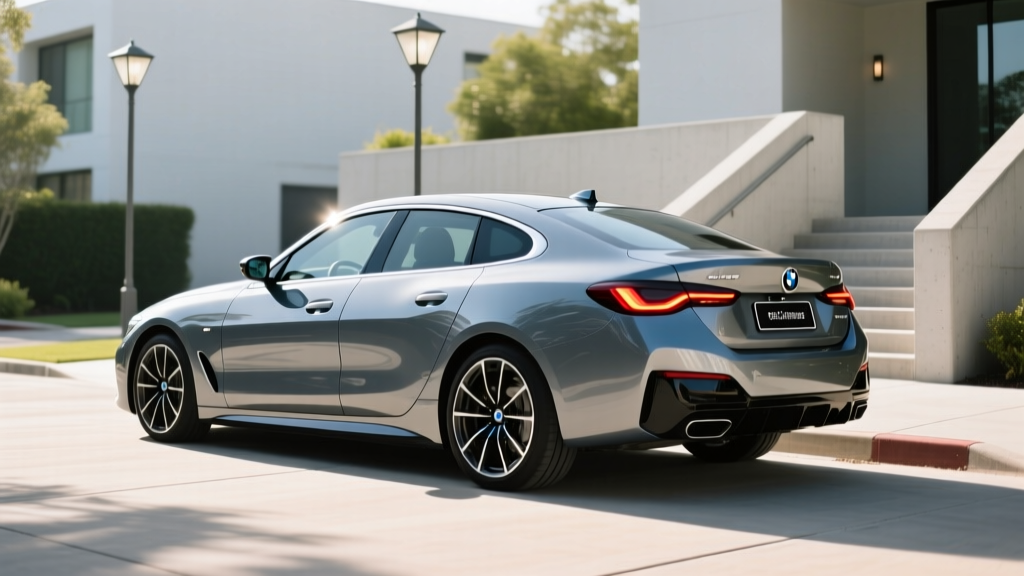
The 2022 BMW i4 eDrive40 arrived as one of the first premium electric sedans to challenge the Tesla Model 3 on its own terms — pairing a familiar 4 Series Gran Coupe body with a rear-wheel-drive electric powertrain and a usable battery large enough for genuine road-trip duty. Now that the i4 has been on sale for several model years, the 2022 eDrive40 has become an attractive target in the certified pre-owned and used EV market, where buyers can pair strong performance with potential used-EV tax credit eligibility. Here is a data-driven look at what the 2022 BMW i4 eDrive40 actually delivers in range, charging speed, ownership cost, and daily livability.
Quick Verdict: Who the 2022 BMW i4 eDrive40 Is For
The 2022 BMW i4 eDrive40 is best suited for drivers who want a premium sport sedan that happens to be electric — not an EV-first design that compromises on build quality or driving dynamics. It fits the executive commuter, the couple who takes weekend road trips of 250–400 miles, and the buyer transitioning from a 3 Series or 4 Series who wants electrification without learning a new interface from scratch. It is not ideal for large families needing three-row seating, heavy towing, or buyers on a strict sub-$35,000 budget.
Range, Efficiency & Real-World Expectations
The EPA rates the 2022 BMW i4 eDrive40 at 301 miles of combined range on its 19-inch wheels (the larger 20-inch sport wheels drop that figure to approximately 270 miles). Efficiency is rated at 97 MPGe combined, which translates to roughly 34 kWh per 100 miles — competitive with the Tesla Model 3 Long Range and slightly behind the Hyundai Ioniq 6 in pure efficiency terms.
Real-World Highway (70 mph, 65°F): Expect approximately 260–280 miles before needing a charge stop.
Cold Weather (below 32°F): Range drops 15–25%, putting real-world winter range at roughly 220–250 miles depending on cabin heating use and preconditioning habits.
City / Moderate Climate: 290–310 miles is achievable with regenerative braking doing heavy lifting in stop-and-go traffic.
BMW's thermal management system is robust — the i4 uses a heat pump as standard equipment, which helps preserve range in cold weather compared to EVs relying solely on resistive cabin heating. On a 300-mile highway road trip in mild conditions, you can expect to arrive at a DC fast charger with roughly 10–15% state of charge remaining if you started at 100%. Plan conservatively in winter.
| Spec | Value |
|---|---|
| EPA Range (19" wheels) | 301 miles |
| EPA Range (20" wheels) | ~270 miles |
| Battery (usable capacity) | 81.5 kWh (NMC chemistry) |
| Battery (gross capacity) | 83.9 kWh |
| Efficiency | 97 MPGe / ~34 kWh/100 mi |
| Drivetrain | Rear-wheel drive (single motor) |
| Horsepower | 335 hp |
| Torque | 317 lb-ft |
| 0–60 mph | 5.5 seconds |
| Top Speed | 118 mph (electronically limited) |
| Max DC Fast Charge | 205 kW (CCS1) |
| 10–80% DC Fast Charge | ~31 minutes |
| Level 2 Charge Rate | 11 kW (up to 44 mi/hr) |
| Cargo Volume | 16.6 cu ft (rear seats folded) |
| Rear Legroom | 33.4 inches |
| Battery Warranty | 8 years / 100,000 miles |
| Original Base MSRP | $55,400 (before destination) |
Battery Chemistry, Capacity & Longevity
The 2022 i4 eDrive40 uses an 81.5 kWh usable (83.9 kWh gross) lithium-ion battery pack with NMC (nickel manganese cobalt) chemistry. This is BMW's fifth-generation eDrive battery architecture, which integrates the cells into a slim floor-mounted module designed to keep the center of gravity low without intruding on cabin space.
NMC chemistry offers a strong balance of energy density and performance, though it carries different care requirements compared to LFP (lithium iron phosphate) packs found in some Tesla Model 3 variants. BMW recommends daily charging to 80–90% for routine use and reserving 100% charges for road-trip departure days. The battery management system includes a buffer — you never truly access the full 83.9 kWh, which helps mitigate long-term degradation.
BMW covers the high-voltage battery for 8 years or 100,000 miles, whichever comes first, against capacity dropping below 70% of its original state of health. Independent data from fleet operators and early adopters of BMW's Gen5 eDrive platform suggests typical degradation of 5–8% over the first 60,000 miles — well within the warranty threshold. According to fueleconomy.gov, modern lithium-ion EV batteries are designed to outlast 150,000+ miles before reaching significant degradation milestones.
Charging Speed: DC Fast, Level 2 & Home Setup
The 2022 BMW i4 eDrive40 supports DC fast charging at up to 205 kW via its CCS1 connector. In optimal conditions — battery preconditioned, starting at a low state of charge — the i4 can add approximately 164 miles of range in 10 minutes on a 200+ kW charger, according to BMW. A 10–80% charge takes approximately 31 minutes.
However, the charging curve matters. The i4 sustains its peak charge rate between roughly 10% and 40% state of charge, then begins tapering. By 60% SoC, the rate drops to approximately 100–120 kW, and above 80% it slows significantly — as is standard for NMC chemistry. If you regularly charge to 100% on DC fast chargers, expect the full session to take 50+ minutes. The practical strategy is to charge to 80% and drive on.
| Charging Level | Power | Range Added per Hour | Typical Use Case |
|---|---|---|---|
| Level 1 (120V household) | ~1.4 kW | ~4 miles/hr | Emergency / overnight trickle |
| Level 2 (240V, 48A home charger) | 11 kW | ~44 miles/hr | Daily home charging (full charge in ~8 hrs) |
| DC Fast Charge (CCS1) | Up to 205 kW | ~164 miles in 10 min (peak) | Road trips, 10–80% in ~31 min |
For home Level 2 charging, the i4's onboard charger accepts up to 11 kW. This means a full charge from near-empty takes approximately 8 hours on a 48-amp Level 2 station — ideal for overnight replenishment. Most owners will plug in each evening and wake up with a full battery. A quality Level 2 home charger (such as a ChargePoint Home Flex or BMW's own Wallbox) costs $500–$700 for the unit, with professional installation typically running $500–$2,000 depending on your electrical panel's capacity and whether a 240V circuit needs to be added.
One important note: the 2022 i4 ships with a CCS1 port. With the industry's shift to NACS (Tesla's connector), BMW has committed to providing NACS adapters and future native NACS ports, but 2022 models require a CCS-to-NACS adapter to access Tesla Supercharger stalls that support non-Tesla vehicles. Check BMW's official EV page for the latest adapter availability.
Performance & Driving Dynamics
The single rear-mounted electric motor produces 335 horsepower and 317 lb-ft of torque, launching the i4 eDrive40 from 0–60 mph in 5.5 seconds. That puts it squarely in sports-sedan territory — roughly matching a BMW M340i xDrive in straight-line acceleration, with the added benefit of instant electric torque delivery and a lower center of gravity.
The rear-wheel-drive layout gives the i4 a more traditional BMW driving character than many electric crossovers. Steering feel is communicative, the chassis balance is neutral-to-slightly-oversteery under hard cornering, and the adaptive suspension (available on M Sport trims) manages ride quality well over rough pavement. Regenerative braking offers multiple modes — including an adaptive setting that uses radar and navigation data to modulate regen based on traffic and upcoming intersections — though true one-pedal driving requires selecting the strongest regen mode manually.
If you need all-wheel drive or more power, BMW offered the 2022 i4 M50 with dual motors (536 hp, 0–60 in 3.7 seconds), but that comes with a range penalty (EPA 227–270 miles depending on wheels) and a significantly higher price.
Pricing, Tax Credits & Ownership Costs
The 2022 BMW i4 eDrive40 originally started at $55,400 (including destination charge), with well-equipped examples reaching $65,000–$70,000 with options like the Premium Package, M Sport Package, larger wheels, and the Harman Kardon surround sound system. On the used market as of 2025–2026, expect to find certified pre-owned examples in the $32,000–$45,000 range depending on mileage and condition.
Federal tax credit eligibility depends heavily on how you acquire the vehicle:
- New vehicle purchase (2022 model year, if any remain in inventory): The 2022 i4 eDrive40 did NOT qualify for the full $7,500 §30D credit under current IRS rules because BMW's battery components and critical minerals did not meet the domestic-sourcing thresholds that took effect in 2023. Always verify current status on irs.gov.
- Used EV purchase (§25E credit): If you buy a 2022 i4 eDrive40 as a qualifying used EV from a dealer for $25,000 or more, you may be eligible for a used-EV tax credit of up to $4,000 (30% of the sale price, capped at $4,000). This credit has income caps: $75,000 single / $112,500 head of household / $150,000 joint filers. The vehicle must be at least two model years old (the 2022 model qualifies in 2024 and beyond), and the credit can be transferred to the dealer as a point-of-sale discount starting in 2024.
- Lease: Leased EVs may qualify for a $7,500 commercial credit passed through by the leasing company, but this depends on the lessor's structure and whether they pass savings to the lessee.
Five-year total cost of ownership for the i4 eDrive40 is competitive with the Tesla Model 3 Long Range and Audi e-tron GT when factoring in electricity costs (approximately $0.13/kWh national average = ~$4.40 per 100 miles vs. ~$14 per 100 miles for a comparable gas sedan at 25 MPG and $3.50/gallon). Insurance premiums for the i4 tend to run 15–25% higher than a gas-powered 4 Series due to repair costs and battery replacement considerations.
Interior, Tech & Cargo Practicality
The 2022 i4 introduced BMW's Curved Display — a single piece of glass housing a 12.3-inch instrument cluster and a 14.9-inch central touchscreen running iDrive 8. The system is responsive, supports wireless Apple CarPlay and Android Auto, and includes over-the-air update capability. Voice control via "Hey BMW" handles navigation, climate, and media requests with reasonable accuracy.
The i4's Gran Coupe hatchback body style provides 16.6 cubic feet of cargo space with the rear seats folded — more practical than a traditional sedan trunk and enough for two large suitcases plus carry-ons. Rear legroom is 33.4 inches, which is adequate for adults on shorter trips but tighter than a Tesla Model 3 (35.3 inches) or a full-size sedan. The sloping roofline cuts into rear headroom for passengers over 6 feet tall.
Driver-assistance technology includes BMW's Driving Assistant Professional, which provides adaptive cruise control with stop-and-go, lane-keeping assist, and automatic lane-change capability on highways. This is an SAE Level 2 system — meaning the driver must keep hands on the wheel and remain fully engaged at all times. It is not a self-driving system. The available Parking Assistant Plus with Reversing Assistant can autonomously back the car out of tight spaces along the exact path it drove in — a genuinely useful feature in urban garages.
- 301-mile EPA range (19" wheels) is road-trip capable
- 205 kW DC fast charging with solid sustained rates
- Refined ride quality and genuine BMW driving dynamics
- Heat pump standard — better cold-weather range preservation
- Hatchback cargo versatility (16.6 cu ft)
- iDrive 8 interface is polished and responsive
- Used-EV tax credit potential (~$4,000 on qualifying purchases)
- Rear legroom (33.4") is tight for a premium sedan
- CCS1 port requires adapter for Tesla Supercharger access
- Did not qualify for full $7,500 new-vehicle credit under current sourcing rules
- 20" sport wheels reduce range by ~30 miles
- Insurance premiums run higher than gas 4 Series equivalents
- No front trunk (frunk) — space is occupied by power electronics
2022 BMW i4 eDrive40 vs. Key Competitors
How does the 2022 i4 eDrive40 stack up against its primary rivals?
| Spec | 2022 BMW i4 eDrive40 | 2022 Tesla Model 3 LR | 2022 Polestar 2 LR SM |
|---|---|---|---|
| EPA Range | 301 mi | 358 mi | 270 mi |
| Battery (usable) | 81.5 kWh (NMC) | ~75 kWh (NMC/NCA) | 75 kWh (NMC) |
| 0–60 mph | 5.5 sec | 4.2 sec | 6.8 sec |
| Max DC Charge | 205 kW | 250 kW | 205 kW |
| 10–80% Time | ~31 min | ~25 min | ~32 min |
| Base MSRP (2022) | $55,400 | $52,990 | $49,900 |
| Cargo | 16.6 cu ft | 23 cu ft | 14.4 cu ft |
The Tesla Model 3 Long Range wins on range (358 miles), charging speed (250 kW), and Supercharger network access. The Polestar 2 undercuts on price but sacrifices range and performance. The BMW i4 eDrive40 occupies a middle ground: it trades some range and peak charge speed for superior interior materials, quieter cabin isolation, more traditional driving dynamics, and BMW dealer service infrastructure. If you value build quality and driving refinement over maximum efficiency numbers, the i4 makes a compelling case.
Frequently Asked Questions
What is the real-world range of the 2022 BMW i4 eDrive40?
In mixed driving at moderate temperatures, expect 270–290 miles. On sustained highway driving at 70+ mph, plan for 260–280 miles. In freezing temperatures, range drops to approximately 220–250 miles. The heat pump helps mitigate cold-weather losses compared to EVs without one, but physics still applies — battery chemistry slows and cabin heating draws energy.
How fast does the 2022 BMW i4 eDrive40 charge at home and on DC fast chargers?
At home on a Level 2 (240V, 48A) charger, the i4 accepts up to 11 kW and adds approximately 44 miles of range per hour — a full overnight charge in about 8 hours. On a DC fast charger, it peaks at 205 kW and charges from 10–80% in approximately 31 minutes under optimal conditions. The charge curve tapers noticeably above 60% SoC.
Does the 2022 BMW i4 eDrive40 qualify for the federal EV tax credit?
As a new vehicle, the 2022 i4 eDrive40 did not qualify for the full $7,500 §30D credit under current battery-sourcing and critical-mineral requirements. However, if purchased as a used EV from a dealer in 2024 or later, it may qualify for the §25E used-EV credit of up to $4,000 (30% of sale price, capped at $4,000), subject to buyer income limits ($75K single / $150K joint) and a sale price above $25,000. Always confirm eligibility at irs.gov and consult a tax professional.
Is the 2022 BMW i4 eDrive40 worth buying vs. a Tesla Model 3 or Polestar 2?
It depends on your priorities. Choose the i4 if you value BMW driving dynamics, interior refinement, quiet cabin isolation, and hatchback practicality. Choose the Model 3 Long Range if maximum range (358 mi), faster charging (250 kW), and Supercharger network access matter most. Choose the Polestar 2 if you want a lower entry price and distinctive Scandinavian design but can accept shorter range (270 mi).
What is the battery warranty on the 2022 BMW i4?
BMW covers the high-voltage battery for 8 years or 100,000 miles, whichever comes first, against capacity falling below 70% of original state of health. The rest of the vehicle carries BMW's standard 4-year/50,000-mile limited warranty and 4-year/unlimited-mileage corrosion warranty.
Does the 2022 i4 have a frunk (front trunk)?
No. The space under the hood is occupied by power electronics and the HVAC system. All cargo space is in the rear hatchback area (16.6 cu ft with seats folded).
Can the 2022 BMW i4 eDrive40 charge at Tesla Superchargers?
The 2022 i4 uses a CCS1 connector. As BMW rolls out NACS adapter compatibility and as Tesla opens more Supercharger stalls to non-Tesla vehicles via the Magic Dock or adapter programs, access is expanding. Check BMW's official guidance for approved adapters and compatible Supercharger locations before relying on Tesla's network for road trips.