Quick Verdict: The 2022 Audi e-tron in a 2026 Market
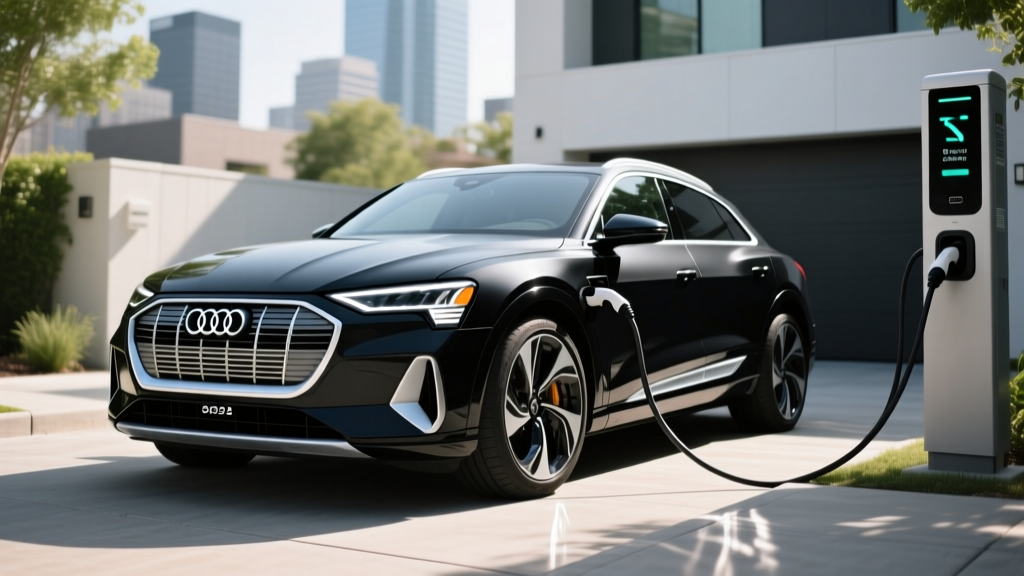
The 2022 Audi e-tron occupies an unusual space in today's used EV market. It's a luxury electric SUV that prioritizes refinement, build quality, and a whisper-quiet cabin over headline-grabbing range figures. With an EPA-estimated 222 miles of range and a 95 kWh battery pack, it trails rivals like the Tesla Model X and BMW iX on paper — but delivers a driving experience that feels closer to a traditional Audi than an appliance-like EV. For buyers shopping the pre-owned luxury EV segment in 2026, the e-tron's depreciated pricing makes it a compelling, if range-limited, option.
EPA estimate: 222 miles (Premium Plus trim with 20-inch wheels). The Prestige trim with 21-inch wheels drops to 218 miles. In real-world mixed driving, expect 195–210 miles on the highway at 70+ mph, and potentially 170–185 miles in sub-30°F winter conditions. City driving with regenerative braking can push closer to the EPA sticker or slightly above.
Spec Sheet: 2022 Audi e-tron at a Glance
| Specification | 2022 Audi e-tron (SUV) |
|---|---|
| EPA Range | 222 mi (20" wheels) / 218 mi (21" wheels) |
| Battery Capacity | 95 kWh gross / ~86.5 kWh usable (NMC lithium-ion) |
| Drivetrain | Dual-motor AWD (quattro) |
| Horsepower | 355 hp (402 hp in Boost mode) |
| Torque | 414 lb-ft (490 lb-ft Boost) |
| 0–60 mph | 5.5 seconds (5.3 sec Boost) |
| Top Speed | 124 mph (electronically limited) |
| Max DC Fast Charge | 150 kW (CCS1) |
| 10–80% DC Charge Time | ~30 minutes |
| Level 2 Charge Rate | 11.5 kW (~25 mi/hr) |
| Efficiency | 78 MPGe combined / 43 kWh/100 mi |
| Cargo (rear seats up) | 28.5 cu ft |
| Cargo (rear seats folded) | 57.0 cu ft |
| Towing Capacity | 4,000 lbs |
| Battery Warranty | 8 years / 100,000 miles |
| Original Base MSRP | $65,900 (Premium Plus) |
Source: EPA Fuel Economy
Range and Efficiency: Honest Numbers for Real Drivers
The 2022 e-tron uses a 95 kWh gross battery pack with approximately 86.5 kWh of usable capacity. Audi employs a relatively large buffer — roughly 8.5 kWh split between the top and bottom of the pack — to protect long-term battery health. This conservative approach helps explain the robust state-of-health readings many owners report at higher mileages, but it also means you're carrying battery weight you can't access for range.
The NMC (nickel-manganese-cobalt) chemistry offers strong energy density and excellent thermal stability when paired with Audi's liquid thermal management system. The e-tron actively heats and cools the pack to keep cells in their optimal temperature window, which pays dividends during DC fast charging and extreme-weather driving.
Efficiency lands at 78 MPGe combined (43 kWh per 100 miles) per the EPA. That's notably less efficient than a Tesla Model Y (roughly 28 kWh/100 mi) or even the Ford Mustang Mach-E. The e-tron's 5,700-pound curb weight and luxury-car aerodynamics are the primary culprits. On a road trip at 75 mph in moderate temperatures, plan for roughly 190–200 miles of usable range before needing a charge stop — and factor in the charging-curve taper above 80% SoC when planning stops.
Charging Performance: The e-tron's Sustained-Speed Advantage
| Charging Level | Power | Speed (miles added) | Notes |
|---|---|---|---|
| Level 1 (120V) | ~1.4 kW | ~3 mi/hr | Emergency/trickle only |
| Level 2 (240V, 48A) | 11.5 kW | ~25 mi/hr | Full charge in ~8.5 hours |
| DC Fast Charge | Peak 150 kW | ~160 mi in 30 min (10–80%) | CCS1 connector |
The 2022 e-tron's 150 kW peak DC fast-charge rate doesn't lead the class, but its charge curve is one of the flattest in the industry. Where many EVs spike to a peak kW and then taper aggressively, the e-tron sustains close to 150 kW from roughly 10% all the way to 70–75% SoC before gradually stepping down. This means the 10–80% time of approximately 30 minutes is genuinely achievable at a properly functioning 150+ kW CCS station — not just a theoretical best case.
For home Level 2 charging, the onboard 11.5 kW charger is a strong point. With a 48-amp hardwired Level 2 station (like a ChargePoint Home Flex or Wallbox Pulsar Plus on a 60-amp circuit), you'll add roughly 25 miles of range per hour. A full overnight charge from 10% to 100% takes about 8.5 hours — well within a typical overnight window.
The e-tron uses the CCS1 connector for DC fast charging. As of 2026, Audi has not released a NACS adapter for the e-tron, so access to Tesla Superchargers requires checking for stations that have integrated CCS cables or using third-party networks like Electrify America, EVgo, and ChargePoint. Audi originally included 1,500 kWh of complimentary Electrify America charging with new e-tron purchases — check whether any of that allocation remains on a used example.
Performance and Driving Dynamics
The dual-motor quattro all-wheel-drive system produces 355 horsepower in standard driving and 402 horsepower when Boost mode is engaged (available in 8-second bursts via a second kickdown detent on the accelerator). The 0–60 mph sprint takes 5.5 seconds — brisk for a luxury SUV but not in the same territory as a Tesla Model X Plaid or even the later e-tron GT sedan.
Where the e-tron earns its Audi badge is ride quality. The standard adaptive air suspension delivers a genuinely plush, isolated ride that absorbs highway expansion joints and rough pavement without drama. Steering is precise if light, and the cabin is among the quietest in the EV segment — wind and tire noise are remarkably well-suppressed even at 80 mph.
Regenerative braking offers three levels selectable via steering-wheel paddles, plus an Auto mode that uses radar and navigation data to modulate regen based on traffic and upcoming curves. One-pedal driving is possible but not as aggressive as Tesla or Nissan's implementations — the e-tron creeps at very low speeds rather than coming to a full stop. Towing capacity is rated at 4,000 pounds, adequate for a small trailer or pair of jet skis.
Interior, Tech, and Cargo
The cabin is a showcase of Audi's pre-2024 design language: dual touchscreen displays (10.1-inch upper for infotainment, 8.6-inch lower for climate and handwriting input), a 12.3-inch Virtual Cockit digital instrument cluster, and premium materials throughout. Haptic feedback on the touchscreens provides tactile confirmation, though some drivers find the dual-screen setup more distracting than a single large display.
Standard driver-assistance features include adaptive cruise control with stop-and-go, lane-keeping assist, intersection assist, and Audi Pre Sense collision mitigation. These are SAE Level 2 systems — the driver must remain fully engaged with hands on the wheel and eyes on the road. This is not autonomous driving.
Cargo space measures 28.5 cubic feet behind the second row and 57.0 cubic feet with the rear seats folded. That's competitive with a BMW X5 but trails the Tesla Model X significantly. There is no front trunk (frunk) — the space under the hood houses power electronics. Rear-seat legroom is generous at 39.1 inches, and the flat floor (no transmission tunnel) makes the middle seat usable for adults on shorter trips.
Pricing, Depreciation, and Federal Tax Credit
| Trim | Original MSRP (2022) | Estimated Used Price (2026) |
|---|---|---|
| Premium Plus (base) | $65,900 | $30,000–$36,000 |
| Prestige | $71,100 | $33,000–$40,000 |
| Chronos Edition | $72,500 | $35,000–$42,000 |
Luxury EVs have depreciated steeply, and the 2022 e-tron is no exception. Three- to four-year-old examples are now trading at roughly half their original MSRP, making them some of the best value propositions in the used EV market for buyers who prioritize build quality over maximum range.
Federal tax credit note: The §30D new-vehicle tax credit no longer applies to a 2022 e-tron purchased new. However, if you buy from a dealer as a used EV (model year 2022 qualifies as it is at least two model years old), you may be eligible for the used clean vehicle credit under IRS §25E: up to $4,000 or 30% of the sale price (whichever is less), subject to income caps ($75,000 single / $150,000 married filing jointly) and a sale price cap of $25,000. Verify current rules at IRS.gov and consult a tax professional, as eligibility depends on your specific situation, the vehicle's sale price, and battery-sourcing requirements that evolve annually.
Pros and Cons
- Exceptionally quiet, refined cabin with premium materials
- Flat, sustained DC charge curve delivers real-world 30-min 10–80%
- Air suspension ride quality rivals any luxury SUV
- Strong build quality; less panel-gap variability than some rivals
- 4,000-lb towing capacity
- Significant depreciation = strong used value in 2026
- 222-mile EPA range trails rivals by 50–100+ miles
- Heavy at 5,700 lbs; efficiency suffers (43 kWh/100 mi)
- CCS1 only — no native NACS/Tesla Supercharger access
- No frunk; cargo space is mid-pack for the class
- Dual touchscreen interface can be distracting
- Regen braking doesn't enable full one-pedal driving
Who Should Buy the 2022 Audi e-tron?
Choose the 2022 e-tron if: You want a luxury electric SUV with exceptional ride comfort and cabin refinement, your daily commute is under 150 miles round-trip, you have reliable home Level 2 charging, and you value Audi's build quality and brand cachet over maximum range.
Look elsewhere if: You regularly drive 250+ miles between charges, you need Tesla Supercharger network access for road trips, or you prioritize efficiency and cargo space over luxury. The Tesla Model Y, Hyundai Ioniq 5, or a newer Q8 e-tron (the e-tron's 2024+ successor with 285 miles of range) may serve you better.
Frequently Asked Questions
What is the real-world range of the 2022 Audi e-tron?
The EPA rates it at 222 miles, but real-world highway driving at 70–75 mph typically yields 195–210 miles. In cold weather (below 30°F), expect 170–185 miles due to battery heating demands and cabin climate load. City driving with regenerative braking can match or slightly exceed the EPA figure.
How fast does the 2022 e-tron charge at home and on the road?
At home on a 240V Level 2 charger (48 amps), the e-tron charges at 11.5 kW, adding about 25 miles per hour — a full overnight charge takes roughly 8.5 hours. On DC fast chargers, it peaks at 150 kW and sustains that rate impressively, achieving a 10–80% charge in about 30 minutes under good conditions.
Does the 2022 Audi e-tron qualify for any federal tax credit?
Not the new-vehicle §30D credit. However, as a used EV purchase in 2026, it may qualify for the IRS §25E used clean vehicle credit: up to $4,000 or 30% of the sale price (whichever is less). Income caps apply ($75K single / $150K joint), the sale price must be $25,000 or less, and the vehicle must be purchased from a dealer. Check current rules at IRS.gov and consult a tax professional.
How does the e-tron compare to the Tesla Model X or BMW iX?
The e-tron trails both on range (Model X: ~348 mi EPA; iX xDrive50: ~324 mi EPA) and efficiency. However, it competes well on cabin quietness, ride quality, and build consistency. The Model X offers more cargo space, a frunk, and Supercharger access; the iX offers more range and a more modern interior. The e-tron's advantage is its lower used-market price and traditional luxury feel.
What is the battery warranty on a used 2022 e-tron?
Audi covers the high-voltage battery for 8 years or 100,000 miles (whichever comes first) against defects and excessive capacity loss (below 70% state of health). A 2022 model's battery warranty extends through the 2030 model year, meaning most used examples in 2026 still carry several years of battery coverage. Always request a battery health report from the dealer or an Audi service center before purchasing.
Can I charge the e-tron at Tesla Superchargers?
Not directly. The 2022 e-tron uses the CCS1 connector, and Tesla Superchargers use the NACS connector. As of 2026, Audi has not released an official NACS adapter for the e-tron (unlike Ford and Rivian). You'll rely on Electrify America, EVgo, ChargePoint, and other CCS-equipped networks for DC fast charging.