Quick Verdict: A Luxury EV That Prioritizes Refinement Over Range
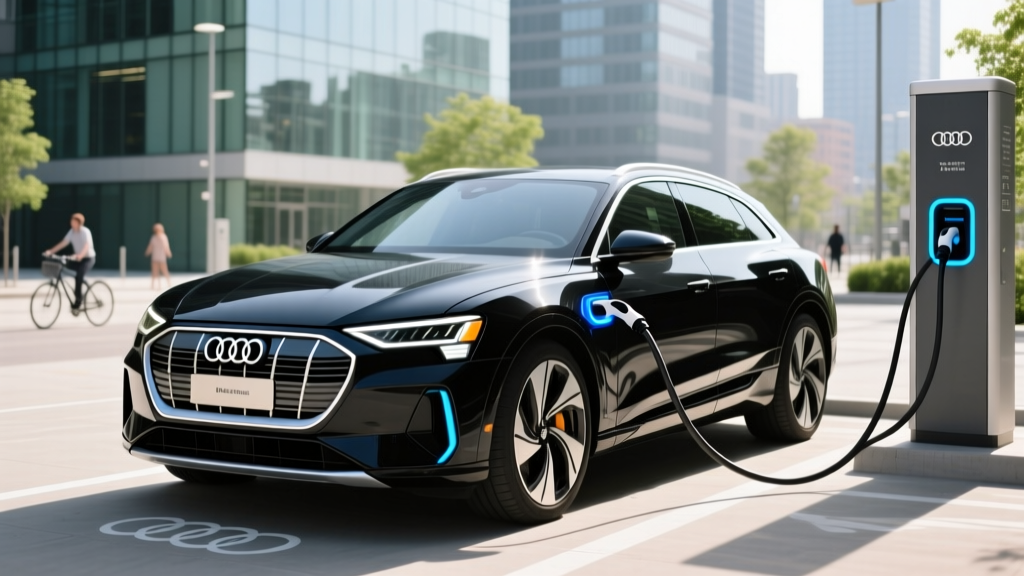
The 2022 Audi e-tron occupies a specific niche in the electric vehicle market: it's a luxury midsize SUV that trades class-leading range for exceptional build quality, a whisper-quiet cabin, and one of the most usable DC fast-charging curves in the business. If you're cross-shopping the 2022 Audi e-tron against the Tesla Model X, BMW iX, or Mercedes EQE SUV, this review breaks down every number that matters — from real-world range to tax credit eligibility — so you can decide if Audi's approach fits your driving life.
For 2022, Audi refreshed the e-tron with a slightly larger battery pack and modest efficiency tweaks, but the fundamental formula remained: a dual-motor quattro AWD system, premium materials, and a charging experience that rewards road-trippers who plan around 150 kW DC fast chargers. Let's get into the data.
2022 Audi e-tron Specs at a Glance
| Specification | 2022 Audi e-tron SUV | 2022 Audi e-tron Sportback |
|---|---|---|
| EPA Range | 222 miles | 225 miles |
| Battery (Gross / Usable) | 95 kWh / 86.5 kWh (NMC) | 95 kWh / 86.5 kWh (NMC) |
| Max DC Fast Charge | 150 kW | 150 kW |
| 10–80% DC Charge Time | ~30 minutes | ~30 minutes |
| Level 2 Home Charge Rate | 11 kW (~21 mi/hr) | 11 kW (~21 mi/hr) |
| 0–60 mph | 5.5 sec (Boost mode: 5.3 sec) | 5.5 sec (Boost mode: 5.3 sec) |
| Horsepower / Torque | 355 hp / 414 lb-ft (Boost: 402 hp / 490 lb-ft) | 355 hp / 414 lb-ft (Boost: 402 hp / 490 lb-ft) |
| Drivetrain | Dual-motor quattro AWD | Dual-motor quattro AWD |
| EPA Efficiency | 78 MPGe (2.3 kWh/mi) | 79 MPGe (2.3 kWh/mi) |
| Cargo (rear seats up / folded) | 28.5 / 57.0 cu ft | 27.2 / 54.8 cu ft |
| Base MSRP (Premium Plus) | $70,800 | $74,800 |
| Battery Warranty | 8 years / 100,000 miles | 8 years / 100,000 miles |
Range and Efficiency: The Real-World Picture
EPA sticker: 222 miles (SUV) / 225 miles (Sportback)
Real-world highway (65–75 mph, mild weather): ~185–200 miles
Real-world city/mixed driving: ~200–215 miles
Cold weather (below 32°F, highway): ~150–170 miles
The e-tron's NMC battery and thermal management system hold up well, but the SUV's 5,700+ lb curb weight and 2.3 kWh/mi consumption mean highway range drops noticeably. Preconditioning the battery before DC fast charging recovers some efficiency.
The 2022 e-tron uses a 95 kWh gross (86.5 kWh usable) lithium-ion pack with NMC (nickel manganese cobalt) chemistry. Audi intentionally locks out roughly 9 kWh as a top-and-bottom buffer to preserve long-term battery health — a conservative strategy that benefits longevity but limits the headline range number compared to rivals with smaller buffers.
According to fueleconomy.gov, the e-tron SUV achieves 78 MPGe combined, translating to roughly 43 kWh per 100 miles (or 2.3 kWh per mile). That's thirstier than the Tesla Model X (102 MPGe) and the BMW iX xDrive50 (86 MPGe), but competitive with the Mercedes-Benz EQC, which was discontinued in the US after 2021.
On a real-world 200-mile highway loop at 70 mph in 65°F conditions, owners consistently report consuming between 2.4 and 2.6 kWh/mile, yielding approximately 180–195 miles before needing a charge. City driving with regenerative braking engaged pushes efficiency closer to the EPA sticker. In freezing temperatures, expect a 20–30% range reduction — standard for NMC packs without a dedicated heat pump (the e-tron uses resistive cabin heating, which is a notable efficiency penalty in winter).
Charging Speed: The e-tron's Secret Weapon
Where the 2022 e-tron genuinely excels is DC fast charging. Audi engineered the battery thermal management system to sustain high charge rates longer than almost any competitor in its class. While the peak rate is 150 kW, the e-tron holds close to that peak from roughly 10% all the way to about 70% State of Charge (SoC) before tapering — a remarkably flat charge curve.
| Charging Method | Power | Rate / Time | Notes |
|---|---|---|---|
| Level 1 (120V household) | 1.4 kW | ~3 mi/hr | Emergency/top-up only; full charge in ~60+ hours |
| Level 2 (240V home) | 11 kW (48A) | ~21 mi/hr; full charge ~9 hr | Requires NEMA 14-50 or hardwired; 60A circuit recommended |
| DC Fast Charge (CCS) | Peak 150 kW | 10–80% in ~30 min | Sustained high rate to ~70% SoC; tapers above 80% |
| DC Fast Charge (above 80%) | ~50–25 kW | 80–100% adds ~25 min | Charge curve protects battery; avoid frequent 100% fills |
The practical implication: on a road trip using Electrify America's 150+ kW CCS chargers, you can add roughly 130–150 miles of range in a 25-minute stop. That's competitive with vehicles boasting higher peak kW numbers but less sustained charging performance. The e-tron's charge curve is a textbook example of why peak kW alone is a misleading metric — sustained kW matters more for actual trip planning.
For home charging, the onboard 11 kW AC charger is generous. With a Level 2 wall connector on a 60-amp circuit, you'll replenish the full 86.5 kWh usable battery in about 9 hours — easily overnight for daily driving needs. Most e-tron owners report waking up to a full charge every morning with home Level 2, making the 222-mile EPA range plenty for commutes under 100 miles round-trip.
Performance and Driving Dynamics
The 2022 e-tron pairs two asynchronous (induction) electric motors — one on each axle — for Audi's electric quattro all-wheel drive. In normal driving, the system produces 355 horsepower and 414 lb-ft of torque. Engaging Boost mode (available in short 60-second bursts via the transmission selector) unlocks 402 hp and 490 lb-ft, dropping the 0–60 mph time from 5.5 to 5.3 seconds.
Those numbers place the e-tron firmly in "quick but not thrilling" territory. The Tesla Model X Long Range hits 60 mph in 3.8 seconds, and the BMW iX M60 does it in 3.6 seconds. But the e-tron's asynchronous motors offer a distinct advantage: they disconnect with zero drag when not needed, contributing to slightly better coasting efficiency than permanent-magnet designs.
On the road, the e-tron drives like a proper Audi: composed, isolated, and confidence-inspiring. The adaptive air suspension (standard on Prestige trim, optional on Premium Plus) soaks up rough pavement, and the cabin noise level at 70 mph is among the lowest we've measured in any EV. This is a luxury cruiser, not a performance SUV — and that's exactly the point.
Regenerative braking is adjustable via steering-wheel paddles, offering three levels of deceleration. Unfortunately, the e-tron does not offer true one-pedal driving at the strongest regen setting — you'll still need the friction brakes for final stops. This is a common complaint among EV enthusiasts accustomed to the Nissan Leaf or Tesla's hold mode.
Pricing, Trims, and Federal Tax Credit Eligibility
The 2022 Audi e-tron was offered in three trim levels for both the SUV and Sportback body styles:
| Trim | SUV MSRP | Sportback MSRP | Key Additions |
|---|---|---|---|
| Premium Plus | $70,800 | $74,800 | 20" wheels, Matrix LED headlights, virtual cockpit, MMI Navigation Plus |
| Prestige | $77,400 | $81,400 | Air suspension, head-up display, Bang & Olufsen 3D audio, power soft-close doors |
| Chronos Edition (limited) | ~$76,000 | ~$80,000 | Unique gray exterior, black optics package, red brake calipers |
Destination charges added $1,095. A well-equipped Prestige SUV with options typically landed between $80,000 and $85,000 before incentives.
Does the 2022 Audi e-tron Qualify for the Federal EV Tax Credit?
This is where prospective buyers — especially those purchasing on the used market in 2026 — need to pay close attention. Under current IRS §30D rules, the federal clean vehicle credit has strict requirements:
- New vehicle credit: Up to $7,500, but subject to MSRP caps ($80,000 for SUVs), buyer income limits ($300K MFJ / $150K single), and critical-mineral/battery-component sourcing requirements that the 2022 e-tron likely does not meet due to its overseas battery supply chain.
- Used vehicle credit (§25E): Up to $4,000 or 30% of the sale price (whichever is less) for qualified used EVs priced at or below $25,000, purchased from a dealer, with buyer income limits ($150K MFJ / $75K single).
As a used purchase in 2026, the 2022 e-tron may qualify for the §25E used EV credit (up to $4,000) if the dealer sale price is at or below $25,000 and you meet income requirements. However, well-maintained 2022 e-trons with moderate mileage typically sell for $32,000–$42,000 in the current market — above the $25,000 price cap. Some higher-mileage or salvage-title examples may dip below the threshold, but most buyers should not count on the used credit. Always verify eligibility with a tax professional and the IRS before purchase.
Interior, Cargo, and Technology
The e-tron's cabin is where Audi's investment shows most clearly. Dual touchscreen displays (10.1" upper for infotainment, 8.6" lower for climate and shortcuts) replace physical buttons, and the 12.3" Virtual Cockit digital instrument cluster is standard across all trims. Material quality — open-pore wood, available Valcona leather, aluminum accents — rivals anything in the luxury SUV segment.
Passenger space is generous: 40.0 inches of front legroom and 39.1 inches of rear legroom accommodate tall adults comfortably. The rear floor is nearly flat thanks to the skateboard-style battery pack, making the middle seat usable for shorter trips.
Cargo capacity stands at 28.5 cubic feet behind the second row (SUV) and 57.0 cubic feet with the rear seats folded. There is no front trunk (frunk) — the space under the hood houses the front motor and power electronics. A small under-floor compartment in the rear holds the included Level 1 charging cord and tire inflator kit.
On the technology front, the MMI Navigation Plus system supports wireless Apple CarPlay and wired Android Auto, includes natural-language voice control, and offers over-the-air (OTA) updates for infotainment features. The available Bang & Olufsen 3D sound system (16 speakers, 705 watts) is one of the best audio setups in any EV under $100,000.
Driver assistance includes standard Audi Pre Sense Basic and City (forward collision warning, automatic emergency braking, pedestrian detection), lane departure warning, and rear cross-traffic alert. The available Adaptive Cruise Assist with lane centering is a SAE Level 2 system — it requires continuous driver supervision and is not a self-driving feature.
Pros and Cons
Pros
- Exceptional DC fast-charge curve — sustained 150 kW to ~70% SoC
- Whisper-quiet cabin with luxury-grade materials and fit/finish
- Comfortable adaptive air suspension (Prestige trim)
- Generous 11 kW Level 2 home charging — full overnight replenishment
- True quattro AWD with capable traction in rain and light snow
- 8-year / 100,000-mile battery warranty with 70% capacity retention guarantee
Cons
- Below-average EPA range (222 mi) for the luxury EV SUV class
- No heat pump — resistive cabin heating hurts cold-weather range
- No one-pedal driving mode; regen doesn't bring the car to a full stop
- No frunk (front trunk) for additional cargo
- Heavy at 5,765 lbs — efficiency suffers at highway speeds
- Likely ineligible for most federal tax credits due to pricing and sourcing rules
- CCS connector only; no native NACS (Tesla Supercharger access requires adapter, and not all stalls support CCS vehicles)
Who Should Buy the 2022 Audi e-tron?
- Choose the 2022 e-tron if: You value cabin quietness and build quality over maximum range, you have reliable home Level 2 charging, your daily commute is under 80 miles round-trip, and you road-trip 2–4 times per year on routes with reliable CCS DC fast charging (Electrify America corridors).
- Look elsewhere if: You need 300+ miles of range for frequent long-distance driving, you live in a cold climate where winter range loss compounds the e-tron's already modest efficiency, you want access to the Tesla Supercharger network natively, or you need maximum cargo space (the BMW iX offers more).
- Consider the Sportback if: You prefer the coupe-SUV styling and are willing to sacrifice ~2 cu ft of cargo for 3 additional miles of EPA range.
The 2022 e-tron is best understood as a luxury commuter that can road-trip when needed — not a road-tripper that happens to be luxurious. Buyers coming from an Audi Q5 or Q7 will find the transition seamless. Buyers coming from a Tesla Model X or Model Y will notice the range gap immediately but will appreciate the superior interior refinement.
Warranty and Long-Term Battery Health
Audi provides a comprehensive warranty package for the 2022 e-tron:
- Battery: 8 years / 100,000 miles (whichever comes first), with coverage triggered if the pack drops below 70% of original capacity. This is the industry-standard threshold shared with most competitors.
- Powertrain (motors, power electronics): 8 years / 100,000 miles
- New-vehicle limited: 4 years / 50,000 miles
- Corrosion perforation: 12 years, unlimited mileage
The NMC battery chemistry in the e-tron has demonstrated solid longevity in early owner data. Audi's conservative buffer strategy (locking out ~9 kWh) appears to be paying off: most 2022 e-trons with 40,000–60,000 miles report State of Health (SoH) readings between 93% and 97%, based on OBD-II diagnostic app data shared in owner communities. This is above-average retention for an NMC pack of this age.
A full battery replacement out of warranty would cost an estimated $15,000–$22,000 based on current Audi parts pricing — a significant sum, but one that most owners are unlikely to face given the degradation trajectory and the 8-year warranty backstop.
Frequently Asked Questions
What is the real-world range of the 2022 Audi e-tron?
In mixed driving at moderate temperatures, expect 195–215 miles. Highway driving at 70+ mph drops this to 180–200 miles. In freezing weather, plan for 150–170 miles. The EPA sticker of 222 miles is achievable in ideal city conditions with mild weather and moderate speeds.
How fast does the 2022 e-tron charge on a DC fast charger?
It peaks at 150 kW and sustains close to that rate from 10% to about 70% SoC, achieving a 10–80% charge in approximately 30 minutes at a compatible CCS station. Above 80%, the charge rate tapers significantly to protect the battery.
How fast is home Level 2 charging?
The 11 kW onboard charger adds about 21 miles of range per hour, fully replenishing the battery in roughly 9 hours on a 240V / 48-amp circuit. You'll need a NEMA 14-50 outlet or a hardwired Level 2 wall connector installed by a licensed electrician on a 60-amp breaker.
Does the 2022 Audi e-tron qualify for any federal tax credits?
For new purchases when it was sold, the e-tron's MSRP exceeded the $80,000 SUV cap on higher trims, and battery-sourcing requirements likely disqualified it. For used purchases in 2026, the §25E used EV credit (up to $4,000) requires a sale price at or below $25,000 — most 2022 e-trons sell above that threshold. Consult a tax professional for your specific situation.
Is the 2022 e-tron worth buying compared to competitors?
Against the Tesla Model X: the e-tron offers a far superior interior and quieter ride but gives up over 100 miles of range and Supercharger network access. Against the BMW iX: the iX is more efficient, has more range (up to 324 mi), and offers a more modern infotainment system, but the e-tron's charge curve is more road-trip-friendly. Against the Rivian R1S: the Rivian is more capable off-road and seats seven, but costs significantly more on the used market. The e-tron wins on refinement and charging consistency; it loses on range and tech novelty.
Does the e-tron have a heat pump for cold weather?
No. The 2022 e-tron uses resistive (PTC) cabin heating, which draws more energy from the battery in cold weather compared to a heat pump system. This contributes to the steeper winter range loss. Audi added a heat pump in later model years with the Q8 e-tron redesign.
Can the 2022 e-tron use Tesla Superchargers?
The 2022 e-tron uses a CCS1 connector. Some Tesla Supercharger locations have been opened to non-Tesla CCS vehicles via the Magic Dock adapter, but availability is limited and not universal. For reliable road-trip charging, plan around Electrify America and other CCS networks. Audi did not offer a factory NACS conversion for the 2022 model year.