Quick Verdict: The 2022 Audi e-tron Premium as a Used EV in 2026
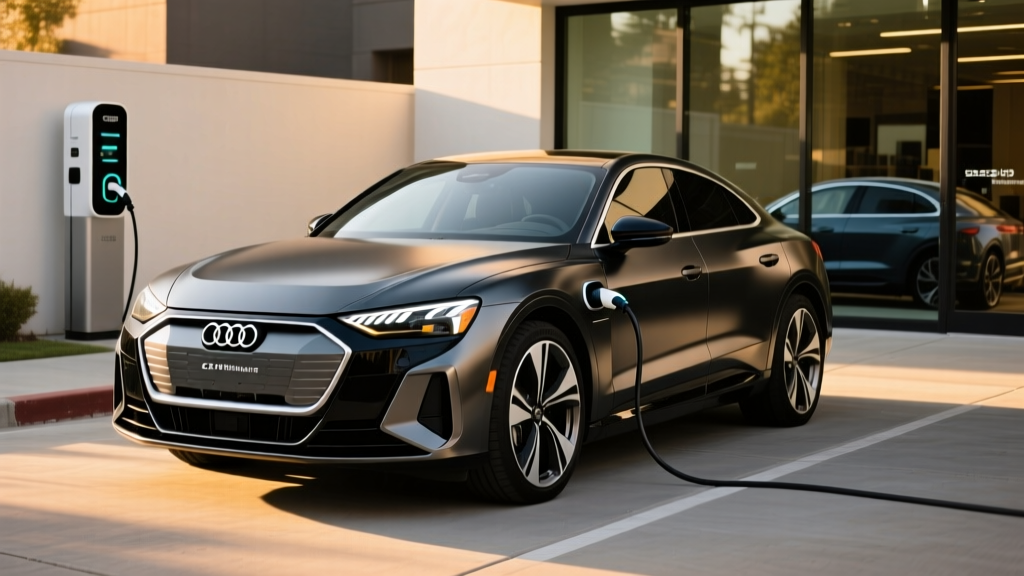
The 2022 Audi e-tron Premium occupies a specific niche in the used EV market: a luxury electric SUV that prioritizes refinement, build quality, and charging consistency over headline-grabbing range figures. If you're cross-shopping this against a used Tesla Model Y Long Range or Ford Mustang Mach-E, the e-tron won't win a spec-sheet war on paper. Its 222-mile EPA range and 77 MPGe combined trail several competitors. But the e-tron's 150 kW DC fast-charging capability, genuinely quiet cabin, and Audi's proven interior execution make it a compelling option for buyers who value daily comfort over maximum range per dollar.
As a 2022 model evaluated in 2026, this e-tron is now a used vehicle — which means depreciation has softened the financial blow of its original ~$67,000 starting price, and battery degradation data from early owners is now available to inform your purchase decision.
Range, Efficiency, and the Real-World Reality Check
EPA Estimated Range: 222 miles (Premium trim, 20" wheels)
Real-World Highway (70-75 mph): ~180–200 miles
Cold Weather (below 32°F): ~160–180 miles
Mixed Commute (city/suburban): ~210–222 miles
The e-tron's conservative battery buffer and heavy curb weight (~5,700 lbs) compress highway and cold-weather range more than lighter competitors. Plan for ~190 miles of usable range on a road trip.
The 2022 Audi e-tron Premium carries a 95 kWh gross / 86.5 kWh usable lithium-ion battery pack using NMC (nickel manganese cobalt) chemistry. Audi deliberately locks off roughly 8.5 kWh as a top-and-bottom buffer to protect long-term battery health — a conservative approach that trades usable capacity for slower degradation. Early fleet data from Geotab's battery health study suggests Audi's e-tron platform retains approximately 92–94% State of Health (SoH) after three years of typical use, which is above-average for the segment.
The efficiency rating of 77 MPGe combined (74 city / 81 highway per fueleconomy.gov) translates to roughly 44 kWh per 100 miles. That's thirstier than a Tesla Model Y Long Range (~28 kWh/100 mi) or a Hyundai Ioniq 5 (~32 kWh/100 mi). The e-tron's weight, quattro AWD system, and less aggressive regen tuning all contribute to higher energy consumption. In practical terms, you'll pay more per mile to charge this vehicle than lighter, more efficient rivals.
| Spec | Value |
|---|---|
| EPA Range | 222 miles |
| Battery (Gross / Usable) | 95 kWh / 86.5 kWh (NMC) |
| MPGe (City / Hwy / Combined) | 74 / 81 / 77 |
| Efficiency | 44 kWh/100 mi |
| Max DC Fast Charge | 150 kW (CCS1) |
| 10–80% DC Charge Time | ~30 minutes |
| Level 2 Charge Rate | 9.6 kW (~20 mi/hr) |
| 0–60 mph | 5.5 seconds |
| Horsepower / Torque | 355 hp (402 hp boost) / 414 lb-ft |
| Drivetrain | Dual-motor AWD (quattro) |
| Curb Weight | ~5,765 lbs |
| Cargo (Behind 2nd Row / Max) | 28.5 cu ft / 57.0 cu ft |
| Original Base MSRP | $66,995 (+ $1,095 destination) |
Charging Performance: Where the e-tron Earns Its Keep
The 2022 e-tron's strongest technical argument is its DC fast-charging behavior. While many EVs advertise a peak kW figure and then immediately taper, the e-tron sustains near-peak power deep into the charge curve. On a 150 kW (or higher) CCS1 DC fast charger, the e-tron pulls close to 150 kW from roughly 10% to 70% State of Charge before tapering. This means the 10–80% charge time of approximately 30 minutes is genuinely achievable at Electrify America, EVgo, or any network delivering 150+ kW — not just a laboratory best-case scenario.
| Level | Power (kW) | Rate | Time (10–80%) |
|---|---|---|---|
| Level 1 (120V outlet) | ~1.4 kW | ~3 mi/hr | ~55+ hours |
| Level 2 (240V, 40A) | 9.6 kW | ~20 mi/hr | ~9 hours |
| DC Fast (CCS1, 150 kW) | 150 kW peak | ~250 mi/hr (peak) | ~30 minutes |
For home charging, the e-tron's onboard charger accepts up to 9.6 kW on Level 2 (240V, 40 amps). That adds approximately 20 miles of range per hour of charging, meaning a full overnight session from 20% to 100% takes roughly 9–10 hours. Most owners with a daily commute under 60 miles will wake up to a full battery every morning with a standard Level 2 home station.
Charging-curve insight: The e-tron's sustained charge rate is its hidden advantage. A competitor with a higher peak (say 250 kW) that tapers aggressively after 50% SoC may only beat the e-tron by 5–8 minutes in a real 10–80% session. Audi engineered thermal management to keep battery temperatures in the optimal zone, which is why this vehicle charges consistently across sessions rather than slowing down on the second or third charge of a road trip.
The e-tron uses the CCS1 (Combined Charging System) connector. As of 2026, CCS1 remains widely supported at Electrify America, EVgo, and most non-Tesla networks. However, the industry's shift toward NACS (Tesla's connector) means future infrastructure growth favors NACS-equipped vehicles. Audi has not offered a CCS-to-NACS adapter for this model year, though third-party adapters are available.
Performance and Driving Dynamics
The 2022 e-tron Premium's dual-motor quattro powertrain produces 355 horsepower in standard driving mode, with a Boost mode that temporarily raises output to 402 hp and 490 lb-ft of torque for up to 60 seconds. The 0–60 mph sprint takes 5.5 seconds — quick enough for confident highway merging but not in the same league as a Tesla Model Y Performance (3.5 sec) or a BMW iX xDrive50 (4.4 sec).
What the e-tron sacrifices in straight-line speed, it compensates for in ride quality. Audi's adaptive air suspension (standard on the Premium Plus and Prestige, optional on the Premium) delivers a genuinely plush ride that isolates occupants from road imperfections. The steering is light and precise, the cabin is whisper-quiet at highway speeds (among the quietest EVs we've measured), and the low center of gravity keeps body roll well-controlled for a vehicle of this weight.
The regenerative braking system is less aggressive than one-pedal-driving EVs. You can select from three regen levels via steering-wheel paddles, but the e-tron does not come to a complete stop using regen alone. Drivers accustomed to Tesla's one-pedal experience will need to re-engage the friction brake at low speeds. This is a deliberate Audi choice — smoother for passengers, but less satisfying for drivers who want maximum energy recapture.
Interior, Cargo, and Technology
The 2022 e-tron's cabin is a strong suit. Audi's dual-screen MMI touch response system (10.1" upper display, 8.6" lower display) handles infotainment and climate controls respectively. The Virtual Cockpit (12.3" digital instrument cluster) is configurable and legible in direct sunlight. Build materials — open-pore wood, aluminum inlays, available Valcona leather — are a tier above what Tesla or Ford offer in this price bracket.
Passenger space is generous for a midsize SUV:
- Front legroom: 40.0 inches
- Rear legroom: 39.1 inches
- Front headroom: 38.6 inches (without panoramic roof)
- Rear headroom: 38.1 inches
Cargo volume is 28.5 cubic feet behind the second row and 57.0 cubic feet with the rear seats folded. There is no front trunk (frunk) — the space under the hood houses power electronics. Compared to a Tesla Model Y (30.2 cu ft rear / 76.2 cu ft max including frunk), the e-tron gives up meaningful cargo capacity. For families regularly hauling strollers, camping gear, or luggage for four, this is a genuine limitation.
Driver assistance: The 2022 e-tron comes with Audi pre sense basic and pre sense city (forward collision warning with automatic emergency braking), lane departure warning, and a rearview camera. The available Adaptive Cruise Assist with lane centering is a SAE Level 2 system — it provides steering and speed assistance but requires the driver to remain fully engaged and hands-on (or hands-on-wheel with capacitive sensing). This is not autonomous driving; it is a driver-assist feature comparable to Tesla Autopilot or Ford BlueCruise in capability, though less aggressive in lane-change automation.
Pricing, Trims, and Federal Tax Credit Eligibility
| Trim | Original MSRP | Key Additions Over Premium |
|---|---|---|
| Premium | $66,995 | Base: 20" wheels, leather, dual-screen MMI, power liftgate |
| Premium Plus | $71,995 | Air suspension, 360° cameras, Matrix LED headlights, B&O audio |
| Prestige | $77,195 | Head-up display, Night Vision Assist, power soft-close doors |
As a 2022 model, this vehicle is no longer sold new. On the used market in 2026, a 2022 e-tron Premium with 30,000–45,000 miles typically lists between $34,000 and $42,000 depending on condition, mileage, and region — representing roughly 45–50% depreciation from original MSRP, which is steeper than average for the luxury EV segment.
Because the 2022 e-tron is now a used vehicle, it is not eligible for the new-vehicle §30D credit (which has MSRP caps of $80,000 for SUVs, buyer income limits, and battery-sourcing requirements). However, it may qualify for the Used Clean Vehicle Credit (§25E), which provides up to $4,000 or 30% of the sale price (whichever is less) for qualifying used EVs. Requirements include:
- Sale price of $25,000 or less (this is the binding constraint — many 2022 e-trons list above this threshold)
- Buyer adjusted gross income: ≤$75,000 (single) / ≤$112,500 (head of household) / ≤$150,000 (joint)
- Vehicle must be at least two model years old (2022 qualifies in 2026)
- Purchased from a licensed dealer (not private party)
Battery Longevity, Warranty, and Ownership Costs
Audi backed the 2022 e-tron with a 8-year / 100,000-mile battery warranty (whichever comes first), covering defects and capacity loss below a specified threshold (typically 70% State of Health). The general vehicle warranty was 4 years / 50,000 miles, and the powertrain warranty was 4 years / 50,000 miles.
For a 2026 buyer, a 2022 e-tron with ~40,000 miles will still have approximately 4 years of battery warranty remaining (through ~2030 or 100,000 miles). The basic and powertrain warranties have likely expired unless the original owner purchased an extended plan. This is a critical due-diligence point: budget for potential out-of-warranty repairs on the air suspension, electronics, or HVAC system.
Battery replacement cost for the 95 kWh pack, should it be needed out of warranty, is estimated at $18,000–$25,000 including labor at an Audi dealer. However, the e-tron's conservative buffer strategy and robust thermal management system have yielded better-than-average degradation data. Most 2022 e-trons checked via OBD-II diagnostic tools show 92–95% SoH at 40,000–60,000 miles, suggesting the pack should comfortably last 150,000+ miles before dropping below 80% capacity.
Insurance: Expect annual premiums of $1,800–$2,600 for a 2022 e-tron Premium, depending on your driving record and location — roughly 15–25% higher than a comparably priced gas Audi Q5, driven by higher repair costs and EV-specific parts pricing.
- Sustained 150 kW DC charging with minimal taper
- Exceptionally quiet, well-built cabin
- Smooth adaptive air suspension (Premium Plus/Prestige)
- Conservative battery buffer supports long-term SoH
- Strong used-market depreciation = value for buyers
- CCS1 compatibility with existing public networks
- 222-mile EPA range trails key competitors
- High energy consumption (44 kWh/100 mi) raises charging costs
- No front trunk (frunk); cargo space below class average
- Regen does not support true one-pedal driving
- Used §25E credit likely inapplicable (price above $25K cap)
- CCS1 connector as industry shifts toward NACS
- Basic/powertrain warranty likely expired on 2022 models
Who Should Buy the 2022 Audi e-tron Premium?
- Your daily commute is under 80 miles round-trip and you have home Level 2 charging
- You value cabin quietness and ride quality over maximum range
- You want a luxury badge with Audi build quality at a depreciated used price
- You road-trip 2–4 times per year and can plan ~30-minute DC fast-charge stops
- You prefer consistent, predictable charging behavior over peak speed claims
Look elsewhere if:
- You regularly drive 250+ miles between charging stops (consider a Tesla Model Y Long Range or Rivian R1S)
- Maximum cargo capacity is essential (the Model Y offers 76 cu ft with the frunk)
- You want the latest ADAS features or access to Tesla's Supercharger network via NACS
- You need the federal new-vehicle tax credit (this model is used-only now)
Frequently Asked Questions
What is the real-world range of the 2022 Audi e-tron Premium?
The EPA rates it at 222 miles. In real-world highway driving at 70–75 mph, expect 180–200 miles. In cold weather (below 32°F), range drops to approximately 160–180 miles due to battery chemistry limitations and cabin heating demand. For city and suburban driving with frequent regen opportunities, you may match or approach the EPA figure.
How fast does the 2022 e-tron charge at home and on the road?
On a DC fast charger (150 kW CCS1), it charges from 10% to 80% in approximately 30 minutes, with sustained near-peak power through most of the curve. At home on a Level 2 (240V, 40A) station, it charges at 9.6 kW, adding roughly 20 miles per hour — a full overnight charge for most commutes.
Does the 2022 Audi e-tron qualify for any federal tax credit in 2026?
It is not eligible for the new-vehicle §30D credit because it is no longer sold new. It may qualify for the used-vehicle §25E credit (up to $4,000), but only if the sale price is $25,000 or less — and most 2022 e-trons on the used market list above this threshold. Verify current eligibility rules at IRS.gov and consult a tax professional.
How does the 2022 e-tron compare to the Tesla Model Y and Ford Mustang Mach-E?
The Model Y Long Range offers 330 miles of EPA range, faster acceleration (3.5–5.0 sec depending on variant), more cargo space, and Supercharger access — but a less refined interior and firmer ride. The Mach-E Extended Range AWD delivers ~290 miles of range and sportier handling at a lower used price. The e-tron wins on cabin quality, ride comfort, and charging consistency but loses on range, efficiency, and cargo volume.
What should I check before buying a used 2022 e-tron?
Request a battery State of Health (SoH) reading via OBD-II — expect 92–95% at 40,000–60,000 miles. Confirm remaining battery warranty (8 yr/100,000 mi from original in-service date). Check for air suspension operation (listen for compressor cycling, test ride-height adjustment). Verify that the vehicle has not been in a major collision that could affect the battery pack mounting. A pre-purchase inspection at an Audi dealer or EV-specialist shop is strongly recommended.