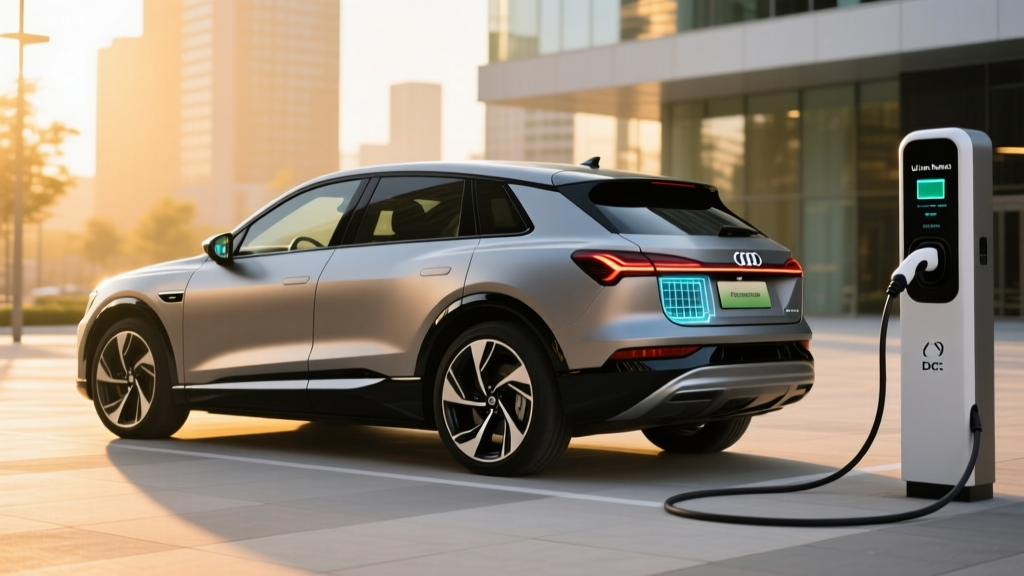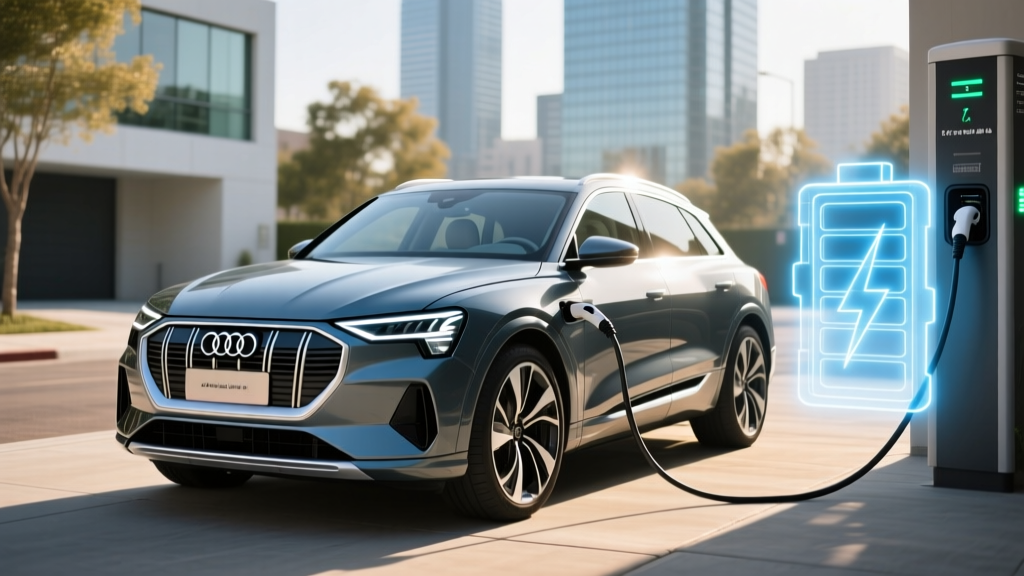
The 2022 Audi e-tron Premium Plus SUV occupies a specific niche in the luxury EV market: it prioritizes refinement, build quality, and a quiet cabin over maximum range or blistering acceleration. Now available exclusively on the used market — Audi replaced the e-tron nameplate with the Q8 e-tron for 2024 — this model remains compelling for buyers who value Audi's interior execution and want a comfortable daily-driver EV with solid DC fast-charging capability. This review breaks down exactly what you get with the Premium Plus trim, from real-world range expectations to charging speeds, tax credit eligibility on the used market, and how it stacks up against rivals.
2022 Audi e-tron Premium Plus SUV: Key Specifications
| Specification | Value |
|---|---|
| EPA Estimated Range | 222 miles |
| Battery Capacity (Usable) | 86.5 kWh (95 kWh gross) |
| Battery Chemistry | NMC (Nickel Manganese Cobalt) |
| Max DC Fast Charge Rate | 150 kW peak |
| 10–80% DC Fast Charge Time | ~30 minutes |
| Level 2 Home Charging Rate | 9.6 kW (48A) — ~25 mi/hr |
| Drivetrain | quattro AWD (dual-motor) |
| Horsepower (Boost Mode) | 402 hp / 490 lb-ft torque |
| 0–60 mph | 5.5 seconds |
| MPGe (Combined) | 78 MPGe |
| Efficiency | 43 kWh/100 mi |
| Cargo Volume (rear seats up / folded) | 28.5 / 57.0 cu ft |
| Battery Warranty | 8 years / 100,000 miles |
| Original MSRP (Premium Plus) | $74,800 (before destination) |
Real-World Range: What the EPA Sticker Doesn't Tell You
EPA Estimated: 222 miles
Real-World Highway (65–75 mph, moderate temps): ~185–200 miles
Real-World City/Mixed Driving: ~200–215 miles
Cold Weather (below 32°F, highway): ~155–175 miles
Note: The e-tron's substantial 95 kWh gross battery buffer (approximately 8.5 kWh reserved) protects long-term battery health but reduces usable capacity versus competitors with smaller buffers.
The 222-mile EPA figure for the 2022 e-tron Premium Plus was competitive at launch but trails newer rivals significantly. According to fueleconomy.gov, the e-tron achieves 78 MPGe combined, translating to 43 kWh per 100 miles — higher consumption than the BMW iX xDrive50 (86 MPGe) or Tesla Model X (102 MPGe for the Long Range variant).
The e-tron's efficiency penalty comes from its weight (approximately 5,700 lbs curb weight) and conservative aerodynamics compared to sleeker competitors. In real-world highway testing at 70 mph in 60–70°F conditions, expect roughly 190 miles before needing to charge. In cold weather, the resistive heating system (no heat pump on the 2022 model year) draws significant energy from the traction battery, compounding the range reduction that all EVs experience. Plan for 155–175 miles of usable range on sub-freezing highway trips.
For daily commuting under 80 miles round-trip with home charging, the range is more than adequate. For road trips, you'll stop every 170–190 miles — more frequently than in a Model X or iX, but the e-tron's excellent DC charging curve partially offsets this.
Charging Performance: The e-tron's Hidden Strength
Where the 2022 e-tron punches above its range ranking is DC fast charging. Audi engineered a remarkably flat charge curve that sustains high power delivery well past the 80% mark — a characteristic that matters enormously on road trips where "peak kW" numbers from competitors often mask aggressive tapering.
| Charging Level | Power / Voltage | Speed | Typical Use Case |
|---|---|---|---|
| Level 1 (120V household) | 1.2 kW | ~3 mi/hr | Emergency / overnight trickle |
| Level 2 (240V home) | 9.6 kW (48A) | ~25 mi/hr | Daily home charging — full charge in ~9 hrs |
| DC Fast Charge (CCS) | 150 kW peak | 10–80% in ~30 min | Road trips, public stations |
The 150 kW peak charge rate isn't class-leading on paper — the Hyundai Ioniq 5 peaks at 240 kW, and the Tesla Model X at 250 kW on V3 Superchargers. But the e-tron's charge curve is one of the flattest in the industry. It holds close to 150 kW from roughly 5% to about 70% state of charge before tapering gradually. This means the 10–80% time of approximately 30 minutes is genuinely achievable at a functioning 150+ kW station, not an optimistic laboratory figure.
For context, many competitors that advertise higher peak rates spend only a few minutes at peak before tapering sharply. The e-tron adds roughly 140–150 miles of range in that 30-minute 10–80% session — enough to continue a road trip comfortably.
At home on a Level 2 charger (the included Audi mobile charger or a hardwired wallbox at 48 amps / 9.6 kW), a full charge from near-empty takes approximately 9 hours. Most owners who plug in nightly will never deplete the battery enough to need a full charge cycle.
The 2022 e-tron uses the CCS1 connector standard. Audi does not offer a NACS (Tesla) port on this model year, though third-party CCS-to-NACS adapters from licensed manufacturers can enable access to Tesla Supercharger networks where permitted.
Performance, Drivetrain, and Ride Quality
The e-tron Premium Plus uses a dual-motor quattro all-wheel-drive system producing 355 hp in standard mode and 402 hp with 490 lb-ft of torque in boost mode (activated via a kickdown switch or launch control). The 0–60 mph time of 5.5 seconds is respectable but not thrilling by modern EV standards — a Tesla Model X Long Range hits 60 in 3.8 seconds, and the BMW iX xDrive50 does it in 4.4 seconds.
What the e-tron trades in straight-line speed, it makes up for in ride refinement. The standard adaptive air suspension delivers a genuinely plush, isolated ride quality that few EV competitors match. Road noise is exceptionally low thanks to extensive sound deadening and acoustic glass. The steering is light and accurate if not communicative, and the regenerative braking system offers three levels selectable via steering-wheel paddles — though it does not provide true one-pedal driving to a complete stop, a notable omission.
The e-tron's low center of gravity (battery pack mounted under the floor) gives it composed handling for its size, though the 5,700-lb curb weight is noticeable during direction changes. This is a grand-touring EV, not a sport SUV — and that's a deliberate engineering choice.
Interior, Cargo Space, and Technology
Audi's interior execution remains a benchmark, and the 2022 e-tron Premium Plus delivers on that reputation. The cabin features standard leather upholstery, heated and ventilated front seats, a heated steering wheel, and Audi's Virtual Cockpit digital instrument cluster. The dual-touchscreen MMI infotainment system (10.1-inch upper, 8.6-inch lower) handles navigation, climate controls, and vehicle settings — though the glossy lower screen attracts fingerprints and requires deliberate presses that can distract while driving.
Cargo and passenger dimensions:
- Cargo behind second row: 28.5 cu ft
- Cargo with second row folded: 57.0 cu ft
- Front legroom: 41.6 inches
- Rear legroom: 38.1 inches
- Front headroom: 38.8 inches
- Rear headroom: 38.6 inches
The cargo area is modest for the class — the BMW iX offers 35.5 / 77.9 cu ft, and the Tesla Model X provides significantly more. The e-tron's small front trunk (frunk) is essentially a shallow compartment for charging cables, not meaningful storage.
The Premium Plus trim includes Audi's full suite of driver-assistance features: adaptive cruise control with stop-and-go, lane-keeping assist, intersection assist, and a 360-degree camera system. Per IIHS, the 2022 e-tron earned a Top Safety Pick+ rating with Good scores across all crashworthiness tests. These are SAE Level 2 driver-assistance systems — the driver must remain fully engaged at all times. This is not autonomous or "self-driving" capability.
Pricing, Tax Credits, and Used Market Value
The 2022 Audi e-tron Premium Plus originally carried an MSRP of approximately $74,800 before the $1,195 destination charge, putting the total at roughly $76,000. Options like the Prestige package, towing package, and premium paint could push the as-tested price above $85,000.
As a used vehicle in 2026, expect pricing in the $38,000–$50,000 range depending on mileage, condition, and market — representing significant depreciation from new, which benefits used buyers.
As a used vehicle, the 2022 e-tron is not eligible for the new-vehicle §30D credit. However, it may qualify for the Used Clean Vehicle Credit (§25E), which provides up to $4,000 or 30% of the sale price (whichever is less), subject to these requirements:
- Sale price must be $25,000 or less
- Buyer AGI: ≤$75,000 (single) / ≤$150,000 (married filing jointly)
- Vehicle must be at least 2 model years old (2022 qualifies in 2026)
- Must purchase from a licensed dealer
- Vehicle must have a battery capacity of at least 7 kWh (e-tron's 95 kWh qualifies)
For buyers who purchased the e-tron new in 2022, the §30D credit was largely unavailable due to battery-sourcing and critical-mineral requirements that phased in during that year. This history is relevant for understanding why the e-tron didn't see the same credit-driven demand as some competitors.
Ownership Costs, Warranty, and Long-Term Battery Outlook
Audi backs the 2022 e-tron's high-voltage battery with an 8-year / 100,000-mile warranty covering defects and capacity loss below 70% of original capacity. The general vehicle warranty is 4 years / 50,000 miles. For a 2022 model purchased used in 2026, approximately 4 years and 50,000+ miles of battery warranty remain (transferable to subsequent owners).
The NMC battery chemistry in the e-tron is well-established, and the large 95 kWh gross capacity (with ~8.5 kWh buffer) means the battery operates at lower stress levels than smaller packs charged to the same cycle counts. Industry data from sources like Recurrent Auto suggests that Audi e-tron batteries have shown minimal degradation in fleet data — typically retaining 90%+ capacity after 60,000 miles. The conservative buffer strategy trades initial range for long-term longevity.
Estimated annual operating costs:
- Electricity (12,000 mi/yr at $0.16/kWh national average): ~$830/year
- Comparable gas SUV (22 MPG combined at $3.50/gal): ~$1,910/year
- Annual fuel savings: ~$1,080
- Maintenance: Minimal — no oil changes, reduced brake wear from regen. Budget ~$200–400/year for cabin filters, fluid top-offs, and tire rotation.
Insurance premiums for the e-tron tend to run 15–25% higher than comparable gas-powered Audi SUVs, reflecting repair-cost realities for EV collisions. Obtain quotes before purchasing.
2022 Audi e-tron Premium Plus vs. Key Competitors
On the used luxury EV SUV market, the 2022 e-tron competes against several strong alternatives:
- Tesla Model X Long Range (2022): 348-mile EPA range, 250 kW Supercharging, faster acceleration, more cargo space. Less refined interior, panel-gap quality concerns. Better for road-trippers who prioritize range.
- BMW iX xDrive50 (2022): 324-mile EPA range, 200 kW DC charging, more modern interior design, significantly more cargo space. Polarizing exterior styling. Better for buyers wanting range plus tech-forward design.
- Mercedes-Benz EQS 450+ SUV (2023): 305-mile EPA range, 200 kW charging, ultra-luxury interior, available third row. Higher used prices. Better for buyers wanting maximum luxury and optional 7-seat capability.
- Ford Mustang Mach-E GT (2022): 270-mile EPA range, lower price point, sportier driving dynamics. Smaller, less premium interior. Better for budget-conscious buyers who don't need luxury badges.
Pros and Cons: The Honest Verdict
- Exceptional ride quality with standard air suspension
- Industry-leading flat DC fast-charge curve (150 kW sustained)
- Quiet, well-insulated cabin — among the best in the class
- High-quality interior materials and build
- IIHS Top Safety Pick+ rating
- Conservative battery buffer promotes long-term battery health
- Significant used-market depreciation benefits second owners
- 222-mile EPA range trails nearly all competitors
- No heat pump — cold-weather range suffers disproportionately
- Heavy at 5,700 lbs — impacts efficiency and tire wear
- Modest cargo space (28.5 cu ft) for the segment
- No true one-pedal driving to a complete stop
- Dual-touchscreen interface can be distracting
- CCS connector only — NACS adapter required for Superchargers
- Used tax credit (§25E) often unavailable due to $25K price cap
Who Should Buy the 2022 Audi e-tron Premium Plus?
- Daily commuters with round trips under 80 miles and reliable home Level 2 charging — range is a non-issue in this scenario.
- Luxury-first buyers who prioritize cabin quietness, ride comfort, and Audi build quality over maximum range or performance numbers.
- Used-EV value seekers who want a premium vehicle at a steep discount from new MSRP, accepting the range trade-off.
- Two-car households where the e-tron serves as the daily driver and a gas/hybrid vehicle handles long road trips.
- You regularly drive 200+ miles between charges on road trips.
- You live in a cold climate and need maximum winter range.
- Cargo capacity is a priority (families with large strollers, sports gear).
- You want access to the Tesla Supercharger network without adapters.
Frequently Asked Questions
What is the real-world range of the 2022 Audi e-tron Premium Plus?
The EPA rates the 2022 e-tron at 222 miles. In real-world mixed driving at moderate temperatures, expect 200–215 miles. Highway driving at 70+ mph drops this to approximately 185–200 miles. In cold weather (below 32°F), plan for 155–175 miles due to the lack of a heat pump and increased cabin-heating energy draw.
How fast does the 2022 e-tron charge at home and on DC fast chargers?
On a Level 2 home charger at 9.6 kW (48 amps), the e-tron adds approximately 25 miles of range per hour, completing a full charge in about 9 hours. On a DC fast charger, it peaks at 150 kW and charges from 10–80% in approximately 30 minutes, with one of the flattest charge curves in the industry — it sustains near-peak power longer than most competitors.
Does the 2022 Audi e-tron qualify for any federal EV tax credit in 2026?
Not for new-vehicle purchases, as it's no longer sold new. As a used vehicle, it may qualify for the §25E Used Clean Vehicle Credit (up to $4,000), but only if the sale price is $25,000 or less and the buyer meets income limits (≤$75,000 single / ≤$150,000 married filing jointly). Most 2022 e-trons sell above $25,000 on the used market, making the credit unavailable in many cases. Consult IRS guidelines and a tax professional.
Is the 2022 e-tron worth buying vs. a Tesla Model X or BMW iX?
If ride comfort, cabin quietness, and build quality are your top priorities, the e-tron delivers a more refined experience than the Model X and a more traditional luxury feel than the polarizing iX. If range and charging-network access are paramount, the Model X wins decisively (348 miles EPA, Supercharger network). If you want the best balance of range and modern design, the iX (324 miles EPA) is a stronger all-rounder. The e-tron's used-market pricing advantage makes it compelling for buyers who can accept the range trade-off.
How long will the e-tron's battery last?
Audi warranties the battery for 8 years / 100,000 miles against capacity loss below 70%. The e-tron's NMC battery uses a large buffer (~8.5 kWh reserved from the 95 kWh gross capacity), which reduces stress on the cells. Fleet data from battery-health companies shows e-tron batteries typically retaining 90%+ capacity after 60,000 miles. With proper care (avoiding frequent 100% charges, using DC fast charging judiciously), the battery should last well beyond 150,000 miles before approaching the warranty threshold.
What's the biggest drawback of owning a 2022 e-tron in 2026?
The 222-mile EPA range is the primary limitation. As public charging infrastructure continues expanding and competitors offer 300+ miles, the e-tron requires more frequent stops on road trips. The lack of a heat pump also makes cold-weather ownership less efficient than newer EVs equipped with one. For daily commuting with home charging, these drawbacks are minimal; for frequent long-distance travel, they're significant.