Quick Verdict: The 2022 Audi e-tron Premium Plus in 2026
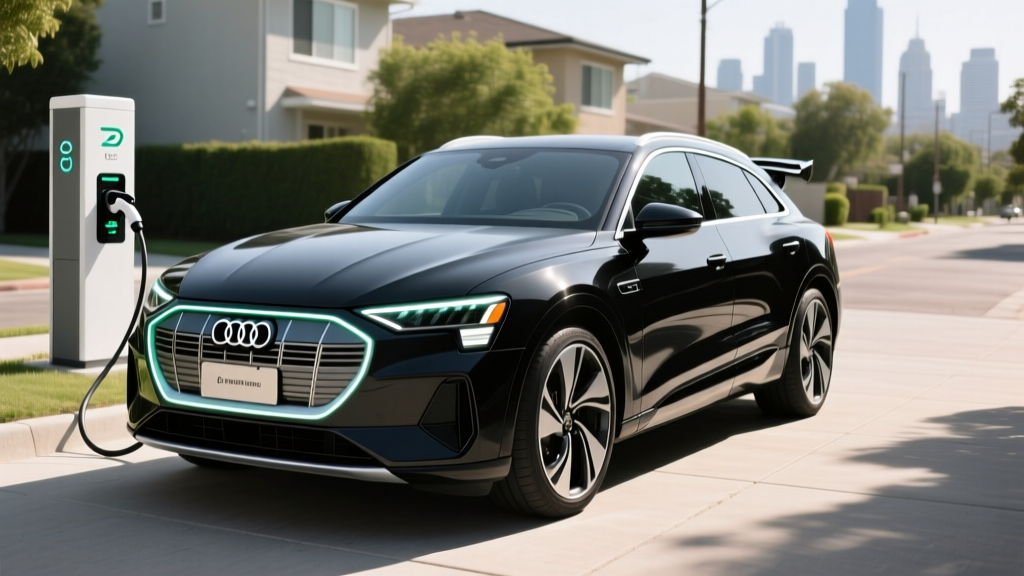
The 2022 Audi e-tron Premium Plus occupies a specific niche in the used EV market: it's a luxury electric SUV that prioritizes refinement, build quality, and charging reliability over headline-grabbing range numbers. Now that Audi has moved on to the Q8 e-tron nameplate, the original e-tron is available exclusively on the used market, where depreciation has made it a compelling value proposition for buyers who want German luxury without the new-car premium.
With an EPA-estimated 222 miles of range, a 95 kWh battery, and class-leading 150 kW DC fast-charging capability, the 2022 e-tron Premium Plus is best suited as a luxury daily driver and commuter that can handle occasional road trips — provided you plan charging stops carefully. It's not the range king of its class, but its charging curve, cabin isolation, and standard quattro AWD make it one of the most livable used luxury EVs available.
| Spec | Value |
|---|---|
| EPA Range | 222 miles |
| Battery (Usable) | 86.5 kWh (95 kWh gross), NMC |
| DC Fast Charge (Peak) | 150 kW |
| 10–80% DC Charge Time | ~30 minutes |
| Level 2 Charge Rate | 11 kW (~25 mi/hr) |
| 0–60 mph | 5.5 seconds |
| Horsepower | 355 hp (402 hp in Boost mode) |
| Drivetrain | Dual-motor quattro AWD |
| MPGe (Combined) | 78 MPGe |
| Efficiency | 43 kWh/100 mi |
| Cargo (Behind 2nd Row) | 28.5 cu ft |
| Cargo (Seats Folded) | 57.0 cu ft |
| Battery Warranty (Original) | 8 years / 100,000 miles |
| Original MSRP (Premium Plus) | $74,800 (before destination) |
Real-World Range: What 222 EPA Miles Actually Means
The EPA rates the 2022 Audi e-tron at 222 miles of combined range. That figure is honest — Audi has historically been conservative with range estimates, and real-world testing generally confirms the sticker number in mixed driving conditions.
- City/Suburban (mild weather): 225–240 miles — regenerative braking recovers energy efficiently in stop-and-go traffic
- Highway (70 mph, 70°F): 190–210 miles — the e-tron's brick-like 0.28 Cd drag coefficient and 5,700-lb curb weight hurt efficiency at speed
- Cold Weather (30°F, mixed driving): 170–195 miles — expect 15–25% range loss without preconditioning; the e-tron's heat pump (standard on Premium Plus) helps mitigate cabin energy draw
- Cold Weather Highway (30°F, 70 mph): 155–175 miles — worst-case scenario for road-trip planning
The e-tron's 86.5 kWh of usable battery capacity (from a 95 kWh gross pack) provides a substantial buffer. Audi's battery management system keeps roughly 8.5 kWh locked below 0% and above 100% to protect long-term health. This conservative approach contributes to strong long-term State of Health (SoH) data — early 2019–2020 e-trons are showing only 3–5% degradation at 60,000+ miles, according to owner-reported data on EV tracking platforms.
The battery uses NMC (nickel manganese cobalt) chemistry, which offers higher energy density than LFP but is more sensitive to sustained 100% charging. For daily use, set your charge limit to 80–85% and reserve 100% for road trips.
Charging Speed: The e-tron's Secret Weapon
Where the 2022 e-tron genuinely excels is DC fast-charging performance. While its 222-mile range trails rivals like the Tesla Model X or BMW iX, its charging curve is among the best in the luxury EV segment.
| Charging Level | Power / Rate | Time / Miles Added |
|---|---|---|
| Level 1 (120V household) | 1.2 kW | ~3 mi/hr — not practical for daily use |
| Level 2 (240V home) | 11 kW | ~25 mi/hr; full 0–100% in ~9 hours |
| DC Fast Charge (150 kW peak) | 150 kW → sustained ~120 kW to 70% | 10–80% in ~30 min; 80–100% adds ~25 min due to taper |
| DC Fast Charge (50 kW station) | 50 kW | 10–80% in ~75 min |
The key insight: the e-tron sustains its peak 150 kW charge rate longer than nearly any competitor. From 10% to roughly 70% State of Charge, it holds above 120 kW — a flat, impressive charge curve. Many rivals peak at a higher number (e.g., 250 kW) but taper aggressively after 50% SoC, resulting in similar or slower 10–80% times.
For home charging, the 11 kW onboard charger is a strong point. On a 48-amp Level 2 circuit (the most common home installation), you'll add roughly 25 miles of range per hour. An overnight charge easily replenishes a full day's driving. According to fueleconomy.gov, the e-tron's combined efficiency of 43 kWh/100 mi means a full home charge costs roughly $11–$14 at the national average electricity rate of $0.16/kWh.
Connector note: The 2022 e-tron uses the CCS1 connector for DC fast charging and J1772 for Level 2. With Audi's parent company Volkswagen Group committing to NACS adoption for future models, CCS remains widely supported at Electrify America, EVgo, and ChargePoint stations. A CCS-to-NACS adapter is available if you need Tesla Supercharger access.
Performance and Driving Dynamics
The dual-motor quattro AWD powertrain produces 355 hp in standard driving and 402 hp when Boost mode is activated (available for 8-second bursts via the kickdown switch). The 0–60 mph time of 5.5 seconds (5.3 seconds in Boost) isn't Tesla Plaid territory, but it's brisk for a 5,700-lb luxury SUV.
What sets the e-tron apart dynamically is its refinement. The cabin is remarkably isolated from wind and road noise, the air suspension (standard on Premium Plus) smooths out rough pavement, and the steering is precise if not sporty. Regenerative braking is moderate — Audi opted for a coasting-focused strategy rather than aggressive one-pedal driving. You can adjust regen levels via steering-wheel paddles, but the e-tron won't come to a complete stop on regen alone at most settings.
The e-tron is not a track car. It's a luxury cruiser that happens to be electric. If you want sporty dynamics, the Porsche Taycan or BMW iX M60 are better fits. If you want whisper-quiet comfort with confident all-weather traction, the e-tron delivers.
Interior, Tech, and Cargo
The Premium Plus trim sits in the middle of the 2022 e-tron lineup (above base Premium, below Prestige) and includes the most important tech and comfort features:
- Dual-touchscreen MMI infotainment: 10.1-inch upper display for navigation and media, 8.6-inch lower display for climate and handwriting input. The system is responsive but has a learning curve — physical buttons are minimal.
- Virtual Cockpit Plus: 12.3-inch configurable digital instrument cluster with dedicated EV range and power-flow displays.
- Audi Pre Sense Basic & City: Forward collision warning, automatic emergency braking with pedestrian detection, lane departure warning. Adaptive cruise control with stop-and-go is included on Premium Plus.
- Matrix-design LED headlights with dynamic turn signals.
- Panoramic sunroof, heated front seats, leather upholstery, power liftgate.
Cargo space is practical: 28.5 cubic feet behind the second row and 57.0 cubic feet with the rear seats folded. There is no frunk — the space under the hood houses power electronics. Rear legroom is generous at 39.1 inches, making the e-tron viable as a family vehicle. However, the center rear seat is best suited for a child due to a pronounced floor tunnel (a legacy of the platform's shared architecture).
- No frunk (front trunk) — all cargo goes in the rear.
- Dual-touchscreen infotainment can be distracting while driving; climate controls require looking down.
- Efficiency of 43 kWh/100 mi is below average for the class — rivals like the BMW iX xDrive50 achieve 37 kWh/100 mi.
- Rear center seat is cramped due to the floor tunnel.
- CCS1 connector may require an adapter for future NACS-dominant charging networks.
Pricing, Tax Credits, and Used Market Value
The 2022 Audi e-tron Premium Plus originally carried an MSRP of $74,800 (plus $1,095 destination, totaling $75,895). In the 2026 used market, well-maintained examples with 25,000–45,000 miles are selling for approximately $36,000–$44,000 depending on condition, mileage, and region.
| Item | Amount |
|---|---|
| Original MSRP (Premium Plus) | $75,895 (incl. destination) |
| Typical Used Price (2026, ~35k miles) | $38,000–$42,000 |
| Federal Used EV Tax Credit (§25E) | Up to $4,000 (30% of sale price, capped) |
| Estimated Price After Federal Credit | $34,000–$38,000 |
Federal tax credit note: The 2022 e-tron does not qualify for the new-vehicle §30D credit (up to $7,500) because it is no longer sold new. However, it may qualify for the §25E Used Clean Vehicle Credit, which provides 30% of the sale price up to $4,000 on eligible used EVs. Key §25E requirements per IRS guidelines:
- Sale price must be $25,000 or less (this is a challenge — many 2022 e-trons list above this threshold; negotiate accordingly)
- Buyer income caps: $75,000 single / $112,500 head of household / $150,000 joint (modified AGI)
- Vehicle must be at least 2 model years old (2022 qualifies in 2026)
- Must purchase from a licensed dealer (private-party sales excluded)
- Credit is non-refundable and cannot be transferred at point of sale for used vehicles
The $25,000 sale-price cap is the biggest hurdle. Some dealers may be willing to negotiate a 2022 e-tron Premium Plus down to $25,000 or slightly below, particularly higher-mileage examples. If you can find one at that price, the $4,000 credit effectively brings your cost to $21,000 — exceptional value for a luxury electric SUV with quattro AWD and air suspension.
Ownership Costs and Warranty
Audi's original battery warranty covers 8 years or 100,000 miles against defects and capacity loss below 70% of original capacity. For a 2022 model, that warranty extends through the 2030 model year or 100,000 miles — whichever comes first. The powertrain warranty is 4 years / 50,000 miles, which has likely expired on most 2022 examples by 2026.
Long-term battery degradation data for the e-tron platform is encouraging. The large 8.5 kWh buffer and conservative charge management mean that even with 5% degradation, you lose roughly 11 miles of range — a negligible impact on daily usability.
Estimated annual ownership costs for a used 2022 e-tron Premium Plus:
- Home charging: $500–$700/year (12,000 miles at $0.16/kWh)
- Insurance: $1,800–$2,400/year (luxury EV premiums remain elevated)
- Maintenance: $300–$500/year (no oil changes; cabin air filter, brake fluid, tire rotation — but tires wear faster due to weight and torque)
- Tires: $1,200–$1,600 every 25,000–35,000 miles for a set of four 255/55R20 or 265/45R21 tires
Pros and Cons
- Sustained 150 kW DC charging with a flat curve to 70% SoC — one of the best in its class
- Exceptionally quiet and refined cabin with premium materials
- Standard air suspension and quattro AWD
- Conservative battery management yields strong long-term SoH
- Significant depreciation makes used pricing attractive
- Potential $4,000 used EV tax credit if purchased at/below $25,000
- Spacious rear seat and practical cargo area
- 222-mile EPA range trails most 2022 luxury EV competitors
- 43 kWh/100 mi efficiency is below average — higher charging costs per mile
- No front trunk (frunk)
- Dual-touchscreen infotainment is distracting and unintuitive
- CCS1 connector may need adapter for NACS stations
- $25,000 used-credit price cap is hard to hit on Premium Plus trim
- Heavy at 5,700 lbs — accelerates tire wear
Who Should Buy the 2022 Audi e-tron Premium Plus?
- You prioritize cabin refinement, ride comfort, and build quality over maximum range.
- Your daily commute is under 120 miles round-trip and you have reliable home Level 2 charging.
- You live in a cold or rainy climate where quattro AWD and a heat pump matter.
- You want a luxury SUV experience at a fraction of the original MSRP.
- You can find one at or below $25,000 to capture the $4,000 used EV credit.
- You need 300+ miles of range for frequent long road trips (consider a used Tesla Model X, Rivian R1S, or BMW iX).
- You want one-pedal driving with aggressive regen (the e-tron's regen is mild by design).
- You want NACS native compatibility without adapters.
- You need three rows of seating (the e-tron is strictly a five-passenger vehicle).
Frequently Asked Questions
What is the real-world range of the 2022 Audi e-tron Premium Plus?
The EPA rates it at 222 miles combined. In real-world driving, expect 225–240 miles in city conditions, 190–210 miles on the highway in mild weather, and 170–195 miles in cold weather. Highway efficiency drops significantly due to the e-tron's weight and aerodynamics.
How fast does the 2022 e-tron charge?
On a 150 kW DC fast charger, it charges from 10–80% in approximately 30 minutes, sustaining above 120 kW until roughly 70% SoC. On a home Level 2 charger (11 kW), a full charge takes about 9 hours, adding roughly 25 miles of range per hour.
Does the 2022 Audi e-tron qualify for the federal EV tax credit?
Not the new-vehicle §30D credit — it's no longer sold new. It may qualify for the §25E Used Clean Vehicle Credit (up to $4,000) if purchased from a dealer at $25,000 or below, subject to buyer income caps ($75k single / $150k joint). Check current rules at irs.gov.
Is the 2022 e-tron worth buying versus competitors?
It depends on your priorities. The Tesla Model X offers more range and Supercharger access but less cabin refinement. The BMW iX xDrive50 has better efficiency and range but costs more on the used market. The Jaguar I-PACE has similar range and a sportier feel but less charging speed. The e-tron wins on charging-curve performance, build quality, and depreciation-adjusted value.
What is the battery warranty on a used 2022 e-tron?
Audi's original battery warranty covers 8 years or 100,000 miles against defects and capacity dropping below 70%. For a 2022 model, this extends through the 2030 model year. The general powertrain warranty (4 years/50,000 miles) has likely expired by 2026.
Does the e-tron have a frunk?
No. The space under the hood is occupied by power electronics. All cargo storage is in the rear: 28.5 cu ft behind the second row, 57.0 cu ft with seats folded.
What connector does the 2022 e-tron use?
It uses CCS1 for DC fast charging and J1772 for Level 2 AC charging. A CCS-to-NACS adapter is available for Tesla Supercharger compatibility.