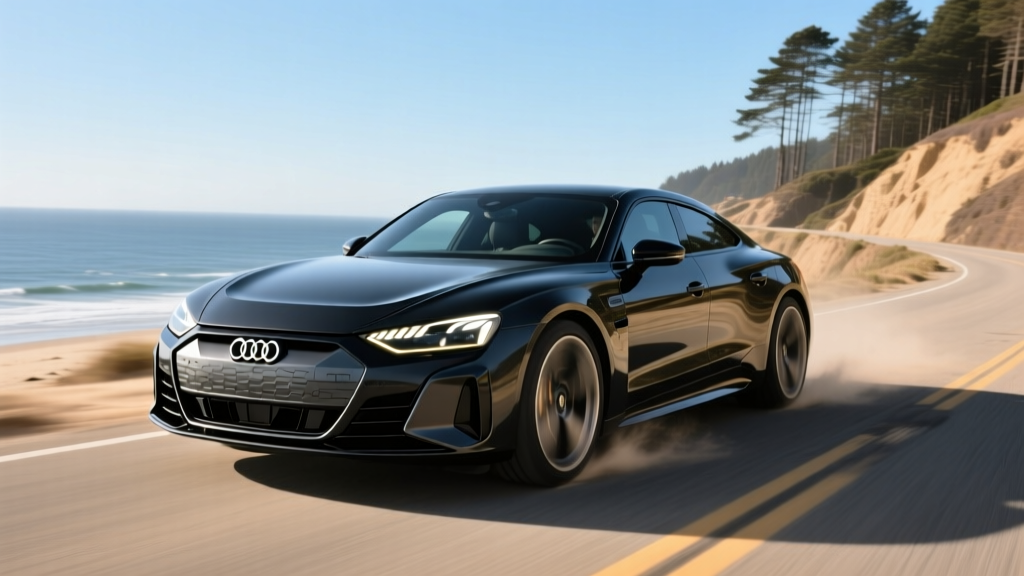
The 2022 Audi e-tron GT was Audi's first dedicated electric performance sedan, built on the same J1 platform as the Porsche Taycan. Now that the EV market has matured through 2026, the e-tron GT has shifted into an interesting position: a used-EV bargain for buyers who want luxury grand-touring credentials at a steep discount from its original six-figure MSRP. But does its 238-mile EPA range and aging CCS connector hold up against newer rivals? Here's the data-driven breakdown.
Quick Verdict: Still a Compelling Electric GT
The 2022 e-tron GT delivers on what it promises — a refined, fast, beautifully built electric grand tourer with legitimate 270 kW DC fast-charging capability and Audi's signature interior quality. It is not, however, a range king. At 238 miles EPA (and closer to 200 in real-world highway driving), it falls short of the Tesla Model S and Lucid Air in distance-per-charge. For buyers who prioritize design, build quality, and charging speed over maximum range, the 2022 model year remains a strong used-EV candidate in 2026, especially with the used clean vehicle credit potentially knocking up to $4,000 off the purchase price from a dealer.
Range, Efficiency, and Real-World Expectations
EPA Estimated: 238 miles (Premium Plus) / 232 miles (Prestige)
Real-World Highway (70 mph): ~195–210 miles
Real-World City/Mixed: ~220–235 miles
Cold Weather (below 32°F): ~165–185 miles (30%+ reduction possible)
e-tron GT RS: 232 miles EPA; expect ~185–200 highway
The 2022 e-tron GT carries a 93.4 kWh gross battery pack (approximately 85 kWh usable) using NMC (nickel manganese cobalt) chemistry. Audi employs a conservative buffer strategy — the car reserves roughly 8–9 kWh at the top and bottom of the pack to protect long-term cell health. This means you're working with a smaller usable window than the raw number suggests, but it pays dividends in reduced degradation over time.
Efficiency lands at 82 MPGe combined (85 city / 82 highway for the Premium Plus trim), or approximately 41 kWh per 100 miles, according to fueleconomy.gov. That's middling for a luxury sedan — the Tesla Model S achieves roughly 120 MPGe combined — but the e-tron GT compensates with its ability to charge extremely quickly.
One critical note for 2026 buyers: as these vehicles age, battery State of Health (SoH) becomes a factor. A 2022 e-tron GT with 40,000+ miles may show 92–96% SoH depending on charging habits. Always request a battery health report before purchasing used, and check whether the original 8-year/100,000-mile battery warranty remains in force.
Charging Speed: The e-tron GT's Secret Weapon
| Charging Level | Power / Rate | Speed | Notes |
|---|---|---|---|
| Level 1 (120V) | ~1.4 kW | ~3–4 mi/hr | Emergency/trickle only; full charge in ~60+ hrs |
| Level 2 (240V, 48A) | 11.5 kW (onboard charger max) | ~27–30 mi/hr | Full charge in ~8.5 hours; ideal for overnight |
| DC Fast Charge (CCS) | Peak 270 kW | 10–80% in ~22 min | Sustains high rate well; tapers above 80% |
The e-tron GT's 800-volt architecture is its most underappreciated feature. While many 2022-era EVs peak at 150 kW and immediately taper, the e-tron GT can sustain above 200 kW for a meaningful portion of the 10–80% charging window when the battery is preconditioned. On a 350 kW Electrify America or compatible station, you can realistically add 150+ miles of range in 15 minutes.
However, the 2022 e-tron GT uses the CCS1 connector — not NACS (Tesla's North American Charging Standard). In 2026, Audi provides a CCS-to-NACS adapter for Supercharger access, but adapter-based charging may not always reach the full 270 kW peak. For maximum charging performance, seek out CCS-native 350 kW stations. The Electrify America network remains the best match for this vehicle's capabilities.
Preconditioning matters. The e-tron GT will warm or cool the battery to optimal temperature before a scheduled DC fast charge when you set a charging station as your navigation destination. Without preconditioning, cold-soaked batteries may see peak rates cut by 30–50%. Always navigate to your charger — don't just pull up cold.
Performance and Driving Dynamics
| Specification | e-tron GT quattro | RS e-tron GT |
|---|---|---|
| Drivetrain | Dual-motor AWD | Dual-motor AWD |
| Horsepower | 469 hp (522 hp w/ launch control) | 590 hp (637 hp w/ launch control) |
| Torque | 464 lb-ft | 612 lb-ft |
| 0–60 mph | 3.9 seconds | 3.1 seconds |
| Top Speed | 152 mph | 155 mph |
| EPA Range | 238 miles | 232 miles |
The e-tron GT uses a two-speed transmission on the rear axle — first gear for explosive launches, second for efficient highway cruising. This is unusual among EVs and gives the car a distinct character: the launch feels urgent and physical in a way single-speed EVs rarely match.
Ride quality is exceptional thanks to standard adaptive air suspension. The GT glides over highway imperfections while remaining composed in corners — a genuine grand tourer, not a stripped-out track car. The RS variant sharpens the handling with rear-axle steering and a more aggressive tune, but the standard GT is the better daily driver for most owners.
Interior, Cargo, and Practicality
The 2022 e-tron GT interior is among the finest Audi has ever produced. Standard leather-free upholstery (Dinamica microfiber) is available alongside optional Valcona leather. The 10.1-inch MMI touchscreen with haptic feedback handles infotainment, while a 12.3-inch Virtual Cockit Plus serves as the instrument cluster. Wireless Apple CarPlay and Android Auto are standard.
Where the e-tron GT compromises is space:
- Front legroom: 42.3 inches
- Rear legroom: 32.1 inches (tight for adults over 6 feet)
- Trunk (rear): 9.2 cu ft
- Frunk (front): 3.2 cu ft (enough for a charging cable bag)
- Total cargo: 12.4 cu ft — less than a Honda Civic sedan
This is a four-seat coupe, not a family hauler. Rear headroom is compromised by the sloping roofline, and the trunk opening is narrow. If cargo versatility matters, the Audi e-tron SUV (now called Q8 e-tron) or a Tesla Model S with its hatchback design are far more practical.
Driver-assistance tech includes Audi's Adaptive Cruise Assist with lane guidance — a SAE Level 2 system that requires hands on the wheel and constant driver supervision. It is competent for highway commuting but is not autonomous. There is no hands-free driving mode comparable to GM's Super Cruise or Ford's BlueCruise on this model year.
Pricing, Tax Credits, and Ownership Costs
| Trim | Original MSRP | 2026 Used Range (est.) | Used EV Credit (max) |
|---|---|---|---|
| Premium Plus | $103,900 | $52,000–$62,000 | $4,000 (IRS §25E) |
| Prestige | $110,200 | $56,000–$67,000 | $4,000 (IRS §25E) |
| RS e-tron GT | $142,400 | $68,000–$82,000 | $4,000 (IRS §25E) |
Federal tax credit for new purchase (no longer applies): The 2022 e-tron GT did not qualify for the full $7,500 §30D new-vehicle credit when it was sold because it was assembled in Germany (Neckarsulm), failing the North American final-assembly requirement that took effect under the Inflation Reduction Act.
Used clean vehicle credit (IRS §25E): If you purchase a 2022 e-tron GT from a licensed dealer in 2026 for $25,000 or more, you may qualify for a used-EV credit of 30% of the sale price, up to $4,000. Key requirements per the IRS:
- Buyer income caps: $75,000 single / $112,500 head of household / $150,000 joint (MAGI)
- Sale price must be $25,000 or less for the maximum — wait, no: the credit is 30% of sale price up to $4,000 maximum, vehicle must be sold for $25,000 or more to be eligible, but the credit caps at $4,000
- Vehicle must be at least 2 model years old (a 2022 qualifies in 2026)
- Must purchase from a licensed dealer (private-party sales excluded)
- Can only be claimed once per vehicle (check the VIN's credit history)
- Point-of-sale transfer available — the dealer applies the credit at purchase
Insurance costs for the e-tron GT remain above average for an EV — expect $2,800–$3,600 annually depending on your state, driving record, and coverage level. The RS variant commands a premium. Get quotes before committing.
Warranty and Long-Term Battery Health
| Coverage Type | Duration | Mileage Limit |
|---|---|---|
| Basic (bumper-to-bumper) | 4 years | 50,000 miles |
| Powertrain | 4 years | 50,000 miles |
| High-Voltage Battery | 8 years | 100,000 miles |
| Corrosion Perforation | 12 years | Unlimited |
| Roadside Assistance | 4 years | Unlimited |
The high-voltage battery warranty guarantees the pack will retain at least 70% of its original capacity for 8 years or 100,000 miles. For a 2022 model, this coverage extends through the 2030 model year — a meaningful safety net for used buyers. If the pack drops below 70% SoH within that window, Audi will repair or replace it at no cost.
NMC chemistry in the e-tron GT has shown solid degradation performance in fleet data. Most owners report 3–5% capacity loss in the first two years, then a slower linear decline. At 100,000 miles, expect roughly 88–93% SoH under normal charging habits (avoiding daily 100% charges and frequent DC fast charging from very low states of charge).
Pros, Cons, and Who Should Buy
✅ Pros
- 270 kW DC fast charging — among the fastest in its class
- 800V architecture with sustained charge-curve performance
- Exceptional build quality and interior materials
- Air suspension delivers GT-level ride comfort
- 3.9s 0–60 (standard) / 3.1s (RS) with two-speed rear axle
- 8-year/100,000-mile battery warranty (remaining on most 2022s)
- Strong used-EV value — 40–50% off original MSRP
❌ Cons
- 238-mile EPA range is below average for the price class
- CCS1 connector requires adapter for Tesla Superchargers
- Tight rear seat (32.1" legroom) and small trunk (9.2 cu ft)
- MMI infotainment feels dated vs. 2025–2026 competitors
- No hands-free Level 2+ driving feature
- High insurance premiums relative to mainstream EVs
- Did not qualify for new-vehicle §30D credit (Germany-assembled)
Who This EV Suits Best
Ideal buyer: A design-conscious commuter or weekend grand-tourer who drives 30–60 miles daily, has access to home Level 2 charging, and values build quality and charging speed over maximum range. The e-tron GT is a two-person luxury car — couples without rear-seat needs will get the most from it.
Look elsewhere if: You need family-friendly cargo space, regularly drive 250+ miles between charges, want hands-free highway driving, or live in a cold climate where the already-modest range drops significantly.
Frequently Asked Questions
What is the real-world range of the 2022 Audi e-tron GT?
Expect 195–210 miles on the highway at 70 mph, and 220–235 miles in mixed city/suburban driving. In freezing temperatures, plan for 165–185 miles. The RS variant loses roughly 5–10 miles across all scenarios due to its more powerful motors and stickier tires.
How fast does the 2022 e-tron GT charge at home and on the road?
At home on a 240V Level 2 charger (48 amps), the e-tron GT charges at up to 11.5 kW, adding roughly 27–30 miles of range per hour — a full charge takes about 8.5 hours overnight. On a 350 kW DC fast charger, it peaks at 270 kW and charges from 10–80% in approximately 22 minutes, adding up to 180 miles of range.
Does the 2022 Audi e-tron GT qualify for any federal tax credit in 2026?
Not the new-vehicle §30D credit — it was assembled in Germany and did not meet the North American final-assembly requirement. However, if purchased from a licensed dealer in 2026, it may qualify for the used clean vehicle credit (§25E): 30% of the sale price, up to $4,000. Income caps apply ($150,000 joint / $75,000 single). Consult a tax professional for your specific situation.
Is the 2022 e-tron GT worth buying vs. the Porsche Taycan or Tesla Model S?
Compared to the Taycan (its platform sibling), the e-tron GT offers a nearly identical driving experience at a lower used-market price, though the Taycan has a marginally more engaging chassis. Against the Tesla Model S, the e-tron GT gives up significant range (320+ miles for the Model S) and Supercharger network convenience, but wins on interior quality, ride comfort, and build precision. Choose the e-tron GT for luxury and design; choose the Model S for range and tech.
What is the battery replacement cost for the e-tron GT?
Out-of-warranty high-voltage battery replacement for the J1 platform runs approximately $25,000–$35,000 including labor. However, most 2022 models will remain under the 8-year/100,000-mile battery warranty through 2030, and NMC degradation data suggests most packs will retain 85%+ capacity at that point.
Can the 2022 e-tron GT use Tesla Superchargers?
Yes, with a CCS-to-NACS adapter. Audi and third-party suppliers offer adapters that enable Supercharger access. However, charging speeds via adapter may be limited compared to native CCS stations. For the fastest possible charges, use 350 kW CCS stations on the Electrify America network.