Quick Verdict: A Luxury Grand Tourer That Charges Like a Supercar
The 2022 Audi e-tron GT Premium Plus occupies a rare space in the EV market: it pairs Porsche Taycan-derived 800-volt architecture with Audi's understated luxury ethos. With a 0-60 mph time of 3.9 seconds and peak DC fast-charging at 270 kW, this grand tourer delivers sports-car acceleration and some of the fastest charging available in its model year. But with an EPA-estimated 238 miles of range and a starting MSRP that originally cleared $100,000, it demands careful evaluation as a used-EV purchase in 2026.
This review breaks down every spec that matters — real-world range, charging curves, battery chemistry, cargo practicality, and federal tax credit eligibility under current IRS §30D rules — so you can decide whether the e-tron GT Premium Plus fits your garage and your budget.
Performance: The 2022 Audi e-tron GT Premium Plus 0-60 and Drivetrain
The headline number for the 2022 Audi e-tron GT Premium Plus is its 0-60 mph time of 3.9 seconds (manufacturer-claimed, consistent with independent testing by outlets like Car and Driver). That places it squarely in sports-car territory, rivaling the Porsche Taycan 4S on which it shares the J1 platform.
| Spec | Value |
|---|---|
| 0-60 mph | 3.9 seconds |
| Horsepower | 522 hp (469 hp standard, boost mode engaged) |
| Torque | 472 lb-ft (boost mode) |
| Drivetrain | Dual-motor AWD (quattro) |
| Top Speed | 152 mph (electronically limited) |
| Transmission | 2-speed rear axle / single-speed front |
The dual-motor all-wheel-drive system uses a permanent-magnet synchronous motor on each axle. The rear motor features a two-speed transmission — first gear maximizes launch acceleration, while second gear optimizes highway efficiency. This is the same engineering solution Porsche uses in the Taycan, and it's a key reason the e-tron GT sustains performance at higher speeds better than single-speed EVs.
In real-world driving, the 522-hp boost mode (activated via launch control or the "Boost" drive mode) holds for approximately 2.5 seconds — enough for the full 0-60 sprint. In normal driving without boost, output settles at 469 hp, which is still decisively quick for passing and merging.
Range, Battery, and Efficiency: What to Expect Beyond the EPA Sticker
The 2022 Audi e-tron GT Premium Plus carries a 93.4 kWh gross battery pack (approximately 85 kWh usable) using NMC (nickel manganese cobalt) lithium-ion chemistry. This is the same cell format used in the Porsche Taycan and is optimized for high discharge rates and fast charging rather than maximum energy density.
EPA Estimated Range: 238 miles
Real-World Highway (70-75 mph, moderate temps): ~205-220 miles
Real-World Cold Weather (below 32°F, highway): ~170-190 miles
Real-World City/Mixed (regenerative braking active): ~225-238 miles
The e-tron GT's range is its most common criticism. The 238-mile EPA figure trails competitors like the Tesla Model S Long Range (405 mi) and Lucid Air Pure (410 mi). On sustained highway drives at 75 mph, expect to use roughly 40-43 kWh/100mi, which brings usable range closer to 205-220 miles. In freezing temperatures, battery resistance increases and cabin heating draws additional power — plan for 170-190 miles between charges on cold-weather road trips.
| Metric | 2022 Audi e-tron GT Premium Plus | 2022 Porsche Taycan 4S | 2022 Tesla Model S LR |
|---|---|---|---|
| EPA Range | 238 mi | 227 mi | 405 mi |
| Combined MPGe | 82 MPGe | 79 MPGe | 120 MPGe |
| kWh/100mi (combined) | 41 | 42 | 28 |
The 82 MPGe combined rating, per fueleconomy.gov, reflects the e-tron GT's heavy curb weight (~5,139 lbs) and performance-oriented tire compound. For context, the Tesla Model S Long Range achieves 120 MPGe combined — a significant efficiency gap that directly translates to fewer miles per kWh.
Charging Speed: 800-Volt Architecture in Practice
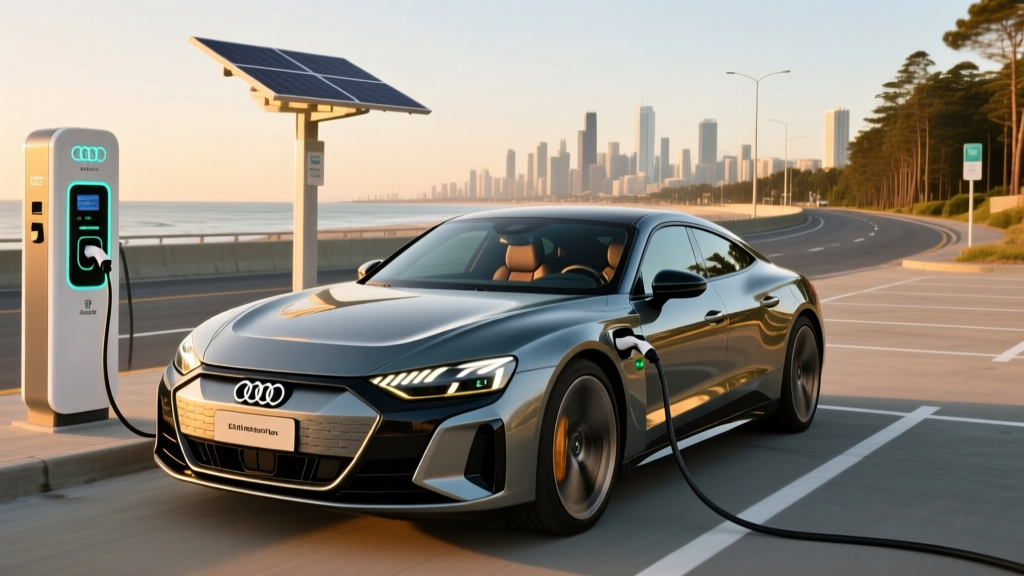
The e-tron GT's 800-volt electrical architecture is its strongest practical advantage. This system enables peak DC fast-charging at 270 kW, among the highest rates available on any production EV from its model year.
| Charging Level | Power | Speed / Time |
|---|---|---|
| Level 1 (120V household) | ~1.4 kW | ~4-5 miles per hour |
| Level 2 (240V, 48A) | 11 kW (onboard charger max) | ~30-35 miles per hour; 0-100% in ~9.5 hours |
| DC Fast Charge (peak) | 270 kW | 10-80% in ~23 minutes (ideal conditions) |
| DC Fast Charge (typical 150 kW station) | ~150 kW sustained | 10-80% in ~32 minutes |
Charging curve reality: The 270 kW peak is achievable only at chargers capable of 350 kW+ output (such as Electrify America 350 kW stalls) and only when the battery is preconditioned — ideally by navigating to the charger using the car's built-in route planner, which activates thermal management. The peak rate holds from approximately 10-40% state of charge, then tapers progressively. From 40-60%, expect roughly 175-200 kW; from 60-80%, the rate drops to approximately 100-130 kW. This taper is typical of NMC chemistry and is managed to protect long-term battery health.
On a 150 kW DC charger (still common on many networks), the e-tron GT will accept close to the full 150 kW through much of the 10-80% window, making the taper less punishing than on vehicles that peak far above 150 kW.
For home charging, the 11 kW onboard charger is competitive. A full charge from empty takes roughly 9.5 hours on a 48-amp Level 2 circuit (requiring a 60-amp dedicated breaker). Most owners charging overnight from 20-80% will need only 5-6 hours.
Pricing, Tax Credits, and Ownership Costs in 2026
The 2022 Audi e-tron GT Premium Plus originally carried a base MSRP of $103,900 (including destination). With options like the Year Package, carbon-fiber trim, and Audi e-tron Sport sound, as-tested prices commonly reached $115,000-$120,000.
As a used vehicle in 2026, expect market prices between $52,000 and $70,000 depending on mileage, condition, and trim options — reflecting typical luxury EV depreciation curves.
As a used purchase in 2026, the e-tron GT may qualify for the Used Clean Vehicle Credit (IRS §25E), worth up to $4,000 (30% of the sale price, capped at $4,000). Requirements include:
- Sale price must be $25,000 or less — the e-tron GT does NOT meet this threshold at current market values
- Buyer income caps: $75,000 single / $112,500 head of household / $150,000 joint
- Vehicle must be at least 2 model years old (2022 qualifies in 2026)
- Must purchase from a licensed dealer
The original new-vehicle §30D credit ($7,500) was unavailable for the 2022 e-tron GT at the time of its sale due to its MSRP exceeding the sedan cap ($55,000 for sedans under the Inflation Reduction Act's revised rules, though pre-IRA rules in early 2022 had no MSRP cap — the transition created confusion). For current-year new EV purchases, always verify MSRP caps, income limits, and battery-sourcing requirements at irs.gov.
Interior, Cargo, and Daily Practicality
The e-tron GT's cabin reflects Audi's design language at its most architectural: layered horizontal surfaces, sustainable Dinamica microfiber upholstery (standard on Premium Plus), and a 10.1-inch MMI touchscreen with haptic feedback. Build quality is exemplary, with tight panel gaps and premium materials throughout.
| Measurement | Value |
|---|---|
| Front Headroom | 38.4 inches |
| Front Legroom | 41.5 inches |
| Rear Headroom | 36.8 inches |
| Rear Legroom | 32.1 inches |
| Cargo (rear trunk) | 9.2 cu ft |
| Frunk (front trunk) | 3.5 cu ft |
| Total Cargo | 12.7 cu ft |
The practicality gap: 12.7 cubic feet of total cargo space is tight — even for the grand-tourer segment. The Tesla Model S offers 28 cu ft behind its liftgate, and the Porsche Taycan provides roughly 14.3 cu ft combined. The e-tron GT's rear trunk opening is narrow, and the sloping roofline limits vertical space. Two carry-on suitcases fit in the rear trunk with room to spare; a full set of golf clubs requires creative angling.
Rear-seat comfort is adequate for adults on shorter trips, but the 32.1 inches of legroom is snug for anyone over six feet tall. The center tunnel (a remnant of the J1 platform's battery layout, which places cells in a "foot garage" but still requires structural tunnel elements) reduces the usability of the middle seat.
Technology, Driver Assistance, and Safety
The 2022 e-tron GT Premium Plus includes Audi's MMI touch response infotainment system with a 10.1-inch upper display and 8.6-inch lower climate/control display. Wireless Apple CarPlay and Android Auto are standard, along with a 16-speaker Bang & Olufsen sound system and a head-up display.
Driver assistance falls under Audi's Pre Sense suite, which includes:
- Adaptive cruise control with stop-and-go
- Lane departure warning and lane keeping assist
- Intersection assist (front cross-traffic alert)
- Park assist with 360-degree camera
- Traffic sign recognition
The e-tron GT's adaptive cruise and lane-keeping systems constitute SAE Level 2 driver assistance — not self-driving. The driver must maintain hands-on-wheel awareness and full attention at all times. Audi does not offer a hands-free highway driving system comparable to GM's Super Cruise or Ford's BlueCruise in this model year.
The NHTSA had not issued a dedicated safety rating for the 2022 e-tron GT as of early 2026, though the platform shares structural engineering with the Porsche Taycan, which earned a 5-star Euro NCAP rating. Check nhtsa.gov for any updated crash-test data.
Warranty, Battery Longevity, and Maintenance
Audi backs the 2022 e-tron GT with the following warranty coverage:
| Component | Coverage |
|---|---|
| Limited Vehicle Warranty | 4 years / 50,000 miles |
| High-Voltage Battery | 8 years / 100,000 miles (70% capacity retention minimum) |
| Powertrain (motors, inverters) | 8 years / 100,000 miles |
| Corrosion Perforation | 12 years / unlimited miles |
| Roadside Assistance | 4 years / unlimited miles |
The 70% capacity retention threshold is standard for the industry. If the battery degrades below 70% of its original capacity within the 8-year/100,000-mile window, Audi will repair or replace it at no cost. NMC batteries in 800-volt architectures like this one typically show 8-12% degradation over the first 100,000 miles based on fleet data from similar platforms — well within the warranty buffer.
Maintenance costs are lower than a comparable gas-powered Audi S7 or RS7 (no oil changes, no transmission fluid, no spark plugs), but brake fluid flushes, cabin air filters, and tire rotations still apply. Expect annual maintenance around $300-$500 after the warranty period.
Pros and Cons: The Honest Assessment
- 0-60 in 3.9 seconds — genuine sports-car acceleration
- 270 kW peak DC charging — among the fastest in its class
- 800V architecture enables sustained high-rate charging
- Exceptional build quality and cabin materials
- Standard AWD with torque vectoring
- Low center of gravity and balanced handling
- Quiet, refined ride quality at highway speeds
- 238-mile EPA range — short for the price class
- 12.7 cu ft total cargo — impractical for families
- Tight rear-seat legroom (32.1 in)
- No hands-free driving system (only Level 2 assist)
- Heavy depreciation — 40-50% in first 3 years
- Does not qualify for used-EV tax credit (§25E price cap)
- Touchscreen-heavy interface lacks physical knobs
Who Should Buy the 2022 Audi e-tron GT Premium Plus?
- You prioritize design, build quality, and driving dynamics over maximum range
- Your daily commute is under 150 miles round-trip with home charging
- You value 800V fast-charging for occasional road trips (23-minute 10-80% stops)
- You want sports-car acceleration (3.9s 0-60) in a refined, understated package
- You're buying used and can absorb the depreciation hit that original owners already took
- You need 300+ miles of range for frequent long-distance travel (consider Tesla Model S or Lucid Air)
- You regularly carry rear-seat passengers or cargo (consider Audi Q8 e-tron or Rivian R1S)
- You want hands-free highway driving (consider GM Super Cruise-equipped vehicles)
- Tax credit eligibility is central to your purchase math
Frequently Asked Questions
What is the real-world range of the 2022 Audi e-tron GT Premium Plus?
The EPA rates it at 238 miles combined. In real-world highway driving at 70-75 mph in moderate temperatures, expect 205-220 miles. In cold weather (below 32°F), range drops to approximately 170-190 miles. City driving with regenerative braking active can approach the EPA figure.
How fast does the e-tron GT charge on DC fast chargers and at home?
On a 350 kW-capable DC fast charger with battery preconditioning, the e-tron GT peaks at 270 kW and charges from 10-80% in approximately 23 minutes. On a more common 150 kW charger, expect 10-80% in roughly 32 minutes. At home on a 48-amp Level 2 charger (11 kW), a full charge takes about 9.5 hours; a typical 20-80% overnight session takes 5-6 hours.
Does the 2022 Audi e-tron GT qualify for any federal tax credit in 2026?
As a used purchase, the e-tron GT is unlikely to qualify for the §25E Used Clean Vehicle Credit because the credit requires a sale price of $25,000 or less — current market values for this model range from $52,000 to $70,000. The original §30D new-vehicle credit was subject to complex eligibility rules during the 2022 transition period. Consult a tax professional and check irs.gov for current guidance.
Is the 2022 e-tron GT worth buying vs. the Porsche Taycan or Tesla Model S?
Against the Taycan 4S, the e-tron GT offers similar performance and platform engineering with a more understated design and slightly lower used pricing, but less engaging steering feedback. Against the Tesla Model S Long Range, the Audi trails significantly on range (238 vs. 405 mi) and cargo space, but surpasses it on build quality, charging speed, and cabin materials. Choose the e-tron GT if luxury craftsmanship and fast charging matter more than maximum range.
What battery chemistry does the e-tron GT use, and how long will it last?
The e-tron GT uses NMC (nickel manganese cobalt) lithium-ion cells in a 93.4 kWh gross / ~85 kWh usable pack. NMC offers high power density and fast-charge capability but slightly faster degradation than LFP chemistry. Based on fleet data from the shared J1 platform, expect 8-12% capacity loss over 100,000 miles. Audi warranties the battery for 8 years/100,000 miles with a 70% minimum capacity retention threshold.
Does the e-tron GT have a frunk?
Yes, but it's small — just 3.5 cubic feet, enough for a charging cable bag or a small backpack. The rear trunk provides 9.2 cubic feet. Combined cargo capacity of 12.7 cu ft is limited for the luxury segment.