Quick Verdict: A Luxury Sprinter With Real Substance
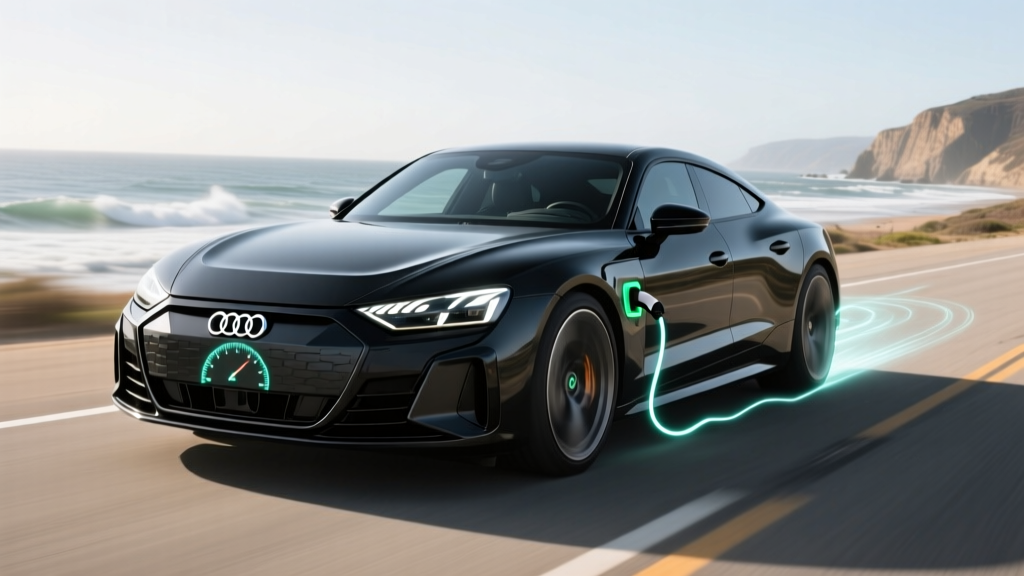
The 2022 Audi e-tron GT arrived as the brand's flagship electric grand tourer, sharing its J1 platform and 800-volt architecture with the Porsche Taycan. For buyers searching for the 2022 Audi e-tron GT 0-60 time, the answer depends on trim: the standard GT Premium hits 60 mph in 3.9 seconds, while the RS e-tron GT slashes that to 3.1 seconds. But straight-line speed is only part of this car's story. The 800V electrical system enables some of the fastest DC charging in the luxury EV segment, and the dual-motor all-wheel-drive powertrain delivers composed, confidence-inspiring performance in all conditions.
As a used-EV prospect in 2026, the 2022 model year offers a compelling entry point into high-end electric performance — especially with the §25E used clean vehicle credit potentially applying to qualified buyers. Let's break down the exact numbers that matter.
Performance: 2022 Audi e-tron GT 0-60 Times by Trim
Audi offers the 2022 e-tron GT in two primary configurations, each with a dual-motor AWD layout and a two-speed rear transmission — a rarity among EVs that optimizes both launch acceleration and high-speed efficiency.
| Specification | e-tron GT Premium / Premium Plus | RS e-tron GT |
|---|---|---|
| Drivetrain | Dual-motor AWD | Dual-motor AWD |
| Horsepower (boost) | 522 hp | 637 hp |
| Torque (boost) | 472 lb-ft | 612 lb-ft |
| 0-60 mph | 3.9 seconds | 3.1 seconds |
| Top Speed | 152 mph | 155 mph |
| Battery (gross / usable) | 93.4 kWh / ~83.7 kWh | 93.4 kWh / ~83.7 kWh |
| Battery Chemistry | NMC (Nickel Manganese Cobalt) | NMC (Nickel Manganese Cobalt) |
| EPA Range | 238 miles | 232 miles |
| MPGe (combined) | 82 MPGe | 79 MPGe |
| Efficiency | 41 kWh/100 mi | 43 kWh/100 mi |
The two-speed rear axle is the key engineering differentiator here. First gear provides explosive off-the-line acceleration, while second gear keeps the motor operating in its efficiency sweet spot at highway speeds. This is why the e-tron GT feels just as urgent at 70 mph as it does from a standstill — something single-speed EVs can struggle with.
For context, the 2022 Tesla Model S Plaid posts a 1.99-second 0-60, but starts at a significantly different price point and sacrifices interior refinement. The Porsche Taycan 4S, the e-tron GT's closest sibling, matches the GT Premium's 3.9-second time but costs roughly $15,000-$20,000 more when new.
Range: EPA Sticker vs. Real-World Expectations
Real-World Highway (70 mph, 68°F): Expect ~200-215 miles
Cold Weather (32°F, highway): Expect ~165-185 miles — a 20-30% reduction
Efficiency Observed: ~2.3-2.5 mi/kWh highway; ~2.8 mi/kWh mixed city
The 2022 e-tron GT's EPA range of 238 miles is respectable for a performance sedan, but it falls short of luxury rivals like the Lucid Air (400+ miles) and even the BMW i4 eDrive40 (301 miles). The 93.4 kWh gross battery (~83.7 kWh usable) provides a generous buffer, but the car's 5,100-pound curb weight and performance-oriented tuning prioritize acceleration over efficiency.
In real-world highway driving at 70-75 mph, owners typically report 200-215 miles before reaching 10% state of charge. Cold weather compounds this: lithium-ion batteries in NMC chemistry lose efficiency below 40°F, and cabin heating draws significant power. The e-tron GT includes a heat pump (standard on most trims), which mitigates some cold-weather loss compared to resistive heating, but you should still plan for roughly 170 miles of usable range on freezing road trips.
For daily commuting under 80 miles round-trip, the e-tron GT is effortless. For cross-country travel, you'll rely on Audi's complimentary Electrify America charging credits (typically 1,200 kWh over the first two years of ownership) and the car's excellent DC charging speed to keep stops short.
Charging Speed: 800V Architecture Makes a Difference
The e-tron GT's 800-volt electrical architecture is its most underrated advantage. While most EVs in 2022 operated on 400V systems limited to 150 kW peak charging, the e-tron GT can accept up to 270 kW at a compatible DC fast charger — placing it among the fastest-charging EVs available.
| Charging Level | Power (kW) | Speed / Time | Notes |
|---|---|---|---|
| Level 1 (120V household) | ~1.4 kW | ~4 miles per hour | Emergency/trickle only |
| Level 2 (240V home, 48A) | 11.5 kW | ~33 miles per hour; full charge ~8-9 hrs | Recommended daily charging |
| DC Fast Charge (peak) | 270 kW | 10-80% in ~22 minutes | Requires 350 kW-capable station |
| DC Fast Charge (typical 150 kW station) | ~135 kW sustained | 10-80% in ~35 minutes | Common Electrify America speed |
The 10-80% charging time of approximately 22 minutes at a 350 kW Electrify America station is genuinely useful on road trips. However, the charge curve tapers significantly above 80% — a protective measure for the NMC battery. Charging from 80-100% can add another 25-30 minutes, so plan your stops around the 10-80% window for maximum efficiency.
At home, the 11.5 kW onboard charger means a full charge from empty takes about 8-9 hours on a Level 2 wallbox. Most owners will plug in overnight and wake up to a full battery every morning. If your electrical panel supports a 60-amp circuit (48A continuous), you'll maximize the Level 2 rate. A 40-amp circuit (32A continuous) drops the home charge rate to about 7.7 kW, adding roughly an hour to a full charge.
One ownership note: the 2022 e-tron GT uses the CCS1 connector standard. As of 2026, Audi has committed to adopting NACS (Tesla's connector) for future models, and CCS-to-NACS adapters are available for accessing Tesla Supercharger stations. Check Audi's official adapter compatibility list before purchasing a third-party adapter.
Pricing, Trims & Federal Tax Credit Eligibility
When new, the 2022 Audi e-tron GT started at $103,900 for the Premium trim, climbing to $142,400 for the RS e-tron GT. In the used market as of 2026, expect to pay approximately $55,000-$70,000 for a well-equipped GT Premium and $80,000-$95,000 for an RS model, depending on mileage and condition.
| Trim | Original MSRP | Est. Used Price (2026) | §25E Used EV Credit (up to) | Est. After Credit |
|---|---|---|---|---|
| GT Premium | $103,900 | $58,000-$65,000 | $4,000 | $54,000-$61,000 |
| GT Premium Plus | $111,900 | $62,000-$70,000 | $4,000 | $58,000-$66,000 |
| RS e-tron GT | $142,400 | $82,000-$95,000 | $4,000 | $78,000-$91,000 |
Tax credit details: The original §30D new-vehicle credit does not apply to used purchases. However, the §25E used clean vehicle credit offers up to $4,000 (or 30% of the sale price, whichever is less) for qualified used EVs. Key eligibility rules for §25E:
- Vehicle price cap: Sale price must be $25,000 or less — this disqualifies most e-tron GT examples at current used prices
- Income limits: Modified AGI ≤ $75,000 (single), $112,500 (head of household), $150,000 (joint)
- Vehicle age: Must be at least 2 model years old (2022 models qualify in 2024+)
- Dealer requirement: Must purchase from a licensed dealer; private-party sales excluded
Given the $25,000 sale price cap, most 2022 e-tron GT examples will not qualify for the §25E credit at 2026 market prices. Buyers should consult a tax professional and verify current IRS rules at irs.gov before relying on any credit in their purchase decision.
Interior, Cargo & Daily Livability
The e-tron GT's interior is a showcase of Audi's design and material quality. Vegan leather (Dinamica microfiber) is standard, with optional Valcona leather. The 12.3-inch Virtual Cockit Plus instrument cluster and 10.1-inch MMI touchscreen handle infotainment duties, with wireless Apple CarPlay and Android Auto included.
However, the GT's grand-tourer proportions create real compromises in passenger and cargo space:
- Front legroom: 42.3 inches — generous and comfortable
- Rear legroom: 29.6 inches — tight for adults over 6 feet; best for children or shorter trips
- Trunk (rear cargo): 9.2 cubic feet — smaller than a compact sedan; a pair of carry-on bags fills it
- Frunk (front trunk): 3.5 cubic feet — fits a charging cable bag or small soft duffel
- Total cargo: 12.7 cubic feet combined
The rear seat is the e-tron GT's most significant practicality weakness compared to the Tesla Model S (28.8 cu ft trunk) or even the Porsche Taycan (which manages 14.3 cu ft rear + 2.8 cu ft frunk). If you regularly carry rear-seat passengers or need luggage capacity for road trips, this car demands compromise.
Driver Assistance, Tech & Notable Drawbacks
Standard driver-assistance features include:
- Audi pre sense front and rear (automatic emergency braking)
- Lane departure warning with active lane assist
- Adaptive cruise control with stop-and-go
- Parking system plus (360-degree camera)
- Intersection assist and exit warning
The tech suite is competent but not class-leading. Audi does not offer a hands-free driving system comparable to GM's Super Cruise or Ford's BlueCruise on highways. The adaptive cruise with lane centering works well on long drives but requires regular steering-wheel touch confirmation.
Notable drawbacks owners report:
- MMI infotainment can feel dated compared to Tesla's or Lucid's interfaces — no large-format screen, no over-the-air feature upgrades on 2022 hardware
- Rear visibility is limited by the sloping roofline; the virtual rearview mirror option helps
- No one-pedal driving mode — regen is adjustable via paddles but does not bring the car to a full stop
- Tire costs are high: 21-inch performance tires (standard on RS) run $350-$500 per corner and may need replacement every 15,000-20,000 miles
Warranty Coverage
| Coverage Type | Duration |
|---|---|
| New Vehicle Limited Warranty | 4 years / 50,000 miles |
| High-Voltage Battery Warranty | 8 years / 100,000 miles (70% capacity retention) |
| Powertrain Warranty | 4 years / 50,000 miles |
| Corrosion Perforation | 12 years, unlimited miles |
| Roadside Assistance | 4 years / unlimited miles |
Audi's 8-year/100,000-mile battery warranty guarantees at least 70% capacity retention. If your 2022 e-tron GT's usable range drops below roughly 166 miles (70% of 238) within that window, Audi is obligated to repair or replace the battery at no cost. As of 2026, most 2022 examples with typical mileage (25,000-45,000 miles) should show battery degradation of 5-10%, well within warranty tolerance. NMC chemistry in the J1 platform has proven durable in real-world fleet data from the Porsche Taycan.
Pros & Cons at a Glance
Pros
- 0-60 in 3.1s (RS) — genuine supercar territory
- 270 kW peak DC charging; 10-80% in ~22 min
- Exceptional build quality and cabin materials
- 800V architecture future-proofs charging speed
- Composed AWD handling in rain and snow
- Heat pump standard for cold-climate efficiency
Cons
- EPA range of 232-238 mi trails luxury rivals
- Rear seat legroom (29.6 in) is cramped for adults
- Cargo space (12.7 cu ft total) is impractical for families
- High tire wear on 21-inch performance wheels
- No true one-pedal driving mode
- Likely ineligible for §25E used credit (price cap)
Who Should Buy the 2022 Audi e-tron GT?
Choose the e-tron GT if: You prioritize build quality, acceleration, and charging speed over maximum range. You commute under 100 miles daily, have home Level 2 charging, and rarely carry rear-seat passengers. You value understated luxury over tech-forward branding.
Look elsewhere if: You need 300+ miles of range (consider the Lucid Air or BMW i7), require practical rear seating and cargo space (Tesla Model S, Mercedes EQS), or want hands-free highway driving (GM Super Cruise-equipped vehicles). Budget-conscious buyers should also note higher insurance premiums ($3,500-$5,000/year) and performance tire replacement costs.
Frequently Asked Questions
What is the real-world range of the 2022 Audi e-tron GT?
The EPA rates the GT Premium at 238 miles and the RS at 232 miles. In real-world highway driving at 70 mph, expect 200-215 miles. In freezing temperatures, plan for 165-185 miles. The heat pump helps, but NMC battery chemistry and the car's 5,100-lb weight work against cold-weather efficiency.
How fast does the 2022 e-tron GT charge?
At a 350 kW DC fast charger, it peaks at 270 kW and charges from 10-80% in approximately 22 minutes. At a typical 150 kW station, expect 10-80% in about 35 minutes. At home on Level 2 (240V, 48A), the 11.5 kW onboard charger adds roughly 33 miles per hour, with a full charge taking 8-9 hours.
Does the 2022 Audi e-tron GT qualify for any federal tax credit?
As a new vehicle, it was eligible for the §30D credit (subject to MSRP and sourcing rules at the time). As a used purchase in 2026, the §25E credit offers up to $4,000 — but only if the sale price is $25,000 or less and the buyer meets income caps. Most e-tron GT examples exceed the $25,000 price cap, making them ineligible. Always verify current rules at irs.gov and consult a tax professional.
Is the 2022 e-tron GT worth buying vs. the Porsche Taycan?
They share the J1 platform, 800V architecture, and battery. The e-tron GT offers a more comfortable ride, standard AWD, and a lower entry price on the used market. The Taycan provides sharper handling, a slightly more engaging drive, and marginally better efficiency. If you value luxury comfort, the Audi wins. If you prioritize sports-car dynamics, the Porsche edges ahead. Both charge at up to 270 kW.
How long will the e-tron GT battery last?
Audi warrants the 93.4 kWh battery for 8 years/100,000 miles at 70% capacity retention. Based on J1 platform fleet data, expect 5-10% degradation over the first 3-4 years with typical use. Full battery replacement (out of warranty) is estimated at $20,000-$28,000 including labor — a significant cost, but rarely needed within the first 10 years of ownership.
Can the e-tron GT use Tesla Superchargers?
The 2022 e-tron GT uses the CCS1 connector. As Audi transitions to NACS, CCS-to-NACS adapters are becoming available. Verify adapter compatibility with Audi before purchasing, and note that charging speed through an adapter may be limited compared to native CCS stations.
Sources: EPA fuel economy data via fueleconomy.gov; Audi USA specifications; IRS §25E and §30D credit rules at irs.gov.