Quick Verdict: A Comfortable Electric Crossover With Room to Grow
The 2021 Volkswagen ID.4 Pro S was one of the first mainstream electric SUVs to challenge Tesla's dominance in the U.S. market, offering a spacious cabin, composed ride quality, and a practical 260-mile EPA range. Five years on, it remains a compelling option on the used EV market — especially for buyers who prioritize comfort and interior space over blistering acceleration or cutting-edge software. As a 2026 ownership prospect, the ID.4 Pro S benefits from Volkswagen's maturing software stack (via over-the-air updates since launch), a growing Electrify America charging network, and potential eligibility for the federal used-EV tax credit under IRS §25E.
That said, the 2021 ID.4 Pro S isn't without compromises. Its DC fast-charging speed peaks at 125 kW — adequate but outpaced by Hyundai/Kia's E-GMP platform rivals. The original infotainment software was frustratingly slow at launch, though subsequent OTA updates have improved responsiveness. For buyers evaluating a used 2021 ID.4 Pro S in 2026, understanding its real-world range, charging behavior, and long-term battery health is essential before signing.
Range, Efficiency, and Real-World Expectations
Real-World Highway: ~220–240 miles at 70 mph sustained
Cold-Weather (below 32°F): ~190–210 miles with cabin heating active
Combined Efficiency: 104 MPGe / 32 kWh per 100 miles
The 2021 ID.4 Pro S uses an 82 kWh gross battery pack (77 kWh net usable capacity) built with NMC (nickel-manganese-cobalt) lithium-ion cells supplied primarily by LG Energy Solution and SK On. The EPA rates the RWD Pro S at 260 miles of combined range, which is achievable in mild-weather city and suburban driving where regenerative braking recovers energy frequently.
However, real-world highway driving tells a different story. In independent testing and owner reports, sustained 70–75 mph freeway travel typically yields 220 to 240 miles before the battery reaches a low state of charge. The ID.4's aerodynamic profile (Cd of 0.28) helps, but it's still a tall crossover pushing through air resistance at speed. In cold weather — particularly below freezing — expect a 15–25% range reduction due to battery heating demands and cabin climate load, bringing practical range down to roughly 190–210 miles. The ID.4 does feature a heat pump (standard on the Pro S), which mitigates some of this loss compared to resistive heating systems, but cold-weather range drop is a physical reality for all NMC packs.
According to fueleconomy.gov, the 2021 ID.4 Pro S achieves 104 MPGe combined (108 city / 99 highway). In practical terms, that translates to roughly 32 kWh consumed per 100 miles of mixed driving — competitive with the Ford Mustang Mach-E RWD but slightly thirstier than the Tesla Model Y Long Range at ~28 kWh/100mi.
| Spec | Value |
|---|---|
| EPA Range (RWD) | 260 miles |
| Battery (Gross / Net Usable) | 82 kWh / 77 kWh |
| Chemistry | NMC (Nickel-Manganese-Cobalt) |
| Max DC Fast Charge | 125 kW |
| 10–80% DC Charge Time | ~38 minutes |
| Level 2 Home Charge Rate | 11 kW (~37 mi/hr) |
| Drivetrain | Rear-Wheel Drive (single motor) |
| Horsepower / Torque | 201 hp / 229 lb-ft |
| 0–60 mph | 7.7 seconds |
| MPGe (Combined) | 104 MPGe (32 kWh/100mi) |
| Cargo Volume (rear seats up / folded) | 30.3 / 64.2 cu ft |
| Original MSRP (Pro S RWD) | $44,495 (before incentives) |
| Battery / Powertrain Warranty | 8 years / 100,000 miles |
Charging Speeds: DC Fast Charging and Home Level 2
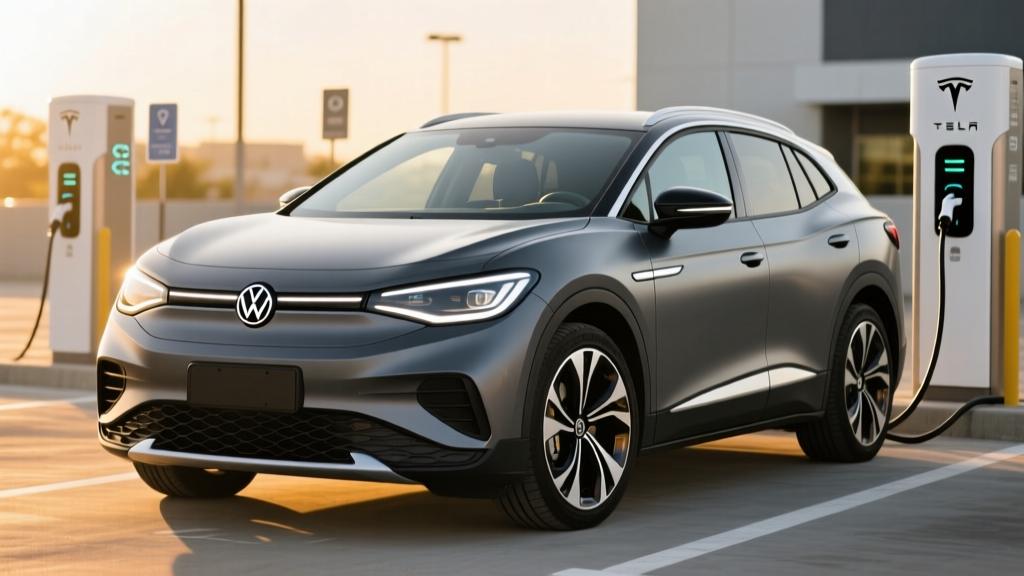
Charging is where the 2021 ID.4 Pro S shows its age relative to newer competitors — but it remains practical for most ownership scenarios. The vehicle uses the CCS1 connector (standard for non-Tesla EVs sold in the U.S. in 2021) and is compatible with Electrify America, EVgo, ChargePoint, and other CCS networks. With Volkswagen's adoption of the NACS adapter ecosystem by 2025, used 2021 ID.4 owners can access Tesla Supercharger stations using a CCS-to-NACS adapter, significantly expanding route options.
| Charge Level | Power (kW) | Miles Added per Hour | Notes |
|---|---|---|---|
| Level 1 (120V household) | ~1.4 kW | ~4 mi/hr | Emergency/trickle only; ~55 hrs for full charge |
| Level 2 (240V home, 48A) | 11 kW | ~37 mi/hr | Full charge in ~7.5 hrs; ideal overnight |
| DC Fast Charge (CCS) | 125 kW peak | ~190 mi/hr (peak) | 10–80% in ~38 min; tapers sharply above 80% |
The 125 kW peak DC charge rate means the ID.4 Pro S can add roughly 70 miles of range in 10 minutes under optimal conditions (warm battery, low state of charge). The charge curve is relatively flat from 10% to about 50%, sustaining close to 120–125 kW, then gradually tapering to around 60–70 kW by 80%. Above 80%, charging slows dramatically to protect the NMC cells — expect the final 20% to take as long as the first 70%. This is normal behavior for NMC chemistry but worth understanding for road-trip planning: charge from 10–80% and drive on rather than waiting for a full top-up.
For home charging, the ID.4 Pro S accepts up to 11 kW on Level 2 (48 amps on a 240V circuit). This requires a dedicated 60-amp breaker and a hardwired Level 2 EVSE or a NEMA 14-50 outlet installed by a licensed electrician. A full overnight charge adds approximately 37 miles of range per hour of charging, meaning even a depleted battery is fully replenished by morning. Typical home Level 2 installation costs range from $800 to $2,000 depending on panel capacity and conduit runs — consult a licensed electrician for your specific setup.
Performance and Driving Dynamics
The 2021 ID.4 Pro S is powered by a single rear-mounted permanent-magnet synchronous motor producing 201 horsepower and 229 lb-ft of torque. The 0–60 mph sprint takes 7.7 seconds — respectable for a family crossover but noticeably slower than the Tesla Model Y Long Range (4.8 seconds) or the dual-motor ID.4 AWD Pro (5.4 seconds). This RWD configuration gives the ID.4 a balanced, slightly tail-happy character that's unusual in the crossover segment, and the instant electric torque makes city merging effortless.
Where the ID.4 Pro S shines is ride quality. VW tuned the suspension for comfort over sportiness, and the result is a compliant, quiet cruiser that absorbs highway expansion joints and potholes with minimal fuss. The low center of gravity (battery pack mounted under the floor) keeps body roll well-controlled, and the steering — while numb by enthusiast standards — is accurate and confidence-inspiring for daily commuting. At 4,682 lbs curb weight, it's not a lightweight, but the mass is well-managed.
The ID.4 Pro S includes Volkswagen's IQ.DRIVE suite of driver-assistance features, including Travel Assist (adaptive cruise control with lane centering), Front Assist (automatic emergency braking), Lane Assist, and Park Assist. Travel Assist operates as an SAE Level 2 system — it provides steering and speed assistance on highways, but the driver must remain fully engaged with hands on the wheel and eyes on the road at all times. It is not self-driving and does not navigate autonomously.
Interior, Cargo, and Technology
The ID.4 Pro S cabin reflects VW's minimalist EV design philosophy. The 12-inch touchscreen dominates the dashboard, with a small 5.3-inch digital instrument cluster behind the steering wheel. The Pro S trim adds premium touches: heated front seats, a panoramic fixed glass roof, ambient lighting, leatherette upholstery, and a power-adjustable driver's seat with memory settings.
Interior space is a genuine strength. Rear-seat passengers enjoy 37.6 inches of legroom — more than the Tesla Model Y (35.2 inches) and competitive with midsize gas crossovers. Cargo capacity measures 30.3 cubic feet behind the rear seats and 64.2 cubic feet with the 60/40 split rear seat folded flat. There is no front trunk (frunk); VW used that space for HVAC and electronics components, which is a missed opportunity for additional storage.
The original 2021 infotainment software drew widespread criticism for sluggish response times, confusing menu structures, and non-illuminated capacitive touch sliders. Volkswagen has addressed many of these issues through over-the-air software updates (Software 3.0 and later), which improved processing speed, added wireless Apple CarPlay/Android Auto stability, and refined the navigation interface. When evaluating a used 2021 ID.4 Pro S in 2026, confirm that the latest OTA software version has been installed — it makes a tangible difference in daily usability.
Pricing, Used Market Value, and Tax Credit Eligibility
When new, the 2021 ID.4 Pro S RWD carried an MSRP of $44,495 (including destination). The lower Pro trim started at $39,995, and the AWD Pro S was $48,175. Depreciation has been significant — as of early 2026, used 2021 ID.4 Pro S models typically trade between $20,000 and $27,000 depending on mileage, condition, and region, based on listings from major used-EV marketplaces.
- Sale price must be $25,000 or less
- Buyer adjusted gross income: ≤$75,000 (single) / ≤$150,000 (married filing jointly)
- Vehicle must be at least 2 model years old (2021 qualifies in 2026)
- Must purchase from a licensed dealer (private-party sales excluded)
- Credit is non-refundable — you must have federal tax liability to claim it
- Vehicle must have a battery capacity of at least 7 kWh (ID.4's 82 kWh qualifies)
Note: The §25E credit is separate from the new-vehicle §30D credit. Consult a tax professional for your specific eligibility.
For buyers who find a well-maintained 2021 ID.4 Pro S at or below $25,000, the potential $4,000 used-EV credit effectively brings the net cost to $21,000 or less — a compelling entry point into a spacious, comfortable electric crossover with a strong warranty remaining (the 8-year/100,000-mile battery warranty extends through the 2029 model year for a 2021 purchase).
Battery Health, Warranty, and Long-Term Ownership
Volkswagen warranties the 2021 ID.4's 82 kWh battery pack for 8 years or 100,000 miles (whichever comes first), guaranteeing a minimum of 70% capacity retention. This means that through 2029 or 100,000 miles, VW will repair or replace the battery if it degrades below 70% of its original usable capacity (approximately 54 kWh net). Based on fleet data and owner reports from high-mileage ID.4 drivers in Europe and the U.S., NMC degradation in the ID.4 platform has been modest — most vehicles show 90–95% state of health (SoH) after 3–4 years and 40,000–60,000 miles of typical use.
To maximize battery longevity, VW's battery management system (BMS) maintains a top and bottom buffer — the displayed 100% is not a true 100% cell-level charge, which reduces stress on the NMC cells. For daily driving, charging to 80% is recommended (configurable in the vehicle's charging settings), with 100% charges reserved for road trips. The ID.4's liquid-cooled thermal management system actively regulates battery temperature during charging and driving, further protecting long-term health.
If battery replacement were ever needed outside warranty, industry estimates for an 82 kWh NMC pack replacement in 2026 range from $12,000 to $18,000 including labor — though this scenario is rare and typically only relevant for vehicles exceeding 150,000+ miles or experiencing defect-related failures.
Pros
- Spacious cabin with 37.6" rear legroom and 30.3 cu ft cargo
- Composed, comfortable ride quality — best in class for cruising
- Heat pump standard on Pro S (improves cold-weather range)
- Strong 8-year/100,000-mile battery warranty (remaining through 2029)
- Potential $4,000 used-EV federal tax credit under §25E
- CCS-to-NACS adapter compatibility opens Tesla Supercharger access
Cons
- 125 kW peak DC charging is slower than Hyundai/Kia/Tesla rivals
- Original infotainment software was poor (verify OTA updates applied)
- No front trunk (frunk) — lost cargo opportunity
- 7.7-second 0–60 time feels leisurely vs. competitors
- Capacitive touch sliders remain frustrating to use while driving
- Highway range drops to ~220 mi — plan road trips accordingly
How the 2021 ID.4 Pro S Compares to Key Rivals
In the used-EV market at the $20,000–$27,000 price point, the 2021 ID.4 Pro S competes against the 2021 Ford Mustang Mach-E Select/Route, the 2021 Tesla Model Y Long Range (higher mileage examples), and the 2021 Hyundai Kona Electric. Each has trade-offs:
- vs. Ford Mustang Mach-E (2021 RWD Extended Range): The Mach-E offers faster DC charging (~150 kW), sportier handling, and a slightly more engaging infotainment system. The ID.4 counters with a more comfortable ride, more rear-seat legroom, and a quieter cabin. The Mach-E's 300-mile EPA range edges out the ID.4's 260, but real-world highway gaps narrow.
- vs. Tesla Model Y (2021 Long Range): The Model Y dominates in efficiency (~28 kWh/100mi vs. 32), Supercharger network access (native NACS), and performance (4.8-second 0–60). The ID.4 wins on ride comfort, build quality consistency, and a more traditional crossover feel. Model Y examples at this price point typically have higher mileage.
- vs. Hyundai Kona Electric (2021): The Kona Electric offers a strong 258-mile EPA range and excellent efficiency but is significantly smaller inside (cargo: 19.2 cu ft). The ID.4 is a class larger and better suited for families.
Who Should Buy the 2021 Volkswagen ID.4 Pro S?
The 2021 ID.4 Pro S is best suited for buyers who:
- Commute 30–80 miles round trip and can charge at home overnight — the 260-mile range provides a comfortable buffer, and daily Level 2 charging is inexpensive (~$0.04–$0.06 per mile depending on local electricity rates).
- Prioritize comfort over performance — the ID.4's ride quality and cabin quietness are genuine strengths that make it an excellent daily driver and road-trip companion for those who plan charging stops.
- Need family-friendly space — rear-seat room and cargo capacity accommodate child seats, strollers, and groceries without compromise.
- Want to minimize purchase cost with a used EV under $25,000 that still carries meaningful factory battery warranty coverage through 2029.
It is less ideal for buyers who regularly drive 300+ miles between charging stops, need towing capability (the 2021 RWD ID.4 is rated for only 2,200 lbs with the factory tow package), or demand the fastest possible DC charging for frequent road trips.
Frequently Asked Questions
What is the real-world range of the 2021 Volkswagen ID.4 Pro S?
The EPA rates the 2021 ID.4 Pro S RWD at 260 miles combined. In real-world highway driving at 70 mph, expect 220–240 miles. In cold weather below freezing, range can drop to 190–210 miles due to battery thermal management and cabin heating demands. The standard heat pump helps mitigate cold-weather losses compared to vehicles using resistive heating.
How fast does the 2021 ID.4 Pro S charge?
On DC fast charging (CCS connector), the ID.4 Pro S peaks at 125 kW and charges from 10% to 80% in approximately 38 minutes. On a home Level 2 charger (240V, 48A), it accepts up to 11 kW, adding about 37 miles of range per hour — a full charge takes roughly 7.5 hours overnight. Level 1 (120V) trickle charging adds about 4 miles per hour and is suitable only for emergencies or very low daily mileage.
Does the 2021 ID.4 Pro S qualify for a federal tax credit in 2026?
As a used vehicle in 2026, the 2021 ID.4 Pro S may qualify for the federal used clean vehicle credit under IRS §25E — up to $4,000 (30% of the sale price, capped). Eligibility requires: a sale price of $25,000 or less, buyer AGI under $75,000 (single) or $150,000 (married filing jointly), purchase from a licensed dealer, and sufficient federal tax liability to absorb the non-refundable credit. The new-vehicle §30D credit is no longer available for 2021 models. Consult a tax professional and review current rules at irs.gov.
Is the 2021 ID.4 Pro S worth buying in 2026 vs. competitors?
Yes, if you value ride comfort, interior space, and strong remaining warranty coverage at a used price point of $20,000–$27,000. It trades outright performance and charging speed for comfort and practicality. If fast DC charging or sporty acceleration is a priority, the 2021 Mustang Mach-E or a higher-mileage Tesla Model Y may suit you better. For pure value and family space per dollar, the ID.4 Pro S is highly competitive — especially with the potential $4,000 used-EV credit bringing net cost below $21,000.
What is the battery warranty on a used 2021 ID.4 Pro S?
Volkswagen's battery and powertrain warranty covers 8 years or 100,000 miles from the original in-service date, guaranteeing at least 70% capacity retention. For a 2021 model first sold in early 2021, this warranty remains active through approximately early 2029 or 100,000 miles — whichever comes first. This provides meaningful protection for used buyers in 2026, with roughly 3 years of factory coverage remaining.
Can the 2021 ID.4 use Tesla Superchargers?
Yes, with an adapter. Volkswagen has supported CCS-to-NACS adapter compatibility, allowing 2021 ID.4 owners to access Tesla's Supercharger network (V2 and V3 stalls) using a third-party or OEM-approved adapter. Check Volkswagen's official guidance and adapter compatibility lists before purchasing an adapter, and note that charging speeds on Superchargers may be limited by the ID.4's 125 kW peak rate.