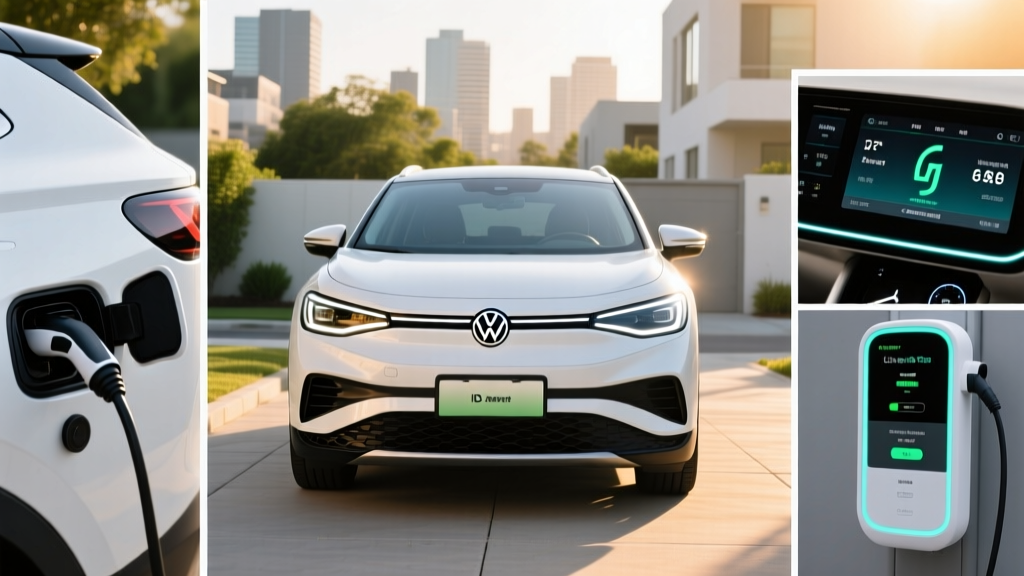
Quick Verdict: The 2021 Volkswagen ID.4 1st Edition in 2026
The 2021 Volkswagen ID.4 1st Edition was VW's opening move in the mass-market electric crossover segment — a practical, roomy, and deliberately mainstream BEV built on the MEB platform. Five years on, it remains a strong used-EV proposition for buyers who value cargo space, ride comfort, and straightforward road-trip charging over blistering acceleration or cutting-edge infotainment. If you're shopping for one today, the used-EV federal tax credit (up to $4,000 under IRS §25E) can make it a genuine bargain — provided you understand its real-world range limits and charging characteristics.
The 2021 ID.4 1st Edition carries an EPA-estimated 250 miles of range (RWD, 19-inch wheels). In real-world driving, expect 220–240 miles on the highway at 70 mph, and as little as 175–195 miles in sub-freezing winter conditions. Cold weather, aggressive acceleration, and sustained high speeds all erode the EPA figure. City driving with regenerative braking can match or slightly exceed the sticker number.
Spec Table: 2021 Volkswagen ID.4 1st Edition at a Glance
| Specification | Value |
|---|---|
| EPA Range (RWD, 19" wheels) | 250 miles |
| Battery Capacity (gross / usable) | 82 kWh / ~77 kWh |
| Battery Chemistry | NMC (Nickel Manganese Cobalt) |
| Drivetrain | Rear-Wheel Drive (single motor) |
| Horsepower / Torque | 201 hp / 229 lb-ft |
| 0–60 mph | 7.7 seconds |
| Top Speed | 99 mph (electronically limited) |
| Max DC Fast-Charge Rate | 125 kW (peak) |
| 10–80% DC Fast-Charge Time | ~38 minutes |
| Level 2 Charge Rate | 11 kW (onboard charger) |
| Level 2 Full Charge Time (0–100%) | ~7.5 hours |
| EPA Efficiency | 104 MPGe combined (29 kWh/100 mi) |
| Cargo Volume (behind rear seats) | 30.3 cu ft |
| Cargo Volume (rear seats folded) | 64.2 cu ft |
| Rear Legroom | 37.6 inches |
| Battery Warranty | 8 years / 100,000 miles (70% capacity retention) |
| Original MSRP (1st Edition) | $43,995 (before incentives) |
Range and Efficiency: What 250 EPA Miles Actually Means
The 2021 ID.4 1st Edition uses an 82 kWh gross / ~77 kWh usable NMC lithium-ion battery pack. Volkswagen reserved roughly 5 kWh as a buffer to protect long-term battery health — a conservative approach that helps longevity but slightly reduces accessible energy compared to competitors that expose more of the pack.
The EPA rates this RWD model at 104 MPGe combined, which translates to roughly 29 kWh per 100 miles. That's competitive with the Hyundai Kona Electric (120 MPGe) but trails the Tesla Model Y Long Range (122 MPGe) and the newer 2025 ID.4 variants with improved heat-pump efficiency. In practical terms:
- City / suburban driving (moderate speeds, regen-heavy): 240–260 miles achievable
- Highway cruising (70–75 mph, mild weather): 220–235 miles
- Cold weather (below 32°F, heater on): 175–200 miles — a 20–30% reduction is typical for NMC packs without consistent preconditioning
- Hot weather with A/C: 230–245 miles (less impact than cold)
The 1st Edition came equipped with a heat pump in some markets, but US-spec 2021 models did not include one as standard equipment. That absence hurts winter efficiency compared to the Hyundai Ioniq 5 or Tesla Model Y, both of which use heat pumps to reduce cabin-heating energy draw.
Charging: DC Fast-Charge Speed and Home Level 2 Setup
The ID.4's charging profile is adequate for road trips but not class-leading. Here's the breakdown by charging level:
| Charging Level | Power (kW) | Miles Added per Hour | Notes |
|---|---|---|---|
| Level 1 (120V household outlet) | ~1.4 kW | ~4–5 miles/hr | Emergency/top-up only; full charge takes 50+ hours |
| Level 2 (240V home charger, 48A circuit) | 11 kW (max onboard) | ~33–36 miles/hr | Full 0–100% in ~7.5 hours; overnight ready |
| DC Fast Charging (peak) | 125 kW | ~190 miles/hr (at peak) | Peak only; tapers significantly above 80% SoC |
DC fast-charging reality: The 125 kW peak rate applies roughly between 5% and 30% state of charge. From 30% to 80%, the rate averages closer to 70–90 kW, which is why the 10–80% session takes approximately 38 minutes on a 150+ kW charger. Above 80%, charging slows dramatically to protect the NMC cells — expect 80–100% to add another 25–30 minutes. If you're road-tripping, plan your stops around 10–80% sessions for the best time-to-miles ratio.
The 1st Edition uses a CCS1 (Combined Charging System) connector. As of 2026, the CCS network remains widely available through Electrify America (which ID.4 owners received complimentary charging access with, though the original 3-year promotional period has expired on 2021 models). VW now equips newer ID.4 models with NACS, but the 2021 model requires a CCS-to-NACS adapter for Tesla Supercharger access — and not all Supercharger stalls support CCS adapters reliably.
Home charging setup: The 11 kW onboard charger means you'll want a Level 2 home station on a 60-amp circuit (delivering 48 amps continuous). A quality Level 2 charger (ChargePoint Home Flex, Emporia Level 2, or Wallbox Pulsar Plus) costs $400–$700 for the unit, with professional installation running $500–$2,000 depending on your electrical panel's capacity. Total home charging investment: roughly $900–$2,700. If your panel needs upgrading from 100A to 200A service, add $1,500–$3,000.
Performance: 201 HP, RWD, and a Comfortable Curb
The 2021 ID.4 1st Edition sends 201 horsepower and 229 lb-ft of torque to the rear wheels via a single permanent-magnet synchronous motor. The 0–60 mph sprint takes 7.7 seconds — perfectly adequate for highway merging and daily commuting, but noticeably slower than the Tesla Model Y Long Range (4.8 seconds) or the Ford Mustang Mach-E Premium RWD (6.1 seconds).
Where the ID.4 shines is ride quality. VW tuned the suspension for comfort over sportiness, and the result is a crossover that absorbs bumps with a maturity that belies its price. The turning circle is remarkably tight at 31.5 feet (thanks to the rear-motor layout and front wheels that turn sharply), making it genuinely easy to park in urban environments.
The AWD Pro S variant (dual-motor, 295 hp) was available for 2021 but the 1st Edition was RWD only. Regenerative braking is adjustable via a steering-wheel paddle (B-mode for stronger regen), but the ID.4 does not offer true one-pedal driving to a complete stop — it creeps at low speeds, which frustrates some BEV veterans accustomed to the Chevrolet Bolt or Nissan LEAF's full regen stop.
Interior, Tech, and Cargo: Practical Space, Quirky Software
The 1st Edition came fully loaded with features that VW positioned as premium: a panoramic fixed glass roof, heated front seats, a heated steering wheel, power-adjustable front seats, and a 12-inch infotainment touchscreen. Cargo space is a genuine strength:
- 30.3 cu ft behind the rear seats (more than the Model Y's rear trunk alone)
- 64.2 cu ft with rear seats folded flat
- 37.6 inches of rear legroom — generous for adults on long trips
Notably, the 2021 ID.4 has no front trunk (frunk). The space under the hood houses the power electronics and washer-fluid reservoir. For a vehicle marketed on practicality, the missing frunk is a missed opportunity for cable storage or a small cargo area.
Infotainment and software remain the ID.4's most-cited weakness. The 2021 model shipped with VW's ID. Software 2.1, which drew widespread criticism for slow response times, confusing capacitive-touch sliders (for volume and climate), and an unintuitive menu structure. VW has issued over-the-air updates that improved stability somewhat, but the interface still lags behind Tesla's, Hyundai's, and even Ford's Sync 4 in responsiveness and usability. Apple CarPlay and Android Auto are supported (wired only on 2021 models), which most owners use as a workaround.
Driver assistance: The ID.4 includes VW's IQ.DRIVE suite — adaptive cruise control with stop-and-go, lane-keeping assist, blind-spot monitoring, and rear cross-traffic alert. This is an SAE Level 2 system, meaning the driver must remain fully engaged with hands on the wheel and eyes on the road. It is not autonomous or self-driving. The system works well on highways but lacks the hands-free capability of GM's Super Cruise or Ford's BlueCruise on mapped roads.
Pricing and Federal Tax Credit: What You'll Actually Pay
The 2021 ID.4 1st Edition originally carried an MSRP of $43,995 (including destination). Early buyers who took delivery in 2021 may have qualified for the full $7,500 federal tax credit under the pre-IRA rules. Today, as a used vehicle, the calculus changes entirely.
| Item | Amount |
|---|---|
| Typical used market price (2021 1st Edition, ~45k miles) | $19,000–$24,000 |
| Used Clean Vehicle Credit (IRS §25E, 30% of sale price) | Up to $4,000 |
| Estimated net cost after credit | $15,000–$20,000 |
The Used Clean Vehicle Credit (§25E) applies to EVs sold for $25,000 or less through a licensed dealer. The credit equals 30% of the sale price, capped at $4,000. Key eligibility requirements per the IRS:
- Sale price must be $25,000 or less
- Buyer income caps: $75,000 single / $112,500 head of household / $150,000 joint (modified AGI)
- Vehicle must be at least 2 model years old (2021 qualifies in 2026)
- Must purchase from a licensed dealer (private-party sales don't qualify)
- Credit is non-refundable and can only be claimed once per vehicle (check the vehicle's credit history)
At $19,000–$24,000 on the used market, many 1st Edition examples fall within the $25,000 cap — making the $4,000 credit a realistic possibility. Always confirm eligibility with a tax professional before purchasing, as rules are subject to legislative change and individual circumstances vary.
Battery Health and Warranty: What to Check Before Buying Used
VW warranties the ID.4's high-voltage battery for 8 years or 100,000 miles (whichever comes first), guaranteeing that it will retain at least 70% of its original capacity. For a 2021 model, that warranty runs through the 2029 model year or 100,000 miles — meaning most examples in 2026 still carry meaningful battery coverage.
NMC chemistry in the ID.4 has shown moderate degradation in real-world fleet data. Owners at 50,000–60,000 miles typically report 3–6% capacity loss, which translates to roughly 8–15 fewer miles of range. That's within normal expectations and well above the 70% warranty threshold. To maximize battery longevity:
- Set daily charge limit to 80% and only charge to 100% before long trips
- Avoid repeated DC fast-charging when Level 2 is available
- Minimize prolonged storage above 90% or below 10% SoC
- Use preconditioning before fast-charging sessions in cold weather
Before purchasing, request a State of Health (SoH) report from the dealer or use an OBD-II diagnostic tool (such as Carista or OBDeleven) with EV-specific software to read the battery's actual capacity retention. A healthy 2021 ID.4 at 45,000 miles should show 94–97% SoH.
Pros and Cons: The Honest Assessment
- Spacious interior with 30.3 cu ft cargo and generous rear legroom
- Comfortable, compliant ride quality — best-in-class for daily comfort
- Tight 31.5-ft turning circle makes urban driving easy
- Used pricing + §25E credit can bring net cost to ~$17,000
- 8-year/100,000-mile battery warranty likely still active
- Strong safety ratings (NHTSA 5-star, IIHS Top Safety Pick+)
- Infotainment software remains sluggish and unintuitive
- No frunk — wasted under-hood space
- 125 kW peak DC charging is slower than Hyundai/Kia/Tesla rivals
- No heat pump on US-spec 2021 models — winter range suffers
- Capacitive-touch sliders for volume and climate frustrate many drivers
- No true one-pedal driving (creeps at low speed in B-mode)
Who Should Buy the 2021 ID.4 1st Edition?
This EV suits you if: You need a practical family crossover with ample cargo room, prioritize ride comfort over sporty dynamics, have access to Level 2 home charging, and drive a daily commute under 60 miles round-trip with occasional 200-mile road trips. The used-EV tax credit makes it one of the most affordable ways into a spacious, modern BEV in 2026.
Look elsewhere if: You regularly drive 300+ miles between charges, need fast DC charging for frequent road trips (consider the Ioniq 5 or Tesla Model Y), want cutting-edge infotainment, or live in a very cold climate where the lack of a heat pump will sting your winter range by 25–30%.
Frequently Asked Questions
What is the real-world range of the 2021 Volkswagen ID.4 1st Edition?
Expect 220–240 miles on the highway in moderate weather, 240–260 miles in city driving with regenerative braking, and 175–200 miles in cold weather below freezing. The EPA sticker says 250 miles, but real-world conditions — especially winter and sustained highway speeds — reduce that figure meaningfully.
How fast does the ID.4 charge at home and on DC fast chargers?
At home on a Level 2 (240V, 48A) charger, the ID.4 accepts up to 11 kW and adds roughly 33–36 miles of range per hour, fully charging in about 7.5 hours. On a DC fast charger, it peaks at 125 kW and takes approximately 38 minutes from 10% to 80%. Charging above 80% slows considerably.
Does the 2021 ID.4 1st Edition qualify for the federal EV tax credit?
As a used vehicle in 2026, it can qualify for the Used Clean Vehicle Credit (IRS §25E) — up to $4,000 or 30% of the sale price, whichever is less. The vehicle must sell for $25,000 or less through a licensed dealer, and the buyer must fall under income caps ($75,000 single / $150,000 joint). The original $7,500 new-vehicle credit (§30D) is no longer available for 2021 purchases. Consult a tax professional for your specific situation, and check IRS guidelines for current rules.
Is the 2021 ID.4 1st Edition worth buying vs. competitors?
Against a used Tesla Model Y (2021, ~$24,000–$28,000), the ID.4 trades acceleration and charging speed for ride comfort, interior space, and potentially lower cost after the used credit. Against a used Hyundai Kona Electric (2021, ~$16,000–$20,000), the ID.4 offers significantly more cargo room and rear-seat space but charges slower on DC. Against a used Ford Mustang Mach-E (2021, ~$22,000–$27,000), the ID.4 is more comfort-oriented while the Mach-E is more engaging to drive. Choose the ID.4 if practicality and comfort matter more than performance or tech.
What are the biggest problems with the 2021 ID.4?
The most common complaints center on the infotainment system — slow touchscreen response, confusing menus, and unreliable capacitive-touch sliders for volume and climate. Some owners report 12V battery drain issues (a common problem across many EVs where the 12V auxiliary battery isn't adequately maintained by the DC-DC converter). The lack of a heat pump also draws criticism from cold-climate owners. Mechanically, the vehicle has been reliable, and VW's NHTSA safety record is strong with a 5-star overall rating.
How long will the ID.4 battery last?
VW warranties the battery for 8 years/100,000 miles at 70% capacity retention. Real-world data from high-mileage ID.4 owners in Europe (where the ID.4 launched earlier) suggests NMC degradation of roughly 5–8% over 100,000 miles with mixed charging habits. With careful charging practices (80% daily limit, minimal DC fast-charging), the pack should comfortably last 150,000–200,000 miles before approaching the warranty threshold. Full battery replacement, if needed out of warranty, is estimated at $12,000–$18,000 based on current MEB pack pricing.