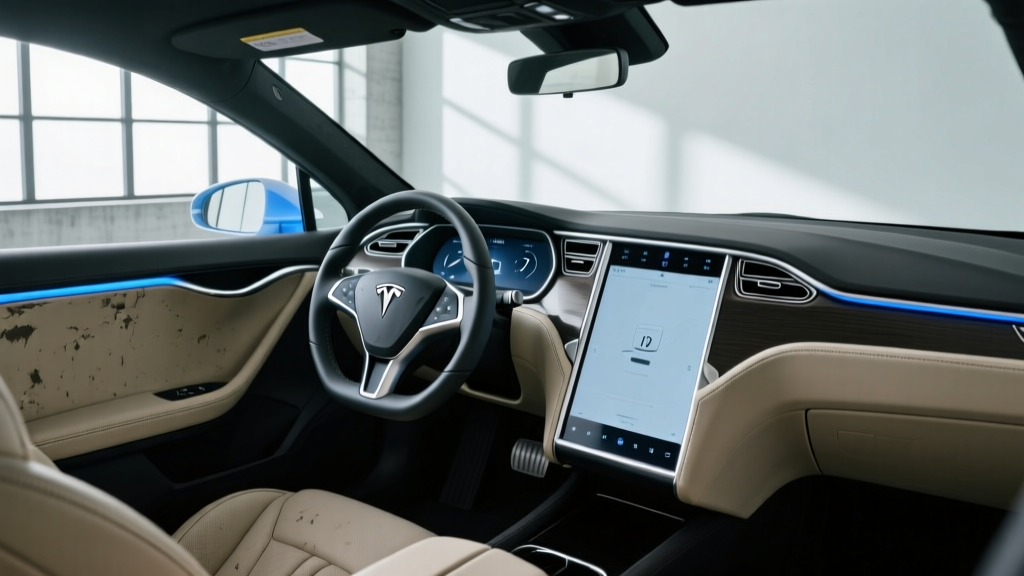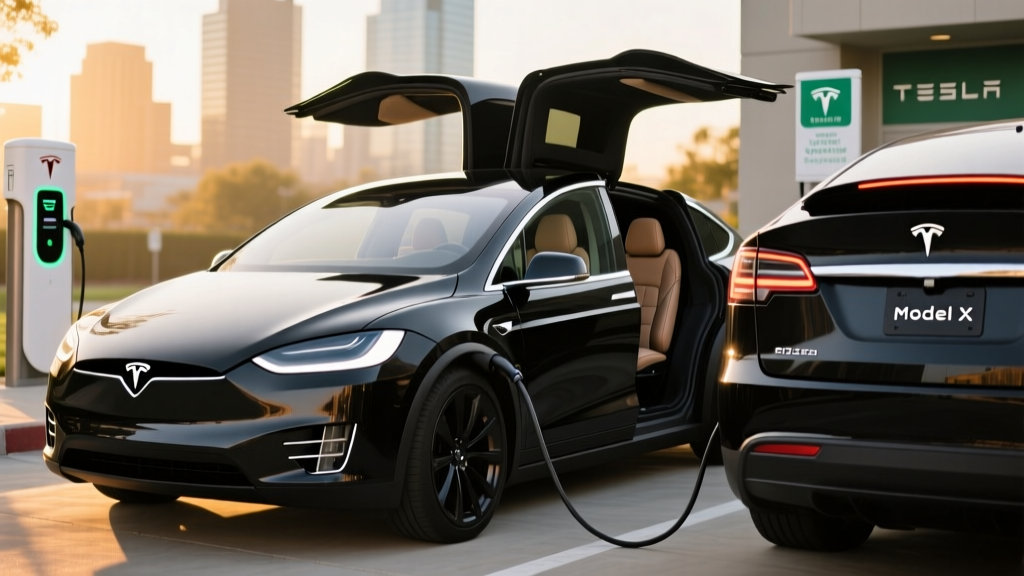
The 2021 Tesla Model X occupies a unique space in the used EV market. It was the last model year before Tesla's major "Plaid" refresh (which introduced the yoke steering, horizontal screen, and 1,020-hp powertrain), meaning the 2021 version retains the vertical touchscreen, traditional round steering wheel, and the proven dual-motor architecture that made the Model X a family-hauler staple. For buyers in 2026 eyeing a three-row electric SUV on the secondary market, this model year offers a compelling mix of Supercharger access, falcon-wing drama, and legitimate 300+ mile range — but it also carries specific ownership risks you need to understand before signing.
This review covers the 2021 Model X Long Range and Long Range Plus variants with real-world data on range, charging behavior, battery health expectations, and total cost of ownership. If you're cross-shopping against the Rivian R1S, BMW iX, or newer Model X Plaid, we'll map out exactly where this vehicle stands.
2021 Tesla Model X: Core Specifications at a Glance
| Specification | Value |
|---|---|
| EPA Range | 360 miles (Long Range Plus); 328 miles (Long Range/Performance) |
| Battery Capacity | ~100 kWh usable (NMC chemistry) |
| Drivetrain | Dual Motor AWD |
| Horsepower | ~670 hp (Long Range) |
| 0–60 mph | 3.8 sec (Long Range); 2.5 sec (Performance/Plaid transition) |
| Max DC Fast Charge | 250 kW peak (V3 Supercharger) |
| 10–80% DC Charge | ~32–36 minutes |
| Level 2 Home Charging | 11.5 kW (48A) — ~36 mi/hr |
| EPA Efficiency | 101 MPGe combined (33 kWh/100 mi) |
| Cargo (behind 3rd row) | 15.8 cu ft |
| Cargo (all seats folded) | 81.4 cu ft |
| Seating | 5, 6, or 7 passengers |
| Battery Warranty | 8 years / 150,000 miles (70% retention) |
| Original MSRP | $89,990 (Long Range Plus) – $99,990 (Performance) |
Sources: EPA fueleconomy.gov, Tesla owner's manual archive.
Real-World Range: What the EPA Sticker Doesn't Tell You
EPA Estimated: 360 miles
Real-World Highway (70–75 mph, moderate climate): ~290–310 miles
Real-World Cold Weather (below 32°F, highway): ~240–270 miles
Mixed City/Suburban: ~320–340 miles
The 2021 Model X Long Range Plus earned a 360-mile EPA rating — impressive on paper and still competitive in 2026 against newer three-row SUVs. But the Model X is a large, heavy vehicle (5,185 lbs curb weight) with the aerodynamic profile of a lifted hatchback. At sustained highway speeds above 70 mph, energy consumption climbs noticeably, and you should plan for roughly 290–310 miles of usable range in fair weather.
Cold weather is the bigger story. Tesla's heat pump (standard on 2021 models) helps mitigate cabin-heating energy draw compared to older resistive heaters, but battery chemistry still suffers in freezing temperatures. Expect 20–30% range reduction in sub-freezing conditions, particularly on highway trips where regenerative braking is minimal. The NMC (nickel manganese cobalt) battery chemistry in the 2021 Model X is energy-dense but more temperature-sensitive than the LFP (lithium iron phosphate) packs Tesla later adopted for standard-range vehicles.
Practical implication: If your regular route involves 250+ mile highway stretches in winter, you'll want to plan a Supercharger stop. In moderate climates with mixed driving, 360 EPA miles translates to a comfortable week of commuting without charging.
Charging Speed and Infrastructure: DC Fast and Home Level 2
The 2021 Model X charges at up to 250 kW on Tesla V3 Superchargers — still one of the fastest public charging rates available among SUVs in this class. However, peak charge rate is not sustained charge rate, and understanding the charge curve is critical for trip planning.
| Charging Level | Power / Rate | Speed / Time |
|---|---|---|
| Level 1 (120V household) | ~1.4 kW | ~3–4 miles per hour |
| Level 2 (240V, 48A Wall Connector) | 11.5 kW | ~36 miles per hour; full charge ~10 hrs |
| Level 2 (240V, 32A mobile connector) | 7.7 kW | ~24 miles per hour; full charge ~14 hrs |
| DC Fast (V3 Supercharger, 250 kW peak) | 250 kW → tapering | 10–80% in ~32–36 min; ~175 mi in 15 min |
| DC Fast (V2 Supercharger, 150 kW) | 150 kW peak | 10–80% in ~45–50 min |
Charge curve reality check: The 250 kW peak only holds between roughly 10–30% state of charge (SoC). Above 50%, the rate tapers to around 100–120 kW, and above 80% it drops further to protect the battery. This is why Tesla (and every other automaker) quotes 10–80% times rather than 0–100%. On a road trip, the practical rhythm is: arrive at a Supercharger around 10–15% SoC, charge to 80% in about 35 minutes, then drive on. Charging beyond 80% at a Supercharger is painfully slow and rarely worth the wait.
For home charging, the Tesla Wall Connector at 48 amps (requiring a 60A circuit) delivers 11.5 kW — enough to fully replenish the ~100 kWh battery overnight. Most owners install a 240V/60A circuit in their garage, with typical installation costs running $800–$2,000 depending on panel proximity and local permitting. If your electrical panel is at capacity, a panel upgrade ($1,500–$3,000) may be necessary.
NACS advantage in 2026: The 2021 Model X uses Tesla's proprietary connector, which is now the North American Charging Standard (NACS). This is a significant ownership advantage in 2026, as Ford, GM, Rivian, Volvo, and others have adopted NACS, meaning Supercharger stalls are expanding rapidly while CCS networks face reliability growing pains. Your 2021 Model X has native access to the most reliable DC fast-charging network in North America without any adapter.
Performance and Driving Dynamics
Even the "base" Long Range version of the 2021 Model X produces approximately 670 horsepower from its dual-motor AWD setup, launching to 60 mph in 3.8 seconds. The Performance variant drops that to 2.5 seconds with 778 hp. These are supercar-rivaling numbers in a vehicle that seats up to seven and offers 81.4 cubic feet of cargo space with seats folded.
The air suspension (standard on all 2021 Model X trims) provides adjustable ride height — useful for scraping over speed bumps, clearing snow, or lowering for highway efficiency. Ride quality is firm but controlled; this is not a luxury float-mobile like an air-suspended Mercedes GLS. The steering is precise but light, and the sheer mass of the vehicle (over 5,100 lbs) is noticeable during aggressive cornering.
Towing: The 2021 Model X is rated to tow 5,000 lbs when properly equipped with the factory tow package. Towing cuts range roughly in half — plan for 150–180 miles between charges when pulling a trailer.
Interior, Cargo, and the Falcon Wing Reality
The 2021 Model X interior carries over the pre-refresh layout: a 17-inch vertical touchscreen, a digital instrument cluster behind the steering wheel, and a minimalist center console. Build quality improved noticeably over 2018–2019 models, but panel gaps and interior material quality still fall short of what you'll find in a similarly priced BMW iX or Mercedes EQS SUV.
Seating configurations:
- 5-seat: Standard second-row bench, maximum cargo utility
- 6-seat: Second-row captain's chairs with center pass-through to the third row
- 7-seat: Second-row bench plus third-row bench (tight for adults in the third row)
Third-row legroom is 32.7 inches — adequate for children on longer trips but cramped for adults beyond 30 minutes. With all rows in use, you get 15.8 cu ft of cargo space behind the third row (enough for a few grocery bags or carry-on luggage). Fold the third row and you unlock 40.7 cu ft; fold everything flat and the Model X offers a van-like 81.4 cu ft.
Falcon wing doors — the ownership reality: They're undeniably dramatic and genuinely useful in tight parking spaces (they open upward, requiring minimal lateral clearance). But they add mechanical complexity. Common issues reported by owners include sensor calibration errors, slow operation in cold weather, and occasional seal leaks. If you're buying used, have the door mechanisms inspected for smooth, quiet operation and check the door seals for water intrusion.
The frunk: The front trunk offers an additional 6.6 cu ft of storage — useful for charging cables, a small bag, or groceries you want to keep separate from the main cargo area.
Technology, Autopilot, and Software
The 2021 Model X runs Tesla's infotainment and driver-assistance suite, which in 2026 remains among the most capable in the industry — with important caveats.
Autopilot (standard): Includes Traffic-Aware Cruise Control and Autosteer (lane-keeping). This is an SAE Level 2 driver-assistance system — it does NOT drive the car autonomously. You must keep your hands on the wheel and eyes on the road at all times. Tesla's torque-sensing steering wheel monitors engagement.
Full Self-Driving (FSD) Supervised: Available as a paid upgrade ($8,000 one-time purchase or $99/month as of 2026 pricing), FSD adds Navigate on Autopilot (automatic highway interchanges), Auto Lane Change, Autopark, Summon, and traffic light/stop sign recognition. Despite the name, this remains an SAE Level 2 system requiring constant driver supervision. Tesla has been gradually improving FSD's neural-net-based driving, but it still makes errors in construction zones, unusual intersections, and adverse weather. Never treat FSD as a substitute for attentive driving.
Tesla Autopilot and FSD (Supervised) are Level 2 systems. The driver is fully responsible for vehicle operation at all times. Only fully driverless services (like Waymo in designated areas) operate at Level 4. No consumer vehicle sold in the US is Level 3 or above for general use.
Infotainment highlights: Over-the-air software updates continuously add features. The 2021 Model X supports Netflix, YouTube, and Disney+ streaming (while parked), a full web browser, arcade-quality gaming, and Tesla's excellent trip planner with real-time Supercharger availability. The premium audio system (22 speakers) is genuinely impressive. One notable drawback: the 2021 model lacks the AMD Ryzen processor introduced in the 2022 refresh, so the interface is slightly less responsive than newer Teslas.
Pricing, Tax Credits, and the Used-EV Credit Opportunity
The 2021 Model X is now exclusively available on the used market. Pricing varies significantly by mileage, condition, battery health, and trim level:
| Trim / Configuration | Original MSRP | Typical Used Price (2026) |
|---|---|---|
| Long Range Plus (5-seat) | $89,990 | $45,000 – $55,000 |
| Long Range (6/7-seat) | $94,990 | $48,000 – $58,000 |
| Performance | $99,990 | $52,000 – $62,000 |
| Plaid (late 2021 deliveries) | $119,990 | $65,000 – $78,000 |
Federal tax credit — the §25E used-EV credit: Because the 2021 Model X is purchased used, it may qualify for the IRS §25E Used Clean Vehicle Credit, which provides up to $4,000 (30% of the sale price, capped at $4,000) for qualifying pre-owned EVs. Key eligibility requirements:
- Sale price must be $25,000 or less — this eliminates most 2021 Model X examples from qualifying, as nearly all sell above this threshold
- Buyer income caps: $75,000 (single), $112,500 (head of household), $150,000 (joint)
- Vehicle must be at least two model years old (2021 qualifies in 2026)
- Must purchase from a licensed dealer (private-party sales do not qualify)
- Credit can be transferred to the dealer at point of sale for an immediate price reduction
Bottom line on credits: At current used prices ($45K–$78K), the 2021 Model X will almost never qualify for the §25E used-EV credit due to the $25,000 sale-price cap. Some high-mileage or salvage-title examples might dip below $25K, but these carry substantial risk. The new-vehicle §30D credit ($7,500) does not apply to used purchases. Consult a tax professional for your specific situation.
Battery Health, Degradation, and Warranty Remaining
The 2021 Model X uses a ~100 kWh NMC (nickel manganese cobalt) battery pack. NMC chemistry offers excellent energy density (hence the 360-mile range) but degrades slightly faster than LFP over time and charge cycles.
Expected degradation: Based on fleet data from Tesla owners and third-party analyses (including Teslanomics tracking), a 2021 Model X with 50,000–80,000 miles in 2026 should retain approximately 88–93% of its original battery capacity. That translates to roughly 315–335 miles of range at full charge for the Long Range Plus variant — still very usable.
Battery warranty: Tesla covers the Model X battery and drive unit for 8 years or 150,000 miles (whichever comes first), with a guaranteed minimum of 70% capacity retention. For a 2021 model, this means warranty coverage extends through 2029 or 150,000 miles. If you buy a 2021 Model X with 60,000 miles in 2026, you still have three years and 90,000 miles of battery warranty remaining — significant peace of mind.
Pre-purchase battery check: Before buying any used Model X, check the battery health through the Tesla app or service menu. Compare the current "typical" range at 100% SoC against the original EPA rating. If the vehicle shows more than 10–12% degradation at under 80,000 miles, that's a yellow flag worth investigating with a Tesla service center.
Pros, Cons, and the Verdict
- 360-mile EPA range still competitive in 2026
- Native NACS/Supercharger access — best public charging network
- 250 kW DC fast charging with practical 32-min 10–80% time
- Massive cargo space (81.4 cu ft) with seats folded
- Strong remaining battery warranty (through 2029)
- Over-the-air updates still adding features
- 5,000-lb towing capacity
- Highway range drops to ~290–310 mi at 75 mph
- Falcon wing doors add repair risk and cost
- Interior quality below BMW iX / Mercedes EQS SUV
- Pre-refresh processor feels slower than 2022+ models
- Third-row space tight for adults
- Used prices too high for the §25E $4,000 tax credit
- No CCS adapter needed, but non-Tesla DC charging requires one (if ever needed)
- Choose the 2021 Model X if: You need three rows + Supercharger access, regularly take road trips where charging speed matters, want a proven platform with remaining warranty, and prioritize cargo versatility.
- Look at the Rivian R1S instead if: You want superior off-road capability, a more premium interior, and don't mind slower DC charging (~200 kW peak) and CCS-based charging (though Rivian now has NACS on newer models).
- Look at the BMW iX xDrive50 instead if: You only need two rows, value interior luxury and ride refinement above all else, and mostly drive under 250 miles between stops.
- Look at a newer (2023+) Model X if: You want the refreshed interior, AMD Ryzen processor, and don't mind paying $70K+ for a used example.
Frequently Asked Questions
What is the real-world range of a used 2021 Tesla Model X?
The EPA rates the 2021 Model X Long Range Plus at 360 miles. In real-world highway driving at 70–75 mph, expect 290–310 miles. In cold weather (below freezing), plan for 240–270 miles. Mixed city driving in moderate temperatures can yield 320–340 miles.
How fast does the 2021 Model X charge at home and on the road?
On a Tesla V3 Supercharger (250 kW peak), the 2021 Model X charges from 10–80% in approximately 32–36 minutes. At home on a 48A Level 2 Wall Connector (11.5 kW), it adds about 36 miles of range per hour, fully charging overnight in roughly 10 hours.
Does a used 2021 Model X qualify for any federal tax credit?
The §25E used-EV credit offers up to $4,000, but only on vehicles with a sale price of $25,000 or less. Since nearly all 2021 Model X examples sell for $45,000–$78,000 in 2026, most will not qualify. Income caps also apply. Verify current rules at IRS.gov and consult a tax professional.
Is the 2021 Model X worth buying over newer electric SUVs?
If you need three rows, Supercharger network access, and 300+ mile range at a used-market price ($45K–$62K), the 2021 Model X is one of the strongest options. It trades interior refinement and the latest processor speed for proven reliability, fast charging, and remaining battery warranty through 2029. Cross-shop against the Rivian R1S (better off-road, premium interior, slower charging) and BMW iX (luxurious, two-row only).
How much battery degradation should I expect on a 2021 Model X?
Fleet data suggests 7–12% degradation at 50,000–80,000 miles for NMC packs. That means a 360-mile Model X might show 315–335 miles at full charge. The 8-year/150,000-mile battery warranty (70% retention minimum) remains in effect through 2029, providing a safety net against abnormal degradation.
Can I still get Tesla service and Supercharger access on a used 2021 Model X?
Yes. Tesla's Supercharger network, mobile service, and service centers fully support the 2021 Model X regardless of ownership history. Over-the-air software updates continue. The main consideration is whether the vehicle has a clean title and active Tesla account transfer — always verify this before purchase.