Quick Verdict: A Used Luxury EV SUV With Real Trade-Offs
The 2021 Tesla Model X occupies a strange place in the used EV market in 2026. It's the last model year before Tesla's major "Palladium" refresh (which brought the yoke steering, horizontal screen, and rear-seat entertainment), meaning buyers get the older interior architecture but also a vehicle that has largely depreciated into a more accessible price bracket. With EPA ranges up to 371 miles, a 100 kWh battery, and access to the Supercharger network, the 2021 Model X Long Range remains a compelling three-row electric SUV — if you understand exactly what you're getting and what you're giving up versus newer rivals like the Rivian R1S, BMW iX, or the refreshed Model X.
This review covers the Long Range and Plaid trims as they were sold for the 2021 model year, with real-world ownership data, charging behavior, and 2026 used-EV tax credit rules factored in.
2021 Tesla Model X Specifications at a Glance
| Spec | Long Range | Plaid |
|---|---|---|
| EPA Range | 371 mi (post-EPA adjustment) | 348 mi |
| Battery (usable) | ~95 kWh (100 kWh pack, NMC) | ~95 kWh (100 kWh pack, NMC) |
| Drivetrain | Dual-Motor AWD | Tri-Motor AWD |
| Horsepower | ~670 hp | ~1,020 hp |
| 0–60 mph | 3.8 sec | 2.5 sec |
| Peak DC Fast Charge | 250 kW | 250 kW |
| 10–80% DC Charge Time | ~32 min | ~32 min |
| Level 2 Home Charge | 11.5 kW (~36 mi/hr) | 11.5 kW (~36 mi/hr) |
| MPGe (combined) | 101 MPGe | 98 MPGe |
| Efficiency | 33 kWh/100 mi | 34 kWh/100 mi |
| Cargo (behind 3rd row) | 12.6 cu ft | 12.6 cu ft |
| Cargo (all rows folded) | 77.5 cu ft | 77.5 cu ft |
| Towing Capacity | 5,000 lbs | 5,000 lbs |
| Original MSRP (base) | ~$89,990 | ~$119,990 |
| Typical 2026 Used Price | $42,000–$58,000 | $65,000–$85,000 |
| Battery/Drive Unit Warranty | 8 yr / 150,000 mi | 8 yr / 150,000 mi |
Sources: EPA / fueleconomy.gov, Tesla press archives.
Range and Efficiency: EPA Numbers vs. the Real World
EPA Estimated: 371 miles (Long Range) / 348 miles (Plaid)
Real-World Highway (70–75 mph): ~280–310 miles
Real-World Cold Weather (below 32°F): ~230–270 miles
City / Moderate Climate: ~330–360 miles
The 2021 Model X Long Range carries a 100 kWh battery pack using NMC (nickel manganese cobalt) chemistry, with roughly 95 kWh usable after the buffer. Tesla's NMC packs prioritize energy density — essential for a 5,000+ lb SUV — but they do not tolerate sustained 100% state of charge as well as LFP (lithium iron phosphate) packs. For daily driving, Tesla recommends charging to 80–90% and only going to 100% before long trips.
The EPA's 371-mile figure for the Long Range was revised downward from Tesla's original 360-mile claim after the EPA applied updated testing protocols. In practice, highway driving at 70–75 mph with climate control running will pull that number to roughly 280–310 miles. The Model X's aerodynamic profile — despite being slippery for an SUV at a 0.24 Cd — still pushes significant air at speed, and the vehicle's weight (5,052 lbs curb) demands energy.
Cold weather is where the Model X loses the most ground. Without a dedicated heat pump (the 2021 model year uses resistive PTC heating in many configurations), cabin heating in sub-freezing temperatures can reduce range by 25–35%. Preconditioning the battery while plugged in mitigates this somewhat, but buyers in northern climates should plan for a real winter range of 230–270 miles on a full charge.
Efficiency lands at roughly 33 kWh per 100 miles (Long Range), which translates to 101 MPGe combined per fueleconomy.gov. That's respectable for a three-row electric SUV but trails the more efficient BMW iX xDrive50 (86 MPGe combined is lower, but the iX is lighter and newer architecture) and the Rivian R1S Dual-Motor (~32 kWh/100mi).
Charging Speed: Supercharger Access Is the Advantage
Charging is where the 2021 Model X still punches above its age class, primarily because of the Tesla Supercharger network. The vehicle supports a peak DC fast-charge rate of 250 kW at V3 Superchargers.
DC Fast Charging (Supercharger / CCS Adapter)
At a V3 Supercharger (250 kW capable), the 2021 Model X Long Range will:
- Peak rate: ~250 kW (briefly, between 10–30% SoC)
- Sustained rate: Tapers to ~150 kW by 50% SoC, ~80 kW by 70%
- 10–80% time: Approximately 32 minutes
- Miles added in 15 minutes: ~150–175 miles (under optimal conditions with battery preconditioned)
The charge curve matters more than the peak number. Tesla's battery management is aggressive about tapering above 50% to protect the NMC cells, so the last 30% of a charge session takes noticeably longer. For road trips, the practical strategy is to charge from 10–60% and hop to the next station rather than waiting for 80%+.
As of 2026, Tesla has opened many Supercharger stalls to non-Tesla EVs via the NACS standard, but Tesla owners retain full native integration — plug in and walk away, no app or RFID card required. The 2021 Model X uses Tesla's proprietary connector; for non-Tesla CCS networks (Electrify America, EVgo), you'll need Tesla's CCS adapter (sold separately, ~$175).
Home Level 2 Charging
| Charging Level | Power | Miles of Range per Hour | Full Charge Time (10–100%) |
|---|---|---|---|
| Level 1 (120V outlet) | ~1.4 kW | ~3–4 mi/hr | ~60+ hours |
| Level 2 (240V, 48A Wall Connector) | 11.5 kW | ~36 mi/hr | ~9–10 hours |
| Level 2 (240V, 32A Mobile Connector) | 7.7 kW | ~24 mi/hr | ~13–14 hours |
| DC Fast (250 kW V3 Supercharger) | 250 kW peak | N/A | 10–80% in ~32 min |
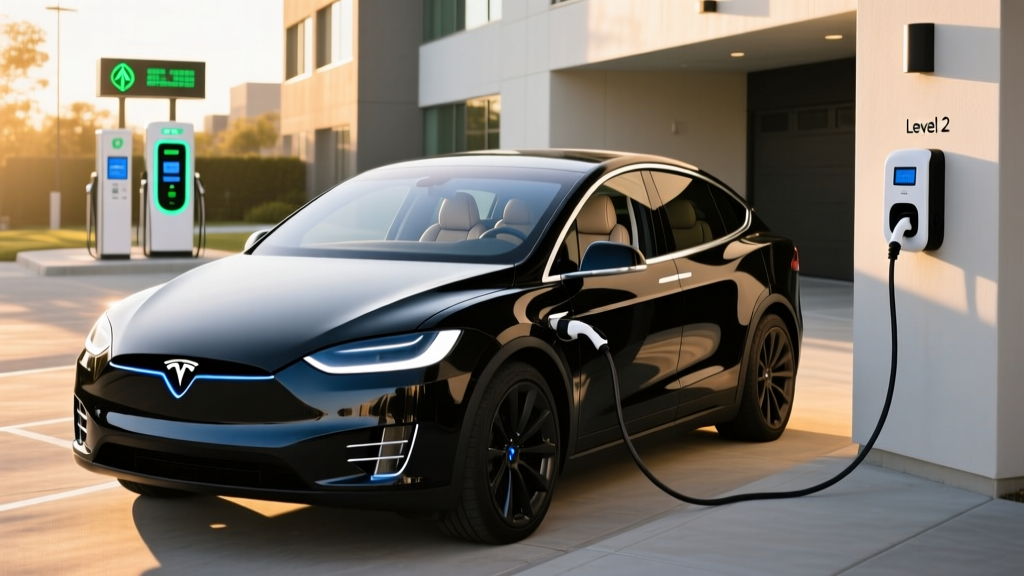
The onboard charger in the 2021 Model X accepts up to 11.5 kW on Level 2 (48 amps). Tesla's Gen 2 Wall Connector, installed on a 60-amp circuit, delivers the full 48A and adds roughly 36 miles of range per hour — enough to fully replenish overnight. A typical Level 2 home installation with a 60A circuit runs $800–$2,000 depending on panel proximity and local permit requirements, according to industry estimates.
Performance and Driving Dynamics
The 2021 Model X Long Range hits 0–60 mph in 3.8 seconds with 670 horsepower from its dual-motor all-wheel-drive setup. That's supercar territory from a 5,052-pound SUV, and the instant torque delivery makes it feel even quicker in real-world passing situations.
The Plaid trim is borderline absurd: 1,020 horsepower, tri-motor AWD, and a 2.5-second 0–60 time. It remains one of the quickest production SUVs ever built. However, the Plaid's performance comes at the cost of some range (348 vs. 371 miles EPA) and higher tire wear — 22-inch wheels with performance rubber don't last long when you use the available power.
Ride quality is where the 2021 Model X shows its age. The adaptive air suspension provides adjustable ride height and decent compliance, but it's not as refined as the BMW iX or even the air-suspension-equipped Rivian R1S. Road noise is noticeable at highway speeds, and the steering is precise but somewhat numb. The panoramic windshield is a standout feature — it extends back over the front-row passengers and floods the cabin with light.
Driver Assistance: Autopilot and FSD
Tesla Autopilot and Full Self-Driving (Supervised) are SAE Level 2 driver-assistance systems. The driver must remain attentive, keep hands on the wheel, and be prepared to take over at any moment. These systems do not make the vehicle autonomous.
The 2021 Model X came with basic Autopilot (Traffic-Aware Cruise Control and Autosteer) standard. FSD (Full Self-Driving) was a $10,000 option at the time (later raised to $12,000, then reduced to $8,000). On the used market, verify whether FSD transfers with the vehicle — Tesla's policy has shifted over the years, and as of 2026, FSD generally transfers on used vehicles purchased from Tesla but may not on private-party sales. Check the vehicle's software menu before purchasing.
Interior, Cargo, and Technology
The 2021 Model X interior reflects the pre-refresh design: a vertical 17-inch touchscreen, traditional round steering wheel, and a physical instrument cluster behind the wheel (the refresh eliminated the instrument cluster in favor of a single horizontal screen). Some buyers prefer the 2021 layout for this reason — you get redundant speed/range information without relying solely on the center screen.
Passenger and Cargo Space
- Seating: 5, 6, or 7 passengers (6-seat with second-row captain's chairs is the most popular configuration)
- Front headroom: 42.8 in
- Front legroom: 41.2 in
- Second-row legroom: 38.4 in (captain's chairs)
- Third-row legroom: 32.7 in (tight for adults on long trips)
- Cargo behind 3rd row: 12.6 cu ft
- Cargo behind 2nd row: 37.1 cu ft
- Cargo (all rows folded): 77.5 cu ft
- Frunk (front trunk): 6.6 cu ft
The falcon-wing rear doors are the Model X's signature feature. They articulate upward and outward, making it easier to load children into car seats and access the second and third rows in tight parking spaces. However, they are mechanically complex — ultrasonic sensors detect overhead obstacles, and the hinges and struts have been a source of warranty claims. Inspect them carefully on any used example.
Infotainment and Tech
The 17-inch vertical touchscreen runs Tesla's proprietary OS, which in 2026 still leads the industry in responsiveness and over-the-air update frequency. Features include:
- Full web browser
- Netflix, YouTube, and gaming (including Cyberpunk 2077) while parked
- Dashcam and Sentry Mode (surveillance recording)
- Phone-as-key via Bluetooth
- HEPA air filtration with "Bioweapon Defense Mode"
- Over-the-air software updates (still actively supported by Tesla in 2026)
Notable omissions vs. 2026 competitors: no Apple CarPlay or Android Auto, no heads-up display, no rear-seat entertainment screens (added in the 2022 refresh), and no native integration with third-party charging networks without the CCS adapter.
Pricing, Tax Credits, and Ownership Costs
The 2021 Model X originally started at approximately $89,990 for the Long Range and $119,990 for the Plaid. In the 2026 used market, expect to pay:
| Trim | Original MSRP | 2026 Used Price Range | After Used EV Credit (§25E) |
|---|---|---|---|
| Long Range | ~$89,990 | $42,000–$58,000 | As low as ~$38,000 |
| Plaid | ~$119,990 | $65,000–$85,000 | As low as ~$61,000 |
Federal Tax Credit Eligibility (Used EV — IRS §25E)
The new-vehicle federal tax credit (§30D) does not apply to a 2021 Model X purchased in 2026 — that credit is for new vehicles only. However, the Used Clean Vehicle Credit (§25E) may apply:
- Credit amount: Up to $4,000 (30% of the sale price, capped at $4,000)
- Vehicle price cap: Sale price must be $25,000 or less to qualify (this limits eligibility significantly for the Model X — only high-mileage or damaged examples may fall under this threshold)
- Buyer income caps: AGI must not exceed $75,000 (single), $112,500 (head of household), or $150,000 (joint)
- Dealer requirement: Must purchase from a licensed dealer (private-party sales do not qualify)
- Vehicle age: Must be at least 2 model years old (a 2021 model qualifies in 2026)
Source: IRS.gov — Used Clean Vehicle Credit. Tax rules change; consult a tax professional for your specific situation.
In practice, most 2021 Model X examples sell above the $25,000 price cap, meaning the §25E credit will not apply for the majority of buyers. This is a critical detail often overlooked in used-EV shopping.
Estimated 5-Year Ownership Costs
| Category | Estimated Cost (5 Years) |
|---|---|
| Purchase (Long Range, avg used) | $50,000 |
| Electricity (home charging, 15,000 mi/yr) | $3,750–$5,250 |
| Insurance (avg) | $12,000–$18,000 |
| Maintenance (tires, cabin filter, fluid top-offs) | $3,000–$5,000 |
| Estimated Depreciation | $12,000–$18,000 |
Insurance on a used Model X remains elevated compared to mainstream EVs. Expect $200–$300/month depending on your location and driving record, per industry averages. Tire costs are significant — the Model X is heavy, and replacement 20- or 22-inch EV-rated tires run $350–$500 each.
Warranty and Battery Longevity
Tesla's battery and drive unit warranty for the 2021 Model X is 8 years or 150,000 miles, whichever comes first, with a minimum 70% battery capacity retention threshold. For a 2021 model, that means factory battery coverage extends through 2029 or 150,000 miles.
Tesla's NMC 100 kWh packs have shown moderate degradation in real-world data. Owners report approximately 8–12% capacity loss over the first 100,000 miles, with the curve flattening after the initial break-in period. A 2021 Model X with 50,000 miles in 2026 should still have roughly 90–93% of its original capacity — translating to about 330–345 miles of real-world range on a full charge in moderate conditions.
The basic vehicle warranty was 4 years / 50,000 miles, which has expired on all 2021 examples by now. This means non-powertrain repairs (falcon-wing door mechanisms, air suspension, touchscreen, HVAC) come out of pocket. Extended warranties from third-party providers are available but vary widely in EV coverage — read exclusions carefully.
Pros and Cons
- 371-mile EPA range (Long Range) — still competitive in 2026
- Supercharger network access with native plug-and-charge
- 250 kW peak DC fast charging
- Falcon-wing doors ease car-seat loading
- Strong OTA update support continues in 2026
- Class-leading acceleration (3.8s / 2.5s 0–60)
- HEPA air filtration system
- 5,000-lb towing capacity
- Pre-refresh interior feels dated vs. 2022+ Model X
- Falcon-wing doors: complex, expensive out-of-warranty repairs
- No Apple CarPlay / Android Auto
- Third row is tight for adults (32.7" legroom)
- No heat pump (resistive heating hurts cold-weather range)
- High insurance costs
- Most used examples exceed $25K §25E credit cap
- Build quality inconsistent (panel gaps, interior rattles on some examples)
Who Should Buy the 2021 Tesla Model X?
- You need a three-row electric SUV with 300+ miles of range
- Supercharger network access is a priority for road trips
- You value extreme acceleration in a family vehicle
- You find a well-maintained example under $50,000 with remaining battery warranty
- Falcon-wing doors genuinely help your car-seat workflow
- You want a modern interior with rear-seat entertainment (consider the 2022+ refresh or BMW iX)
- You live in a cold climate and need maximum winter range (the lack of a heat pump is a real drawback)
- You want Apple CarPlay or a more conventional SUV experience (Rivian R1S, Hyundai Ioniq 9)
- Out-of-warranty repair risk concerns you (falcon-wing and air suspension costs are real)
Frequently Asked Questions
What is the real-world range of the 2021 Tesla Model X?
The EPA rates the Long Range at 371 miles, but expect 280–310 miles on the highway at 70–75 mph and 230–270 miles in freezing weather. City driving in moderate temperatures gets closest to the EPA sticker, around 330–360 miles.
How fast does the 2021 Model X charge?
At a V3 Supercharger, it peaks at 250 kW and charges from 10–80% in approximately 32 minutes. At home on a 48-amp Level 2 Wall Connector (11.5 kW), it adds about 36 miles per hour, fully charging overnight in 9–10 hours.
Does the 2021 Tesla Model X qualify for a federal tax credit?
Not the new-vehicle §30D credit — that's for new purchases only. The used-EV credit (§25E) offers up to $4,000, but only if the sale price is $25,000 or less and buyer income is under the caps ($75K single / $150K joint). Most 2021 Model X examples sell well above $25,000, making them ineligible in practice. Consult a tax professional and review current rules at IRS.gov.
Is the 2021 Model X worth buying vs. newer competitors?
It depends on price. At $42,000–$50,000 for a Long Range with under 60,000 miles, it offers range and Supercharger access that few competitors match at that price. But the pre-refresh interior, lack of a heat pump, and falcon-wing repair risk are genuine drawbacks. The Rivian R1S (used), BMW iX, and the refreshed 2022+ Model X are all worth cross-shopping.
How long will the 2021 Model X battery last?
Tesla warranties the battery for 8 years / 150,000 miles with 70% minimum capacity retention. Real-world data suggests 8–12% degradation over 100,000 miles for NMC packs. A 2021 example with moderate mileage should still deliver 330+ miles of real-world range in good conditions. Battery replacement, if ever needed outside warranty, runs $15,000–$22,000 at Tesla service centers.
Does Autopilot or FSD make the Model X self-driving?
No. Tesla Autopilot and Full Self-Driving (Supervised) are SAE Level 2 driver-assistance systems. You must keep your hands on the wheel, remain attentive, and be ready to take over immediately. These are not autonomous driving systems.