Quick Verdict: Still the Acceleration Benchmark Five Years Later
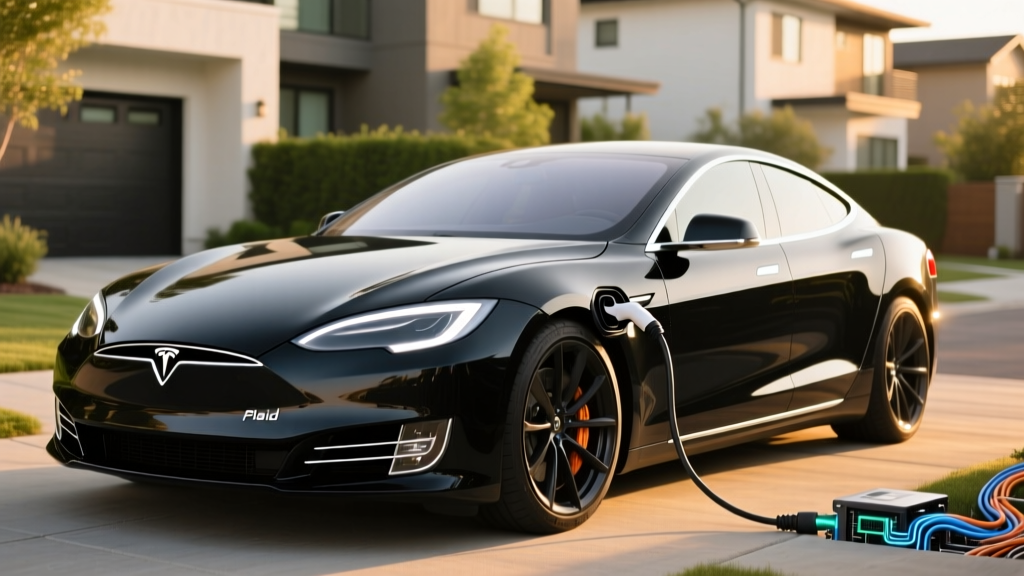
When Tesla delivered the first Model S Plaid units in mid-2021, it reset expectations for what a production sedan could do off the line. The claimed 1.99-second 0-60 mph time made headlines, but five years on, the Plaid's legacy is more nuanced than a single drag-strip number. As a used luxury EV in 2026, the 2021 Model S Plaid offers supercar-level thrust, a usable 390-mile EPA range, and access to the most reliable DC fast-charging network in North America — but it also carries premium insurance costs, a yoke that divides drivers, and a price tag that still starts above $70,000 on the pre-owned market.
This profile dissects the 2021 Model S Plaid with the data a serious buyer needs: real-world range reconciliation, charging-curve behavior, battery chemistry and degradation expectations, and whether it qualifies for the used-EV federal tax credit under current IRS §25E rules.
2021 Tesla Model S Plaid: Core Specifications
| Attribute | Value |
|---|---|
| 0-60 mph (manufacturer claim, rollout subtracted) | 1.99 seconds |
| 0-60 mph (independent tests, no rollout) | 2.1–2.3 seconds |
| Quarter-mile | 9.25 sec @ 152 mph |
| Top speed | 200 mph (with hardware upgrade) |
| Horsepower (peak) | 1,020 hp |
| Drivetrain | Tri-motor AWD (1 front, 2 rear) |
| Battery capacity (usable) | ~95 kWh (NMC chemistry) |
| EPA range | 390 miles (19-inch wheels) / 348 miles (21-inch) |
| MPGe (combined) | 120 MPGe |
| Efficiency | 28 kWh / 100 mi |
| Max DC fast-charge rate | 250 kW (V3 Supercharger) |
| 10-80% DC charge time | ~27 minutes |
| Level 2 home charging (max) | 11.5 kW / 48A (~41 mi/hr) |
| Cargo volume | 28 cu ft rear + 3.1 cu ft frunk |
| Rear legroom | 35.4 inches |
| Base MSRP (2021) | $129,990 |
| Typical used price (2026 market) | $72,000–$89,000 |
| Battery & drivetrain warranty | 8 years / 150,000 miles |
The 2021 Tesla Model S Plaid 0-60 Story: What the Numbers Actually Mean
Tesla's 1.99-second claim uses a 1-foot rollout subtraction — a common drag-racing convention that removes the first ~12 inches of movement from the clock. Independent testers at Car and Driver and MotorTrend consistently measured 2.1 to 2.3 seconds without rollout subtraction, on prepared surfaces with the car in Drag Strip mode and battery preconditioned to optimal temperature.
That distinction matters for buyers evaluating the 2021 Tesla Model S Plaid 0-60 figure against competitors. The Porsche Taycan Turbo S, for example, posts a repeatable 2.4-second 0-60 without rollout tricks. In real-world street driving — where you're launching from a stoplight on standard asphalt — expect the Plaid to hit 60 mph in roughly 2.3 to 2.5 seconds. That's still violently quick, neck-snapping acceleration that outpaces nearly every combustion supercar ever built.
The tri-motor setup (one permanent-magnet motor up front, two induction motors in the rear) enables torque vectoring across the rear axle, which is what translates 1,020 horsepower into usable grip rather than wheelspin. The carbon-sleeved rotors in the rear motors are engineered to withstand 20,000+ RPM without expanding past their stator clearances — a genuine engineering achievement that prevents power falloff at top speed.
Real-World Range: Beyond the 390-Mile EPA Sticker
EPA estimate: 390 miles (19" wheels) / 348 miles (21" Arachnid wheels)
Highway cruising (70 mph, moderate temps): ~310–330 miles
Cold weather (below 32°F, highway): ~250–280 miles
Mixed daily driving (city + suburban): ~340–360 miles
The Model S Plaid's ~95 kWh usable battery pack uses NMC (nickel-manganese-cobalt) chemistry, which offers higher energy density than LFP but is more sensitive to sustained high state-of-charge storage. The EPA's 390-mile figure is achievable in moderate temperatures with a mix of city regenerative braking and suburban driving. However, the tri-motor Plaid is inherently less efficient than the dual-motor Long Range variant — you're trading roughly 15 miles of range for 350 additional horsepower.
On a 75 mph highway run in 70°F weather, expect to consume energy at roughly 30–32 kWh/100 mi, translating to about 310 miles of real range before the buffer engages. In freezing temperatures, the heat pump helps cabin efficiency, but battery resistance increases and regenerative braking is limited until the pack warms — plan for 250 to 280 miles of usable range on cold winter road trips.
Wheel choice is the single largest range variable at purchase: the standard 19-inch Tempest wheels deliver the full 390-mile rating, while the 21-inch Arachnid wheels drop it to 348 miles — a 42-mile penalty for stickier rubber and heavier unsprung mass.
Charging Speed: DC Fast-Charge and Home Level 2 Breakdown
| Charging Level | Power / Amperage | Miles Added per Hour | Notes |
|---|---|---|---|
| Level 1 (120V household) | ~1.4 kW | ~5 mi/hr | Emergency/trickle only |
| Level 2 (240V, 48A) | 11.5 kW | ~41 mi/hr | Full overnight charge in ~10 hrs |
| Level 2 (240V, 32A Mobile Connector) | 7.7 kW | ~27 mi/hr | Tesla Mobile Connector on NEMA 14-50 |
| DC Fast (V3 Supercharger) | Up to 250 kW peak | ~200 mi in 15 min | 10-80% in ~27 min; tapers hard above 80% |
| DC Fast (V2 Supercharger) | Up to 150 kW peak | ~130 mi in 15 min | Older stations; still viable for road trips |
| DC Fast (CCS adapter, non-Tesla) | Up to 250 kW | Varies by station | CCS adapter available from Tesla |
The 2021 Model S Plaid charges on Tesla's proprietary connector (which became the NACS standard). At a V3 Supercharger, the car peaks at 250 kW but only sustains that rate between roughly 10-30% state of charge. The charging curve tapers progressively: by 50% SoC, you're pulling around 150 kW; by 80%, it drops below 60 kW. This is normal lithium-ion behavior — the battery management system protects cell longevity by reducing current as cells approach full charge.
For home charging, the onboard charger accepts up to 11.5 kW (48 amps) on a 240V / 60A circuit. A full 10-100% charge takes roughly 10 hours, meaning a standard overnight session easily replenishes even a depleted pack. Installation of a Tesla Wall Connector on a dedicated 60A circuit typically runs $800–$1,500 for the electrician work, plus $475 for the unit itself, assuming your panel has capacity. Older homes with 100A service panels may need a $2,000–$4,000 panel upgrade.
According to fueleconomy.gov, the Model S Plaid's combined efficiency is 120 MPGe (28 kWh/100 mi), which at the national average electricity rate of ~$0.17/kWh translates to roughly $4.76 per 100 miles — compared to approximately $14–$16 per 100 miles for a comparable 600-hp gas sedan averaging 18 mpg.
Interior, Tech, and the Yoke Question
The 2021 refresh brought a horizontal 17-inch center touchscreen, a rear-seat 8-inch display, and a new "yoke" steering wheel as standard equipment (a conventional round wheel became a no-cost option later). The yoke remains the Plaid's most polarizing feature: it provides an unobstructed view of the instrument cluster and feels natural on highways, but demands hand-over-hand relearning for low-speed maneuvers and three-point turns where you'd normally rotate a full wheel.
The infotainment system runs Tesla's proprietary OS, which in 2021 included a built-in gaming platform capable of running Cyberpunk 2077-level titles on the AMD Ryzen processor — a genuine differentiator for charging-station downtime. Apple CarPlay and Android Auto remain absent; Tesla's native navigation, media, and phone integration handle everything internally.
Autopilot comes standard with Traffic-Aware Cruise Control and Autosteer. Full Self-Driving (Supervised) was a $10,000 add-on in 2021 (later raised to $12,000, then reduced to $8,000). It is critical to understand that FSD is an SAE Level 2 driver-assistance system — it does not make the car self-driving. The driver must remain engaged, hands on the yoke or wheel, and eyes on the road at all times. True Level 4 autonomy (no driver required) is currently limited to geofenced robotaxi services like Waymo.
Cargo space is generous for a performance sedan: 28 cubic feet in the rear hatch (the liftback design is far more practical than a traditional trunk) plus a 3.1-cubic-foot frunk. Rear legroom at 35.4 inches is adequate for adults but tighter than a Mercedes EQS or BMW i7. The glass roof creates an airy cabin but contributes to heat soak in summer — the 2021 refresh added some insulation improvements over pre-2021 models, but solar tinting film remains a popular aftermarket addition.
Pricing, Tax Credits, and 2026 Used-EV Economics
The 2021 Model S Plaid launched at an MSRP of $129,990 before options. In the 2026 used market, well-maintained examples with 30,000–60,000 miles typically sell for $72,000 to $89,000 depending on condition, mileage, and wheel configuration.
Because the original MSRP exceeded $55,000, the 2021 Model S Plaid did not qualify for the new-vehicle §30D federal tax credit (which caps sedan eligibility at $55,000 MSRP). However, it may qualify for the §25E used-EV tax credit under current IRS rules:
- Credit amount: 30% of the sale price, up to a maximum of $4,000
- Vehicle price cap: Must be sold for $25,000 or less — the Plaid does NOT meet this threshold
- Buyer income cap: AGI ≤ $75,000 single / $150,000 joint
- Vehicle age: Must be at least 2 model years old (2021 qualifies in 2026)
- Dealer requirement: Must be purchased from a licensed dealer
At current market prices of $72,000–$89,000, the 2021 Model S Plaid does not qualify for any federal EV tax credit. The §25E used credit's $25,000 sale-price cap effectively limits it to older, more affordable EVs. Buyers should consult the IRS used-EV credit page and a tax professional for personal eligibility.
State incentives vary widely and change frequently — check your state's energy office or the AFDC state incentive database for current local rebates, HOV lane access, and utility charging discounts.
Ownership Costs: Insurance, Maintenance, and Battery Longevity
Insurance is the Plaid's biggest ongoing expense beyond electricity. With 1,020 horsepower and a six-figure original price, expect annual premiums of $3,500–$5,500 depending on your driving record, location, and age. This is roughly 50–80% higher than insuring a dual-motor Model S Long Range from the same year.
Maintenance costs are low by luxury-sedan standards — there are no oil changes, spark plugs, or transmission fluid services. Brake pad life is extended significantly by regenerative braking (many owners report 80,000+ miles on original pads). The cabin air filter (HEPA) should be replaced every 2–3 years (~$50–$80), and tire rotation is recommended every 6,250 miles. The original Michelin Pilot Sport 4S tires wear relatively quickly under the Plaid's torque — budget $1,200–$1,600 for a set of four replacements every 20,000–30,000 miles if you drive aggressively.
The battery and drive unit warranty covers 8 years or 150,000 miles, whichever comes first, with a minimum 70% capacity retention guarantee. For a 2021 model, that coverage extends through mid-2029. NMC batteries in the Model S have shown average degradation of roughly 8–12% over the first 100,000 miles based on fleet data, meaning a 2021 Plaid with 50,000 miles should still deliver roughly 340–360 miles of EPA-equivalent range. Tesla's battery management system includes a substantial buffer (roughly 4–5 kWh below the stated usable capacity) that protects against deep discharge damage.
Pros, Cons, and Who Should Buy
- Sub-2.5-second 0-60 mph — still among the fastest production cars ever
- 390-mile EPA range (19" wheels) is genuinely road-trip capable
- 250 kW Supercharger access with reliable network coverage
- Liftback cargo design offers 28 cu ft — more practical than most sedans
- Tri-motor torque vectoring provides exceptional all-weather traction
- Over-the-air updates continue to add features years after purchase
- Battery warranty extends through 2029 on a 2021 model
- No federal tax credit eligibility at current used prices
- Insurance premiums 50–80% higher than Long Range variant
- Yoke steering demands adaptation and is controversial for daily use
- No Apple CarPlay or Android Auto support
- Rear seat space tighter than German luxury competitors (EQS, i7)
- Build quality on 2021 examples can be inconsistent (panel gaps, trim)
- Tire wear accelerated by 1,020 hp — budget for frequent replacements
Who it suits: The 2021 Model S Plaid is built for the enthusiast who prioritizes acceleration above all else and wants a daily-driver that can also serve as a cross-country road-trip machine. It works for tech-forward professionals, track-day hobbyists, and buyers who want supercar performance with four doors and a usable back seat. It is not the right choice for budget-conscious buyers, families who prioritize rear-seat space, or anyone uncomfortable with Tesla's all-touchscreen interface and yoke steering.
Frequently Asked Questions
What is the real-world range of the 2021 Tesla Model S Plaid?
Expect 310–330 miles on the highway in moderate temperatures, 340–360 miles in mixed city/suburban driving, and 250–280 miles in freezing weather. The 390-mile EPA figure is achievable primarily in warm-weather city driving with frequent regenerative braking opportunities. Choosing 21-inch wheels reduces all these figures by roughly 10–12%.
How fast does the 2021 Model S Plaid charge?
At a V3 Supercharger, it peaks at 250 kW and charges from 10-80% in approximately 27 minutes. The rate tapers significantly above 80% to protect battery health. At home on a 240V/48A Level 2 charger, it adds about 41 miles of range per hour, with a full charge taking roughly 10 hours.
Does the 2021 Model S Plaid qualify for the federal EV tax credit?
Not at current used-market prices. The §25E used-EV credit requires a sale price of $25,000 or less, and the Plaid trades at $72,000–$89,000 in 2026. The original §30D new-vehicle credit was unavailable due to the $55,000 sedan MSRP cap. No federal credit is available for this vehicle at current valuations. Consult IRS.gov and a tax professional for your specific situation.
Is the 2021 Model S Plaid worth buying vs. competitors in 2026?
Against the Porsche Taycan Turbo S (used ~$80,000–$95,000), the Plaid wins on range (390 vs. 227 miles EPA), charging infrastructure (Supercharger network), and acceleration. The Taycan counters with superior build quality, an 800V architecture for faster charging at compatible stations, CarPlay support, and more engaging steering feel. The Lucid Air Grand Touring (used ~$70,000–$85,000) offers even more range (516 miles EPA) and a more luxurious interior but has a sparser service network. Choose the Plaid if raw performance and Supercharger access are your priorities; choose the Taycan for build quality and driving dynamics; choose the Lucid for maximum range.
How reliable is the 2021 Model S Plaid's battery?
Tesla's NMC packs in the Model S have demonstrated 8–12% degradation over 100,000 miles in fleet data. The 8-year/150,000-mile warranty guarantees at least 70% capacity retention, and Tesla covers replacement if degradation exceeds that threshold. For a 2021 model with 40,000–60,000 miles, expect roughly 90–92% of original capacity remaining. Avoid routinely charging to 100% for daily use — set the limit to 80–90% for NMC longevity and charge to 100% only before long trips.
What are the biggest ownership surprises?
Insurance costs are the most common shock — get a quote before purchasing. Tire wear is accelerated by the tri-motor torque, especially on the rear axle. The yoke steering requires a genuine adjustment period of 1–2 weeks, and some owners never warm to it. Phantom drain (the car consuming energy while parked) typically runs 1–3 miles per day, which matters if you leave the car unplugged at an airport for a week. And while Superchargers are the most reliable network, non-Tesla DC fast-charging requires a CCS adapter and can be inconsistent depending on the station operator.