Quick Verdict: The 2021 Model 3 in 2026
Five years after its production year, the 2021 Tesla Model 3 remains one of the most compelling used electric vehicles on the market. With used prices now settling between $18,000 and $30,000 depending on trim and mileage, it undercuts nearly every new EV while still delivering Supercharger network access, over-the-air updates, and efficiency figures that newer rivals struggle to match. The critical question for 2026 buyers isn't whether it's a good car — it's which trim to choose, how to evaluate battery health, and whether you qualify for the $4,000 used-EV federal tax credit.
This review breaks down every spec that matters for a used purchase: real-world range versus EPA stickers, DC fast-charging curves, battery chemistry differences between trims, and the IRS rules governing the pre-owned clean vehicle credit.
Range & Efficiency: EPA vs. Real World
| Trim | EPA Range | Battery (Usable) | Chemistry | MPGe (Combined) | kWh/100 mi |
|---|---|---|---|---|---|
| Standard Range Plus (RWD) | 263 mi | ~50 kWh | NMC (Panasonic 2170) | 142 MPGe | 24 |
| Long Range (AWD) | 353 mi | ~75 kWh | NMC (Panasonic 2170) | 134 MPGe | 25 |
| Performance (AWD) | 315 mi | ~75 kWh | NMC (Panasonic 2170) | 116 MPGe | 29 |
Real-World Range Reality: EPA estimates assume a mix of city and moderate-speed driving. In our experience and aggregated owner data:
- Highway (70-75 mph, 70°F): Expect ~85-90% of EPA — roughly 225 mi (SR+), 300 mi (LR), and 270 mi (Performance).
- Winter (30°F, mixed driving): Range drops 20-30% depending on cabin heat usage. The Model 3's heat pump (standard on 2021 models) mitigates this compared to older resistive-heating EVs, but plan for ~185 mi (SR+), ~260 mi (LR), and ~230 mi (Performance) in sustained cold.
- City/commuter (stop-and-go, moderate climate): You'll often exceed EPA thanks to regenerative braking — 270+ mi on the SR+ is achievable.
The 2021 Model 3 lineup exclusively uses Panasonic 2170 cells with NMC (nickel-manganese-cobalt) chemistry across all trims. Tesla did not introduce the LFP (lithium iron phosphate) battery in the US-market Model 3 until late 2021 for 2022 model-year vehicles, so a true 2021 will have NMC. This matters for long-term ownership: NMC offers higher energy density (hence the Long Range's 353-mi figure) but is more sensitive to prolonged 100% state-of-charge storage. Tesla recommends daily charging to 80-90% for NMC batteries and only charging to 100% before long trips.
Charging Speed: DC Fast Charge & Home Level 2
Charging speed is where the 2021 Model 3 still holds up well against newer competition, largely because Tesla's Supercharger network remains the most reliable DC fast-charging ecosystem in North America.
| Charging Method | Max Rate | Speed (Approx.) | Notes |
|---|---|---|---|
| Level 1 (120V household) | ~1.4 kW | ~3-5 mi/hr | Emergency/trickle only |
| Level 2 (240V home, 48A) | 11.5 kW | ~37-44 mi/hr | Requires NEMA 14-50 or hardwired Wall Connector; full charge in ~7-9 hrs (LR) |
| DC Fast Charge — SR+ | Peak 170 kW | 10-80% in ~25 min | Curve tapers significantly above 60% |
| DC Fast Charge — LR / Perf | Peak 250 kW | 10-80% in ~18-20 min | Sustains 200+ kW up to ~50% SoC, then tapers |
| Tesla Supercharger (V3) | Up to 250 kW | ~75 mi in 5 min (peak) | Native NACS connector — no adapter needed |
| CCS Adapter (for non-Tesla DC) | Up to ~170 kW via adapter | Varies by station | Tesla sells a CCS1 adapter (~$250); unlocks Electrify America, EVgo, etc. |
Charging curve reality check: The "peak 250 kW" figure for Long Range and Performance trims is only sustained at low states of charge (roughly 10-35% SoC). By 50%, the rate drops to ~150 kW, and above 80% it falls below 50 kW. This is normal for NMC lithium-ion cells, but it means your last 20% at a road-trip stop will take almost as long as your first 40%. Plan your Supercharger stops around the 10-80% window for the best time efficiency.
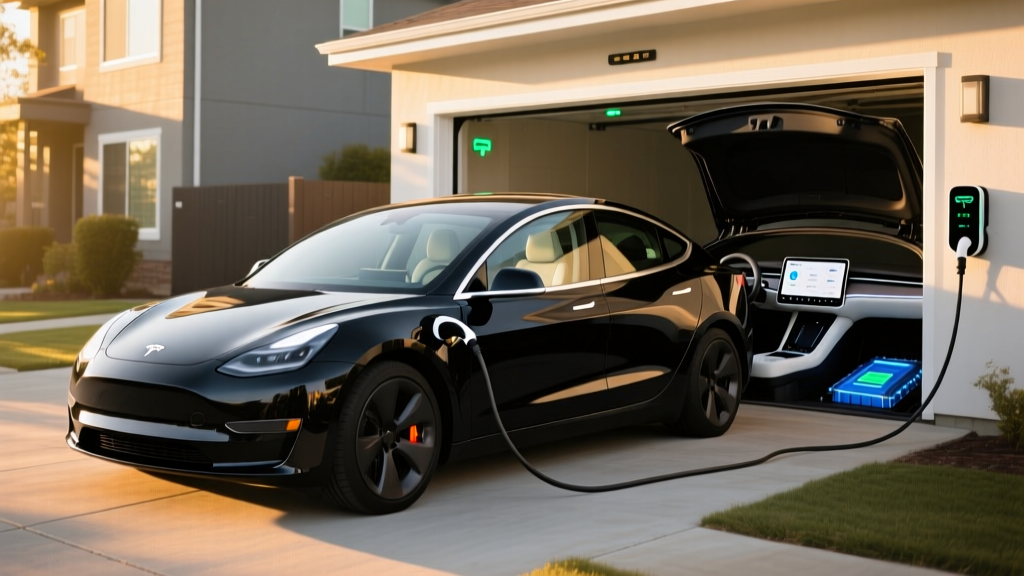
For home charging, the 2021 Model 3's onboard charger accepts up to 11.5 kW (48 amps) on Level 2. A Tesla Wall Connector on a 60-amp circuit delivers the fastest home charging. Budget $500-$1,500 for a professional Level 2 installation depending on your electrical panel's proximity to the parking spot — and potentially $2,000-$4,000 if your home needs a panel upgrade to 200 amps. Source: always use a licensed electrician for final specs.
Performance & Drivetrain
| Trim | Drivetrain | Horsepower | 0-60 mph | Top Speed |
|---|---|---|---|---|
| Standard Range Plus | RWD (single motor) | ~283 hp | 5.3 sec | 140 mph |
| Long Range | AWD (dual motor) | ~346 hp | 4.2 sec | 145 mph |
| Performance | AWD (dual motor) | ~450 hp | 3.1 sec | 162 mph |
Even the base SR+ feels quick in daily driving thanks to instant electric torque and a low center of gravity. The Long Range strikes the best balance for most buyers — dual-motor AWD provides confident all-weather traction, and 4.2 seconds to 60 mph is more than adequate for highway merging and passing. The Performance trim is a thrill (3.1 seconds puts it in supercar territory) but comes with a stiffer ride, lower range, and higher tire wear. All trims feature one-pedal driving via strong regenerative braking, which Tesla re-introduced as a user-selectable option after a period of forced single-mode regen.
Interior, Cargo & Technology
The 2021 Model 3 interior is minimalist by design — a single 15-inch center touchscreen handles all infotainment, climate, navigation, and vehicle settings. There is no instrument cluster; speed and range information appear in the top corner of the main screen. Love it or not, this approach keeps the cabin uncluttered and reduces component failure points.
Cargo & passenger dimensions:
- Rear trunk: 15.0 cu ft (sedan trunk with wide opening)
- Front trunk (frunk): 3.1 cu ft — useful for charging cables and small bags
- Total cargo: 18.1 cu ft (seats up); 43.0 cu ft (rear seats folded, measured to roof)
- Rear legroom: 35.2 inches — adequate for adults on shorter trips, tight for tall passengers on long drives
- Front headroom: 40.3 inches (glass roof creates an airy feel)
Standout tech features:
- Autopilot (standard): SAE Level 2 driver-assist including Traffic-Aware Cruise Control and Autosteer (lane centering). Requires continuous driver supervision — this is not self-driving.
- Full Self-Driving (FSD) capability: Optional $10,000 add-on at purchase (or transferable if original owner purchased it). As of 2026, FSD (Supervised) remains SAE Level 2 and handles highway on-ramps, lane changes, and some city streets, but the driver must remain fully attentive.
- Over-the-air (OTA) updates: Tesla continues pushing software updates to 2021 vehicles, adding features and refinements years after purchase.
- Sentry Mode & Dashcam: Built-in cameras record surroundings when parked (requires USB drive).
- Phone-as-key: Bluetooth-based keyless entry and start — no fob needed.
- Heat pump: Standard on 2021 models, significantly improving cold-weather efficiency versus older resistive heating systems.
Notable drawbacks: The all-touchscreen interface frustrates some drivers who prefer physical buttons for climate and volume. Rear visibility is limited by the sloping roofline (backup camera helps). Panel-gap quality on 2021 Fremont-built cars is inconsistent — inspect door and trunk gaps carefully when buying used. Road noise on the highway is noticeable, though the 2021 refresh added acoustic glass that improved things over 2018-2020 models.
Pricing & Federal Tax Credit (Used EV)
As a used vehicle in 2026, the 2021 Model 3 is no longer eligible for the new-vehicle §30D credit. Instead, it may qualify for the Previously-Owned Clean Vehicle Credit (§25E), which provides up to $4,000 or 30% of the sale price (whichever is lower) when purchased from a licensed dealer.
| Trim | Typical Used Price Range | Max §25E Credit | Effective Price After Credit |
|---|---|---|---|
| Standard Range Plus | $17,000 – $21,000 | $4,000 (or 30% of price) | $13,000 – $17,000 |
| Long Range | $22,000 – $27,000 | $4,000 | $18,000 – $23,000 |
| Performance | $24,000 – $30,000 | $4,000 | $20,000 – $26,000 |
§25E Used-EV Credit Eligibility Requirements (per IRS.gov):
- Sale price cap: Vehicle must sell for $25,000 or less (this eliminates many Performance and low-mileage Long Range listings)
- Buyer income limits: AGI must not exceed $75,000 (single), $112,500 (head of household), or $150,000 (joint filers)
- Dealer requirement: Must be purchased from a licensed dealer (private-party sales do not qualify)
- Vehicle age: Must be at least 2 model years old (2021 qualifies in 2026)
- First-time transfer: The credit can only be claimed once per vehicle VIN since the credit was enacted
- Point-of-sale: As of 2024+, the credit can be transferred to the dealer at sale for an immediate price reduction
Consult a tax professional for your specific situation. Rules are subject to change.
Battery Health, Warranty & Longevity
Tesla's battery and drive unit warranty for the 2021 Model 3 is 8 years or 100,000 miles (Standard Range Plus) and 8 years or 120,000 miles (Long Range and Performance), whichever comes first. The warranty guarantees the battery will retain at least 70% of its original capacity during the coverage period.
For a 2021 vehicle in 2026, you are likely within the warranty window (5 years old, potentially under 100K miles). Verify the remaining warranty through Tesla's app or a service center using the VIN before purchasing.
Battery degradation data: Aggregated fleet data from sources like Tesla's Impact Reports and independent owner tracking shows Model 3/Y batteries typically lose ~8-12% capacity over the first 100,000 miles, with the steepest drop occurring in the first 20,000-30,000 miles before leveling off. A well-maintained 2021 Model 3 with 60,000 miles should still have 90-92% of its original range. Red flags include:
- More than 15% degradation at under 60K miles (possible defective module)
- Large cell-imbalance warnings in the service menu
- History of DC fast-charging exclusively without Level 2 top-off cycles
Replacement cost context: Out-of-warranty battery replacement for a Model 3 runs $12,000-$16,000 as of 2026, though independent EV repair shops are increasingly offering module-level repairs for $3,000-$6,000. This is a key reason to prioritize warranty-covered examples.
Pros & Cons
Pros
- Best-in-class efficiency — 24-29 kWh/100 mi means cheaper "fuel" costs than almost any rival EV
- Supercharger network access — still the most reliable DC fast-charging ecosystem in North America (native NACS connector)
- Continued OTA software updates in 2026 keep the vehicle feeling current
- Strong safety ratings — NHTSA 5-Star overall and IIHS Top Safety Pick+
- Low running costs: no oil changes, minimal brake wear (regen), ~$0.04-$0.05/mile on home charging
- Qualifies for up to $4,000 used-EV tax credit (trim and buyer-income dependent)
- Heat pump standard — better cold-weather range retention than most pre-2022 EVs
Cons
- Touchscreen-only controls — no physical buttons for climate, wipers, or glovebox
- Rear seat is tight for tall adults on long trips (35.2" legroom)
- Fremont build quality inconsistency — check panel gaps, trim alignment, and paint carefully
- NMC battery requires 80-90% daily charge limit (not ideal for owners who want to charge to 100% nightly)
- No Apple CarPlay or Android Auto — Tesla's proprietary infotainment only
- Insurance premiums tend to be 15-30% higher than comparable gas sedans
- Sentry Mode and cabin camera recording require USB drive and can drain 12V battery if parked for extended periods
Who Should Buy the 2021 Model 3?
Choose the 2021 Model 3 Standard Range Plus if: You're a daily commuter driving under 150 miles round-trip, want the lowest entry price, and have reliable home Level 2 charging. At ~$17K-$21K before credits, it's one of the cheapest ways into a modern, efficient EV with Supercharger access.
Choose the 2021 Model 3 Long Range if: You take regular road trips (200+ miles), live in a region with cold winters (the extra battery buffer absorbs winter range loss better), or need dual-motor AWD for snow and rain. The 353-mi EPA range provides genuine peace of mind and the best overall value in the lineup.
Choose the 2021 Model 3 Performance if: Driving dynamics matter to you, you want 3.1-second 0-60 capability, and you accept the range and price trade-off. Best for enthusiasts who don't need maximum cargo or rear-seat practicality.
Look elsewhere if: You need SUV cargo space (consider a used Model Y), you require Apple CarPlay, you want a traditional instrument cluster, or you frequently tow (the Model 3 is not rated for towing in the US market).
2021 Tesla Model 3 vs. Key Competitors
At 2026 used-EV prices, the Model 3 competes with:
- 2021-2022 Hyundai Ioniq 5: More interior space, 800V ultra-fast charging (10-80% in ~18 min at 350 kW), but slightly lower range (220-303 mi EPA) and no native Supercharger access (CCS, though adapters exist). Used prices ~$22K-$30K.
- 2021-2022 Ford Mustang Mach-E: Crossover ride height and more cargo room, but heavier and less efficient (~230-305 mi EPA). Used prices ~$20K-$28K.
- 2021 Polestar 2: Scandinavian design, Android Automotive OS with Google Maps, but lower range (249 mi EPA single-motor) and slower charging. Used prices ~$18K-$24K.
- 2021 Chevrolet Bolt EV/EUV: Cheapest entry point (~$12K-$16K used) with 259 mi range, but no DC fast charging capability worth using (55 kW peak) and discontinued platform.
The Model 3's combination of efficiency, Supercharger access, and OTA longevity still sets it apart in this price bracket. Its closest rival — the Ioniq 5 — wins on interior space and charging speed at 350 kW stations, but the Supercharger network advantage remains decisive for road-trip-heavy buyers.
Frequently Asked Questions
What is the real-world range of the 2021 Tesla Model 3?
Expect 225-270 miles for the SR+, 280-320 miles for the Long Range, and 250-290 miles for the Performance in mixed real-world driving at moderate temperatures. Highway driving at 75+ mph and cold weather (below 35°F) will reduce these figures by 10-30%. The Long Range AWD is the most versatile choice for variable conditions.
How fast does the 2021 Model 3 charge at home and on the road?
At home on a 240V Level 2 charger (48A), the Model 3 charges at up to 11.5 kW, adding roughly 37-44 miles of range per hour — a full overnight charge covers even the Long Range's 75 kWh battery. On DC fast chargers, the SR+ peaks at 170 kW (10-80% in ~25 minutes) while the Long Range and Performance peak at 250 kW on V3 Superchargers (10-80% in ~18-20 minutes).
Does the 2021 Tesla Model 3 qualify for a federal tax credit in 2026?
Not the new-vehicle §30D credit, but it may qualify for the §25E Previously-Owned Clean Vehicle Credit — up to $4,000 or 30% of the sale price (whichever is less). The vehicle must sell for $25,000 or less from a licensed dealer, and the buyer must meet income caps ($75K single / $150K joint). Check IRS.gov for current rules and consult a tax professional.
Is the 2021 Model 3 still worth buying in 2026 versus newer EVs?
Yes, if you prioritize efficiency, charging infrastructure, and value. At $17K-$30K used (before credits), it undercuts nearly every new EV while retaining Supercharger access, OTA updates, and strong safety ratings. It loses to newer rivals on interior space (Ioniq 5), charging speed at 800V stations, and Apple CarPlay support — but as a total-ownership-cost proposition, it remains one of the smartest used EV buys available.
What should I check before buying a used 2021 Model 3?
Request a battery health report from Tesla (accessible via the app or service center), verify remaining warranty coverage (8 yr/100K-120K mi), inspect panel gaps and paint for Fremont build inconsistencies, check tire wear (EVs are heavier and wear tires faster), and confirm whether FSD was purchased and is transferable. A pre-purchase inspection at a Tesla service center (~$200-$300) is strongly recommended.
Does Autopilot or FSD make the 2021 Model 3 self-driving?
No. Both Autopilot and Full Self-Driving (Supervised) are SAE Level 2 driver-assistance systems. The driver must remain fully attentive, keep hands on or near the wheel, and be prepared to take over at any moment. These systems assist with lane centering and adaptive cruise control but do not replace an engaged driver. Only Level 4 services like Waymo operate without a human driver — and those are limited robotaxi services, not consumer vehicles.