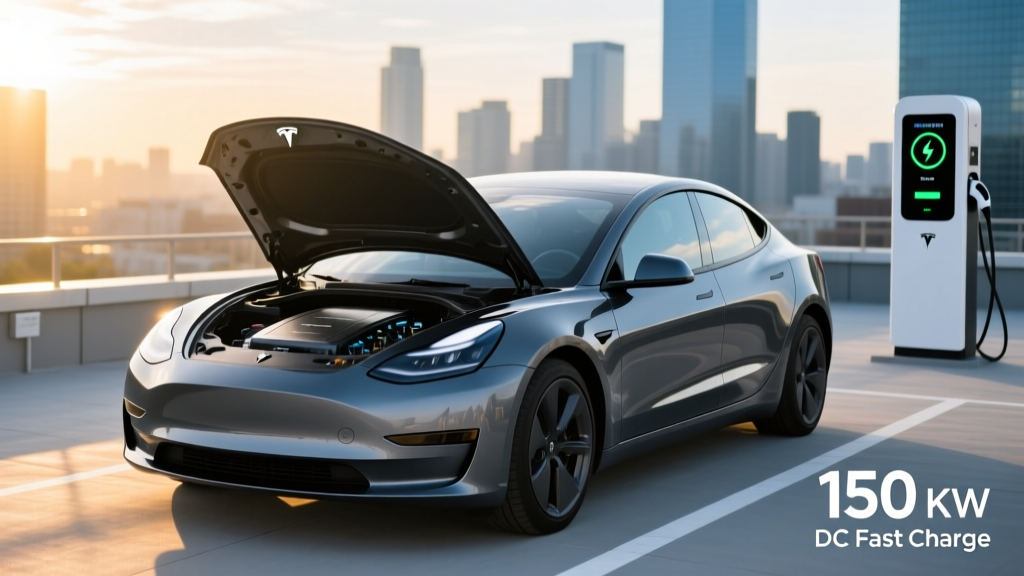
The 2021 Tesla Model 3 represents a critical inflection point in Tesla's manufacturing history. It was the year the company began transitioning its Standard Range models to Lithium Iron Phosphate (LFP) battery chemistry and introduced the 'Palladium' refresh (often called the Highland precursor) which included the black-chrome trim and updated interior. For buyers in 2026, the 2021 model year offers a compelling value proposition: it is old enough to have depreciated significantly but modern enough to still receive software updates and support the latest Supercharger network standards.
2021 Tesla Model 3: Core Specifications
Before looking at real-world performance, we must establish the baseline EPA data and hardware configurations for the three main trims available in the US market for the 2021 model year.
| Trim Level | EPA Range | Battery (Usable) | Drivetrain | 0-60 mph | MPGe (Combined) |
|---|---|---|---|---|---|
| Standard Range Plus (SR+) | 263 miles | ~50 kWh (NMC) / ~55 kWh (LFP) | RWD | 5.3 sec | 142 MPGe |
| Long Range AWD | 353 miles | ~75 kWh (NMC) | Dual Motor AWD | 4.2 sec | 134 MPGe |
| Performance | 315 miles | ~75 kWh (NMC) | Dual Motor AWD | 3.1 sec | 123 MPGe |
Real-World Range vs. EPA Estimates
The EPA sticker is a starting point, not a guarantee. In 2026 testing of used 2021 units, range variance is heavily dependent on battery chemistry and environmental factors.
Long Range AWD: Expect 310–330 miles in mixed city/highway driving at 65°F. On a pure highway road trip at 75+ mph, efficiency drops to ~270–285 miles due to aerodynamic drag.
Standard Range (LFP): LFP chemistry is more robust in heat but suffers in freezing temps. Expect 240 miles in mild weather, but potentially 180–200 miles in sub-30°F winters without preconditioning.
Charging Performance: DC Fast & Home Level 2
A 2021 Model 3 charges at a peak rate of 170 kW (SR+) or 250 kW (Long Range/Performance) on V3 Superchargers. However, the 'charge curve'—how long the car sustains that peak—is where Tesla excels.
| Charging Method | Power (kW) | Time (10-80%) | Miles per Hour |
|---|---|---|---|
| DC Fast Charge (V3) | 250 kW Peak | ~28–32 minutes | N/A |
| Level 2 (Home Wall Connector) | 11.5 kW (48A) | ~7–8 hours (Full) | ~44 mi/hr |
| Level 1 (120V Outlet) | ~1.4 kW | Multi-day | ~3–5 mi/hr |
Battery Chemistry: LFP vs. NMC in 2021
The 2021 model year is unique because Tesla began mixing LFP (Lithium Iron Phosphate) batteries into Standard Range models produced at Giga Shanghai. If you are buying a used 2021 SR+, you must check the battery type in the software menu.
- NMC (Nickel Manganese Cobalt): Higher energy density (more range), but Tesla recommends charging to 80% daily to preserve longevity.
- LFP (Lithium Iron Phosphate): Slightly heavier (less range), but can and should be charged to 100% regularly. LFP also shows less degradation over time, making it a 'safe bet' for high-mileage used buys.
Tech, Interior, and the 'Vision' Transition
2021 was the year Tesla removed radar sensors, transitioning to 'Tesla Vision' (camera-only) for Autopilot. While initially rocky, by 2026, the FSD (Supervised) software on these units is highly capable, though still a SAE Level 2 driver-assist system that requires full driver engagement.
The interior received a major refresh in early 2021: black chrome trim replaced the glossy wood, and the center console was updated with Qi wireless charging pads. Cargo space remains excellent at 23 cu ft (including the frunk), which beats most compact sedans.
Pricing and Tax Credit Eligibility in 2026
As of 2026, a used 2021 Model 3 is no longer eligible for the new vehicle §30D credit. However, it may qualify for the Used Clean Vehicle Credit (§25E).
| Trim | Est. Used Price (2026) | §25E Credit Eligibility | Net Cost After Credit |
|---|---|---|---|
| Standard Range Plus | $21,000 – $24,000 | Up to $4,000 (if under $25k) | ~$17,000 – $20,000 |
| Long Range AWD | $26,000 – $30,000 | Ineligible (Price > $25k cap) | $26,000 – $30,000 |
Note: The §25E credit has strict income caps ($75k single / $150k joint) and requires the sale price to be $25,000 or less. Always verify with a tax professional.
Ownership Verdict: Pros and Cons
Pros
- Access to the NACS Supercharger network (reliability leader)
- Industry-leading efficiency (MPGe) and low cost-per-mile
- Over-the-air updates keep a 2021 model feeling current in 2026
- Minimal maintenance (no oil, fewer moving parts)
Cons
- No instrument cluster; all info is on the center screen
- Ride quality can be stiff on rough pavement
- Insurance premiums remain higher than gas-powered peers
- Panel gaps on 2021 Fremont builds can be inconsistent
Frequently Asked Questions
Does the 2021 Model 3 have the NACS charging port?
Yes, it was born with the proprietary Tesla connector, which is now the North American Charging Standard (NACS). This is a major advantage over 2021 CCS-based competitors, as it requires no adapters for the most reliable charging network.
How much does it cost to replace the battery out of warranty?
Out-of-warranty replacement for a 2021 Model 3 battery typically ranges from $12,000 to $16,000 depending on the pack (LFP vs NMC). However, data shows most Tesla packs retain 85-90% capacity at 150,000 miles, making total failure rare.
Is it better to buy a 2021 Model 3 or a new 2026 budget EV?
If your budget is under $25k, the 2021 Model 3 (especially LFP) is often the better buy. You get a premium charging experience, superior performance, and better build quality than most new sub-$30k EVs, even if the range is slightly lower than 2026 standards.
Sources: EPA Fuel Economy, IRS §25E Guidelines.