Quick Verdict: Still a Benchmark Five Years Later
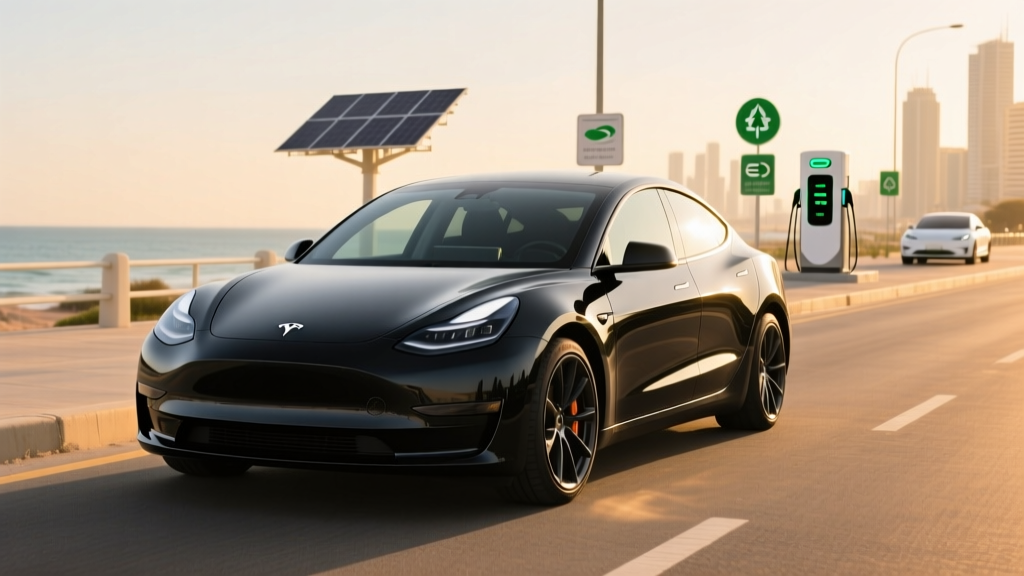
The 2021 Tesla Model 3 Performance remains one of the most compelling used electric sedans on the market in 2026. With a 315-mile EPA range, dual-motor all-wheel drive, and a 3.1-second 0-60 mph time, it delivers sports-car acceleration wrapped in a practical daily driver. Five years on, the NMC battery chemistry and 250 kW DC fast-charging capability hold up well against newer competitors, though interior material quality and the lack of a traditional instrument cluster continue to divide buyers. For those shopping the used EV market, the 2021 Model 3 Performance occupies a sweet spot: post-refresh build quality, pre-2024 pricing depreciation, and potential eligibility for the $4,000 used-EV federal tax credit.
Spec Table: 2021 Tesla Model 3 Performance at a Glance
| Specification | Value |
|---|---|
| EPA Range | 315 miles |
| Battery Capacity (usable) | ~75 kWh (NMC/LG M50) |
| Drivetrain | Dual-motor AWD |
| Horsepower | ~480 hp (combined) |
| 0-60 mph | 3.1 seconds |
| Top Speed | 162 mph |
| Max DC Fast Charge | 250 kW (peak) |
| 10-80% DC Fast Charge | ~25-28 minutes |
| Level 2 Home Charging | 11.5 kW / 48A (~44 mi/hr) |
| Efficiency | 125 MPGe combined / 26 kWh/100mi |
| Cargo Volume | 23 cu ft (trunk + frunk) |
| Original MSRP | $56,990 (before incentives) |
| Battery Warranty | 8 years / 120,000 miles |
| Basic Warranty | 4 years / 50,000 miles |
Sources: EPA / fueleconomy.gov, Tesla archive specifications.
Range and Efficiency: EPA vs. the Real World
Real-World Expectation: 260-290 miles in mixed driving; 230-260 miles sustained highway at 75 mph; 200-230 miles in freezing temperatures with cabin heat.
The 2021 Model 3 Performance's 315-mile EPA rating was among the best in its class at launch, and it remains competitive today. That figure is achievable in city and moderate-speed suburban driving where regenerative braking recaptures energy and speeds stay below 55 mph. However, the Model 3 Performance's sticky 20-inch Überturbine wheels and performance-oriented tires increase rolling resistance compared to the Long Range variant (which achieved 353 miles EPA on 18-inch Aero wheels).
On highway road trips at 70-80 mph, expect roughly 240-270 miles before needing to stop, depending on elevation changes and wind. Cold weather is the great equalizer for all EVs: at 20°F with the cabin heater running, the usable range drops to approximately 200-230 miles. The 2021 Model 3 does include a heat pump (introduced with the "Refresh" model year update in late 2020), which significantly reduces cabin-heating energy draw compared to older resistive heaters. Preconditioning the battery while plugged in — using the Tesla app's scheduled departure feature — mitigates cold-weather range loss and dramatically improves DC fast-charge speeds in winter.
Efficiency lands at 125 MPGe combined (26 kWh per 100 miles) per the EPA, which translates to roughly 3.5-4.0 miles per kWh in real-world mixed driving. That efficiency figure means home charging costs approximately $0.04-$0.05 per mile at the US average electricity rate of $0.16/kWh — roughly one-third the per-mile fuel cost of a comparable 30 MPG gas sedan.
Charging Speed: DC Fast Charging and Home Level 2
The 2021 Model 3 Performance supports Tesla's V3 Supercharger architecture at a peak rate of 250 kW, using Tesla's proprietary connector (which became the NACS standard). At a V3 Supercharger with a preconditioned battery, the charge curve peaks at 250 kW up to approximately 30% State of Charge, then tapers progressively: ~175 kW through 50%, ~100 kW through 70%, and ~50 kW above 85%. This taper is normal for NMC lithium-ion chemistry and thermal management limits.
| Charging Method | Power / Rate | Time or Miles Added |
|---|---|---|
| DC Fast Charge (V3 Supercharger) | 250 kW peak | 10-80% in ~25-28 min |
| DC Fast Charge (older V2 Supercharger) | 150 kW peak | 10-80% in ~38-42 min |
| Level 2 Home (Tesla Wall Connector, 48A) | 11.5 kW | ~44 miles per hour of charging |
| Level 2 Public (40A / 9.6 kW) | 9.6 kW | ~37 miles per hour of charging |
| Level 1 (120V household outlet) | ~1.4 kW | ~5 miles per hour of charging |
Charging curve reality check: The advertised "250 kW" peak is not sustained across the full session. A typical 10-80% session averages approximately 130-150 kW, which is why the total time is 25-28 minutes rather than the ~15 minutes a sustained 250 kW would theoretically deliver. This is standard across all current EVs — peak rate is a headline number, but the charge curve taper determines actual session length.
For home charging, the onboard charger accepts up to 11.5 kW (48 amps) on a 240V Level 2 circuit. A full charge from 10% to 100% takes approximately 7-8 hours, easily completed overnight. Most owners charge between 20-80% daily to preserve NMC battery longevity, adding roughly 180 miles of range per overnight session. Installation of a Tesla Wall Connector typically costs $500-$1,500 for the unit and electrical work, depending on panel capacity and run length.
As of 2024, Tesla opened its Supercharger network to non-Tesla EVs via built-in adapters, but Model 3 owners have always had native access. With over 6,000 Supercharger stations across North America, Tesla's charging network remains the most reliable and ubiquitous DC fast-charging option — a significant ownership advantage over CCS-dependent competitors.
Performance and Driving Dynamics
The 2021 Model 3 Performance earns its name. Dual electric motors — one permanent-magnet rear motor and one induction front motor — produce approximately 480 combined horsepower and deliver instant torque to all four wheels. The result is a 3.1-second 0-60 mph time, verified by multiple independent tests, placing it in supercar territory at a fraction of the price.
Beyond straight-line speed, the Performance variant includes several hardware upgrades over the Long Range:
- Lowered sport suspension with stiffer damping for flatter cornering
- Performance brakes with larger rotors and higher-temperature pads
- 20-inch Überturbine wheels with Michelin Pilot Sport 4S tires (summer compound)
- Carbon fiber spoiler and aluminum alloy pedals
- Track Mode (software-enabled) for adjustable torque distribution and regen settings on closed courses
The steering is precise and well-weighted, and the low center of gravity (battery pack under the floor) keeps body roll minimal. However, the sport suspension and low-profile tires transmit road imperfections noticeably — ride quality is firm, which some drivers appreciate and others find fatiguing on rough roads. For daily commuting on well-maintained roads, it's composed; for potholed city streets, the Long Range on 18-inch wheels rides more comfortably.
Interior, Technology, and Cargo
The 2021 Model 3 "Refresh" interior is minimalist by design: a single 15-inch center touchscreen handles all infotainment, climate, navigation, and vehicle settings. There is no traditional instrument cluster — speed and navigation directions appear in the upper-left corner of the center screen. This approach polarizes buyers; some find it clean and distraction-free, while others miss a dedicated speedometer in their sightline.
Standout tech features:
- Over-the-air (OTA) updates that add features, improve efficiency, and update UI — the car improves after purchase
- Tesla Autopilot (standard): adaptive cruise control, lane-centering, and automatic emergency braking — this is SAE Level 2 driver assistance, not self-driving; hands must remain on the wheel
- Full Self-Driving (Supervised) (optional add-on, ~$8,000-$12,000 depending on purchase date): adds automatic lane changes, navigate-on-autopilot, and traffic light/stop sign recognition — still Level 2, requires full driver attention
- Sentry Mode: cameras record surroundings when parked, accessible via the Tesla app
- Dashcam: built-in recording using the Autopilot cameras, no aftermarket hardware needed
- Phone-as-key: Bluetooth-based entry and start, no fob required
- Heat pump HVAC: more efficient cabin heating in cold weather vs. resistive systems
Notable drawbacks:
- No Apple CarPlay or Android Auto — Tesla's proprietary infotainment only
- No physical buttons for climate or volume (though a steering-wheel scroll wheel handles volume)
- Build quality improved significantly with the 2021 Refresh, but panel gaps and interior material quality still lag behind BMW and Mercedes at this price point
- Rear-seat headroom is tight for passengers over 6 feet due to the sloping roofline
- No heads-up display
Cargo and passenger space:
- Trunk: 15 cu ft (plus a deep under-floor sub-trunk)
- Frunk (front trunk): ~3 cu ft — useful for charging cables or a small bag
- Total cargo: ~23 cu ft with rear seats upright; ~64 cu ft with 60/40 rear seats folded
- Rear legroom: 35.2 inches (adequate for adults, but not limousine-class)
- Front headroom: 40.3 inches; rear headroom: 37.8 inches
Pricing, Used Market Value, and Tax Credit Eligibility
The 2021 Tesla Model 3 Performance originally stickered at $56,990 (plus destination). In the 2026 used market, examples with 30,000-60,000 miles typically sell for $28,000-$36,000 depending on condition, mileage, color, and whether FSD was purchased.
| Item | Amount |
|---|---|
| Original MSRP (2021) | $56,990 |
| Typical used price (2026, 40k mi) | $30,000 - $35,000 |
| Federal used-EV tax credit (§25E) | Up to $4,000 (30% of sale price, max $4,000) |
| Estimated price after credit | $26,000 - $31,000 |
Federal tax credit details: The 2021 Model 3 Performance does NOT qualify for the new-vehicle §30D credit (which applies only to new purchases). However, it may qualify for the §25E used-EV credit, which provides 30% of the sale price up to a maximum of $4,000. Key eligibility requirements per the IRS:
- Sale price must be $25,000 or less — this is a hard cap and many 2021 Performance examples exceed it; buyers should negotiate carefully
- Buyer income caps: AGI must not exceed $75,000 (single), $112,500 (head of household), or $150,000 (joint)
- Vehicle must be purchased from a licensed dealer (private-party sales do not qualify)
- Vehicle must be at least 2 model years old (2021 qualifies in 2026)
- The credit can be transferred to the dealer at point of sale as an immediate price reduction
Critical caveat: Because the §25E credit requires a sale price at or below $25,000, many 2021 Model 3 Performance listings priced at $30,000+ will not qualify. Buyers should search for higher-mileage examples or negotiate aggressively to hit the $25,000 threshold. Always verify eligibility with a tax professional and check the latest IRS guidance before purchase.
Battery Health, Warranty, and Longevity
The 2021 Model 3 Performance uses an approximately 75 kWh (usable) NMC battery pack built with LG M50 cells. NMC (nickel-manganese-cobalt) chemistry offers high energy density, which is why the Performance achieves 315 miles in a relatively compact sedan. The trade-off versus LFP (lithium iron phosphate) chemistry is that NMC degrades slightly faster over time and should not be routinely charged to 100% for daily use — Tesla recommends a daily charge limit of 80-90% for NMC packs.
Battery warranty: 8 years or 120,000 miles, whichever comes first, with a guaranteed minimum capacity retention of 70%. This means Tesla will repair or replace the battery if it drops below 70% of original capacity within the warranty window.
Real-world degradation data: Tesla's 2024 Impact Report and aggregated fleet data from sources like Teslanomics show that Model 3 NMC packs typically lose approximately 5-8% capacity in the first 50,000 miles, then degrade more slowly, settling at roughly 10-15% total loss by 150,000 miles. A 2021 Model 3 Performance with 50,000 miles in 2026 might realistically offer 275-290 miles of range (down from 315 EPA new) — still very usable for daily driving and road trips.
Out-of-warranty replacement cost: If the battery fails outside the warranty window, replacement currently costs approximately $13,000-$16,000 at a Tesla service center, including labor. This is a meaningful long-term ownership cost to factor in, though catastrophic failures are statistically rare.
Pros and Cons
Pros
- 3.1-second 0-60 mph — supercar acceleration in a practical sedan
- 250 kW DC fast charging with access to the Tesla Supercharger network
- 315-mile EPA range remains competitive with 2026 new EVs
- OTA updates keep software current years after purchase
- Heat pump for efficient cold-weather operation
- Strong safety ratings (IIHS Top Safety Pick+, 5-star NHTSA)
- Low running costs: ~$0.04/mile on home electricity vs. ~$0.14/mile for gas
- Frunk + trunk provides versatile cargo space
Cons
- Firm sport suspension — ride quality is harsh on rough roads
- No Apple CarPlay or Android Auto
- Minimalist interior lacks physical controls and traditional instrument cluster
- Rear headroom is tight for tall passengers
- Summer tires (Michelin Pilot Sport 4S) lose grip below 40°F — winter tires are essential in cold climates
- Insurance costs run 15-30% higher than comparable non-performance sedans
- Build quality, while improved, doesn't match German luxury rivals
- NMC battery should not be charged to 100% daily — requires more management than LFP
Who Should Buy the 2021 Tesla Model 3 Performance?
Choose the 2021 Model 3 Performance if:
- You want sports-car acceleration in a practical, efficient daily driver
- You prioritize access to the Supercharger network for road trips
- You have home Level 2 charging access and can charge overnight
- You're comfortable with a touchscreen-centric interface
- You live in a region with mild-to-moderate winters (or are willing to buy a dedicated winter wheel/tire set)
- You want to spend $26,000-$35,000 on a used EV that still feels modern
Look elsewhere if:
- You need a spacious rear seat for tall adults or child seats (consider the Model Y or Ioniq 5)
- You want Apple CarPlay or physical buttons (consider the BMW i4 or Hyundai Ioniq 6)
- You prioritize ride comfort over handling (the Long Range on 18-inch wheels or a Polestar 2 rides softer)
- You regularly drive in extreme cold without garage parking (NMC batteries lose more range in deep cold than LFP)
- You need towing capability (the Model 3 is not rated for towing; the Model Y tows up to 3,500 lbs)
Frequently Asked Questions
What is the real-world range of the 2021 Tesla Model 3 Performance?
Expect 260-290 miles in mixed driving, 230-260 miles on sustained highway trips at 75 mph, and 200-230 miles in freezing temperatures. The EPA sticker of 315 miles is achievable in low-speed city driving with moderate climate-control use.
How fast does the 2021 Model 3 Performance charge?
At a V3 Supercharger, it peaks at 250 kW and charges from 10-80% in approximately 25-28 minutes with a preconditioned battery. At home on a 48A Level 2 charger, it adds about 44 miles of range per hour, fully recharging overnight in 7-8 hours.
Does the 2021 Model 3 Performance qualify for a federal tax credit?
Not the new-vehicle §30D credit. It may qualify for the §25E used-EV credit of up to $4,000, but only if the dealer sale price is $25,000 or less, the buyer meets income caps ($75K single / $150K joint), and the car is purchased from a licensed dealer. Verify current rules at IRS.gov.
Is the 2021 Model 3 Performance worth buying vs. competitors?
Against the 2021 Polestar 2 (249-mile range, slower charging), the Model 3 wins on range, charging speed, and Supercharger access. Against the 2021 BMW i4 M50 (more luxurious but ~270-mile range and higher used prices), the Model 3 offers better efficiency and lower cost. The Model 3 Performance's combination of acceleration, range, and charging infrastructure remains difficult to beat at its 2026 used-market price.
How long will the battery last?
Tesla's NMC packs typically retain 85-90% capacity at 50,000 miles and 85-88% at 100,000 miles based on fleet data. The battery is warranted for 8 years/120,000 miles at 70% minimum capacity. Out-of-warranty replacement costs approximately $13,000-$16,000.
Is Tesla Autopilot self-driving?
No. Autopilot and Full Self-Driving (Supervised) are SAE Level 2 driver-assistance systems. The driver must keep hands on the wheel and eyes on the road at all times. These systems handle lane-centering and adaptive cruise well on highways, but they do not make the vehicle autonomous.