Quick Verdict: The Electric Sports Car Benchmark
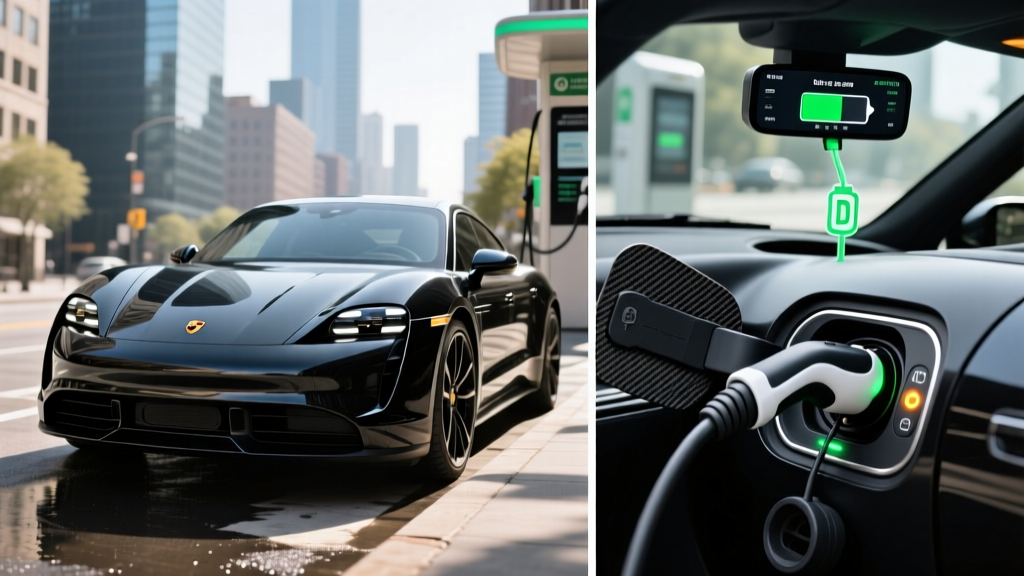
The 2021 Porsche Taycan Turbo S remains one of the most dynamically accomplished electric vehicles ever built. With 750 horsepower on overboost, a 2.4-second 0-60 mph time, and an 800-volt architecture that enables repeatable high-speed charging, it set the template for performance EVs that rivals are still chasing. But with a 201-mile EPA range, a base MSRP that started at $185,000, and zero federal tax credit eligibility, the Turbo S is an uncompromising driver's car — not a practical daily for most buyers.
This review breaks down the real-world ownership picture five years after launch: what the battery holds up like, how the 800V charging architecture behaves on today's public networks, and whether a used Turbo S makes sense in 2026.
| Spec | Value |
|---|---|
| EPA Range | 201 miles |
| Real-World Range (highway, moderate) | ~170–190 miles |
| Battery (usable / gross) | 83.7 kWh usable / 93.4 kWh gross (NMC) |
| Drivetrain | Dual-motor AWD, 2-speed rear transmission |
| Horsepower (overboost w/ Launch Control) | 750 hp |
| Torque | 774 lb-ft |
| 0–60 mph | 2.4 seconds |
| Top Speed | 162 mph |
| Max DC Fast Charge | 270 kW (peak) |
| 10–80% DC Charge Time | ~22.5 minutes |
| Level 2 AC Charge Rate | 9.6 kW (onboard charger) |
| Efficiency (combined) | 68 MPGe / 49 kWh/100 mi |
| Cargo (rear trunk + frunk) | 14.3 cu ft + 2.9 cu ft (17.2 total) |
| Base MSRP (2021) | $185,000 |
| Federal Tax Credit (§30D) | Not eligible (MSRP cap: $55,000 sedans) |
| Battery Warranty | 8 years / 100,000 miles |
Range and Efficiency: EPA vs. Reality
Real-World Expectation: 170–190 miles on highway loops at 70+ mph in moderate weather; 140–160 miles in sustained cold (below 30°F) or aggressive driving. City/regenerative driving can push toward 210+ miles.
The Taycan Turbo S carries a large 93.4 kWh gross battery (83.7 kWh usable), built with NMC (nickel manganese cobalt) pouch cells supplied by LG Energy Solution. The usable buffer is deliberately conservative — Porsche reserves roughly 10 kWh at the top and bottom of the pack to protect long-term health and sustain repeatable performance.
Efficiency is the Turbo S's weak point relative to rivals. At 49 kWh per 100 miles (68 MPGe combined per fueleconomy.gov), it trails the Tesla Model S Plaid (~33 kWh/100 mi) and the Lucid Air (~26 kWh/100 mi). The reasons are physical: the Taycan is heavy (5,121 lbs curb weight), uses a permanent-magnet dual-motor setup optimized for peak power delivery, and features a 2-speed rear axle that prioritizes launch and top-end over efficiency.
In real-world testing by multiple outlets, the Turbo S has delivered between 180 and 210 miles depending on driving style. The car's thermal management system is exceptional — battery preconditioning works well, and degradation has proven mild for NMC chemistry when owners follow Porsche's recommended charging practices (daily limit at 85%).
Charging: 800V Architecture Done Right
| Level | Power | Rate / Time |
|---|---|---|
| Level 1 (120V household) | ~1.4 kW | ~3–4 miles per hour |
| Level 2 (240V home, 40A circuit) | 9.6 kW | ~27 miles per hour; 0–100% in ~9.5 hrs |
| DC Fast Charge (peak) | 270 kW | 10–80% in ~22.5 min; adds ~60 mi in 5 min |
| DC Fast Charge (350 kW station) | Limited to 270 kW | Full speed at Electrify America 350 kW stalls |
The Taycan was the first production EV with an 800-volt architecture, and it remains one of the best-implemented. At a 350 kW DC fast charger (Electrify America, Ionity in Europe), the Turbo S can accept up to 270 kW peak — and unlike many competitors that spike and immediately taper, the Taycan sustains above 200 kW for a meaningful portion of the charge curve. The 10–80% time of roughly 22.5 minutes is still competitive in 2026, though newer platforms from Hyundai/Kia (E-GMP at 240 kW) and Lucid (300+ kW) have closed the gap.
The charge curve is honest: expect peak rates from roughly 10–40% State of Charge, tapering to ~150 kW by 60%, and ~80 kW above 80%. Porsche's battery preconditioning activates automatically when a DC fast charger is set as the navigation destination, warming the pack to optimal temperature.
For home charging, the onboard 9.6 kW AC charger means a full charge from empty takes about 9.5 hours on a 40-amp Level 2 circuit (NEMA 14-50 or hardwired Wall Connector). Most Turbo S owners will rarely charge past 85% daily, making overnight top-ups a 6–7 hour affair — easily handled with a standard Level 2 home install.
Performance: 750 HP and Repeatable Launches
The Turbo S is defined by its powertrain. Dual permanent-magnet synchronous motors produce 616 hp in standard driving and 750 hp with Launch Control engaged (overboost). The rear motor routes through a unique 2-speed transmission — first gear for explosive launches, second gear for high-speed efficiency — a design no other mainstream EV uses.
The 2.4-second 0–60 mph time is independently verified and repeatable. Unlike some EVs that heat-soak after two or three hard launches, the Taycan's thermal management allows back-to-back runs with minimal power degradation. Top speed is electronically limited to 162 mph.
Driving dynamics extend beyond straight-line speed. The standard Porsche Active Suspension Management (PASM) adaptive dampers, rear-axle steering (optional on Turbo, standard on Turbo S), and Porsche Torque Vectoring Plus give this 5,100-lb sedan the reflexes of a much lighter car. Steering feel and brake pedal modulation — two common EV complaints — are class-leading thanks to Porsche's integration of regenerative and friction braking.
Interior, Tech, and Daily Practicality
The Taycan's cabin is a showcase for Porsche's digital-first approach. The driver faces an 16.8-inch curved instrument cluster (configurable between Classic, Map, Full, and Pure layouts). The center stack houses a 10.9-inch infotainment touchscreen, with an optional 8.4-inch lower touch panel for climate controls and handwriting input. A front-passenger 10.9-inch display was available as an option.
Build quality is exceptional — every surface, switch, and material meets or exceeds the Panamera standard. However, the Taycan's reliance on touch-sensitive controls (especially the lower climate panel) draws criticism for being distracting while driving.
Practicality is the trade-off:
- Rear trunk: 14.3 cu ft — adequate for two carry-on bags, less than a Model S (28 cu ft behind rear seats)
- Front trunk (frunk): 2.9 cu ft — fits a small duffel or charging cables
- Rear legroom: 32.5 inches — tight for adults over 6 feet on longer trips
- Seating: Standard 4-seat layout; optional 4+1 adds a narrow center rear position
Driver-assistance tech includes adaptive cruise control with stop-and-go, lane-keeping assist, and Porsche InnoDrive (predictive cruise using navigation and road-sign data). These are SAE Level 2 features — the driver must remain fully engaged at all times. There is no hands-free or eyes-off capability.
Pricing, Tax Credits, and Used Market Value
| Item | Amount |
|---|---|
| Original Base MSRP | $185,000 |
| Typical As-Tested (with options) | $195,000–$210,000 |
| Federal §30D Tax Credit (New) | $0 — MSRP exceeds $55,000 sedan cap |
| Used EV Tax Credit (§25E) | Up to $4,000 (30% of sale price, max $4,000) if purchased from dealer for ≤$25,000 — unlikely for Turbo S |
| Estimated Used Price (2026) | $85,000–$110,000 depending on mileage/condition |
The Taycan Turbo S has never qualified for the federal §30D new EV tax credit. Under current IRS rules, sedans must have an MSRP at or below $55,000 to be eligible — the Turbo S's $185,000 sticker disqualifies it entirely. Buyer income caps ($150,000 single / $300,000 joint) and battery critical-mineral sourcing requirements are moot here.
On the used market, the §25E used clean vehicle credit offers up to $4,000, but only on vehicles sold for $25,000 or less by a licensed dealer. A used Turbo S will not hit that price point for many years. Buyers should budget the full purchase price plus state/local incentives (which vary by jurisdiction — check your state's energy office for current programs).
Depreciation has been significant: a well-maintained 2021 Turbo S with 30,000–40,000 miles trades between $85,000 and $110,000 in 2026, representing a 45–55% loss from original MSRP. This is steep but typical for high-end German performance sedans.
Battery Health, Warranty, and Long-Term Outlook
Porsche warrants the Taycan's high-voltage battery for 8 years or 100,000 miles (whichever comes first), guaranteeing a minimum of 70% capacity retention. For a 2021 model, this warranty extends through 2029 or 100,000 miles — most original-owner cars are still covered in 2026.
Real-world degradation data is encouraging. The NMC pouch cells, managed by the aggressive top/bottom buffer (only 83.7 of 93.4 kWh are usable), show mild capacity loss. Multiple high-mileage Taycan owners report 92–96% State of Health after 50,000–60,000 miles. Porsche's battery replacement cost, if needed out of warranty, is estimated at $20,000–$30,000 for the full pack — a figure to consider for second owners planning to keep the car past 100,000 miles.
The 12V auxiliary battery (a lithium-ion unit, not lead-acid) has been a known failure point on early Taycans. Porsche addressed this with software updates and hardware revisions. Verify that any used 2021 model has had the relevant service campaigns completed.
Pros
- Best-in-class driving dynamics, steering feel, and brake integration
- Repeatable 2.4s launches without heat-soak
- 800V architecture sustains high DC charge rates
- Exceptional build quality and cabin materials
- Strong battery health data at 50,000+ miles
- Distinctive design — doesn't look like every other EV
Cons
- 201-mile EPA range is low for the price class
- 49 kWh/100 mi efficiency trails Tesla, Lucid, and BMW iX
- No federal tax credit eligibility
- Tight rear seat and modest cargo space
- Touch-sensitive climate controls are distracting
- High insurance premiums (specialty performance EV)
- Steep depreciation — 45–55% over 5 years
Taycan Turbo S vs. Key Competitors
The 2021 Turbo S competes with a small group of high-performance electric sedans. Here's how it stacks up on the metrics that matter:
| Spec | Porsche Taycan Turbo S | Tesla Model S Plaid* | Audi e-tron GT (RS) |
|---|---|---|---|
| EPA Range | 201 mi | 396 mi | 238 mi |
| 0–60 mph | 2.4s | 1.99s | 3.1s |
| Peak DC Charge | 270 kW | 250 kW | 270 kW |
| Base MSRP (2021) | $185,000 | $129,990 | $139,900 (RS) |
| Cargo Space | 17.2 cu ft | 28 cu ft | 14.8 cu ft |
| Driving Dynamics | Best | Good | Very Good |
*Model S Plaid deliveries began mid-2021; specs reflect launch configuration.
The Taycan wins on driving engagement, build quality, and charge-curve consistency. The Model S Plaid wins on range, cargo, straight-line speed, and price. The Audi RS e-tron GT — built on the same J1 platform as the Taycan — offers similar charging and dynamics at a lower price but with even less range.
Who Should Buy the 2021 Taycan Turbo S?
Choose the Taycan Turbo S if:
- You prioritize driving dynamics and build quality over range
- You have reliable home Level 2 charging and don't need 300+ miles per charge
- You want a used performance EV with proven battery durability data
- You value the 800V charging advantage for road-trip DC fast charging
Look elsewhere if:
- You need 300+ miles of real-world range (consider Model S or Lucid Air)
- You regularly carry rear-seat passengers or large cargo
- You want federal tax credit eligibility on a new EV purchase
- You're cost-sensitive on insurance, maintenance, or depreciation
The Turbo S is a weekend car, a collector-grade daily, or a second/third vehicle in a garage that already includes something practical. It is not a one-car solution for families or high-mile commuters.
Frequently Asked Questions
What is the real-world range of the 2021 Taycan Turbo S?
Expect 170–190 miles on highway drives in moderate weather, and 140–160 miles in cold conditions or with aggressive driving. City driving with regenerative braking can stretch range to 210+ miles. The 201-mile EPA estimate is conservative by Porsche's tradition — the car often exceeds it in mixed driving.
How fast does the Taycan Turbo S charge?
On a 350 kW DC fast charger, it peaks at 270 kW and charges from 10–80% in approximately 22.5 minutes. At home on a Level 2 (9.6 kW) charger, a full charge takes about 9.5 hours. Level 1 (120V) adds only 3–4 miles per hour and is not practical for regular use.
Does the 2021 Taycan Turbo S qualify for the federal EV tax credit?
No. Under IRS §30D rules, new sedans must have an MSRP of $55,000 or less to qualify. The Turbo S's $185,000 base price disqualifies it. The used EV credit (§25E) also doesn't apply, as it caps at a $25,000 sale price.
Is the Taycan Turbo S worth buying vs. a Tesla Model S Plaid?
For driving dynamics, build quality, and repeatable performance, the Taycan is superior. For range (396 vs. 201 miles EPA), cargo space, price, and over-the-air updates, the Model S Plaid is the more practical choice. They serve different buyer priorities.
How is the battery holding up on 2021 models?
Very well. The NMC pack's large top/bottom buffer (only 83.7 of 93.4 kWh usable) limits stress on cells. Owners at 50,000–60,000 miles report 92–96% State of Health. Porsche's 8-year/100,000-mile battery warranty (70% minimum capacity) remains active for most 2021 cars through 2029.
What are the biggest ownership costs to expect?
Insurance runs $3,500–$5,500 annually depending on location and driving record. Tire replacement (21-inch Michelin Pilot Sport EV or Pirelli P Zero) costs $1,600–$2,400 per set and may be needed every 15,000–20,000 miles given the car's weight and torque. Home Level 2 charger installation typically costs $800–$2,000 depending on electrical panel capacity.