Quick Verdict: Still a Benchmark for Electric Performance
Even five years after its debut, the 2021 Porsche Taycan remains one of the most dynamically accomplished electric vehicles ever built. It sacrifices some range to competitors like the Tesla Model S and Lucid Air, but trades that for repeatable track performance, 800-volt charging architecture, and a chassis that communicates like no other EV. For buyers shopping the used EV market in 2026, the Taycan is a compelling luxury performance sedan — especially if you can capture the $4,000 federal used-EV credit.
EPA vs. Real-World Range
EPA Estimated: 201 mi (Turbo), 212 mi (4S with Performance Battery Plus), 227 mi (base RWD added mid-2021).
Real-World Expectation: Plan for 170–190 mi on highway road trips at 75+ mph. In freezing temperatures, expect a 15–25% reduction, dropping the Turbo to roughly 150–165 mi. City driving with regenerative braking recovers range closer to the EPA sticker.
Spec Sheet: 2021 Porsche Taycan at a Glance
| Spec | Taycan (Base RWD) | Taycan 4S | Taycan Turbo | Taycan Turbo S |
|---|---|---|---|---|
| EPA Range | 227 mi | 212 mi (PB+) | 201 mi | 192 mi |
| Battery (Usable/Total) | 71.0 / 79.2 kWh (NMC) | 83.7 / 93.4 kWh (NMC) | 83.7 / 93.4 kWh (NMC) | 83.7 / 93.4 kWh (NMC) |
| Power (Overboost) | 322 hp / 402 hp | 522 hp / 562 hp | 616 hp / 670 hp | 670 hp / 750 hp |
| 0–60 mph | 5.1 sec | 3.8 sec | 3.0 sec | 2.6 sec |
| Drivetrain | RWD | AWD (dual-motor) | AWD (dual-motor) | AWD (dual-motor) |
| Max DC Charge Rate | 225 kW | 270 kW | 270 kW | 270 kW |
| 10–80% DCFC Time | ~22.5 min | ~22.5 min | ~22.5 min | ~22.5 min |
| Level 2 AC Charging | 9.6 kW (~33 mi/hr) | 9.6 kW (~33 mi/hr) | 9.6 kW (~33 mi/hr) | 9.6 kW (~33 mi/hr) |
| MPGe (Combined) | 79 MPGe | 68–75 MPGe | 69 MPGe | 68 MPGe |
| Original MSRP | $81,250 | $105,150 | $152,250 | $186,350 |
Source: fueleconomy.gov and Porsche USA press archives. The base RWD was introduced mid-2021 with the smaller 79.2 kWh pack; 4S buyers could opt for the 79.2 kWh "Performance Battery" (71.0 kWh usable) or the larger "Performance Battery Plus."
Battery and Charging Architecture
The 2021 Taycan uses NMC (nickel manganese cobalt) lithium-ion cells supplied by LG Energy Solution, arranged in a "Performance Battery Plus" configuration with 33 modules (12 cells each) for the 93.4 kWh pack. The smaller 79.2 kWh pack uses 28 modules. Unlike newer EVs adopting LFP chemistry for cost savings, the Taycan's NMC cells prioritize energy density and high-discharge performance — essential for its repeatable launch control.
The 800-Volt Advantage
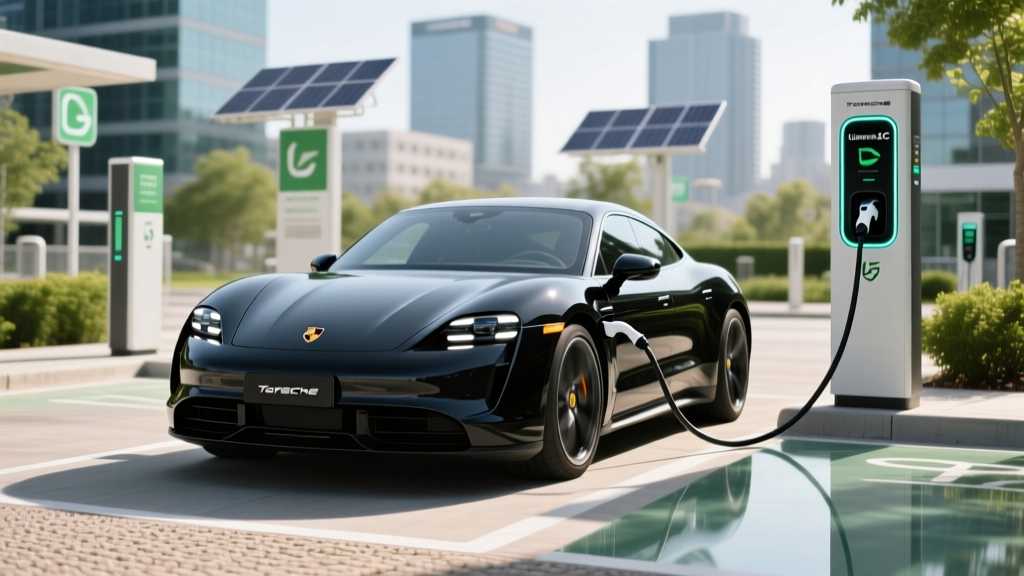
The Taycan was the first production EV with an 800-volt electrical architecture, enabling peak DC charging at 270 kW. On a 350 kW Electrify America or equivalent CCS1 charger, the Taycan sustains over 200 kW from roughly 5% to 50% state of charge before tapering. The 10–80% sprint takes approximately 22.5 minutes under ideal conditions. Real-world sessions at older 150 kW stations will stretch this to 35–40 minutes.
| Charging Method | Power | Time / Range Added |
|---|---|---|
| Level 1 (120V household) | ~1.4 kW | ~4 mi/hr — overnight trickle only |
| Level 2 (240V, 40A home) | 9.6 kW | ~33 mi/hr, full charge in ~9.5 hrs (93.4 kWh pack) |
| DC Fast (150 kW CCS1) | ~150 kW peak | 10–80% in ~36 min |
| DC Fast (350 kW CCS1) | 270 kW peak | 10–80% in ~22.5 min |
Home charging tip: A 48A Level 2 wall connector on a 60A circuit delivers the full 9.6 kW. Budget $800–$1,500 for a quality EVSE (e.g., ChargePoint Home Flex or Emporia Level 2) plus $500–$2,000 for electrician installation, depending on panel proximity. Homes with 100A service may need a $2,000–$4,000 panel upgrade.
Performance and Driving Dynamics
Numbers alone don't capture the Taycan. The Turbo S hits 60 mph in 2.6 seconds with Launch Control engaged, but unlike some EVs that overheat after two pulls, Porsche's thermal management system and two-speed rear transmission (a unique feature) allow repeatable performance. The rear two-speed gearbox uses a short first gear for explosive launches and a tall second gear for highway efficiency.
Even the base RWD, at 5.1 seconds to 60 mph, feels rapid thanks to instant torque delivery and a low center of gravity from the floor-mounted battery pack. The steering is communicative by EV standards — a rarity — and the optional rear-axle steering shrinks the car's footprint in tight corners. Air suspension (standard on 4S and above, optional on base) delivers a compliant ride without sacrificing body control.
Efficiency: MPGe and kWh/100mi
Efficiency is the Taycan's acknowledged weakness. The 4S with the larger battery achieves roughly 75 MPGe combined, or about 45 kWh/100mi. For comparison, a Tesla Model S Long Range manages around 120 MPGe. The Taycan's weight (4,900–5,100 lbs depending on trim), wide tires, and performance-oriented tuning trade efficiency for grip and stability. Expect to spend $0.12–$0.18 per mile on electricity at home (varies by utility rate), versus $0.10–$0.14 for a more efficient EV.
Interior, Tech, and Cargo
The Taycan's cabin is minimalist and premium, dominated by screens: an 10.9-inch infotainment display, an 8.4-inch lower console screen for climate and handwriting input, an 11.8-inch digital gauge cluster, and an optional 10.9-inch passenger display. The PCM 6.0 infotainment system is responsive but lacks physical shortcut buttons — everything routes through touch or voice.
Driver Assistance
The 2021 Taycan comes with Porsche InnoDrive (adaptive cruise with lane centering) as an option, rated at SAE Level 2. It is not self-driving; the driver must keep hands on the wheel and eyes on the road. It's competent for highway cruising but less ambitious than Tesla's Autopilot or GM's Super Cruise. Automatic emergency braking, lane-keeping assist, and parking sensors are standard.
Space and Practicality
- Front legroom: 41.5 in
- Rear legroom: 32.7 in (tight for tall adults on long trips)
- Rear cargo (behind second row): 14.3 cu ft
- Front trunk (frunk): 2.8 cu ft
- Total cargo: ~17.1 cu ft
The Taycan is a four-seat grand tourer, not a family hauler. Rear headroom is compromised by the sloping roofline, and the frunk is small — enough for a charging cable bag, not a suitcase. The Cross Turismo wagon variant (introduced for 2021) adds ~5 cu ft of rear cargo and slightly more headroom.
Pricing, Tax Credits, and Ownership Costs
| Trim | Original MSRP (2021) | Typical Used Price (2026) | Federal Used-EV Credit (§25E) | Effective Cost |
|---|---|---|---|---|
| Base RWD | $81,250 | $48,000–$58,000 | Up to $4,000 (30% of sale price, max $4k) | $44,000–$54,000 |
| 4S | $105,150 | $58,000–$72,000 | Up to $4,000 | $54,000–$68,000 |
| Turbo | $152,250 | $75,000–$95,000 | Up to $4,000 | $71,000–$91,000 |
| Turbo S | $186,350 | $90,000–$115,000 | Up to $4,000 | $86,000–$111,000 |
Federal Tax Credit Rules (§25E Used, §30D New)
If buying used in 2026: The IRS §25E used-EV credit offers 30% of the sale price, up to $4,000, for EVs priced at or below $25,000. Most 2021 Taycans exceed this price cap and will not qualify. Buyer income caps also apply: $75,000 single / $112,500 head of household / $150,000 joint. The vehicle must be purchased from a licensed dealer, and you must not have claimed a used-EV credit in the prior three years.
If buying new (remaining inventory): The Taycan does not qualify for the §30D new-EV credit. Its MSRP far exceeds the $55,000 sedan cap, and battery sourcing rules further disqualify it. Always verify current eligibility at IRS.gov and consult a tax professional.
Warranty
- Battery: 8 years / 100,000 miles (capacity retention guaranteed above 70%)
- Powertrain: 4 years / 50,000 miles
- Bumper-to-bumper: 4 years / 50,000 miles
- Free maintenance: None (Porsche does not include complimentary scheduled service)
Out-of-warranty battery replacement for a 93.4 kWh NMC pack is estimated at $25,000–$35,000 as of 2026, though module-level repairs are possible for less. Porsche's 70% capacity retention threshold is standard for the industry.
Pros, Cons, and Who It's For
Pros
- Best-in-class driving dynamics and steering feel
- 800V architecture: 270 kW DC charging, 10–80% in ~22.5 min
- Repeatable performance — no thermal throttling after multiple launches
- Premium interior with high build quality
- Two-speed rear transmission unique among EVs
- Strong resale value relative to other luxury EVs
Cons
- Below-average EPA range (192–227 mi) vs. Tesla Model S (402 mi)
- Poor efficiency (~45 kWh/100mi) raises charging costs
- Tight rear seat and small cargo area
- No federal new-EV tax credit; used credit unlikely due to price cap
- Infotainment lacks physical buttons; learning curve
- Insurance premiums 20–35% higher than average luxury sedan
Who Should Buy the 2021 Taycan?
Best for: Driving enthusiasts who prioritize chassis feel and repeatable performance over maximum range. Daily commuters with home charging who take occasional 200-mile road trips. Luxury sedan buyers who want something less ubiquitous than a Tesla.
Skip it if: You regularly drive 300+ miles between charges, need rear-seat space for adults, or want the lowest cost per mile. The Tesla Model S, Lucid Air, or BMW i5 eDrive40 are better efficiency-first alternatives.
Frequently Asked Questions
What is the real-world range of the 2021 Porsche Taycan?
The EPA rates the Taycan between 192 and 227 miles depending on trim and battery pack. In real-world highway driving at 75 mph, expect 170–190 miles. In cold weather (below 32°F), range drops an additional 15–25%. Porsche is conservative with EPA testing, so real-world city driving with regenerative braking often matches or slightly exceeds the sticker number.
How fast does the Taycan charge at home and on the road?
At home on a 9.6 kW Level 2 charger, the 93.4 kWh pack refills in about 9.5 hours — easily overnight. On a 350 kW CCS1 DC fast charger, it peaks at 270 kW and reaches 10–80% in roughly 22.5 minutes. On a 150 kW charger, expect 35–40 minutes for the same 10–80% session.
Does the 2021 Taycan qualify for the federal EV tax credit?
Not the new-vehicle §30D credit — its MSRP exceeds the $55,000 sedan cap, and battery sourcing requirements are not met. For used purchases, the §25E credit offers up to $4,000, but only if the sale price is at or below $25,000 and buyer income falls under IRS caps. Most used Taycans in 2026 exceed this price threshold.
Is the Taycan worth buying vs. the Tesla Model S or Lucid Air?
If driving dynamics and build quality are your priorities, yes. The Taycan's steering, braking, and chassis communication are in a different league. If range and efficiency are paramount, the Model S (402 mi EPA) or Lucid Air (up to 516 mi) are superior. The Taycan is a sports sedan that happens to be electric; its rivals are electric sedans that happen to be quick.
What are the biggest ownership costs to budget for?
Beyond the purchase price, budget for higher insurance ($2,500–$4,000/year depending on state and trim), premium tires (the Michelin Pilot Sport EV or Pirelli P Zero run $300–$450 per corner and wear faster due to torque and weight), and out-of-warranty battery risk. Porsche's 8-year/100,000-mile battery warranty provides good coverage, but a post-warranty replacement could exceed $30,000.
Can the Taycan use Tesla Superchargers?
Not natively. The 2021 Taycan uses the CCS1 connector. As of 2026, Tesla has opened some Superchargers to non-Tesla EVs via the Tesla app and a built-in CCS adapter, but coverage is not universal. Porsche offers a CCS-to-NACS adapter for newer models; check with your dealer for compatibility with 2021 hardware. Electrify America remains the Taycan's most reliable DC network.
For the latest EPA data, consult fueleconomy.gov. For tax-credit eligibility, see IRS.gov clean vehicle credits. Safety ratings available at NHTSA.gov.