Quick Verdict: The Driver's EV That Compromises on Range
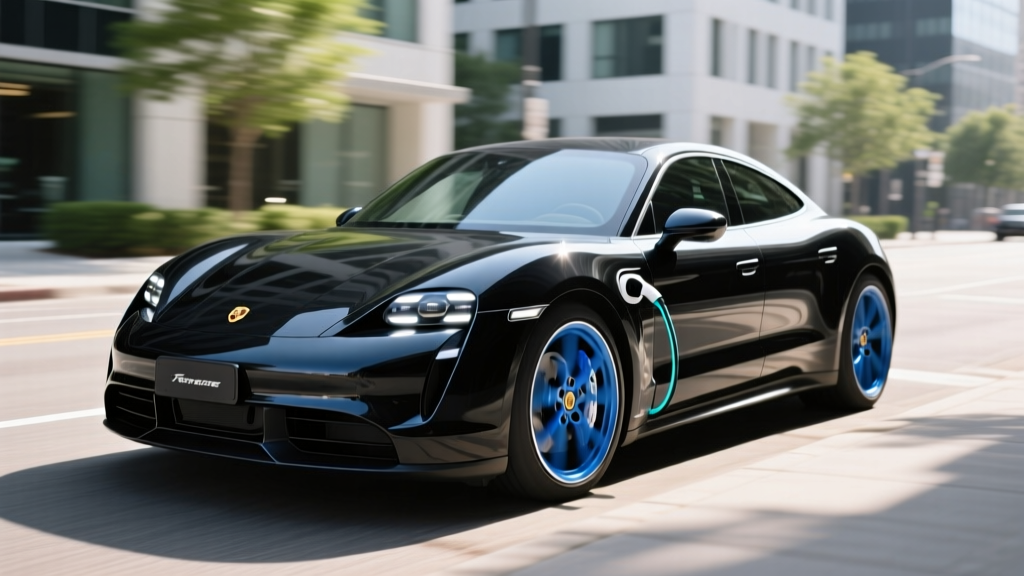
The 2021 Porsche Taycan 4S remains one of the most dynamically accomplished electric vehicles ever built. Its 800-volt architecture delivers class-leading DC fast-charging speeds, and its dual-motor all-wheel-drive powertrain produces up to 562 horsepower with launch control engaged. But the Taycan 4S asks buyers to accept a trade-off that defines ownership: EPA-estimated range falls well short of rivals like the Tesla Model S and Lucid Air, and the as-tested price routinely clears $120,000.
For 2026 used-EV shoppers, the Taycan 4S represents a compelling entry into Porsche's electric lineup — particularly now that depreciation has softened the blow of its original MSRP. This review breaks down exactly what you get, what you give up, and whether the numbers add up for your use case.
Range and Efficiency: EPA Numbers vs. Real-World Reality
Real-World Expectation: 190–210 miles highway; 170–190 miles in cold weather (below 40°F); up to 240+ miles in mild city driving with regen
Efficiency: 68 MPGe combined / 49 kWh per 100 miles (EPA)
The 2021 Taycan 4S came with two battery options: the standard Performance Battery (79.2 kWh gross, ~71 kWh usable) rated at 200 miles EPA, and the larger Performance Battery Plus (93.4 kWh gross, ~83.7 kWh usable) rated at 227 miles. Most 4S models on the used market carry the larger pack, which we focus on here.
Porsche's 800-volt architecture is engineered for sustained performance rather than maximum range. The Taycan 4S uses a two-speed transmission on the rear axle — first gear for hard launches, second for efficient cruising — but the car's weight (approximately 5,100 lbs) and wide performance tires work against highway efficiency. In EPA testing, the Taycan 4S with the larger battery returned 68 MPGe combined. Expect real-world highway consumption around 2.0–2.3 kWh/mile at 70 mph.
Cold weather hits the Taycan's range noticeably. Without a dedicated heat pump standard on 2021 models (it was optional), cabin heating draws significant power from the traction battery. Owners in northern climates report 15–25% range loss in winter conditions, bringing effective range down to 170–190 miles. Preconditioning the battery while plugged in mitigates some of this loss and is essential before DC fast-charging in cold weather.
Battery Chemistry and Longevity
The Taycan 4S uses an NMC (nickel-manganese-cobalt) lithium-ion battery pack manufactured by LG Energy Solution. NMC chemistry prioritizes energy density and power delivery over the cycle-life advantages of LFP (lithium iron phosphate) packs found in some competitors. For a performance-oriented vehicle like the Taycan, this is the expected choice.
| Spec | Performance Battery | Performance Battery Plus |
|---|---|---|
| Gross Capacity | 79.2 kWh | 93.4 kWh |
| Usable Capacity | ~71 kWh | ~83.7 kWh |
| Chemistry | NMC | NMC |
| Architecture | 800V | 800V |
| EPA Range | 200 miles | 227 miles |
Porsche provides a battery warranty of 8 years or 100,000 miles, whichever comes first, guaranteeing at least 70% state of health (SoH) retention over that period. This is competitive with the industry standard. Real-world degradation data from early Taycan owners suggests approximately 5–8% capacity loss over the first 60,000 miles, which is within expectations for NMC chemistry under normal use. The 800V system's thermal management keeps cell temperatures well-regulated during repeated hard acceleration and fast charging.
Charging Speed: Where the 800V Architecture Pays Off
The Taycan 4S's headline charging capability is its 800-volt electrical architecture, which enables DC fast-charging rates that remain among the fastest in production. Here is the complete charging picture:
| Level | Power | Time / Rate | Notes |
|---|---|---|---|
| Level 1 (120V) | ~1.4 kW | ~3–4 miles/hour | Emergency/trickle only |
| Level 2 (240V, 48A) | 9.6 kW (onboard charger max 11 kW with optional) | ~27 miles/hour; 0–100% in ~9.5 hours | Standard home charging |
| DC Fast Charge | Peak 270 kW | 10–80% in ~22.5 minutes (ideal conditions) | Requires 350 kW charger; taper above 80% |
Understanding the charge curve: The Taycan 4S peaks at 270 kW on a 350 kW-capable DC fast charger (CCS connector), but this peak rate is not sustained for the entire session. The charge curve holds above 200 kW from roughly 10% to about 55% state of charge, then progressively tapers. From 80% to 100%, charging slows dramatically to protect the battery — expect the final 20% to take an additional 25–30 minutes. Porsche's published 22.5-minute 10–80% time assumes battery preconditioning is active and ambient temperatures are moderate (60–85°F).
On a more common 150 kW Electrify America or EVgo station, expect 10–80% in approximately 35–40 minutes. For home Level 2 charging, the standard onboard charger accepts up to 9.6 kW; an optional 19.2 kW onboard charger was available on the 2021 model but requires a 100-amp dedicated circuit and compatible wall connector. Most owners charge overnight on Level 2 and wake to a full battery every morning, which is the most convenient and battery-friendly approach.
The Taycan uses the CCS1 connector standard for North America. With the industry's ongoing shift to NACS (Tesla's connector), adapters are available for Supercharger access, though Porsche has not adopted NACS natively for the 2021 model year.
Performance and Driving Dynamics
| Spec | Value |
|---|---|
| Drivetrain | Dual-motor AWD |
| Horsepower (Launch Control) | 562 hp (overboost) |
| Horsepower (Standard) | 522 hp |
| Torque | 479 lb-ft (with Launch Control) |
| 0–60 mph | 3.8 seconds |
| Top Speed | 155 mph |
| Curb Weight | ~5,121 lbs |
The Taycan 4S sits in the middle of the 2021 Taycan lineup, between the base rear-drive Taycan and the flagship Turbo/Turbo S. Its dual-motor AWD setup provides exceptional traction, and Porsche's two-speed rear transmission delivers both explosive launches and relaxed highway cruising. The 3.8-second 0–60 mph time (with Performance Battery Plus and Launch Control) is rapid, though the Turbo S's 2.6-second time grabs headlines.
Where the Taycan 4S truly distinguishes itself is in handling and braking. The car's low center of gravity (battery pack mounted under the floor), optional rear-axle steering, and Porsche Active Suspension Management (PASM) air suspension produce a level of cornering composure that no SUV-based EV can match. Regenerative braking delivers up to 265 kW of recuperation, but Porsche deliberately tuned the regen feel to mimic a traditional Porsche sports car — expect to use the brake pedal more than in a Nissan LEAF or Tesla with aggressive one-pedal driving. This is a feature, not a bug, for driving enthusiasts.
Interior Space, Cargo, and Technology
The Taycan is a sports sedan, and its interior dimensions reflect that priority. Rear-seat legroom is tight at 32.7 inches, and the sloping roofline limits headroom for taller passengers. Cargo capacity totals 14.3 cubic feet combined: 12.9 cu ft in the rear trunk and 2.9 cu ft in the front trunk (frunk). This is significantly less than a Tesla Model S (28 cu ft behind the rear seats alone) and makes the Taycan impractical for family road-trip hauling.
The infotainment system uses an 10.9-inch central touchscreen with a secondary optional passenger-side display, plus an 8.4-inch haptic touchpanel for climate and handwriting input. Apple CarPlay is standard (wired on 2021 models); Android Auto was not available on the 2021 Taycan — a notable omission. The instrument cluster is a curved 16.8-inch digital screen that is among the best in the industry for readability and customization.
Driver-assistance features include adaptive cruise control, lane-keeping assist, and night vision (optional). These are SAE Level 2 driver-assist systems — the driver must remain fully engaged at all times. Porsche's InnoDrive predictive cruise control (optional) uses navigation data to adjust speed for upcoming curves and speed limits, and it works impressively well on highway drives.
Pricing, Tax Credits, and Ownership Economics
| Item | Amount |
|---|---|
| Original Base MSRP | $103,800 |
| Typical As-Tested (well-optioned) | $120,000–$135,000 |
| 2026 Used Market Range | $55,000–$78,000 (varies by mileage/condition) |
| Federal Used EV Tax Credit (§25E) | Up to $4,000 (30% of sale price, max $4,000) |
| Federal New EV Tax Credit (§30D) | Not applicable (discontinued model year) |
Because the 2021 Taycan 4S is no longer in production, buyers in 2026 are purchasing on the used market. The IRS §25E used clean vehicle credit provides up to $4,000 (30% of the sale price, capped at $4,000) for qualified used EVs sold for $25,000 or more. Income limits apply: modified adjusted gross income cannot exceed $75,000 (single), $112,500 (head of household), or $150,000 (joint). The vehicle must be purchased from a licensed dealer, and the credit can be transferred to the dealer at the point of sale to reduce the purchase price directly.
Note: The §30D new-vehicle credit is not available for the 2021 Taycan 4S because it is no longer sold new. When it was new, the Taycan's MSRP exceeded the §30D sedan cap of $55,000, making it ineligible regardless. For current new-EV credit rules, consult IRS guidance on qualifying manufacturers and models.
Ownership cost considerations: Insurance premiums for the Taycan 4S run 30–50% higher than average EV insurance due to its performance classification and repair costs. Maintenance is minimal compared to ICE Porsches (no oil changes, fewer brake replacements thanks to regen), but Porsche dealer labor rates are steep. Tire replacement costs are significant — the Taycan wears through performance tires in 15,000–25,000 miles, and a set of four Michelin Pilot Sport EV tires costs approximately $1,400–$1,800.
Pros, Cons, and Who Should Buy
Pros
- Best-in-class driving dynamics and steering feel
- 270 kW peak DC fast charging (10–80% in ~22.5 min)
- 800V architecture enables sustained performance without thermal derating
- Exceptional build quality and interior materials
- Repeatable launch control without power loss
- Strong depreciation curve now leveling out on used market
Cons
- 227-mile EPA range trails Tesla Model S (405 mi) and Lucid Air (516 mi)
- Tight rear seat and limited cargo space (14.3 cu ft total)
- No Android Auto on 2021 model
- High insurance and tire replacement costs
- Heavy at 5,100+ lbs — felt in transitions
- Heat pump was optional, not standard
Who the 2021 Taycan 4S Suits Best
Choose the Taycan 4S if: You prioritize driving engagement over maximum range, have reliable home Level 2 charging, take road trips of 200 miles or less between stops, and value Porsche build quality and badge prestige.
Look elsewhere if: You need 300+ miles of range (consider Tesla Model S or Lucid Air), regularly carry rear-seat passengers (consider BMW iX or Mercedes EQS), want maximum cargo versatility (consider a Tesla Model X or Rivian R1S), or need the lowest possible operating cost (consider a Hyundai Ioniq 6 or Tesla Model 3).
Warranty Coverage
Porsche's warranty package for the 2021 Taycan 4S:
- New Vehicle Limited Warranty: 4 years / 50,000 miles
- Battery Warranty: 8 years / 100,000 miles (minimum 70% state of health)
- Powertrain Warranty: 8 years / 100,000 miles (electric motors, power electronics)
- Corrosion Perforation: 12 years / unlimited miles
- Roadside Assistance: 4 years / 50,000 miles
For used buyers in 2026, verify remaining warranty coverage by VIN through a Porsche dealer. Many 2021 Taycan 4S models with under 50,000 miles still carry factory vehicle warranty, and nearly all retain substantial battery/powertrain coverage given the 8-year/100,000-mile terms.
Frequently Asked Questions
What is the real-world range of the 2021 Porsche Taycan 4S?
With the Performance Battery Plus (93.4 kWh gross), expect 190–210 miles on the highway at 70 mph in moderate temperatures. City driving with regenerative braking can push range to 240+ miles. In cold weather (below 40°F), range drops to approximately 170–190 miles due to battery resistance and cabin heating demand. The EPA sticker reads 227 miles, but plan trips around 180–200 miles of usable range for a comfortable buffer.
How fast does the Taycan 4S charge at home and on the road?
At home on a Level 2 (240V, 48A) charger, the Taycan 4S adds approximately 27 miles of range per hour, fully charging from empty overnight in about 9.5 hours. On a 350 kW-capable DC fast charger, it peaks at 270 kW and charges from 10–80% in approximately 22.5 minutes under ideal conditions. On a more typical 150 kW public charger, plan for 35–40 minutes for a 10–80% session. Battery preconditioning is critical for achieving peak charge rates.
Does the 2021 Taycan 4S qualify for any federal tax credit?
As a used vehicle in 2026, the Taycan 4S may qualify for the IRS §25E used clean vehicle credit of up to $4,000, provided the buyer meets income limits ($75K single / $150K joint), purchases from a licensed dealer, and the sale price is at least $25,000. The original §30D new-vehicle credit was never available to the Taycan because its MSRP exceeded the $55,000 sedan cap. Consult a tax professional for your specific eligibility.
Is the Taycan 4S worth buying over a Tesla Model S?
It depends on your priorities. The Model S offers nearly double the range (405 miles EPA), more cargo space, over-the-air updates, and Supercharger network access. The Taycan 4S delivers vastly superior steering feel, brake modulation, suspension composure, and build quality. If driving dynamics and Porsche ownership matter more than range and tech features, the Taycan wins. If you road-trip frequently and need maximum range, the Model S is the practical choice.
What are the biggest ownership costs to budget for?
Beyond the purchase price, budget for: higher-than-average insurance ($3,000–$5,000/year depending on location and driving record), performance tire replacement every 15,000–25,000 miles ($1,400–$1,800 per set), and Porsche dealer service rates ($200–$300/hour). Home Level 2 charger installation typically costs $500–$2,000 depending on electrical panel proximity and local permitting. Electricity costs for charging average $0.13–$0.16/kWh nationally, making fueling roughly 50–60% cheaper per mile than a comparable gas-powered Porsche Panamera.
Does the Taycan 4S support Tesla Superchargers?
The 2021 Taycan 4S uses the CCS1 connector. Tesla's Supercharger network has begun opening to non-Tesla EVs at select locations via the Tesla app and a built-in CCS adapter, but availability varies by region. Third-party CCS-to-NACS adapters (such as those from Lectron or A2Z) enable Supercharger access at compatible stalls, though charging speeds may be limited. Porsche has not issued an official NACS retrofit for 2021 models.