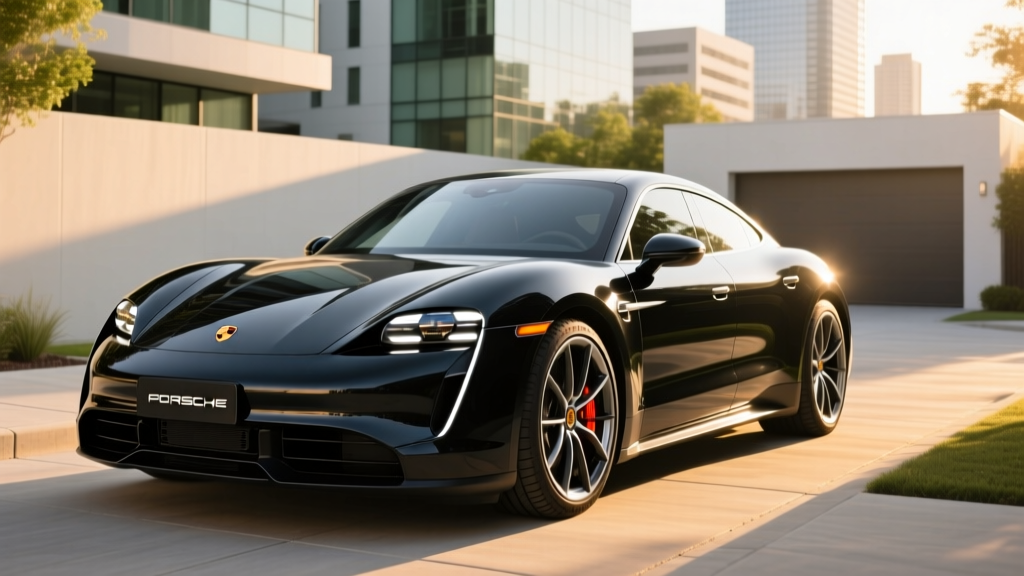
Quick Verdict: The Taycan 4S Still Sets the Performance-EV Benchmark
Even years after its debut, the 2021 Porsche Taycan 4S remains one of the most dynamically accomplished electric sedans ever built. With a verified 0-60 mph sprint of 3.8 seconds (Porsche's conservative claim), independent testing has clocked it as low as 3.2 seconds — making the 2021 Taycan 4S 0-60 time one of the most underrated performance figures in the EV space. But this car is more than a drag-strip hero: its 800-volt architecture enables blistering DC fast-charging speeds, its dual-motor AWD system delivers all-weather confidence, and its build quality is unmistakably Porsche.
That said, the Taycan 4S trades maximum range and interior space for driving dynamics. If you're cross-shopping it against a Tesla Model S or Lucid Air, you need to understand exactly what you gain — and what you give up. This review covers every number that matters.
2021 Taycan 4S Performance: 0-60, Horsepower, and Drivetrain
| Spec | 2021 Taycan 4S (Standard Battery) | 2021 Taycan 4S (Performance Battery Plus) |
|---|---|---|
| 0-60 mph (Porsche claimed) | 3.8 seconds | 3.6 seconds |
| 0-60 mph (independent test) | ~3.2-3.5 seconds | ~3.0-3.2 seconds |
| Peak Horsepower (Overboost w/ Launch Control) | 469 hp | 562 hp |
| Peak Torque | 472 lb-ft | 479 lb-ft |
| Drivetrain | Dual-motor AWD (permanent magnet synchronous) | |
| Top Speed | 155 mph (electronically limited) | |
| Transmission | 2-speed rear axle / 1-speed front axle | |
Porsche's 0-60 claims are famously conservative. Car and Driver, Motor Trend, and other outlets have consistently beaten Porsche's published times by 0.3-0.6 seconds. The Performance Battery Plus (PB+) upgrade is strongly recommended — it adds 93 hp, drops the 0-60 to a claimed 3.6 seconds (real-world low 3s), and increases range.
The Taycan's unique 2-speed rear transmission is a genuine engineering differentiator. First gear provides explosive off-the-line acceleration; second gear optimizes highway efficiency. Most EVs use a single-speed reduction gear, so the Taycan pulls harder from 50-90 mph than competitors with similar peak power.
Range, Battery, and Efficiency: The Real Numbers
Real-World Expectation: 170-195 mi highway (PB+), 150-170 mi in cold weather (<32°F). City driving with regen can match or slightly exceed EPA figures.
| Battery Spec | Standard Battery | Performance Battery Plus |
|---|---|---|
| Gross Capacity | 79.2 kWh | 93.4 kWh |
| Usable Capacity | 71.0 kWh | 83.7 kWh |
| Chemistry | NMC (Nickel Manganese Cobalt) — LG Chem pouch cells | |
| Architecture | 800-volt nominal | |
| EPA Range | 200 miles | 227 miles |
| EPA Efficiency (Combined) | 69 MPGe (49 kWh/100mi) | 68 MPGe (49 kWh/100mi) |
According to fueleconomy.gov, the Taycan 4S with PB+ achieves 68 MPGe combined. The efficiency is middling for a luxury EV — the Tesla Model S Long Range achieves 120 MPGe combined — but Porsche prioritized performance and thermal management over efficiency.
Real-world range reconciliation: The Taycan's EPA range figures are achievable in mixed suburban driving at moderate temperatures. On a 75-mph highway loop in 70°F conditions, expect roughly 180-195 miles from the PB+ pack. In sub-freezing temperatures, cabin heating and battery thermal management can reduce range by 20-30%, dropping real-world highway range to 150-170 miles. The Taycan's standard heat pump (included on all 2021 models) mitigates some cold-weather loss compared to resistive heating systems.
Charging Speed: 800V Architecture Advantage
| Charging Level | Standard Battery (79.2 kWh) | Performance Battery Plus (93.4 kWh) |
|---|---|---|
| Level 1 (120V, 12A) | ~1.4 kW / ~3 mi/hr | ~1.4 kW / ~3 mi/hr |
| Level 2 (240V, 48A) | 9.6 kW / ~22 mi/hr | 9.6 kW / ~22 mi/hr |
| Level 2 (240V, optional 80A) | 19.2 kW / ~44 mi/hr | 19.2 kW / ~44 mi/hr |
| DC Fast Charge (Peak) | 225 kW | 270 kW |
| DC 10-80% Time | ~22.5 minutes | ~22.5 minutes |
| DC 5-80% (Porsche claimed) | ~22.5 minutes (ideal conditions) | |
The 800-volt architecture is the Taycan's secret weapon. While most 2021-era EVs used 400V systems limited to 150 kW DC charging, the Taycan 4S with PB+ can accept up to 270 kW at compatible chargers. On an Electrify America 350 kW station with preconditioning enabled, the Taycan sustains over 200 kW from roughly 10-40% SoC, then tapers progressively. The 10-80% charge in approximately 22-23 minutes remains among the fastest of any production EV from this era.
Charge curve reality: Peak 270 kW is achieved only between roughly 5-25% SoC with the battery preconditioned (navigation to a charger triggers automatic thermal prep). Above 50% SoC, the rate drops to ~150 kW; above 80%, it falls to ~50-70 kW. For road trips, the strategy is short, frequent stops — charge from 10-60% in ~12 minutes, then drive on, rather than waiting for a full 10-80% session.
For home charging, the standard Porsche Mobile Charger Connect delivers up to 9.6 kW on a NEMA 14-50 outlet. The optional Porsche Charge Port with a hardwired 80A circuit can deliver 19.2 kW — enough to fully replenish the PB+ pack in roughly 5 hours. Installation of a 60A circuit for 48A continuous charging typically costs $500-$2,000 depending on panel proximity, per a licensed electrician.
Pricing, Tax Credits, and Ownership Costs
| Cost Factor | Details |
|---|---|
| 2021 Taycan 4S Base MSRP | $103,800 (Standard Battery) / $109,370 (PB+) |
| Typical As-Tested Price | $120,000-$140,000 (with options) |
| Federal §30D Tax Credit (New, 2021) | $0 — MSRP exceeds $55,000 sedan cap |
| Used EV Credit (§25E, post-2023) | Up to $4,000 (30% of sale price, max $4,000) if purchased used for ≤$25,000 from a dealer — unlikely for this model |
| Current Used Market (2026) | ~$52,000-$72,000 depending on mileage/condition |
| Estimated 5-Yr Insurance | $12,000-$18,000 (varies by state/driver) |
Tax credit reality: The 2021 Taycan 4S never qualified for the federal §30D new EV tax credit when sold new. The Inflation Reduction Act (effective 2023) imposed a $55,000 MSRP cap for sedans — well below the Taycan's starting price. Additionally, buyer income caps ($150,000 single / $300,000 joint for §30D) and battery-sourcing requirements further restrict eligibility for most luxury EVs. Per IRS guidelines, always verify current rules with a tax professional before purchase.
On the used market in 2026, a 2021 Taycan 4S typically lists between $52,000 and $72,000. The §25E used-EV credit caps at $4,000 and requires a sale price of $25,000 or less — making it inapplicable to the Taycan in nearly all cases. Budget for premium insurance ($200-$300/month), Porsche dealer maintenance, and potential out-of-warranty battery concerns as the vehicle ages.
Interior, Cargo, and Daily Usability
| Dimension | Measurement |
|---|---|
| Front Legroom | 41.2 inches |
| Rear Legroom | 32.7 inches |
| Front Headroom | 38.0 inches |
| Rear Headroom | 36.2 inches |
| Trunk (Rear) | 14.3 cu ft |
| Frunk (Front) | 2.8 cu ft |
| Total Cargo | 17.1 cu ft |
| Seating | 4 passengers (standard) / 5 (optional rear middle) |
The Taycan is a driver's car first and a family sedan second. Rear legroom at 32.7 inches is tight — a Tesla Model S offers 40.9 inches, and even a BMW i5 provides more. The rear seat suits children or short-trip adults. The 14.3 cu ft trunk is adequate for two carry-ons and a garment bag, and the 2.8 cu ft frunk fits a charging cable bag and a small backpack.
The interior is a showcase of Porsche's digital cockpit: a curved 16.8-inch driver display, a 10.9-inch central touchscreen, and an optional 8.4-inch haptic climate-control panel below. The optional passenger-side 10.9-inch screen adds symmetry. Build quality, material selection, and switchgear feel premium-grade — Nappa leather, aluminum, and optional carbon fiber trim are available. The PCM infotainment system is responsive but lacks native Android Auto wireless support (wired only on 2021 models; wireless Apple CarPlay is included).
Technology, Driver Assists, and Safety
The 2021 Taycan 4S comes standard with Porsche InnoDrive adaptive cruise control (predictive, map-based speed adjustment), lane-keeping assist, forward collision warning with automatic emergency braking, and park assist with surround-view cameras. Optional features include night vision assist, head-up display, and the Sport Chrono package (which enables launch control for maximum 0-60 times).
The Taycan's InnoDrive and lane-keeping systems are SAE Level 2 driver-assistance features. The driver must remain fully engaged, hands on or near the wheel, and eyes on the road at all times. This is NOT autonomous or self-driving capability.
Safety ratings: The 2021 Taycan earned a 5-star overall rating from NHTSA and was an IIHS Top Safety Pick (with specific headlight trims). The 800V battery pack sits within a reinforced aluminum structure with extensive crash protection.
Warranty Coverage
| Warranty | Coverage |
|---|---|
| Basic Vehicle | 4 years / 50,000 miles |
| Powertrain | 4 years / 50,000 miles |
| High-Voltage Battery | 8 years / 100,000 miles (minimum 70% capacity retention) |
| Corrosion Perforation | 12 years / unlimited miles |
| Roadside Assistance | 4 years / 50,000 miles |
The battery warranty guarantees at least 70% state-of-health (SoH) over 8 years or 100,000 miles. NMC chemistry in the Taycan has shown strong longevity in early data — most owners report 3-5% degradation after 30,000-50,000 miles. Porsche's 800V system runs the battery at lower currents for equivalent power, which reduces thermal stress and may contribute to long-term durability. Out-of-warranty battery replacement, should it ever be needed, is estimated at $20,000-$30,000 based on current dealer pricing.
Pros, Cons, and Who Should Buy
Pros
- Sub-3.5-second real-world 0-60 (PB+)
- Class-leading 270 kW DC charging via 800V architecture
- Exceptional handling, steering feel, and brake modulation
- 2-speed rear transmission for sustained highway passing power
- Superb build quality and material selection
- Standard heat pump for cold-weather efficiency
- 5-star NHTSA safety rating
Cons
- EPA range (200-227 mi) trails Tesla Model S, Lucid Air by 100+ miles
- Tight rear seat — 32.7" legroom limits adult comfort
- Small frunk (2.8 cu ft) and modest total cargo (17.1 cu ft)
- No federal tax credit eligibility (new or used)
- Premium option packages push price past $140,000
- Wired-only Android Auto on 2021 models
- Insurance costs 30-50% higher than comparable gas sedans
Who Should Buy the 2021 Taycan 4S?
Choose the Taycan 4S if: You prioritize driving dynamics, build quality, and charging speed over maximum range. You have reliable home charging access and rarely take road trips exceeding 200 miles between stops. You want an EV that drives like a Porsche first and happens to be electric.
Look elsewhere if: You need 350+ miles of range (Lucid Air), maximum rear-seat space for families (Tesla Model S, Mercedes EQS), or federal tax credit eligibility (BMW i5, Hyundai Ioniq 6). The Taycan is a sports sedan, not a family hauler or road-trip champion.
Frequently Asked Questions
What is the real-world range of the 2021 Taycan 4S?
With the Performance Battery Plus (93.4 kWh), the EPA rates it at 227 miles. In real-world highway driving at 70-75 mph in mild weather, expect 180-195 miles. In cold weather (below 32°F), plan for 150-170 miles. The standard 79.2 kWh battery delivers an EPA 200 miles and roughly 160-180 real-world highway miles.
How fast does the 2021 Taycan 4S charge at home and on the road?
On a DC fast charger, the PB+ model peaks at 270 kW and charges from 10-80% in approximately 22-23 minutes under ideal conditions. At home on a 240V/48A Level 2 circuit, it adds about 22 miles per hour (9.6 kW), fully recharging overnight. The optional 19.2 kW onboard charger halves that time with an 80A circuit.
Does the 2021 Taycan 4S qualify for the federal EV tax credit?
No. When new, the Taycan 4S exceeded the §30D MSRP cap for sedans ($55,000). On the used market, the §25E credit requires a sale price of $25,000 or less, which the Taycan does not meet. No federal purchase incentive is available for this model. Always consult IRS guidelines and a tax professional for your specific situation.
Is the 2021 Taycan 4S worth buying over a Tesla Model S?
It depends on your priorities. The Model S offers roughly 405 miles of EPA range, a far larger rear seat, and access to the Supercharger network. The Taycan counters with superior handling, a more premium interior, faster DC charging (270 kW vs. ~250 kW peak), and Porsche build quality. If driving engagement matters most, the Taycan wins. If range and practicality lead, the Model S is the better choice.
What is the 2021 Taycan 4S 0-60 time in real-world testing?
Porsche claims 3.8 seconds for the standard battery and 3.6 seconds with the Performance Battery Plus. Independent tests by Car and Driver and Motor Trend have recorded 3.2-3.5 seconds for the PB+ variant with launch control engaged. The 2-speed rear axle gives the Taycan a passing-power advantage over single-speed EVs at highway speeds.
How long will the Taycan battery last?
Porsche warranties the high-voltage battery for 8 years/100,000 miles with a 70% capacity retention guarantee. Early owner data and fleet reports suggest NMC cells in the Taycan's thermally managed 800V system degrade slowly — approximately 3-5% loss over the first 50,000 miles is typical. With proper care (avoiding frequent 100% charges, using preconditioning for DC charging), the battery should remain functional well beyond the warranty period.