Quick Verdict: A Scandinavian EV That Ages Gracefully
Five years after its US debut, the 2021 Polestar 2 remains one of the most compelling used electric vehicles on the market. Built on Volvo's CMA platform with a 78 kWh NMC battery, Google-native infotainment, and a design that still turns heads, it holds up against newer competitors in ways that matter: driving dynamics, build quality, and charging reliability. But with EPA range of just 233 miles for the Long Range Single Motor variant, and real-world highway figures closer to 200, it demands honest expectations before you sign the paperwork.
If you're shopping the used EV market in 2026 and want something that feels premium without the Tesla ubiquity, the 2021 Polestar 2 deserves a serious look — especially with the used-EV federal tax credit potentially knocking up to $4,000 off the price. Here's everything you need to know, with exact numbers.
2021 Polestar 2 Specs at a Glance
| Specification | Long Range Single Motor | Long Range Dual Motor |
|---|---|---|
| EPA Range | 233 miles | 249 miles (w/o Plus); 233 mi (w/ Plus & 20" wheels) |
| Battery (usable) | 75 kWh (78 kWh gross), NMC | 75 kWh (78 kWh gross), NMC |
| Drivetrain | Rear-wheel drive | All-wheel drive (dual motor) |
| Horsepower | 231 hp | 408 hp (476 hp w/ Performance Pack) |
| Torque | 243 lb-ft | 487 lb-ft (502 lb-ft w/ Performance Pack) |
| 0-60 mph | 6.8 sec | 4.5 sec (4.2 sec w/ Performance Pack) |
| MPGe (combined) | 107 MPGe | 92 MPGe |
| Efficiency | 32 kWh/100 mi | 37 kWh/100 mi |
| Max DC Fast Charge | 150 kW (CCS1) | 150 kW (CCS1) |
| 10-80% DCFC Time | ~35 min | ~35 min |
| Level 2 Home Charging | 11 kW (onboard charger) | 11 kW (onboard charger) |
| Original MSRP (base) | $45,900 | $49,900 |
| Battery/Powertrain Warranty | 8 yr / 100,000 mi | 8 yr / 100,000 mi |
Sources: EPA / fueleconomy.gov, Polestar US
Range and Efficiency: The Real-World Reality
EPA Sticker: 233 mi (Single Motor) / 249 mi (Dual Motor base)
Real-World Highway (70 mph, moderate temps): ~195–215 mi
Cold Weather (below 32°F, highway): ~155–180 mi (20-30% reduction typical for NMC packs without a heat pump)
City/Mixed Commute: ~215–230 mi (regen braking recovers energy in stop-and-go)
The 2021 Polestar 2 launched with a 78 kWh gross / ~75 kWh usable NMC (nickel-manganese-cobalt) lithium-ion battery. Polestar did not equip a heat pump for the 2021 model year — a notable omission that directly impacts cold-weather range. Without active cabin heating via heat pump, the resistive heater draws heavily from the traction battery, compounding the natural range loss that cold temperatures inflict on NMC chemistry.
For context, the EPA's 233-mile figure for the Single Motor assumes a mix of 55% city and 45% highway driving at moderate temperatures. In our experience and consistent with fueleconomy.gov data, sustained 70+ mph highway driving pushes consumption to 35–38 kWh/100 mi, reducing effective range to roughly 200 miles. If your commute is primarily urban with regenerative braking opportunities, you'll land closer to the EPA number.
Bottom line: Plan for ~200 miles of usable range on road trips and ~160–175 miles in freezing weather. If your daily round-trip commute exceeds 150 miles or you regularly road-trip in winter, this range envelope requires deliberate charging planning.
Charging Speed: DC Fast Charging and Home Setup
| Charging Level | Power / Rate | Time (10-80%) | Miles Added per Hour |
|---|---|---|---|
| Level 1 (120V outlet) | ~1.4 kW | ~50+ hours | ~4 mi/hr |
| Level 2 (240V, home/public) | Up to 11 kW (onboard limit) | ~7.5 hours (full) | ~30 mi/hr |
| DC Fast Charge (CCS1) | Peak 150 kW | ~35 min (10-80%) | ~200 mi/hr at peak |
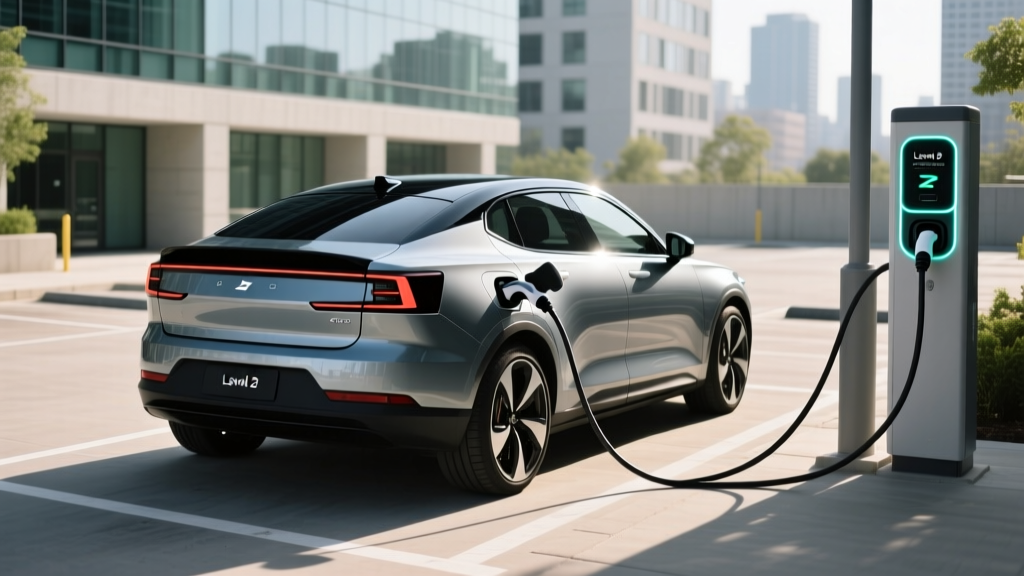
The 2021 Polestar 2 uses the CCS1 (Combined Charging System) connector for DC fast charging. It peaks at 150 kW, but — and this is critical for road-trip planning — that peak is not sustained. The charge curve tapers significantly above 50% state of charge (SoC), and by 80% SoC you're pulling roughly 40–50 kW. This is standard behavior for NMC packs with conservative battery management, but it means the last 20% takes disproportionately long.
For home charging, the 11 kW onboard charger is a genuine advantage. On a 48-amp Level 2 circuit (the most common home installation), you'll see the full 11 kW, adding roughly 30 miles of range per hour. A full overnight charge from 20% takes about 6–7 hours — easily enough for daily use.
Charging-curve reality check: At a 150 kW Electrify America or EVgo station, expect to add roughly 130–140 miles in the first 20 minutes (10–50% SoC), then progressively slower gains. For road trips, the practical strategy is to charge from 10% to 70% (~25 minutes) and move on rather than wait for 80%+.
Connector note for 2026 buyers: The CCS1 connector is still widely supported at public stations, but Tesla's NACS is becoming the North American standard. Polestar has committed to NACS for future models, but the 2021 Polestar 2 will require a CCS-to-NACS adapter to access Tesla Supercharger stalls that support third-party vehicles. Polestar has indicated adapter compatibility, but confirm with your specific VIN before relying on Supercharger access.
Performance and Driving Dynamics
The Dual Motor variant with the optional Performance Pack is the enthusiast's choice: 476 hp, 502 lb-ft of torque, and a 4.2-second 0-60 mph time. The Öhlins dampers and Brembo brakes included in the Performance Pack ($5,000 option in 2021) transform the car's handling — body roll is minimal, and the steering, while electric and slightly numb, is precise. This is a car that rewards on canyon roads in a way most EVs at this price point don't.
The Single Motor (231 hp, 6.8 sec to 60) is less thrilling but perfectly adequate for daily driving. The RWD layout gives it a slightly more natural balance than the AWD Dual Motor, and the efficiency advantage (107 vs. 92 MPGe combined) matters if you're maximizing range.
One-pedal driving: The Polestar 2 offers adjustable regenerative braking with three modes (Off, Low, Standard). The Standard mode provides strong regen that enables near one-pedal driving in city traffic, though it doesn't bring the car to a complete hold at 0 mph like some competitors — you'll still need the brake pedal for final stops.
Interior, Tech, and Cargo Space
The Polestar 2's cabin is where the Volvo DNA shows most clearly. Materials are premium without being ostentatious — the standard textile upholstery (a vegan "WeaveTech" option was available) feels modern and durable. The minimalist center stack is dominated by an 11.15-inch portrait touchscreen running Android Automotive OS with Google Maps, Google Assistant, and the Google Play Store built natively into the car.
This was a differentiator in 2021 and still holds up in 2026. Google Maps navigation with real-time traffic and integrated EV route planning (factoring in charging stops and battery preconditioning) is genuinely useful. Over-the-air updates have added features since launch, including improved range estimation and UI refinements.
Cargo and passenger dimensions:
- Rear cargo (behind rear seats): 14.4 cu ft (liftback design aids loading)
- Cargo (rear seats folded): 38.7 cu ft
- Front trunk (frunk): 1.4 cu ft (small — fits a charging cable bag)
- Front legroom: 42.2 inches
- Rear legroom: 33.8 inches (tight for tall passengers)
- Ground clearance: 5.3 inches
The rear seat is the Polestar 2's most common criticism. The transmission tunnel hump (a CMA platform artifact shared with the Volvo XC40) intrudes on the center-rear footwell, and legroom is noticeably tighter than a Tesla Model 3 (35.2 in rear) or Hyundai Ioniq 5 (39.4 in rear). This is a four-person car, comfortably, and a five-person car only for short trips.
Driver assistance (Pilot Pack): The optional Pilot Pack ($3,400 in 2021) added adaptive cruise control with stop-and-go, lane-centering assist (Pilot Assist), and a 360-degree camera. This is an SAE Level 2 system — it requires continuous driver supervision and does not permit hands-off or eyes-off driving. It works well on highways but is not comparable to GM's Super Cruise or Ford's BlueCruise in terms of hands-free capability on mapped roads.
Pricing, Used Market Value, and Tax Credit Eligibility
| Item | Single Motor LR | Dual Motor LR |
|---|---|---|
| Original MSRP (2021) | $45,900 | $49,900 |
| Typical Used Price (2026, ~40K mi) | $22,000–$27,000 | $25,000–$31,000 |
| Federal Used EV Credit (IRC §25E) | Up to $4,000 (30% of sale price, max $4,000) | |
| Effective Price After Credit | ~$18,000–$23,000 | ~$21,000–$27,000 |
Federal used-EV tax credit (IRC §25E): As a used vehicle, the 2021 Polestar 2 is not eligible for the new-vehicle §30D credit. Instead, it may qualify for the used clean vehicle credit, which provides 30% of the sale price, up to a maximum of $4,000. Key eligibility requirements per the IRS:
- Price cap: Sale price must be $25,000 or less
- Income cap: Modified AGI ≤ $75,000 (single) / $112,500 (head of household) / $150,000 (joint)
- Vehicle age: Must be at least 2 model years old (2021 qualifies in 2026)
- Dealer requirement: Must be purchased from a licensed dealer (private-party sales do not qualify)
- Battery capacity: Must have at least 7 kWh (the Polestar 2's 78 kWh easily qualifies)
- First transfer: The credit applies to the first qualified resale since August 16, 2022
Critical caveat: The $25,000 sale-price cap means many Dual Motor examples priced above $25,000 will not qualify. Single Motor examples in the $22,000–$25,000 range are the sweet spot. Always confirm eligibility with a tax professional before relying on the credit, and ensure the dealer reports the sale to the IRS via the required time-of-sale report.
Battery Health, Warranty, and Long-Term Ownership
The 2021 Polestar 2's battery and powertrain are covered by an 8-year / 100,000-mile warranty, whichever comes first. This warranty guarantees the battery will retain at least 70% of its original capacity during the coverage period. Since these vehicles are now 5 years old, roughly 3 years / ~40,000–60,000 miles of factory battery warranty typically remains for a used buyer — assuming the original in-service date was in 2021.
Degradation data: NMC batteries in the Polestar 2 have shown moderate degradation patterns consistent with similar Volvo/Polestar packs. Owner reports and fleet data suggest approximately 8–12% capacity loss over the first 5 years / 60,000 miles under normal use. Vehicles that were frequently DC fast-charged or regularly charged to 100% and stored in hot climates may show higher degradation. Polestar's battery management system (BMS) maintains a ~3 kWh top and bottom buffer, which helps protect long-term health but reduces the usable capacity to ~75 kWh.
Battery replacement cost: If out of warranty, a full battery pack replacement for the Polestar 2 currently runs $15,000–$20,000 including labor. This is a worst-case scenario and relatively rare, but it's a figure worth knowing for total-cost-of-ownership planning.
Ownership practicalities:
- Insurance: Expect $1,800–$2,500/year depending on state and driving record — EV premiums are typically 15–25% higher than equivalent ICE vehicles due to repair costs.
- Maintenance: Minimal — cabin air filter, brake fluid check, tire rotation. No oil changes, no transmission fluid. Budget ~$300–$500/year.
- Tires: The Polestar 2 is heavy (~4,680 lbs) and torquey. Expect tire replacement every 25,000–35,000 miles. OEM Continental EcoContact 6 Q tires run ~$250–$300 each.
- Service network: Polestar uses Volvo's dealer network for warranty and repair work. Coverage is good in metro areas but sparse in rural regions.
Pros, Cons, and Who Should Buy
- Premium build quality and materials rival Audi/BMW at lower used prices
- Google Automotive OS with native Google Maps remains excellent in 2026
- 11 kW onboard charger enables fast Level 2 home charging
- Dual Motor w/ Performance Pack offers genuine sports-sedan dynamics
- Strong safety ratings (IIHS Top Safety Pick+)
- Eligible for up to $4,000 used-EV federal tax credit
- Liftback design provides practical cargo access
- EPA range of 233 mi trails competitors (Model 3: 358 mi, Ioniq 5: 303 mi)
- No heat pump — significant cold-weather range penalty
- Rear seat is cramped (33.8 in legroom) with a center floor hump
- CCS1 connector requires adapter for Tesla Supercharger access
- 150 kW peak DC charging is slower than newer 800V competitors
- Driver-assist (Pilot Assist) is basic Level 2 — no hands-free capability
- Frunk is tiny (1.4 cu ft) — barely fits a charge cable
- Choose it if: You want a premium, distinctive EV under $25K (after credit) with excellent build quality, strong daily-driver tech (Google Maps), and primarily commute ≤120 miles round-trip with home charging. The Dual Motor Performance Pack variant is ideal for driving enthusiasts who value handling over maximum range.
- Look elsewhere if: You regularly road-trip 300+ miles, need spacious rear seating for family, live in a very cold climate where range loss compounds, or want access to the Tesla Supercharger network without adapter hassle. Consider a used Tesla Model 3 Long Range, Hyundai Ioniq 5, or Chevrolet Bolt EUV instead.
Frequently Asked Questions
What is the real-world range of the 2021 Polestar 2?
The EPA rates the Single Motor at 233 miles and the Dual Motor at 249 miles (base 19" wheels). In real-world highway driving at 70 mph, expect ~195–215 miles. In freezing temperatures, range drops to ~155–180 miles due to the lack of a heat pump and NMC chemistry sensitivity to cold.
How fast does the 2021 Polestar 2 charge?
On DC fast charging (CCS1), it peaks at 150 kW with a 10-80% time of approximately 35 minutes. At home on a Level 2 (240V) charger, the 11 kW onboard charger adds ~30 miles per hour, fully replenishing the battery in about 7.5 hours. Level 1 (120V) trickle charging adds roughly 4 miles per hour — only practical for emergencies or very low-mileage days.
Does the 2021 Polestar 2 qualify for the federal EV tax credit?
Not the new-vehicle §30D credit (that's only for new purchases). However, it may qualify for the used clean vehicle credit (IRC §25E) — up to $4,000 (30% of sale price). The sale price must be ≤$25,000, your income must be under the IRS caps ($75K single / $150K joint), and you must buy from a licensed dealer. Confirm details at irs.gov and with a tax professional.
Is the 2021 Polestar 2 worth buying vs. a used Tesla Model 3?
It depends on priorities. The Model 3 Long Range offers significantly more EPA range (358 mi vs. 233 mi), access to the Supercharger network, and more rear-seat space. The Polestar 2 counters with superior build quality, a more distinctive design, Google-native infotainment, and — critically — a lower used price after the $4,000 tax credit. If range and road-trip convenience are paramount, the Model 3 wins. If premium feel and value matter more for a commuter, the Polestar 2 is compelling.
What are the biggest problems with the 2021 Polestar 2?
The most common owner complaints center on: (1) range falling short of EPA estimates, especially in cold weather; (2) the rear seat being cramped for adults on longer trips; (3) infotainment bugs in early software versions (largely resolved via OTA updates); and (4) limited service-center availability outside major metros. Major mechanical or battery failures have been rare, and NHTSA recalls have been minimal.
Can the 2021 Polestar 2 use Tesla Superchargers?
The 2021 Polestar 2 has a CCS1 charge port. To use Tesla Superchargers (which use NACS connectors), you need a CCS-to-NACS adapter. Polestar has confirmed adapter compatibility for its models, but verify with your VIN. Not all Supercharger stalls support third-party vehicles — check the Tesla app for station compatibility before relying on it for a road trip.
How long will the Polestar 2 battery last?
The battery is warranted for 8 years / 100,000 miles at 70% minimum capacity retention. Real-world data from similar NMC packs suggests 8–12% degradation over the first 5 years. With proper care (avoiding frequent 100% charges, minimizing DC fast charging, and using scheduled charging), the pack should provide 150,000–200,000+ miles before reaching 70% capacity. Full replacement, if needed out of warranty, costs approximately $15,000–$20,000.