The 2021 Nissan Leaf occupies a strange space in the used EV market of 2026. It is simultaneously one of the most affordable ways to get into an electric vehicle and a cautionary tale about how quickly EV technology can age. With two battery options, an aging CHAdeMO charging connector, and passive air-cooled battery management, the Leaf demands a more informed buyer than most modern EVs. This review breaks down exactly what you are getting — and where the compromises bite.
2021 Nissan Leaf Quick Specs at a Glance
| Spec | Leaf S / SV (40 kWh) | Leaf SL Plus (62 kWh) |
|---|---|---|
| EPA Range | 149 miles | 226 miles |
| Battery (usable) | ~39 kWh, NMC | ~60 kWh, NMC |
| Motor Output | 110 kW (147 hp) | 160 kW (214 hp) |
| 0-60 mph | ~7.9 sec | ~6.5 sec |
| Drivetrain | FWD | FWD |
| DC Fast Charge (peak) | ~50 kW (CHAdeMO) | ~100 kW (CHAdeMO) |
| Level 2 Charge Rate | 6.6 kW | 6.6 kW |
| MPGe (combined) | 111 MPGe | 104 MPGe |
| Cargo (rear seats up) | 23.6 cu ft | 23.6 cu ft |
| Cargo (seats folded) | 30.0 cu ft | 30.0 cu ft |
| Original Base MSRP | $32,620 | $44,820 |
Real-World Range: What the EPA Sticker Doesn't Tell You
EPA Estimate: 149 mi (40 kWh) / 226 mi (62 kWh Plus)
Expected Highway (70 mph, mild weather): ~125 mi (40 kWh) / ~190 mi (Plus)
Expected Cold Weather (30°F, mixed driving): ~100-115 mi (40 kWh) / ~155-170 mi (Plus)
The 2021 Leaf's EPA numbers come from Nissan's testing under ideal conditions, but real-world range diverges significantly depending on how and where you drive. The standard 40 kWh Leaf rated at 149 miles EPA is best understood as a 120-130 mile car in temperate city driving. Take it on the highway at sustained 70 mph speeds and the lack of aerodynamic optimization plus the small battery shrinks your practical range to roughly 125 miles before you need to find a charger.
The 62 kWh Leaf Plus is the more versatile choice, with its 226-mile EPA rating translating to a usable 185-200 miles in real-world mixed driving. However, cold weather is the Leaf's particular weakness. Unlike modern EVs with liquid-cooled thermal management and heat pumps, the Leaf uses passive air cooling for its battery pack and a resistive heater for the cabin. In sustained sub-40°F temperatures, expect a 25-35% range reduction. A Plus owner in Minnesota may see only 155 miles of range on a January commute — a critical factor if your daily round trip exceeds 100 miles in winter.
One underappreciated advantage: the Leaf's e-Pedal regenerative braking system is genuinely strong, allowing near one-pedal driving in city traffic. This recovers meaningful energy in stop-and-go conditions and is one area where the Leaf still feels competitive with newer EVs.
Charging: The CHAdeMO Problem
| Charging Level | Power | Connector | Speed (approx.) | Notes |
|---|---|---|---|---|
| Level 1 (120V) | ~1.4 kW | J1772 | ~4 mi/hr | Emergency/trickle only |
| Level 2 (240V) | 6.6 kW | J1772 | ~22 mi/hr | Full charge in ~7 hr (40 kWh) / ~11 hr (62 kWh) |
| DC Fast (40 kWh) | ~50 kW peak | CHAdeMO | 10-80% in ~45 min | Rapidgate-prone in heat |
| DC Fast (62 kWh Plus) | ~100 kW peak | CHAdeMO | 10-80% in ~40 min | Tapers hard above 80% |
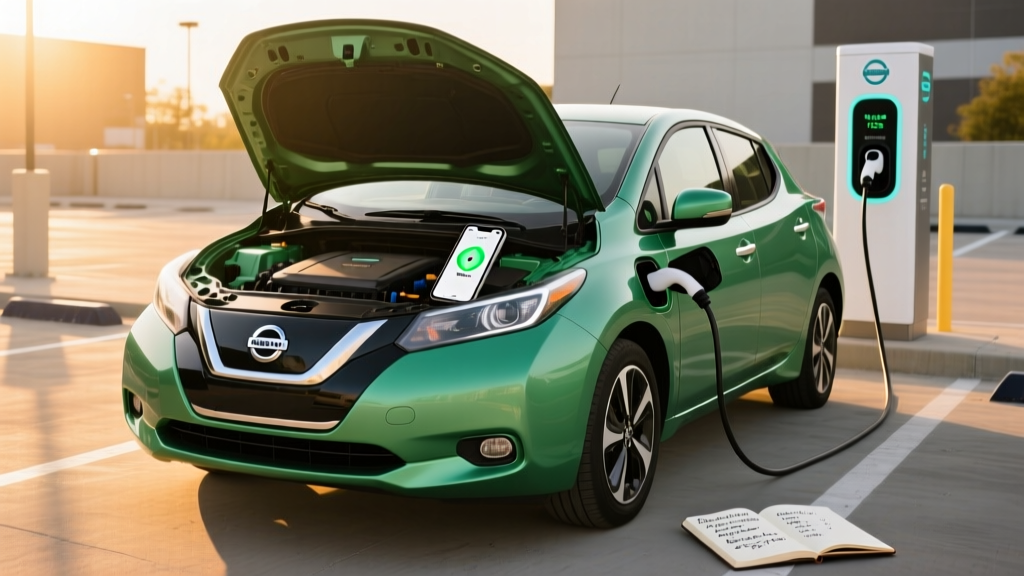
Here is the most important thing to understand before buying a 2021 Leaf in 2026: it uses the CHAdeMO DC fast-charging standard, and CHAdeMO infrastructure in North America has been in steep decline since 2022. Electrify America, the largest US fast-charging network, never supported CHAdeMO. Tesla's Supercharger network — now open to non-Tesla vehicles via the NACS standard — does not support CHAdeMO natively. The networks that do carry CHAdeMO connectors (some EVgo stations, older ChargePoint sites) are shrinking or being retrofitted with CCS/NACS plugs.
This means a Leaf owner's DC fast-charging options are increasingly limited to a dwindling pool of older stations. If your daily driving stays within the battery's range and you can charge at home, this may not matter. But for anyone who envisions road-tripping or who lacks home charging access, the CHAdeMO situation is a deal-breaking limitation that will only worsen over time.
On the technical side, the 40 kWh Leaf's ~50 kW peak charge rate is slow by any modern standard. Even the Plus model's ~100 kW peak is undercut by the Leaf's aggressive charge-curve taper: after 80% State of Charge, speeds drop precipitously, making the final 20% painfully slow. And because the battery is passively cooled, repeated fast-charging sessions in hot weather trigger Nissan's infamous "Rapidgate" — the car's battery management system severely throttles charge speed to protect the cells from overheating. On a summer road trip, your second DC fast charge of the day may peak at half the rated speed.
Level 2 home charging at 6.6 kW is adequate for overnight replenishment. A standard 240V/30A home charger (like a ChargePoint Home Flex or Emporia Vue) will fully recharge the 40 kWh model in about 7 hours and the 62 kWh Plus in roughly 11 hours. Installation costs for a Level 2 home station typically run $500-$2,000 depending on whether your electrical panel needs an upgrade — consult a licensed electrician for a site-specific quote.
Performance and Driving Dynamics
The standard Leaf's 147 horsepower and 236 lb-ft of instant torque make it perfectly adequate for city driving and suburban commuting. The 0-60 mph time of roughly 7.9 seconds won't thrill anyone, but the immediate torque delivery gives it a punchy feel around town that its spec sheet undersells. The Leaf Plus bumps output to 214 hp and 250 lb-ft, dropping the 0-60 time to approximately 6.5 seconds — genuinely quick for a compact hatchback.
Ride quality is comfortable, with a soft suspension tuned for compliance over sportiness. The low center of gravity from the under-floor battery pack keeps body roll reasonable, but the Leaf is not a car you buy for driving excitement. Steering is light and numb, and the Michelin Energy Saver tires prioritize efficiency over grip.
One notable mechanical quirk: the Leaf uses a conventional hydraulic brake system blended with regenerative braking rather than the fully integrated brake-by-wire systems found in newer EVs. The transition between regen and friction braking is generally smooth, but the pedal feel is somewhat vague compared to a Tesla Model 3 or Hyundai Ioniq 5.
Interior, Tech, and Practicality
Inside, the 2021 Leaf feels like a product from a different era — because it largely is. The dashboard architecture dates to the Leaf's 2018 redesign, and the materials, while durable, are hard-plastic heavy. The 8-inch touchscreen infotainment system (standard on SV and SL trims) supports Apple CarPlay and Android Auto, which largely rescues the user experience by letting your phone handle navigation and media.
Nissan's ProPILOT Assist is available on the SV and standard on the SL trim. This is a SAE Level 2 driver-assistance system combining adaptive cruise control and lane-centering. It works adequately on well-marked highways but requires constant driver supervision — hands must remain on the wheel, and the system can be confused by faded lane markings or construction zones. It is not autonomous driving and should not be treated as such.
Practical dimensions:
- Front headroom: 41.2 inches
- Front legroom: 42.1 inches
- Rear headroom: 37.3 inches
- Rear legroom: 33.5 inches
- Cargo behind rear seats: 23.6 cu ft
- Cargo with seats folded: 30.0 cu ft
The rear seat is tighter than competitors like the Chevrolet Bolt EUV or Volkswagen ID.4, and there is no front trunk (frunk) — the space under the hood houses conventional drivetrain components. The 23.6 cu ft cargo area is generous for a hatchback, but the 30.0 cu ft maximum with seats folded trails most modern electric crossovers significantly.
Pricing, Tax Credits, and Used-EV Value
The 2021 Leaf is no longer available new, so the relevant question in 2026 is used-market pricing and whether it qualifies for the federal used-EV tax credit under IRS §25E. Here is how the numbers break down:
| Trim | Original MSRP | Est. Used Price (2026) | §25E Used Credit (30%, max $4,000) | Effective Cost |
|---|---|---|---|---|
| S (40 kWh) | $32,620 | $10,000-$13,000 | Up to $3,000-$3,900* | ~$6,100-$9,100 |
| SV (40 kWh) | $35,220 | $11,500-$15,000 | Up to $3,450-$4,000* | ~$7,500-$11,000 |
| SL Plus (62 kWh) | $44,820 | $15,000-$19,000 | Up to $4,000* | ~$11,000-$15,000 |
*The §25E used clean vehicle credit equals 30% of the sale price, capped at $4,000. The vehicle must be purchased from a licensed dealer for $25,000 or less. Buyer income caps apply: $75,000 single / $112,500 head of household / $150,000 joint filers (modified AGI). The vehicle must be at least two model years old, which the 2021 Leaf qualifies for in 2026. Verify eligibility with a tax professional and the IRS §25E guidelines before purchasing.
At an effective cost of $6,000-$15,000 after the used credit, the Leaf becomes one of the cheapest ways to access EV ownership in 2026. The key caveat is that you are buying into a declining charging ecosystem and an older-generation battery with known degradation tendencies.
Battery Health, Degradation, and Warranty
The Leaf's battery is its most scrutinized component, and for good reason. Nissan uses NMC (nickel manganese cobalt) lithium-ion cells with passive air cooling — no liquid thermal management. This design choice, carried over from the original 2011 Leaf, makes the battery more susceptible to heat-related degradation, particularly in hot climates or with frequent DC fast charging.
Based on long-term fleet data and owner reports, a 2021 Leaf with 50,000-70,000 miles in 2026 may have lost 8-15% of its original capacity depending on climate and charging habits. Hot-climate cars (Arizona, Texas, Florida) that were frequently fast-charged tend toward the higher end of that range. The Leaf's dashboard displays battery health as a series of bars (out of 12) — always check this before purchasing used, and consider a third-party OBD-II battery health report for confirmation.
Nissan's original battery warranty covers 8 years / 100,000 miles against defects and excessive capacity loss (defined as dropping below 9 bars out of 12 on the capacity gauge). For a 2021 model, this warranty remains active through the 2029 model year or 100,000 miles, whichever comes first. If the battery drops below 9 bars within that window, Nissan is obligated to repair or replace it — though replacement batteries are expensive out of warranty, typically costing $6,500-$9,000 installed.
Pros, Cons, and the Verdict
- Among the cheapest used EVs available, especially after §25E credit
- Comfortable ride and strong low-speed regenerative braking
- ProPILOT Assist is competent Level 2 highway assistance
- Hatchback practicality with 23.6 cu ft cargo area
- Leaf Plus offers a genuinely usable 226-mile EPA range
- Apple CarPlay / Android Auto standard on SV and above
- CHAdeMO connector — shrinking DC fast-charge network access
- Passive air-cooled battery prone to heat degradation and Rapidgate
- Significant cold-weather range loss (25-35%) with no heat pump
- Dated interior materials and infotainment architecture
- No frunk; rear seat tighter than modern EV competitors
- 50 kW DC fast charging (40 kWh model) is painfully slow
Who Should Buy the 2021 Leaf?
Buy the 2021 Leaf if: You need an affordable commuter EV for a daily round trip under 80 miles (40 kWh) or 130 miles (Plus), you have reliable home Level 2 charging, you live in a moderate climate, and you do not plan to take frequent road trips. The Leaf excels as a second car or dedicated city/suburban runabout where its low purchase cost and cheap home-charging economics dominate.
Look elsewhere if: You lack home charging, you live in an extreme-heat or extreme-cold climate, you regularly drive more than 150 miles in a day, or you want the flexibility to DC fast-charge on a growing national network. A used Chevrolet Bolt EV/EUV (CCS connector, liquid-cooled battery, similar price) or a slightly pricier used Tesla Model 3 (NACS, Supercharger access) will serve those use cases far better.
Frequently Asked Questions
What is the real-world range of the 2021 Nissan Leaf?
Expect roughly 120-130 miles from the 40 kWh model and 185-200 miles from the 62 kWh Plus in moderate weather mixed driving. Highway driving at 70+ mph reduces these figures by 10-15%, and cold weather (below 40°F) can cut range by 25-35% due to the resistive cabin heater and lack of battery thermal management.
How fast does the 2021 Leaf charge at home and on DC fast chargers?
At home on a Level 2 (240V) charger, the Leaf charges at 6.6 kW, adding roughly 22 miles of range per hour. A full charge takes about 7 hours for the 40 kWh model and 11 hours for the 62 kWh Plus. DC fast charging peaks at ~50 kW (40 kWh) or ~100 kW (Plus) via the CHAdeMO connector, with 10-80% taking approximately 40-45 minutes — but real-world speeds are often lower due to Rapidgate thermal throttling and the shrinking CHAdeMO station network.
Does the 2021 Nissan Leaf qualify for a federal tax credit?
As a used vehicle in 2026, the 2021 Leaf can qualify for the IRS §25E used clean vehicle credit — up to 30% of the purchase price, capped at $4,000. Requirements include buying from a licensed dealer for $25,000 or less, and buyer income must not exceed $75,000 (single) / $150,000 (joint). It does not qualify for the §30D new-vehicle credit since it is no longer sold new. Consult a tax professional and review IRS §25E rules for your specific situation.
Is the 2021 Leaf worth buying over a used Chevy Bolt or Tesla Model 3?
It depends entirely on your use case and budget. The Leaf's advantage is rock-bottom entry pricing — a base S trim can fall below $7,000 after the used credit. But the Bolt EV/EUV offers a CCS connector (widespread DC charging), a liquid-cooled battery (better longevity), and comparable range at a slightly higher price. A used Model 3 costs significantly more but unlocks the Supercharger network and superior range, tech, and performance. If budget is the sole priority and you charge at home, the Leaf is defensible. For everything else, the Bolt or Model 3 are stronger long-term choices.
How long will the 2021 Leaf battery last?
Based on degradation trends, a well-maintained 2021 Leaf battery should retain 75-85% of its original capacity at 100,000 miles. Hot-climate and frequently fast-charged batteries degrade faster. Nissan's 8-year/100,000-mile battery warranty covers the 2021 model through 2029. Out-of-warranty battery replacement costs $6,500-$9,000, which can approach or exceed the vehicle's value — making pre-purchase battery health assessment essential.