Quick Verdict: Is the 2021 Kia Niro EV Still Worth It in 2026?
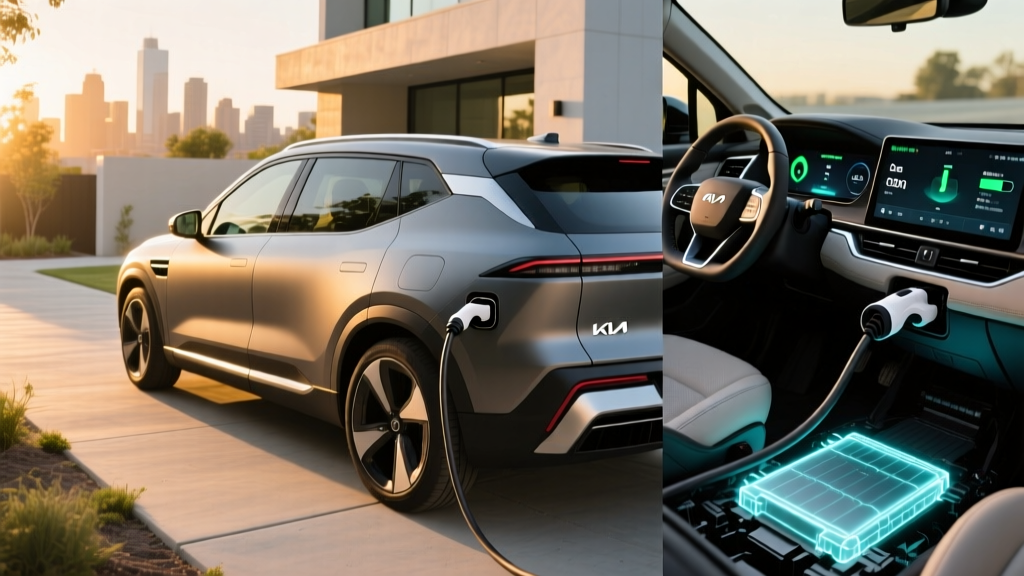
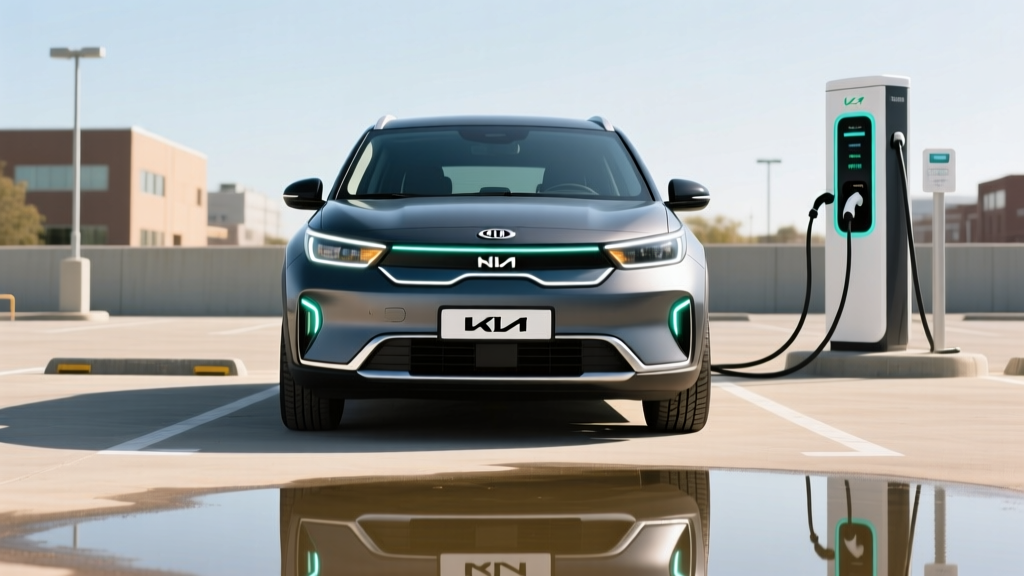
The 2021 Kia Niro EV delivers an EPA-estimated 239 miles of range from a 64 kWh lithium-ion polymer battery, peaks at 77 kW DC fast charging (10–80% in roughly 45–50 minutes), and produces 201 hp with a 0–60 mph time around 7.5 seconds. On the used market in 2026, expect to pay $16,000–$23,000 depending on mileage and condition. It qualifies for the up-to-$4,000 used-EV federal tax credit (IRS §25E) if you meet income and dealer requirements. It remains a practical, efficient commuter EV — but its relatively slow DC charging and CHAdeMO connector are meaningful drawbacks compared to newer models with NACS or CCS ports.
2021 Kia Niro EV: Core Specs at a Glance
| Spec | Value |
|---|---|
| EPA Range | 239 miles |
| Battery Capacity | 64 kWh (usable ~60 kWh) |
| Battery Chemistry | Lithium-ion polymer (NMC) |
| Motor Output | 201 hp / 291 lb-ft torque |
| 0–60 mph | ~7.5 seconds |
| EPA Efficiency | 112 MPGe combined (30 kWh/100 mi) |
| DC Fast Charge (Peak) | 77 kW (CHAdeMO) |
| DC 10–80% Time | ~45–50 minutes |
| Level 2 AC Charge | 7.2 kW onboard charger (~9.5 hrs 0–100%) |
| Connector | CHAdeMO (DC) / J1772 (AC) |
| Cargo Volume | 18.5 cu ft (rear seats up) / 53.0 cu ft (folded) |
| Battery Warranty (Original) | 10 years / 100,000 miles |
| Original MSRP (EX / EX Premium) | $39,990 / $44,990 (before incentives) |
| Used Price Range (2026) | $16,000–$23,000 |
Sources: fueleconomy.gov, Kia America specifications.
Real-World Range vs. EPA Sticker
The EPA rates the 2021 Niro EV at 239 miles. In real-world driving, expect:
- Mild weather, city/suburban mix: 230–250 miles (regen braking shines in stop-and-go)
- Highway cruising at 70–75 mph: 190–210 miles (aerodynamic drag reduces efficiency to ~33–35 kWh/100 mi)
- Cold weather (below 32°F): 160–190 miles (the Niro EV lacks a heat pump in most US trims, relying on resistive cabin heating that draws significant battery energy)
The Niro EV's efficiency of 30 kWh/100 mi combined is strong for its era, but cold-weather range loss of 20–30% is a real consideration for buyers in northern climates. Preconditioning the battery while plugged in helps mitigate this — schedule your departure time via the UVO app to warm the cabin using grid power rather than battery energy.
Charging: The CHAdeMO Challenge in 2026
The 2021 Niro EV uses the CHAdeMO connector for DC fast charging. This is the single biggest ownership consideration for used buyers in 2026.
| Charging Level | Power | Speed (Approx.) | Use Case |
|---|---|---|---|
| Level 1 (120V) | 1.2 kW | ~4 miles/hour | Emergency/overnight trickle |
| Level 2 (240V, 32A) | 7.2 kW | ~24 miles/hour | Home daily charging, full charge in ~9.5 hrs |
| DC Fast (CHAdeMO) | 77 kW peak | ~150 miles in 45 min | Road trips; taper significant above 80% |
The CHAdeMO problem: The North American charging infrastructure has decisively shifted toward CCS1 and, increasingly, NACS (Tesla's connector, now adopted by Ford, GM, Rivian, Hyundai, and others). CHAdeMO stalls are becoming scarce at Electrify America, EVgo, and ChargePoint stations. Many newer installations omit CHAdeMO entirely. In practice, this means:
- Fewer available fast-charger stalls on road trips
- Longer waits if the single CHAdeMO plug at a station is occupied
- Potentially unreliable hardware at aging CHAdeMO-only stations
At 77 kW peak, the Niro EV's charging speed was middling in 2021 and feels slow by 2026 standards. Expect the charge curve to sustain roughly 60–77 kW from 10–50% SoC, then taper to 40–50 kW through 65%, and drop sharply above 80%. A 10–80% session typically takes 45–50 minutes on a 150+ kW CHAdeMO-capable station — assuming you can find one.
For daily driving, most owners will rely on Level 2 home charging, which fully replenishes the 64 kWh battery overnight. If you have reliable home or workplace Level 2 access, the CHAdeMO limitation matters far less for daily commuting.
Cost Breakdown: Purchase, Charging, and Ownership
| Cost Factor | 2021 Niro EV (Used) | 2021 Niro Gas (FE Trim) | 2021 Niro PHEV |
|---|---|---|---|
| Used Purchase Price (2026) | $16,000–$23,000 | $17,000–$21,000 | $19,000–$25,000 |
| Federal Tax Credit | Up to $4,000 (§25E used-EV credit) | $0 | $0 (used PHEVs eligible for up to $4,000 if ≥4 kWh battery) |
| Fuel/Energy Cost per Mile | ~$0.04–$0.05 (home charging at $0.14/kWh) | ~$0.11 (at $3.30/gal, 50 MPG combined) | ~$0.07 blended |
| Annual Fuel/Energy (12,000 mi) | $480–$600 | $790–$850 | $550–$700 |
| Annual Maintenance | ~$200–$300 (no oil, fewer fluids) | ~$500–$700 (oil, filters, plugs) | ~$450–$600 |
| Insurance (Annual Avg) | ~$1,400–$1,800 | ~$1,200–$1,500 | ~$1,300–$1,600 |
| 5-Year Total Fuel + Maintenance | ~$3,400–$4,500 | ~$6,450–$7,750 | ~$5,000–$6,500 |
Key takeaways:
- Energy savings are real: At national average electricity rates (~$0.14/kWh), the Niro EV costs roughly $0.04–$0.05 per mile to fuel at home — about half the cost of the gas Niro. Over 5 years and 60,000 miles, that's $1,800–$2,200 in fuel savings versus the gas version.
- Maintenance savings add up: No oil changes, no spark plugs, no transmission fluid, and regenerative braking extends pad life. Budget roughly $250/year for cabin air filters, wiper fluid, tire rotations, and brake fluid checks.
- Insurance runs 10–20% higher than the gas Niro — a common EV pattern. Get quotes before purchasing.
- The §25E used-EV credit (up to $4,000 or 30% of sale price, whichever is less) can significantly reduce the effective purchase price. Per IRS rules, you must buy from a licensed dealer, meet income caps ($75,000 single / $150,000 joint AGI), and the vehicle must have a sale price of $25,000 or less. The credit is non-refundable and applies once per taxpayer every three years.
Battery Health: What to Check Before Buying Used
The 2021 Niro EV's 64 kWh NMC battery pack carries Kia's original 10-year/100,000-mile warranty against defects and capacity loss below 70%. In 2026, a 2021 model is five years old — meaning roughly five years of battery warranty remains (assuming under 100K miles).
Common Misconceptions About Used EV Batteries
| Myth | Fact |
|---|---|
| "Used EV batteries are a ticking time bomb" | NMC batteries in liquid-cooled packs like the Niro's typically lose 8–15% capacity over 5 years. Most 2021 Niros should still be at 85–92% State of Health (SoH) with normal use. |
| "The battery warranty doesn't transfer to second owners" | Kia's 10-year/100,000-mile battery warranty transfers to subsequent owners on the Niro EV. Verify with a Kia dealer using the VIN. |
| "I need to replace the battery soon and it costs $20,000" | Out-of-warranty replacement for the Niro EV battery runs $8,000–$14,000 at a dealer. But most packs last well beyond 150,000 miles before hitting the 70% threshold. Catastrophic failure is rare. |
| "Fast charging destroys the battery" | The Niro's thermal management system moderates charge rates. Occasional DC fast charging has minimal impact. Consistent daily fast charging may accelerate degradation by 1–3% over several years, but it's not a dealbreaker. |
Pre-purchase checklist:
- Check State of Health (SoH): Ask the seller or a Kia dealer to pull the battery diagnostics. Look for SoH above 88% at this age.
- Verify warranty status: Confirm the in-service date and current mileage against the 10-year/100,000-mile battery coverage.
- Inspect charging port: CHAdeMO ports should be clean, with no corrosion or loose pins. Test both Level 2 and DC charging during your test drive.
- Check for recall campaigns: Kia issued recalls for certain Niro EVs related to the high-voltage battery contactor and onboard charger. Verify all recalls were completed via NHTSA's recall lookup.
How the 2021 Niro EV Compares: EV vs Gas vs Hybrid
| Attribute | 2021 Niro EV | 2021 Niro Gas (HEV) | 2021 Niro PHEV |
|---|---|---|---|
| Powertrain | 201 hp electric motor | 139 hp (1.6L + electric motor) | 161 hp (1.6L + electric motor) |
| EPA Range / MPG | 239 mi / 112 MPGe | 50 MPG combined | 26 mi electric + 46 MPG gas |
| 0–60 mph | ~7.5 sec | ~9.5 sec | ~8.5 sec |
| Refuel/Recharge Time | 9.5 hrs (L2) / 45 min (DC) | 3 minutes (gas station) | 2.5 hrs (L2) + 3 min (gas) |
| Home Refueling Possible? | Yes (Level 2) | No | Yes (Level 2 for electric portion) |
| Cargo Space | 18.5 cu ft | 22.7 cu ft | 19.4 cu ft |
| Driving Feel | Instant torque, smooth, quiet | Adequate, DCT shifts noticeable | EV mode is smooth; gas engine adds noise |
The Niro EV sacrifices some cargo space (the battery pack sits under the floor, raising it slightly) and road-trip convenience (CHAdeMO charging) in exchange for dramatically lower running costs and a more refined driving experience. The gas HEV still wins for buyers who regularly drive long distances in areas with sparse charging infrastructure, or who cannot charge at home.
Decision Framework: Should You Buy a Used 2021 Niro EV?
Choose the 2021 Niro EV If:
- You have reliable Level 2 home or workplace charging — this eliminates the CHAdeMO issue for daily use
- Your daily commute is under 100 miles round-trip (well within the 239-mile range, even with cold-weather loss)
- You want the lowest per-mile operating cost of any Niro variant
- You can capture the up-to-$4,000 used-EV federal credit (income ≤ $75K single / $150K joint, dealer purchase ≤ $25K)
- You value instant torque and a quiet, vibration-free commute
- You find one priced at $18,000 or below with SoH above 88%
Look Elsewhere If:
- You cannot charge at home and must rely on public fast charging — CHAdeMO availability is declining
- You regularly take road trips exceeding 200 miles between stops and need fast, reliable DC charging (consider a used Hyundai Kona Electric, Chevy Bolt EUV, or Tesla Model 3 with NACS/Supercharger access)
- You live in a very cold climate and need maximum range — the lack of a heat pump means significant winter range loss
- You need maximum cargo space — the gas Niro HEV offers 4+ extra cubic feet
- You want the latest ADAS tech — the 2021 Niro's Highway Driving Assist is functional but generations behind current systems
Frequently Asked Questions
Does the 2021 Kia Niro EV qualify for any tax credit in 2026?
Not the original §30D new-vehicle credit — that expired for this model year. However, it can qualify for the §25E used clean vehicle credit: up to $4,000 or 30% of the sale price (whichever is less). Requirements per IRS guidelines include purchasing from a licensed dealer for $25,000 or less, and meeting adjusted gross income limits ($75,000 single, $112,500 head of household, $150,000 joint). The credit is non-refundable — you must have tax liability to claim it. Consult a tax professional for your specific situation.
How long does the 2021 Niro EV battery last?
Based on degradation data from NMC packs of this generation, expect 85–92% State of Health at 5 years old with normal use. Kia warranties the battery against dropping below 70% capacity for 10 years or 100,000 miles. Realistically, most packs retain usable capacity well beyond 150,000 miles. The key factor is whether the vehicle was regularly DC fast-charged in extreme heat — ask for charging history if possible.
Can I charge the Niro EV at Tesla Superchargers?
No. The 2021 Niro EV uses CHAdeMO for DC fast charging and J1772 for Level 2. Tesla Superchargers use NACS. There is no commercially available, reliable CHAdeMO-to-NACS adapter as of 2026. You're limited to Electrify America, EVgo, ChargePoint, and other networks with CHAdeMO-equipped stalls — and that pool is shrinking.
What's the real-world highway range?
Expect approximately 190–210 miles at sustained highway speeds of 70–75 mph in moderate temperatures. The Niro EV's boxy crossover profile creates more aerodynamic drag than a sedan like the Tesla Model 3 or Hyundai Ioniq, reducing efficiency at speed. In winter highway driving, plan for 160–180 miles.
Is the 2021 Niro EV safe?
The Niro EV earned a Top Safety Pick rating from IIHS with Good ratings in all crashworthiness tests. Standard safety features include forward collision-avoidance assist, lane-keeping assist, blind-spot monitoring, and rear cross-traffic alert. It lacks some newer features like a comprehensive hands-free highway system, but its core active safety suite is solid for the model year.
How much does home charging installation cost?
A Level 2 home charger (240V, 32–40A) installation typically costs $500–$2,000 total: $300–$600 for the charger unit (e.g., ChargePoint Home Flex, Emporia Level 2) and $200–$1,400 for electrician labor, depending on panel proximity and whether your electrical panel needs an upgrade (a 200-amp panel upgrade adds $1,500–$3,000). Always get a quote from a licensed electrician before committing to a used EV purchase.