Quick Verdict: A Compact EV That Still Punches Above Its Weight
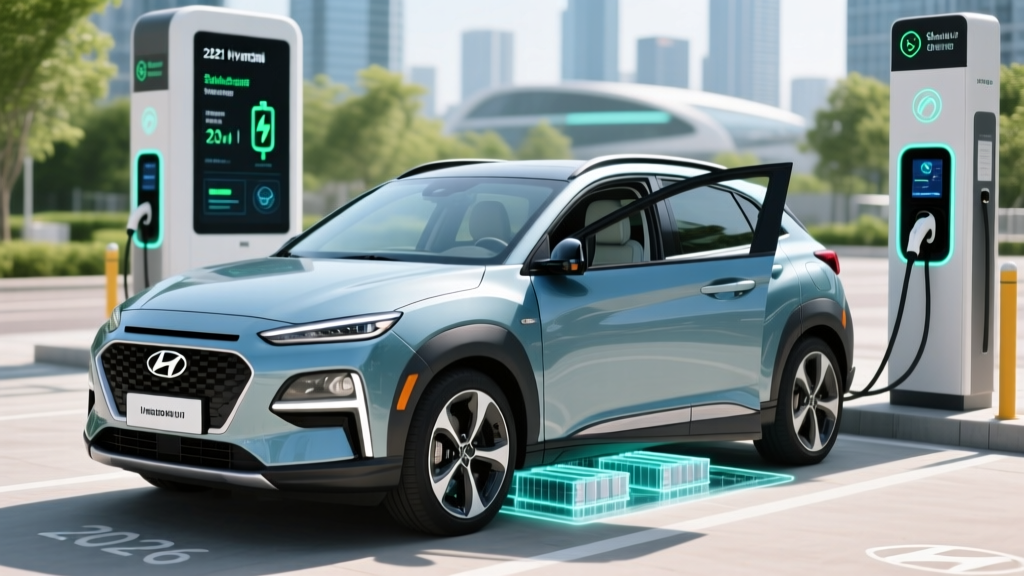
The 2021 Hyundai Kona Electric arrived as one of the most efficient and longest-range subcompact EVs on the market. With an EPA-estimated 258 miles of range, a 64 kWh NMC battery, and peppy 201-hp acceleration, it carved out a loyal following among urban commuters and cost-conscious EV adopters. Now in 2026, the Kona Electric has been redesigned with a larger platform, but the 2021 model remains a compelling option on the used EV market — especially if you can capture the IRS §25E used-EV tax credit of up to $4,000.
This review covers everything a prospective buyer or current owner needs: real-world range expectations, DC fast-charging realities, home charging setup, the NMC battery's longevity profile, and how the 2021 Kona Electric stacks up against competitors like the Chevrolet Bolt EV and Nissan Leaf Plus.
Range, Efficiency, and the Real-World Reality Check
The EPA rates the 2021 Hyundai Kona Electric at 258 miles of combined range on its 64 kWh usable battery pack. That figure placed it among the top-tier compact EVs of its model year, trailing only the Tesla Model 3 and Chevrolet Bolt EV in the sub-$40K segment.
EPA combined: 258 miles
Highway driving (70-75 mph, warm weather): expect 215–235 miles
City/regenerative-heavy driving: 250–270 miles (regen recovers energy in stop-and-go)
Cold weather (below 32°F): 175–210 miles depending on cabin heating use and preconditioning
The Kona Electric lacks a heat pump, relying on resistive PTC heating. This means winter range loss is more pronounced than in EVs equipped with heat-pump HVAC systems. Preconditioning the cabin while still plugged in at home is essential to preserving range in cold climates.
Efficiency is where the Kona Electric truly shines. The EPA rates it at 120 MPGe combined (city: 134 MPGe, highway: 106 MPGe), translating to roughly 28 kWh per 100 miles. That's one of the lowest energy-consumption figures of any EV sold in the United States, rivaling the Tesla Model 3 RWD and beating the Chevrolet Bolt EV's 118 MPGe. In practical terms, that efficiency means lower charging costs whether you're plugging in at home or paying for public DC fast charging.
| Spec | Value |
|---|---|
| EPA Range | 258 miles |
| Battery (usable) | 64 kWh, NMC (nickel-manganese-cobalt) |
| Efficiency | 120 MPGe combined / 28 kWh/100 mi |
| Motor Output | 201 hp / 290 lb-ft torque |
| Drivetrain | FWD (front-wheel drive, single motor) |
| 0–60 mph | 6.4 seconds |
| Max DC Fast Charge | ~100 kW peak (CCS1) |
| 10–80% DC Charge | ~47 minutes |
| Level 2 Charge Rate | 7.2 kW onboard charger |
| Cargo Volume | 19.2 cu ft (rear seats up) / 45.8 cu ft (folded) |
| Original Base MSRP | $37,400 (SEL) – $44,550 (Ultimate) |
| Battery Warranty | 8 years / 100,000 miles (10/100k in CA ZEV states) |
Charging Speed: DC Fast, Level 2, and What to Expect
Charging is where the 2021 Kona Electric shows its age compared to newer 800V-platform EVs like Hyundai's own Ioniq 5. The Kona Electric uses a 400V architecture with a CCS1 connector and peaks at approximately 100 kW on a DC fast charger — but only in ideal battery-temperature conditions and only in the lower state-of-charge (SoC) window.
| Level | Power | Speed | Notes |
|---|---|---|---|
| Level 1 (120V) | ~1.2 kW | ~4 mi/hr | Emergency/top-up only; full charge in ~54 hours |
| Level 2 (240V, 32A) | 7.2 kW | ~25 mi/hr | Full 0–100% in ~9 hours; ideal overnight charge |
| DC Fast (CCS1) | Peak ~100 kW | 10–80% in ~47 min | Tapers significantly above 80% SoC; preconditioning helps |
The charge curve matters. The Kona Electric holds roughly 70–75 kW between 10% and 50% SoC, then tapers to 50–55 kW through 70%, and drops below 30 kW past 80%. This means a 10–80% session takes approximately 47 minutes on a 150 kW or faster station, but charging from 80–100% can add another 30+ minutes. For road trips, plan your stops around 10–80% increments to minimize time at the charger.
The Kona Electric does not support battery preconditioning for DC fast charging — a notable omission. In cold weather, this means your first fast-charge stop of a road trip will be slower than the peak rate because the battery hasn't been warmed to optimal temperature. Plan for 55–65 minute stops in winter instead of the advertised 47.
Performance and Driving Dynamics
The 2021 Kona Electric's single front-mounted permanent-magnet synchronous motor delivers 201 horsepower and 290 lb-ft of instant torque. That's enough for a 0–60 mph time of 6.4 seconds — genuinely quick for a subcompact crossover and quicker than most gas-powered competitors in the segment.
Acceleration from a stop is where the Kona Electric feels most energetic. The instant torque delivery makes it a confident city car, merging onto highways and pulling away from lights with ease. The FWD-only layout means torque steer can surface under hard acceleration on wet roads, but in normal driving the powertrain feels well-managed.
Handling is competent rather than sporty. The battery pack's low center of gravity gives it better body control than the gas Kona, but the steering is numb and the ride quality firm over rough pavement. This is an EV optimized for efficiency and daily commuting, not canyon carving. Regenerative braking offers four levels adjustable via steering-wheel paddles, including a "Level 3" mode that enables near one-pedal driving in city traffic — though it won't bring the car to a complete stop without touching the brake pedal.
Interior, Cargo, and Technology
The cabin of the 2021 Kona Electric is well-built for its price point, with soft-touch materials on the dashboard and a distinctive shift-by-wire center console that replaces the traditional gear lever with buttons. The raised floor to accommodate the battery pack slightly compromises rear-seat legroom compared to the gas Kona, but front-seat comfort is excellent.
Key dimensions:
- Front headroom: 39.6 inches
- Front legroom: 41.5 inches
- Rear legroom: 34.6 inches (tight for taller passengers on longer trips)
- Cargo behind rear seats: 19.2 cu ft
- Cargo with rear seats folded: 45.8 cu ft
- No front trunk (frunk) — the motor and electronics fill the space under the hood
Infotainment: The SEL and Limited trims feature an 8-inch touchscreen with wireless Apple CarPlay and Android Auto. The Ultimate trim upgrades to a 10.25-inch widescreen display with built-in navigation and a 7-inch digital instrument cluster. All trims include a dedicated EV menu showing real-time energy flow, charging station locators, and battery state of health data.
Driver assistance (Hyundai SmartSense): Every 2021 Kona Electric includes forward collision-avoid assist with pedestrian detection, lane-keeping assist, blind-spot monitoring, rear cross-traffic collision warning, and driver attention warning. The Limited and Ultimate trims add adaptive cruise control with stop-and-go functionality and highway driving assist. Note: these are SAE Level 2 driver-assistance systems — the driver must remain fully engaged at all times.
Pricing, Trims, and Tax Credit Eligibility in 2026
The 2021 Hyundai Kona Electric was offered in four trims when new. Original MSRP figures (before destination) were:
- SEL: $37,400
- SEL Convenience: $39,400
- Limited: $41,550
- Ultimate: $44,550
As of 2026, used-market pricing for a 2021 Kona Electric typically ranges from $18,000 to $28,000 depending on mileage, condition, and trim level. The SEL Convenience and Limited trims represent the strongest value, offering the most useful tech without the Ultimate's premium that's hard to recoup in a five-year-old vehicle.
If you purchase a 2021 Kona Electric from a licensed dealer in 2026, you may qualify for the IRS §25E used clean vehicle credit. Key requirements:
- Sale price must be $25,000 or less
- Buyer AGI must not exceed: $75,000 (single), $112,500 (head of household), $150,000 (joint)
- Credit equals 30% of the sale price, capped at $4,000
- Vehicle must be at least 2 model years old (2021 qualifies)
- Must purchase from a licensed dealer (private-party sales excluded)
- Credit is non-refundable — you must have sufficient tax liability to claim it
Note: The §30D new-vehicle credit does NOT apply to 2021 Kona Electric purchases in 2026 since the vehicle is no longer sold new. Check IRS.gov §25E for current rules, as incentive programs can change. Consult a tax professional for your specific situation.
Battery Longevity, Warranty, and Ownership Costs
The 2021 Kona Electric uses a 64 kWh NMC (nickel-manganese-cobalt) lithium-ion battery pack supplied by LG Energy Solution. NMC chemistry offers high energy density — which is how Hyundai achieved 258 miles in a compact platform — but it requires more careful charging management than LFP (lithium iron phosphate) chemistries found in some newer EVs.
Battery care best practices for NMC:
- Daily charging target: 80% SoC (use the built-in charge-limit setting)
- Avoid frequent DC fast charging when Level 2 is available
- Don't leave the vehicle sitting at 100% SoC for extended periods
- Precondition the battery before fast charging in cold weather (drive 15–20 minutes first)
Hyundai backs the battery with an 8-year / 100,000-mile warranty (10 years / 100,000 miles in California and other states that follow CARB ZEV rules). The warranty covers capacity loss below 70% of original capacity. For a 2021 model, that factory warranty remains in effect through the 2029 model year or until 100,000 miles — a significant advantage for used buyers. Independent data from EV fleet tracking suggests NMC packs of this generation typically retain 88–92% capacity after 5 years / 60,000 miles under normal use, well above the warranty threshold.
The powertrain (motor, reduction gear, inverter) is also covered for 8 years / 100,000 miles. The remainder of the original 5-year / 60,000-mile new-vehicle warranty has expired on all 2021 models unless covered by a certified pre-owned (CPO) extension.
How It Compares: Kona Electric vs. the Competition
| Spec | Hyundai Kona Electric | Chevrolet Bolt EV | Nissan Leaf Plus |
|---|---|---|---|
| EPA Range | 258 mi | 259 mi | 226 mi |
| Battery | 64 kWh NMC | 65 kWh NMC | 62 kWh NMC |
| MPGe (combined) | 120 | 118 | 108 |
| DC Fast Charge Peak | ~100 kW | ~55 kW | ~100 kW (CHAdeMO) |
| 10–80% DC Time | ~47 min | ~64 min | ~45 min |
| 0–60 mph | 6.4 sec | 6.5 sec | 6.9 sec |
| Connector | CCS1 | CCS1 | CHAdeMO |
| Cargo (seats up) | 19.2 cu ft | 16.9 cu ft | 23.6 cu ft |
| Battery Warranty | 8 yr / 100k mi | 8 yr / 100k mi | 8 yr / 100k mi |
- Maximum efficiency (120 MPGe) is your priority
- You want CCS1 fast-charging compatibility at ~100 kW
- You value Hyundai's SmartSense safety suite as standard
- You want a remaining factory battery warranty through 2029
- You need maximum cargo space (Leaf Plus offers 23.6 cu ft)
- You regularly drive in extreme cold without garage parking (no heat pump)
- You want the latest 800V fast-charging speeds (consider a used Ioniq 5)
- You need AWD for snow-belt commutes (Kona Electric is FWD only)
Pros, Cons, and Final Assessment
- Class-leading 120 MPGe efficiency keeps charging costs low
- 258-mile EPA range covers most commutes and day trips comfortably
- Peppy 6.4-second 0–60 with instant electric torque
- Standard Hyundai SmartSense driver assists across all trims
- 8-year/100k-mile battery warranty still active on 2021 models
- Strong used-EV tax credit potential (up to $4,000 via §25E)
- Wireless Apple CarPlay/Android Auto on lower trims
- No battery preconditioning for DC fast charging (cold-weather penalty)
- No heat pump — significant winter range loss in cold climates
- Tight rear-seat legroom (34.6 in) and modest 19.2 cu ft cargo
- FWD only — no AWD option for snow/ice
- ~47-minute 10–80% DC charge lags behind newer 800V platforms
- No frunk for additional storage
- CHAdeMO-equipped Nissan Leaf charges at similar speeds but the Leaf's connector is losing network support; Kona's CCS1 is the right standard
Frequently Asked Questions
What is the real-world range of the 2021 Hyundai Kona Electric?
In mixed driving at moderate temperatures, owners typically see 230–255 miles. Highway-only driving at 70+ mph drops that to roughly 215–235 miles. In sub-freezing weather without preconditioning, expect 175–210 miles due to the resistive heating system and lack of a heat pump. The EPA's 258-mile figure is achievable in city-heavy, mild-weather driving with moderate regen use.
How fast does the 2021 Kona Electric charge at home and on the road?
On a Level 2 home charger (240V, 32A), the 7.2 kW onboard charger adds approximately 25 miles of range per hour, fully replenishing the 64 kWh battery in about 9 hours. On a DC fast charger, the Kona Electric peaks at roughly 100 kW and charges from 10–80% in approximately 47 minutes. Above 80% SoC, charging slows dramatically — plan to unplug at 80% during road trips to maximize efficiency.
Does the 2021 Kona Electric qualify for any federal tax credit in 2026?
The §30D new-vehicle credit does not apply since the 2021 model is no longer sold new. However, the §25E used clean vehicle credit may provide up to $4,000 (30% of sale price, capped at $4,000) if the dealer sale price is $25,000 or less and the buyer meets income thresholds ($75K single / $150K joint). The credit is non-refundable, so you must have sufficient federal tax liability. Always verify current rules with a tax professional.
Is the 2021 Kona Electric worth buying in 2026 vs. newer EVs?
For budget-conscious buyers who primarily commute and have home Level 2 charging, the 2021 Kona Electric offers outstanding value. Its 258-mile range, 120 MPGe efficiency, and remaining battery warranty make it one of the best used EV deals under $25,000. However, if you regularly road-trip, need AWD, or want the fastest DC charging available, newer platforms like the Hyundai Ioniq 5 or Tesla Model 3 (with NACS access) are better fits at higher price points.
How long will the 2021 Kona Electric battery last?
Hyundai's NMC battery pack is warranted for 8 years / 100,000 miles against capacity loss below 70%. Real-world fleet data suggests these packs retain 88–92% of original capacity at the 5-year mark under normal charging habits. With proper care (80% daily charge limit, minimal DC fast charging, avoiding deep discharges), the battery should provide reliable service well beyond 150,000 miles. Full battery replacement, if ever needed outside warranty, is estimated at $8,000–$12,000 depending on labor rates.
Who is the 2021 Hyundai Kona Electric best suited for?
This EV is ideal for single drivers or couples who commute 30–60 miles daily, have access to home Level 2 charging, live in moderate climates, and want a low-cost-of-ownership vehicle with strong safety features. It's less suited for large families (tight rear seat), frequent long-distance road trippers (47-minute DC stops), or drivers in heavy snow regions (FWD only, no heat pump). Think of it as an excellent electric daily driver that excels within its design envelope.
Sources: EPA Fuel Economy, IRS Used Clean Vehicle Credit (§25E), Hyundai Motor America specifications.