Quick Verdict: The Efficiency King That Time Forgot
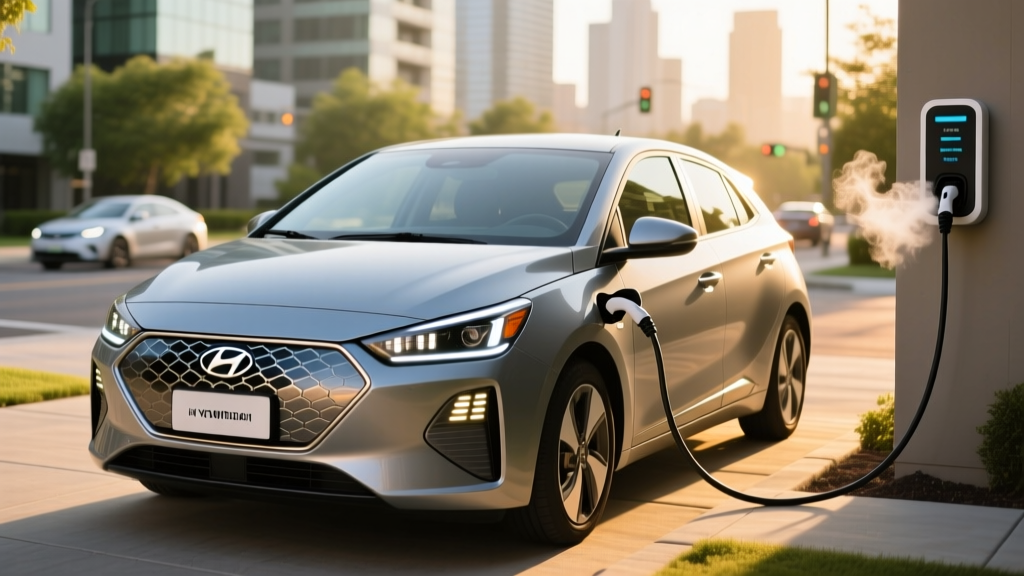
The 2021 Hyundai Ioniq Electric was discontinued after the 2021 model year, replaced by the Ioniq 5 crossover. But for used-EV shoppers in 2026, this compact hatchback remains one of the most energy-efficient battery-electric vehicles ever sold in the United States. With an EPA-estimated 170 miles of range from a modest 38.3 kWh battery, it achieves an extraordinary 133 MPGe combined — a figure few EVs at any price have matched. If your commute is under 80 miles round-trip and you have reliable home charging, the used Ioniq EV is a compelling, budget-friendly entry into electric ownership.
EPA Estimate: 170 miles
Real-World Highway (70 mph, 75°F): ~145–155 miles
Real-World City (stop-and-go, regen-heavy): ~165–175 miles
Cold Weather (20°F, heater on): ~115–135 miles
The Ioniq EV's small battery means cold-weather range loss hits harder than on larger-pack EVs. Plan for 25–35% reduction in freezing conditions.
Spec Sheet: 2021 Hyundai Ioniq Electric at a Glance
| Specification | Value |
|---|---|
| EPA Range | 170 miles |
| Battery Capacity (Usable) | 38.3 kWh (NMC lithium-ion) |
| Efficiency (Combined) | 133 MPGe / 25 kWh/100 mi |
| Motor Output | 134 hp (100 kW) / 218 lb-ft torque |
| Drivetrain | FWD (single motor) |
| 0–60 mph | ~9.0 seconds |
| Max DC Fast Charge | ~100 kW peak (CCS) |
| 10–80% DC Charge Time | ~54 minutes |
| Level 2 AC Charge Rate | 7.2 kW (~25 mi/hr) |
| Cargo Volume (rear seats up) | 23.0 cu ft |
| Cargo Volume (rear seats folded) | 55.0 cu ft |
| Original MSRP (SE trim) | $33,045 (before incentives) |
| Battery Warranty | 8 years / 100,000 miles (10 yr/100k in CARB states) |
Sources: EPA / fueleconomy.gov, Hyundai America press materials.
Battery, Range, and Efficiency: Why 38.3 kWh Goes So Far
The 2021 Ioniq EV uses a 38.3 kWh (gross) NMC (nickel-manganese-cobalt) lithium-ion battery pack. Hyundai's thermal management system is liquid-cooled, which helps preserve long-term battery health and enables consistent charging speeds. What makes this car remarkable isn't the size of the battery — it's how little energy the car wastes.
At 25 kWh per 100 miles combined, the Ioniq EV sips electrons like no other mainstream EV in its class. For context, the 2021 Tesla Model 3 Standard Range Plus rated at 26 kWh/100 mi, and the Chevy Bolt EV at 29 kWh/100 mi. This efficiency comes from a low curb weight (~3,360 lbs), a drag coefficient of just 0.24, and aggressive regenerative braking with steering-wheel paddle selectors offering four levels of regen — including a near-one-pedal-driving "i-PEDAL" mode at Level 3.
However, the small battery is a double-edged sword. With only about 34–35 kWh of usable capacity, there's less buffer for cold-weather degradation, highway-speed consumption spikes, and long-term capacity loss. Owners in northern climates should realistically budget 120–140 miles of usable range in winter.
Charging Speeds: DC Fast Charging and Home Level 2
| Charging Level | Power / Rate | Time / Miles Added |
|---|---|---|
| Level 1 (120V household) | ~1.4 kW | ~5 mi/hr — full charge ~24 hrs |
| Level 2 (240V, 32A home) | 7.2 kW | ~25 mi/hr — full charge ~5.5 hrs |
| DC Fast Charge (CCS) | Peak ~100 kW | 10–80% in ~54 min; 80–100% tapers sharply |
The Ioniq EV's DC fast-charging capability is its weakest link for road-trip use. While Hyundai claims a peak rate near 100 kW, real-world testing shows the charge curve is conservative. The pack accepts roughly 70–80 kW sustained through the 10–60% state of charge window, then tapers significantly above 70%. A 10–80% session typically takes around 54 minutes on a 150 kW+ CCS station — noticeably slower than competitors like the Chevy Bolt EUV (~30 minutes to 80% with the upgraded pack) or the Tesla Model 3 (~25 minutes on V3 Superchargers).
For daily use, this is irrelevant. Plug in at home on a Level 2 charger each night, and the 7.2 kW onboard charger replenishes the entire battery in about 5.5 hours — more than enough for any daily commute. The Ioniq EV uses the CCS1 (Combo) connector standard, which in 2026 is widely supported at Electrify America, EVgo, and ChargePoint DC stations, though the industry's ongoing shift to NACS (Tesla's connector) means CCS availability may gradually narrow in future years.
Performance and Driving Dynamics
The single front-mounted motor produces 134 horsepower (100 kW) and 218 lb-ft of torque, routing power to the front wheels. The 0–60 mph time of approximately 9.0 seconds places it firmly in "adequate commuter" territory — this is not a performance EV. However, the instant torque delivery makes the Ioniq feel peppier than the numbers suggest in city driving, with strong 0–30 mph acceleration ideal for merging and stoplight starts.
Ride quality is compliant and quiet, with a well-tuned suspension that absorbs road imperfections better than you'd expect from a compact hatch. Steering is light and precise. The low center of gravity (battery pack under the floor) keeps body roll minimal through corners. Wind and road noise are impressively suppressed at highway speeds.
Regenerative braking deserves special mention: the paddle-shift regen system is one of the best implementations in any EV. Level 0 coasting, Level 1 and 2 for progressive deceleration, and Level 3 for near-one-pedal driving. You can also hold the left paddle for a max-regen emergency-style stop. It's intuitive and eliminates the need to toggle drive modes through a screen.
Interior, Cargo, and Technology
The 2021 Ioniq EV was offered in two trims: SE ($33,045 MSRP) and Limited ($38,615 MSRP). Both share the same powertrain and battery.
Cargo space: 23.0 cubic feet behind the rear seats, expanding to 55.0 cu ft with the 60/40 split rear seats folded. That's competitive with the 2021 Chevy Bolt EV (25.5 cu ft / 56.0 cu ft) and more practical than many subcompact EVs. The hatchback design makes loading bulky items easy.
Passenger space: Front legroom is generous at 43.3 inches; rear legroom measures 35.2 inches — adequate for average adults but tight for tall passengers on longer trips. Headroom is good front and rear thanks to the hatchback roofline.
Infotainment: The SE features an 8-inch touchscreen with Apple CarPlay and Android Auto (wired). The Limited upgrades to a 10.25-inch display with built-in navigation, Blue Link connected services, and a premium Harman Kardon audio system. Both trims include wireless phone charging, a 7-inch digital instrument cluster, and a heat pump (standard on all trims — a significant efficiency advantage in cold weather, as it reduces cabin-heating energy draw compared to resistive heaters).
Driver Assistance (ADAS): Hyundai SmartSense is standard across both trims and includes:
- Forward Collision-Avoidance Assist with pedestrian detection
- Lane Keeping Assist and Lane Following Assist
- Blind-Spot Collision-Avoidance Assist
- Rear Cross-Traffic Collision-Avoidance Assist
- Smart Cruise Control with Stop & Go (adaptive cruise)
This is an SAE Level 2 driver-assistance system — it can manage speed, following distance, and lane centering simultaneously, but the driver must remain fully attentive with hands on the wheel at all times. It is not autonomous driving.
Pricing, Tax Credits, and Used Market Value in 2026
Because the 2021 Ioniq EV is discontinued and only available on the used market, the new-vehicle federal tax credit (§30D) does not apply. However, used EV buyers may qualify for the Used Clean Vehicle Credit, which offers up to $4,000 or 30% of the sale price (whichever is less), subject to these requirements:
- Vehicle sale price: Must be $25,000 or less
- Buyer income caps: $75,000 single / $112,500 head of household / $150,000 joint (modified AGI)
- Vehicle age: Must be at least 2 model years old (the 2021 model qualifies)
- Dealer requirement: Must be purchased from a licensed dealer
- One-time use: You can only claim this credit once every 3 years
Source: IRS.gov — Used Clean Vehicle Credit. Tax rules change; consult a tax professional for your specific eligibility.
| 2021 Ioniq EV SE (30–50k miles) | $14,000–$17,000 |
| 2021 Ioniq EV Limited (20–40k miles) | $17,000–$20,000 |
| Used EV credit (if eligible) | –$4,000 (up to 30% of price) |
| Effective cost after credit | ~$10,000–$16,000 |
Prices vary by region, mileage, condition, and market fluctuations. Check local listings for current values.
Warranty and Long-Term Battery Health
Hyundai's original battery warranty on the 2021 Ioniq EV is 8 years / 100,000 miles (extended to 10 years / 100,000 miles in CARB states including California, New York, Massachusetts, and others). The warranty guarantees the battery will retain at least 70% of its original capacity during the coverage period. The basic vehicle warranty was 5 years / 60,000 miles — most used examples will have expired basic coverage but should still carry battery warranty protection through 2029 at minimum.
The NMC chemistry in this pack has shown solid long-term degradation performance. Early Ioniq Electric owners (2017–2019 models with the 28 kWh pack) reported roughly 5–8% capacity loss over 5 years and 60,000+ miles. The 38.3 kWh pack in the 2021 model benefits from improved thermal management and should follow a similar trajectory. At 5 years old in 2026, expect a well-maintained pack to retain 92–95% of original capacity — translating to roughly 155–162 miles of range from a full charge.
Pros and Cons
- Class-leading efficiency: 133 MPGe combined
- Heat pump standard on all trims (rare at this price point)
- Smooth, intuitive regen paddle system
- Practical hatchback cargo area (23/55 cu ft)
- Strong ADAS suite standard (SmartSense)
- Low used pricing + potential $4,000 used-EV credit
- Quiet, comfortable ride for a compact
- Only 170 miles EPA range — limiting for road trips
- Slow DC fast charging (~54 min 10–80%)
- Modest 134 hp — not a quick car
- Small battery amplifies cold-weather range loss
- Discontinued — no new-vehicle tax credit eligibility
- CCS connector may face reduced station support as NACS expands
- Rear seat legroom tight for tall adults
Is the 2021 Hyundai Ioniq EV Still Worth It vs. Competitors?
Against used-market alternatives in 2026, the Ioniq EV occupies a specific niche: the ultra-efficient commuter car.
vs. Used Chevy Bolt EV (2020–2022): The Bolt offers 259 miles of EPA range from a 65 kWh battery, far more road-trip flexibility, and comparable DC charging speeds. However, it's less efficient (29 kWh/100 mi) and the interior feels cheaper. The Bolt wins on range; the Ioniq wins on refinement and efficiency.
vs. Used Nissan Leaf (2021, 62 kWh): The Leaf Plus offers 226 miles of range but uses passive air cooling for its battery (leading to faster degradation and charge throttling — "Rapidgate") and the CHAdeMO connector, which has far fewer DC stations than CCS in 2026. The Ioniq is the better long-term bet.
vs. Used Tesla Model 3 Standard Range (2019–2021): The Model 3 offers more range (~250 mi), Supercharger access, and stronger performance — but typically costs $5,000–$8,000 more on the used market. The Ioniq makes sense if budget is the priority and you don't need Supercharger access.
Who Should Buy the 2021 Hyundai Ioniq EV?
This car is ideal for:
- Daily commuters with round trips under 80 miles who charge at home nightly
- Second-car households that already have a gas/long-range vehicle for road trips
- Budget-conscious EV buyers who want a reliable, well-built EV under $15,000 after credits
- Urban and suburban drivers who value efficiency, hatchback practicality, and low running costs
This car is NOT ideal for:
- Single-car households who regularly drive 100+ miles in a day
- Frequent road-trippers (the slow DC charging and 170-mile range make highway travel tedious)
- Cold-climate drivers without a garage (cold range loss is significant on a small battery)
- Performance-oriented drivers who want rapid acceleration
Frequently Asked Questions
What is the real-world range of the 2021 Hyundai Ioniq EV?
The EPA rates it at 170 miles. In real-world mixed driving at moderate temperatures, expect 150–165 miles. Highway driving at 70+ mph drops this to roughly 145–155 miles. In freezing weather with cabin heat, plan for 115–135 miles. The heat pump helps mitigate cold-weather losses compared to EVs without one, but the small 38.3 kWh battery limits the absolute range ceiling.
How fast does it charge at home and on the road?
On a 240V Level 2 home charger, the 7.2 kW onboard charger adds about 25 miles of range per hour, fully replenishing the battery in roughly 5.5 hours. On a DC fast charger (CCS connector), it peaks near 100 kW but sustains 70–80 kW through the bulk of the charge, taking approximately 54 minutes from 10–80%. This is slower than most modern EVs and makes road-trip charging stops lengthy.
Does the 2021 Ioniq EV qualify for any tax credit?
Not the new-vehicle §30D credit — that only applies to new purchases. However, as a used EV purchased from a licensed dealer for $25,000 or less, it may qualify for the Used Clean Vehicle Credit of up to $4,000 (or 30% of the sale price, whichever is less). Income caps apply ($75k single / $150k joint). Confirm current rules at IRS.gov and consult a tax professional.
Is the Ioniq EV reliable? What about battery degradation?
Hyundai's Ioniq line has a strong reliability track record. The NMC battery pack with liquid cooling shows modest degradation — expect roughly 5–8% capacity loss over 5–6 years based on data from earlier Ioniq models. The 8-year/100,000-mile battery warranty (10 years in CARB states) provides coverage through at least 2029 for the original battery. Replacement costs, if ever needed out of warranty, are estimated at $6,000–$9,000 for the pack — but most packs outlast the vehicle.
Can I use Tesla Superchargers with the Ioniq EV?
The 2021 Ioniq EV uses the CCS1 connector. Tesla's Supercharger network with the "Magic Dock" CCS adapter is available at select stations, and Tesla has opened portions of its network to non-Tesla EVs via the Tesla app. However, coverage is not universal, and you'll need the Tesla app to initiate sessions. Most Ioniq EV owners rely on Electrify America, EVgo, and ChargePoint for DC fast charging.
How does the Ioniq EV compare to the Ioniq 5?
The Ioniq 5 (introduced for 2022) is a completely different vehicle — a larger crossover built on Hyundai's E-GMP platform with an 800V architecture, 220–303 hp, up to 303 miles of range, and 10–80% DC charging in ~18 minutes at 350 kW chargers. It's a dramatically more capable EV but also significantly more expensive on the used market ($25,000–$35,000 in 2026). The Ioniq EV is the budget choice; the Ioniq 5 is the do-everything choice.