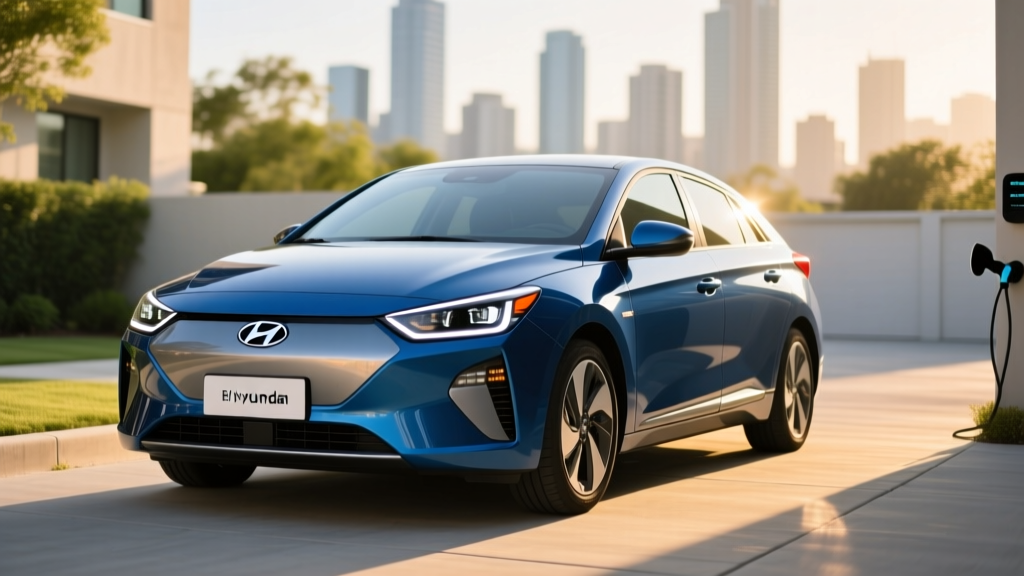
The 2021 Hyundai Ioniq Electric occupies a specific niche in the used-EV market: a compact, efficiency-focused hatchback built for commuters who prioritize low running costs over headline-grabbing range. Discontinued after the 2021 model year in the United States to make way for the Ioniq 5 crossover, this hatchback remains a compelling secondhand buy for shoppers who understand exactly what they're getting — and what they're giving up.
In this review, we break down the 2021 Hyundai Ioniq Electric's real-world range, charging behavior, efficiency numbers, ownership costs, and whether the federal used-EV tax credit can make this discontinued model a genuine bargain in 2026.
2021 Hyundai Ioniq Electric: Key Specifications at a Glance
| Specification | Value |
|---|---|
| EPA Range | 170 miles |
| Battery Capacity (Total / Usable) | 38.3 kWh / ~36.0 kWh |
| Battery Chemistry | NMC (Nickel Manganese Cobalt) |
| EPA Efficiency | 133 MPGe combined (25 kWh/100 mi) |
| Motor Output | 134 hp / 218 lb-ft torque |
| Drivetrain | FWD (single front motor) |
| 0-60 mph | |
| Max DC Fast Charge Rate | ~100 kW (peak) |
| 10-80% DC Fast Charge Time | ~34 minutes (optimal conditions) |
| Level 2 Onboard Charger | 7.2 kW |
| Cargo Volume (rear seats up / folded) | 23.0 / 55.0 cu ft |
| Original Base MSRP | $33,045 (SE trim, before incentives) |
| Battery/Powertrain Warranty | 8 years / 100,000 miles (original owner) |
Range and Efficiency: EPA vs. Real World
The EPA rates the 2021 Hyundai Ioniq Electric at 170 miles of combined range. That figure was competitive for a compact hatchback in 2021, but it trails the longer-range EVs dominating the market in 2026. What the Ioniq Electric trades in total range, it makes up in efficiency: at 133 MPGe combined (approximately 25 kWh per 100 miles), it remains one of the most energy-efficient EVs ever sold in the U.S., according to fueleconomy.gov.
- City / mild-weather driving: 170-185 miles — regenerative braking recovers significant energy in stop-and-go traffic.
- Highway (70 mph sustained): ~140-155 miles — aerodynamic drag and the lack of a heat pump reduce efficiency at speed.
- Cold weather (below 32°F): ~115-135 miles — expect 20-30% range loss due to battery heating demands and cabin climate use.
The Ioniq Electric lacks a heat pump, relying instead on resistive PTC heating. This is the single biggest efficiency penalty in cold climates. If you live in the northern U.S. and commute more than 60 miles round-trip in winter, this is a meaningful limitation.
One ownership insight worth noting: the Ioniq Electric's battery management system (BMS) maintains a relatively conservative top and bottom buffer. The ~2.3 kWh gap between total and usable capacity protects long-term battery health, but it also means you'll never actually access the full 38.3 kWh. For daily driving, plan around 150 usable miles in mixed conditions and you'll rarely feel range-stressed.
Charging Performance: DC Fast, Level 2, and Level 1
Charging speed is where the 2021 Ioniq Electric shows its age compared to 800-voltage architecture vehicles like its successor, the Ioniq 5. Still, its charging capability is adequate for the battery size and the use case it serves.
| Charging Level | Power / Rate | Time / Miles Added |
|---|---|---|
| Level 1 (120V household) | ~1.4 kW | ~5 miles per hour; full charge in ~26 hours |
| Level 2 (240V home / public) | 7.2 kW (max onboard) | ~25 miles per hour; 0-100% in ~5.5 hours |
| DC Fast Charge (CCS) | ~100 kW peak | 10-80% in ~34 minutes (optimal conditions) |
DC fast-charging reality check: The Ioniq Electric peaks near 100 kW only briefly, typically between 20-40% state of charge (SoC). Above 60%, the charge curve tapers significantly, dropping below 50 kW by 80% SoC. On a 150 kW or 350 kW Electrify America station, you won't see the full rated power for long. The 10-80% time of approximately 34 minutes assumes a well-conditioned battery at moderate ambient temperature — in extreme cold or heat, add 10-15 minutes.
The 7.2 kW onboard Level 2 charger is a strong point. On a home Level 2 station (such as a ChargePoint Home Flex or Wallbox Pulsar Plus wired to a 40-amp circuit), you'll recover roughly 25 miles of range per hour, and a full overnight charge is easily achievable. For a 170-mile-range vehicle, home Level 2 charging is the practical daily solution — public DC fast charging should be reserved for road trips.
Performance, Driving Dynamics, and Tech
The 2021 Ioniq Electric is not a performance EV. Its single front-mounted motor produces 134 horsepower and 218 lb-ft of torque, delivering a 0-60 mph time of approximately 9.0 seconds. That's adequate for merging and city driving but noticeably slower than competitors like the Chevrolet Bolt EV (200 hp) or the Nissan Leaf Plus (214 hp).
Where the Ioniq shines is refinement. The cabin is well-insulated, the ride is composed, and the steering is precise if not engaging. Hyundai equipped the 2021 model with four levels of regenerative braking, adjustable via steering-wheel paddles, enabling a semi-one-pedal driving experience. Level 3 regen provides strong deceleration that handles most city stops without touching the brake pedal.
Infotainment and Driver Assistance
The 2021 Ioniq Electric came in two trims: SE and Limited.
- SE trim: 8-inch touchscreen with Apple CarPlay/Android Auto, wireless smartphone charging, Hyundai SmartSense suite (forward collision-avoidance assist, lane-keeping assist, driver attention warning, high beam assist, adaptive cruise control with stop-and-go).
- Limited trim: Adds 10.25-inch touchscreen with built-in navigation, Harman Kardon premium audio, LED headlights, leather seats, ventilated front seats, highway driving assist, and a sunroof.
The SmartSense ADAS suite is SAE Level 2 driver assistance — it provides active steering and speed control but requires continuous driver engagement. It is not self-driving. The system is competent for highway cruising but less confident on poorly marked roads compared to Tesla's Autopilot or GM's Super Cruise.
Cargo and Passenger Space
The hatchback body style delivers practical cargo volume: 23.0 cubic feet behind the rear seats and 55.0 cubic feet with the rear seats folded. Rear legroom is 35.7 inches — adequate for adults on shorter trips but tight for taller passengers on longer drives. There is no front trunk (frunk); the space under the hood houses conventional drivetrain components.
Pricing, Trims, and Federal Tax Credit Eligibility
Because the Ioniq Electric was discontinued after 2021, all purchases in 2026 are on the used market. Original MSRPs were:
- SE trim: $33,045
- Limited trim: $38,615
Used 2021 Ioniq Electric pricing in early 2026 typically ranges from $14,000 to $21,000 depending on mileage, condition, trim, and market. The Limited trim commands a $2,000-$4,000 premium over the SE.
Federal Used-EV Tax Credit (§25E)
- Credit amount: 30% of sale price, up to a maximum of $4,000.
- Vehicle sale price must be $25,000 or less.
- Buyer income caps: $75,000 (single), $112,500 (head of household), $150,000 (joint filers) — based on modified AGI.
- Vehicle must be at least 2 model years old (2021 qualifies in 2026).
- Must be purchased from a licensed dealer (private-party sales do not qualify).
- Vehicle must have a battery capacity of at least 7 kWh (the Ioniq's 38.3 kWh qualifies).
- Credit is non-refundable but may be transferred to the dealer at point of sale for an upfront price reduction, per IRS guidelines.
A $18,000 used 2021 Ioniq Electric purchased from a dealer could yield a $4,000 credit (30% of $18,000 = $5,400, capped at $4,000), bringing the effective cost to approximately $14,000 — provided the buyer meets income requirements. Always consult a tax professional to confirm eligibility.
Note: The §30D new-vehicle credit does not apply here, as the Ioniq Electric is no longer sold new. The §25E used-vehicle credit is the relevant incentive, and its $25,000 sale-price cap aligns well with current used Ioniq Electric pricing.
Warranty Coverage and Battery Longevity
Hyundai originally backed the 2021 Ioniq Electric with one of the industry's strongest warranty packages:
- Battery warranty: 8 years / 100,000 miles (capacity retention above 70%)
- Powertrain warranty: 5 years / 60,000 miles
- New-vehicle limited warranty: 5 years / 60,000 miles
- Roadside assistance: 5 years / unlimited miles
For a 2021 model purchased in 2026, the original 8-year/100,000-mile battery warranty remains in effect until approximately mid-2029, assuming the vehicle hasn't exceeded 100,000 miles. This is a significant advantage for used buyers — Hyundai's battery warranty is transferable to subsequent owners, though the powertrain and new-vehicle warranties are limited to the original owner per Hyundai's terms.
NMC battery degradation data from real-world Ioniq Electric fleets suggests approximately 5-8% capacity loss over the first 100,000 miles under normal use. The Ioniq's liquid-cooled thermal management system helps mitigate degradation compared to passively cooled competitors like the earlier Nissan Leaf. However, frequent DC fast charging in extreme heat and regular charging to 100% will accelerate wear.
How the 2021 Ioniq Electric Compares to Key Competitors
| Metric | 2021 Hyundai Ioniq Electric | 2021 Chevrolet Bolt EV | 2021 Nissan Leaf Plus |
|---|---|---|---|
| EPA Range | 170 mi | 259 mi | 226 mi |
| Battery (usable) | ~36.0 kWh | ~60 kWh | ~58 kWh |
| Efficiency | 133 MPGe | 118 MPGe | 108 MPGe |
| DC Fast Charge (peak) | ~100 kW | ~55 kW | ~100 kW (CHAdeMO) |
| 0-60 mph | ~9.0 sec | ~6.5 sec | ~6.9 sec |
| Horsepower | 134 hp | 200 hp | 214 hp |
| Cargo (seats up) | 23.0 cu ft | 16.9 cu ft | 23.6 cu ft |
| Thermal Management | Liquid-cooled | Liquid-cooled | Air-cooled |
| Charging Standard | CCS1 | CCS1 | CHAdeMO |
The Bolt EV wins on range and performance, but its slower DC charging (~55 kW peak) is a real road-trip handicap. The Leaf Plus offers competitive range but its air-cooled battery and CHAdeMO connector (a declining standard in North America) are long-term concerns. The Ioniq Electric's advantage is efficiency and charging infrastructure compatibility via CCS, though its 170-mile range is the shortest of the three.
- Best-in-class efficiency (133 MPGe)
- CCS charging with 100 kW peak capability
- 7.2 kW onboard Level 2 charger
- Strong Hyundai SmartSense ADAS suite standard
- Hatchback cargo versatility (23/55 cu ft)
- Remaining factory battery warranty coverage
- Eligible for up to $4,000 used-EV tax credit
- 170-mile EPA range limits road-trip utility
- No heat pump — significant cold-weather range loss
- Modest 134 hp / ~9.0-sec 0-60 time
- Discontinued — limited dealer support and parts availability may decline
- Tight rear-seat legroom (35.7 in)
- No frunk for additional storage
- DC fast charge tapers heavily above 60% SoC
Who Should Buy the 2021 Hyundai Ioniq Electric?
- You're a single or couple commuter with a round-trip under 80 miles.
- You have reliable home Level 2 charging and rarely drive more than 150 miles in a day.
- You live in a moderate climate (minimal sub-freezing winters).
- You want the lowest possible cost-per-mile EV with strong efficiency.
- You want to maximize the $4,000 used-EV tax credit on a sub-$25,000 purchase.
- You regularly take road trips exceeding 200 miles.
- You live in a cold climate and need winter range reliability.
- You need a family vehicle with spacious rear seating.
- You want a current-production model with full warranty and dealer support.
The 2021 Ioniq Electric is a purpose-built commuter that excels at exactly one thing: moving one or two people short to moderate distances with minimal energy cost. At roughly 25 kWh per 100 miles and a national average electricity rate of ~$0.17/kWh, fueling cost is approximately $4.25 per 100 miles — roughly one-quarter the cost of a 30 MPG gas car at $3.50/gallon. Over 12,000 annual miles, that's a fuel savings of approximately $1,000-$1,200 per year.
Frequently Asked Questions
What is the real-world range of the 2021 Hyundai Ioniq Electric?
The EPA rates it at 170 miles combined. In real-world mixed driving, expect 150-170 miles in moderate weather, 140-155 miles on sustained highway drives, and 115-135 miles in cold winter conditions below freezing. The lack of a heat pump makes cold-weather range loss more pronounced than in EVs equipped with heat pump systems.
How fast does the 2021 Ioniq Electric charge?
On a DC fast charger (CCS connector), it peaks at approximately 100 kW, achieving a 10-80% charge in about 34 minutes under optimal conditions. On a home Level 2 charger (240V), the 7.2 kW onboard charger delivers roughly 25 miles of range per hour, fully charging the battery in approximately 5.5 hours. Level 1 (120V) charging adds about 5 miles per hour.
Does the 2021 Hyundai Ioniq Electric qualify for a federal tax credit?
As a used vehicle, it qualifies for the §25E Used Clean Vehicle Credit — up to $4,000 (30% of sale price, capped at $4,000) — provided the sale price is $25,000 or less, the buyer meets income limits ($75K single / $150K joint), and the purchase is through a licensed dealer. The original §30D new-vehicle credit no longer applies. Consult a tax professional and review IRS §25E guidelines for your specific situation.
Is the 2021 Ioniq Electric worth buying vs. the Chevy Bolt EV or Nissan Leaf?
It depends on your priorities. The Bolt EV offers significantly more range (259 mi) and power (200 hp) but charges much slower on DC. The Leaf Plus has decent range (226 mi) but uses the declining CHAdeMO standard and has an air-cooled battery that degrades faster in hot climates. The Ioniq Electric wins on efficiency and CCS charging compatibility but sacrifices range. For a budget-conscious commuter with home charging, the Ioniq's lower used pricing and tax credit eligibility can make it the most economical choice.
What happens to warranty coverage on a used 2021 Ioniq Electric?
Hyundai's 8-year/100,000-mile battery warranty is transferable to subsequent owners, meaning a 2021 model retains battery coverage until approximately mid-2029 or 100,000 miles (whichever comes first). The 5-year/60,000-mile powertrain and new-vehicle warranties are typically limited to the original owner. Verify warranty status with a Hyundai dealer using the VIN before purchasing.
What charging connector does the 2021 Ioniq Electric use?
The 2021 Ioniq Electric uses the CCS1 (Combined Charging System) connector for both Level 2 AC and DC fast charging. This is the dominant North American standard, though the industry is transitioning to NACS (Tesla's connector) for 2025+ models. CCS1 chargers remain widely available on Electrify America, EVgo, and ChargePoint networks.