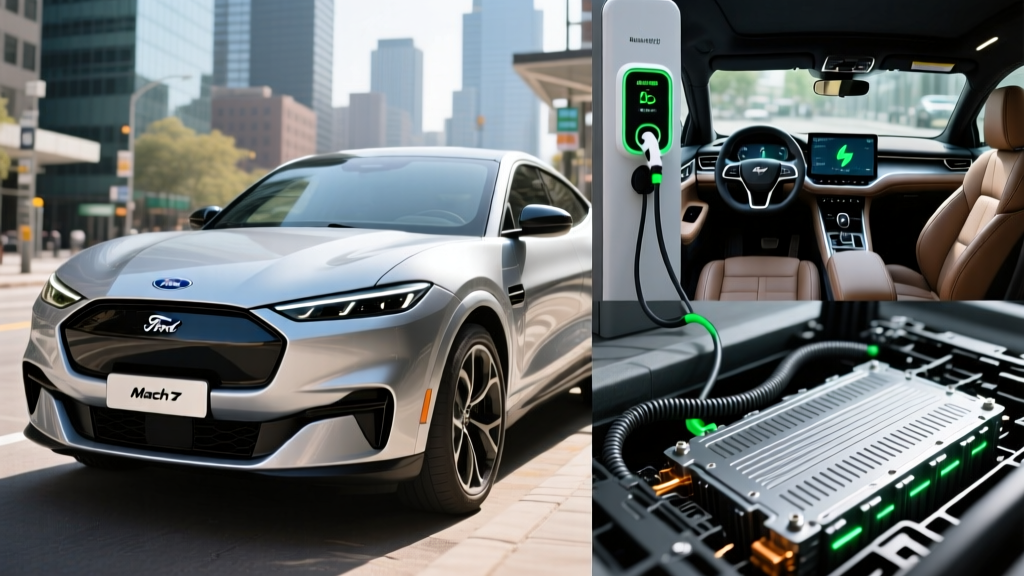
The 2021 Ford Mustang Mach-E was Ford's first serious battery-electric crossover, and five years later it remains one of the most compelling used EVs on the market. With its car-like driving dynamics, BlueCruise hands-free capability, and a practical hatchback layout, the Mach-E carved out a niche between the Tesla Model Y and the Hyundai Ioniq 5. But as a used purchase in 2026, the calculus shifts: battery degradation, software updates, and the federal used-EV tax credit all play a role in whether this early-build model still delivers.
We've compiled EPA data, real-world range observations, charging benchmarks, and ownership costs to give you the complete picture of the 2021 Mach-E as a pre-owned buy today.
2021 Ford Mach-E Specs at a Glance
| Spec | Standard Range (RWD) | Extended Range (RWD) | Extended Range (AWD) | GT (AWD) |
|---|---|---|---|---|
| EPA Range | 230 mi | 300 mi | 270 mi | 270 mi (GT: 260 mi) |
| Battery (usable) | 68 kWh (NMC) | 88 kWh (NMC) | 88 kWh (NMC) | 88 kWh (NMC) |
| Horsepower | 266 hp | 290 hp | 346 hp | 459 hp (GT: 480 hp w/ GT PE) |
| 0–60 mph | 5.8 sec | 5.5 sec | 5.1 sec | 3.5 sec (GT PE) |
| Max DC Charge Rate | 115 kW | 150 kW | 150 kW | 150 kW |
| 10–80% DC Time | ~38 min | ~45 min | ~45 min | ~45 min |
| Level 2 (240V) Rate | 10.5 kW (~30 mi/hr) | 10.5 kW (~30 mi/hr) | 10.5 kW (~30 mi/hr) | 10.5 kW (~30 mi/hr) |
| Efficiency (combined) | 101 MPGe | 101 MPGe | 93 MPGe | 85 MPGe (GT) |
| Drivetrain | RWD single motor | RWD single motor | AWD dual motor | AWD dual motor |
| Original Base MSRP | $42,895 | $50,200 | $52,800 | $60,500 (GT) |
Source: EPA fueleconomy.gov
Real-World Range: What the EPA Sticker Doesn't Tell You
EPA Extended Range RWD: 300 mi
Real-world highway (70 mph): ~245–265 mi
Real-world cold weather (below 32°F): ~210–240 mi
Combined mixed driving: ~260–280 mi
The 2021 Mach-E Extended Range RWD carries an EPA estimate of 300 miles, which was competitive at launch. However, real-world highway driving at sustained speeds above 70 mph typically yields 245 to 265 miles before you'll want to find a charger. The Mach-E's aerodynamic profile helps, but it's still a tall crossover with the frontal area to show it at speed.
Cold weather is the bigger penalty. The 2021 model year lacked a standard heat pump (Ford added one for 2022+ models), meaning cabin heating draws directly from the traction battery. In sub-freezing conditions, expect a 20–30% range reduction, bringing a 300-mile pack down to roughly 210–240 miles of practical range. If you live in the northern tier of the US, this is a critical consideration for a 2021 build.
The Standard Range models, with their 68 kWh usable pack, deliver a more modest 230 EPA miles. Real-world mixed driving lands around 190–210 miles — fine for commuting, but tight for road trips without careful planning.
Five years on, battery degradation is a factor. Ford's NMC chemistry typically shows 5–8% capacity loss over the first 100,000 miles. A well-maintained 2021 Mach-E with 60,000 miles might have 93–95% of its original capacity remaining, which translates to a proportional range reduction. Always check the State of Health (SoH) before purchasing used — many OBD2 apps and Ford dealerships can pull this metric.
Charging Speed: DC Fast Charging and Home Setup
Charging performance was a mixed bag for the 2021 Mach-E at launch, and it remains a defining characteristic of this model year. Here's what you need to know:
| Charging Level | Power / Voltage | Rate | Notes |
|---|---|---|---|
| Level 1 (120V) | ~1.4 kW | ~3 mi/hr | Emergency/trickle only |
| Level 2 (240V, 48A) | 10.5 kW | ~30 mi/hr | Ford Mobile Charger or home wallbox; full charge ~8.5 hr (ER) |
| DC Fast Charge (Standard Range) | Peak 115 kW | 10–80% in ~38 min | CCS1 connector; taper significant above 80% |
| DC Fast Charge (Extended Range) | Peak 150 kW | 10–80% in ~45 min | CCS1 connector; sustained rate averages ~100 kW |
The Extended Range models peak at 150 kW on DC fast chargers, but that peak is short-lived. The charging curve tapers aggressively: you'll see 150 kW briefly between 15–30% State of Charge (SoC), then it drops to roughly 110–120 kW through the mid-range, and falls below 60 kW past 80%. The 10–80% time of approximately 45 minutes is respectable but trails competitors like the Hyundai Ioniq 5 (18 minutes on 800V architecture) and the Tesla Model Y (15–20 minutes on V3 Superchargers).
The 2021 Mach-E uses the CCS1 connector. Ford has since announced NACS adoption for newer models, but the 2021 build remains CCS-native. You can use Tesla Superchargers with a CCS-to-NACS adapter (Ford provides one for newer models; check with your dealer for 2021 compatibility), but native NACS access is not available.
For home charging, the onboard 10.5 kW charger means a full Level 2 session (48-amp circuit, hardwired 60-amp breaker) adds about 30 miles per hour of charging. An overnight charge from 20% to full takes roughly 7–8 hours for the Extended Range battery — perfectly adequate for daily use.
Performance, Drivetrain, and Driving Impressions
The Mach-E's performance varies dramatically by trim. The RWD Standard Range model makes 266 hp and 317 lb-ft of torque — adequate for merging and city driving, but not what anyone would call quick. Step up to the AWD Extended Range and you get 346 hp and 428 lb-ft, dropping the 0–60 time to 5.1 seconds. That's genuinely quick for a family crossover.
The GT trim is the performance flagship: 459 hp standard (480 hp with the GT Performance Edition), launching to 60 mph in as little as 3.5 seconds. The GT also includes MagneRide adaptive dampers, larger brakes, and a sport-tuned suspension that transforms the driving character entirely.
Across all trims, the Mach-E drives lower and more car-like than its SUV dimensions suggest. Steering is precise, body roll is well-controlled, and the low center of gravity from the floor-mounted battery pack gives it a planted feel that many EV crossovers lack. The ride quality on the standard suspension is firm but compliant; it's a driver's EV first, a luxury cruiser second.
Regenerative braking offers two modes: a mild setting that mimics a gas car's coasting behavior, and a stronger one-pedal mode that brings the car to a complete stop. The one-pedal implementation is smooth and predictable — among the better systems in the segment.
Interior, Cargo, and Tech
The Mach-E's cabin was a departure from Ford's traditional design language. The centerpiece is a massive 15.5-inch vertically oriented touchscreen running Ford's SYNC 4A infotainment system. Physical buttons are minimal — even the climate controls are integrated into the touchscreen, which some drivers find distracting.
The rotary gear selector frees up center-console space, and the flat floor creates an airy, open feel. Material quality is good but not premium — hard plastics appear on lower door panels and the rear cargo area. This was a deliberate cost decision to keep pricing competitive with Tesla.
Cargo and passenger dimensions:
- Rear cargo volume: 29.7 cu ft (behind second row); 59.7 cu ft (seats folded)
- Front trunk (frunk): 4.7 cu ft — small but useful for charging cables or a bag
- Front legroom: 43.3 in
- Rear legroom: 38.9 in
- Front headroom: 40.4 in
- Rear headroom: 38.2 in
The rear seat is comfortable for two adults on longer trips, though the sloping roofline cuts into headroom for taller passengers. The frunk includes a drain plug, making it usable as a cooler for tailgating — a thoughtful touch.
Standout tech features:
- BlueCruise: Ford's Level 2 hands-free driver-assist system (added via OTA update on many 2021 models). Operates on pre-mapped divided highways — approximately 130,000+ miles of compatible roads in the US as of 2026. Requires an active subscription after the initial trial period.
- SYNC 4A with OTA updates: Navigation, wireless Apple CarPlay and Android Auto, and Ford Power-Up capability for remote software improvements.
- Phone As A Key (PaaK): Uses your smartphone via Bluetooth to unlock and start the vehicle. Backup key fob included.
- 360-degree camera: Available on higher trims, useful for parking and tight urban spaces.
Pricing, Used Market Value, and Tax Credits in 2026
The 2021 Mach-E originally started at $42,895 for the Standard Range RWD Select trim and climbed to over $65,000 for a fully loaded GT Performance Edition. As a used vehicle in 2026, prices have depreciated meaningfully, making this one of the better value propositions in the used EV market.
| Trim (2021) | Original MSRP | Est. Used Price (2026) | Used-EV Tax Credit (§25E) | Effective Price |
|---|---|---|---|---|
| Select SR RWD | $42,895 | $20,000–$24,000 | Up to $4,000 | $16,000–$20,000 |
| Premium ER RWD | $53,500 | $26,000–$31,000 | Up to $4,000 | $22,000–$27,000 |
| Premium ER AWD | $56,100 | $27,000–$33,000 | Up to $4,000 | $23,000–$29,000 |
| GT | $60,500 | $32,000–$38,000 | Up to $4,000 | $28,000–$34,000 |
Used prices vary by mileage, condition, and region. Tax credit estimates based on IRS §25E Used Clean Vehicle Credit rules.
The §25E used-EV tax credit is the key incentive for buying a pre-owned 2021 Mach-E. It provides up to $4,000 (or 30% of the sale price, whichever is lower) if you meet these requirements:
- Income cap: Modified AGI ≤ $75,000 (single), $112,500 (head of household), $150,000 (joint)
- Vehicle price cap: Sale price must be ≤ $25,000
- Vehicle age: Must be at least 2 model years old (2021 qualifies in 2026)
- Purchase from a dealer: Private-party sales do not qualify
- Battery capacity: ≥ 7 kWh (all Mach-E trims qualify)
- One-time use per buyer: You can only claim this credit once every 3 years
Note that the $25,000 sale-price cap means some higher-trim 2021 Mach-E models (GT, Premium AWD with high residual value) may exceed the threshold and become ineligible. Always confirm the final negotiated sale price with your dealer and consult a tax professional before relying on the credit.
Battery Health, Warranty, and Long-Term Ownership
The 2021 Mach-E uses NMC (nickel manganese cobalt) lithium-ion battery chemistry supplied primarily by LG Energy Solution. NMC offers higher energy density than LFP (lithium iron phosphate), which is why Ford achieved 300 miles in a relatively compact crossover. The trade-off is slightly faster degradation and greater sensitivity to sustained high-SoC storage.
Original warranty coverage:
- Battery: 8 years / 100,000 miles (whichever comes first) — covers capacity below 70% of original
- Electric powertrain: 8 years / 100,000 miles
- Bumper-to-bumper: 3 years / 36,000 miles (likely expired on most 2021 models by 2026)
For a 2021 model in 2026, the battery and powertrain warranty still has 3+ years of coverage remaining (assuming under 100,000 miles). This is a significant safety net. If the battery drops below 70% State of Health within the warranty window, Ford will repair or replace it at no cost.
Out-of-warranty battery replacement costs for the Extended Range pack have been reported in the $15,000–$22,000 range, though actual failures requiring full replacement are rare. More commonly, individual module replacements or BMS recalibrations address capacity issues at lower cost.
Ownership tips for maximizing battery life:
- Set daily charge limit to 80% and only charge to 100% before road trips
- Avoid leaving the vehicle at high SoC in extreme heat for extended periods
- Use DC fast charging sparingly — frequent 150 kW sessions accelerate degradation
- Precondition the battery before fast charging (the Mach-E does this automatically when a DC charger is set as your navigation destination)
How the 2021 Mach-E Stacks Up Against Key Competitors
If you're cross-shopping the used 2021 Mach-E, here's how it compares to its main rivals from the same era:
| Attribute | 2021 Mach-E ER RWD | 2021 Tesla Model Y LR | 2022 Hyundai Ioniq 5 (AWD) | 2021 VW ID.4 Pro S |
|---|---|---|---|---|
| EPA Range | 300 mi | 326 mi | 256 mi | 260 mi |
| Battery | 88 kWh NMC | ~75 kWh NMC | 77.4 kWh NMC | 82 kWh NMC |
| Peak DC Charge | 150 kW | 250 kW | 235 kW (800V) | 125 kW |
| 10–80% Time | ~45 min | ~20 min | ~18 min | ~38 min |
| 0–60 mph | 5.5 sec | 4.8 sec | 5.2 sec | 7.7 sec |
| Driver Assist | BlueCruise (L2) | Autopilot (L2) | HDA2 (L2) | Travel Assist (L2) |
| Heat Pump | No (2021) | Yes | Yes | Yes |
The Mach-E's biggest competitive weakness is charging speed — it trails the Model Y and Ioniq 5 significantly. Its strengths are driving dynamics, the BlueCruise system (which many reviewers rate above Tesla's base Autopilot for highway comfort), and a more conventional, approachable design that appeals to first-time EV buyers.
✓ Pros
- Engaging, car-like driving dynamics
- 300-mile EPA range on ER RWD (competitive)
- BlueCruise hands-free highway driving
- Strong OTA update track record since launch
- Spacious cabin with useful frunk
- Remaining battery warranty coverage
- Attractive used pricing after depreciation
✗ Cons
- Slower DC charging vs. Tesla/Hyundai (45 min 10–80%)
- No heat pump on 2021 models — significant cold-weather range loss
- CCS1 connector (NACS requires adapter)
- Touchscreen-heavy controls can distract while driving
- Rear headroom limited by sloping roofline
- Standard Range models feel underpowered
- BlueCruise requires paid subscription after trial
Who Should Buy the 2021 Ford Mach-E?
- Daily commuters with home charging who want 250+ miles of real-world range and a comfortable, quiet ride
- Small families needing a practical crossover with car-seat-friendly rear doors and decent cargo space
- Highway-heavy drivers who can benefit from BlueCruise on mapped interstates
- Budget-conscious EV buyers who want to leverage the $4,000 used-EV tax credit for an effective sub-$20,000 entry price
- You take frequent long road trips and need the fastest possible DC charging (choose Model Y or Ioniq 5)
- You live in a cold climate and need maximum winter range (the lack of a heat pump is a real penalty)
- You want a three-row family hauler or need to tow more than the Mach-E's ~2,300 lb capacity
Frequently Asked Questions
What is the real-world range of the 2021 Ford Mach-E?
The Extended Range RWD model achieves an EPA-estimated 300 miles, but real-world highway driving at 70 mph typically yields 245–265 miles. In cold weather (below 32°F), expect 210–240 miles due to the lack of a heat pump on 2021 models. Standard Range models deliver approximately 190–210 real-world miles.
How fast does the 2021 Mach-E charge at home and on the road?
On a Level 2 home charger (240V, 48A), the Mach-E charges at 10.5 kW, adding roughly 30 miles of range per hour. On DC fast chargers, Extended Range models peak at 150 kW and achieve a 10–80% charge in approximately 45 minutes. Standard Range models peak at 115 kW with a 10–80% time of roughly 38 minutes.
Does the 2021 Ford Mach-E qualify for a federal tax credit?
As a new vehicle, the 2021 Mach-E no longer qualifies for the §30D new-EV credit (which applies only to new purchases). However, it may qualify for the §25E Used Clean Vehicle Credit of up to $4,000 when purchased from a dealer, provided the sale price is $25,000 or less and the buyer meets income limits ($75K single / $150K joint). Confirm eligibility with a tax professional.
Is the 2021 Mach-E worth buying over a Tesla Model Y?
It depends on priorities. The Model Y offers longer range (326 mi), significantly faster charging (250 kW peak, ~20 min 10–80%), and access to the Supercharger network. The Mach-E counters with a more engaging driving experience, BlueCruise (rated highly for hands-free comfort), a more conventional crossover aesthetic, and often lower used pricing. If charging speed and road-trip convenience are paramount, the Model Y wins. If driving feel and value matter more, the Mach-E is a strong pick.
What is the battery warranty on a used 2021 Mach-E?
Ford's battery warranty covers 8 years or 100,000 miles (whichever comes first) against capacity loss below 70% of original. For a 2021 model, this warranty extends through at least 2029 or 100,000 miles. Many used 2021 Mach-E models in 2026 still have 3+ years of battery warranty remaining — a significant advantage over buying a used gas vehicle with no powertrain coverage.
Can I use Tesla Superchargers with a 2021 Mach-E?
The 2021 Mach-E uses the CCS1 connector natively. Ford has provided NACS adapters for newer models, and some 2021 owners have received or can purchase adapters that enable access to Tesla Superchargers equipped with Magic Dock or NACS-to-CCS compatibility. Check with your local Ford dealer for adapter availability and compatibility with your specific VIN. Non-Tesla DC networks like Electrify America, EVgo, and ChargePoint work natively with the CCS1 plug.