Quick Verdict: The 2021 Chevy Bolt EV at a Glance
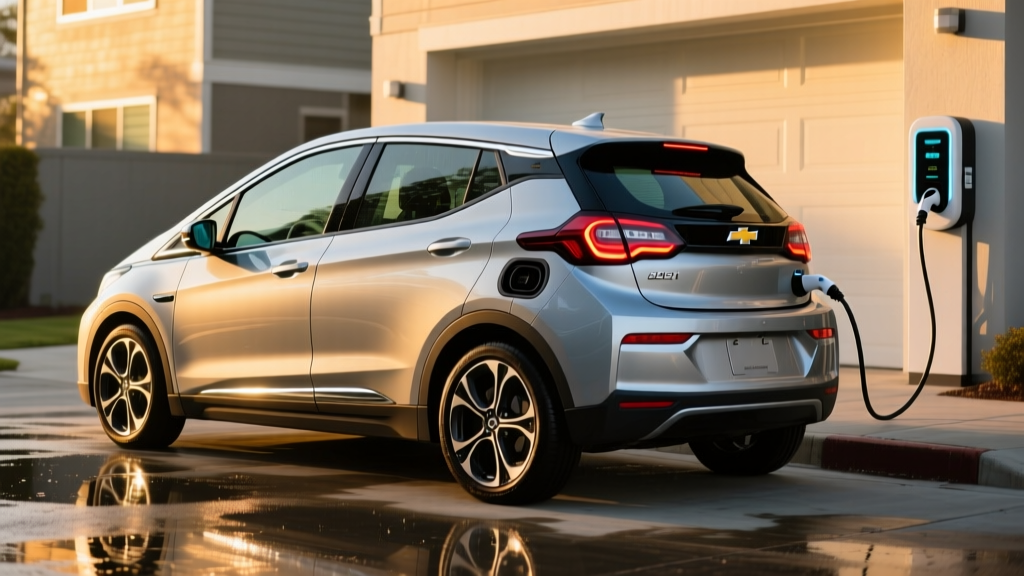
The 2021 Chevrolet Bolt EV remains one of the most compelling used electric vehicles on the market in 2026. With an EPA-estimated 259 miles of range, a roomy hatchback body, and a peppy 200-horsepower electric motor, it delivers practical daily transportation at a fraction of the cost of newer EVs. However, its DC fast-charging speed — capped at 55 kW — is its most significant limitation for road-trippers. If you primarily commute and charge at home, the 2021 Bolt EV is a smart, affordable entry into electric ownership.
| Spec | Value |
|---|---|
| EPA Range | 259 miles |
| Battery (usable) | ~65 kWh (NMC chemistry) |
| Motor Output | 200 hp / 266 lb-ft torque |
| Drivetrain | FWD (single motor) |
| 0–60 mph | ~6.5 seconds |
| Max DC Fast Charge | 55 kW (CCS1) |
| 10–80% DC Time | ~60 minutes |
| Level 2 Charge Rate | 11.5 kW (39 mi/hr) |
| EPA Efficiency | 118 MPGe combined (28 kWh/100 mi) |
| Cargo Volume | 16.9 cu ft (rear seats up) / 56.6 cu ft (folded) |
| Original Base MSRP | $36,500 (LT) / $41,700 (Premier) |
| Battery Warranty | 8 years / 100,000 miles |
Range and Efficiency: 259 Miles on Paper, What About Reality?
The 2021 Bolt EV carries a 259-mile EPA combined range estimate, which was class-leading for an affordable compact EV when it launched and still holds up well today. That figure comes from a 66 kWh total capacity lithium-ion battery pack (~65 kWh usable), using NMC (nickel-manganese-cobalt) cell chemistry supplied by LG Energy Solution.
Real-World Range Expectations:
- City/commuter driving (mild weather): 260–280 miles — regenerative braking in stop-and-go traffic can actually exceed the EPA estimate.
- Highway driving (70 mph, mild weather): ~215–235 miles — the Bolt's boxy shape and lack of a heat pump hurt efficiency at sustained speed.
- Cold weather (below 32°F, mixed driving): ~170–200 miles — expect 25–35% range loss in freezing temperatures. The Bolt uses resistive cabin heating, which draws significant energy.
Efficiency is rated at 118 MPGe combined, which translates to 28 kWh per 100 miles. That's competitive with the Hyundai Kona Electric and slightly behind the Tesla Model 3 Standard Range. In real-world driving, owners typically report 26–32 kWh/100 mi depending on climate and driving style.
Charging Speed: The Bolt's Biggest Compromise
Charging is where the 2021 Bolt EV shows its age most clearly. While home Level 2 charging is perfectly adequate, DC fast charging is frustratingly slow by 2026 standards.
| Charging Level | Max Power | Speed | Notes |
|---|---|---|---|
| Level 1 (120V household) | ~1.4 kW | ~4 mi/hr | Emergency/top-up only; full charge takes ~48 hours |
| Level 2 (240V home/public) | 11.5 kW | ~39 mi/hr | Full 0–100% in ~7 hours on a 48A circuit |
| DC Fast Charge (CCS1) | 55 kW peak | ~10–80% in ~60 min | Tapers significantly above 80%; adds ~100 mi in 30 min |
The 55 kW DC fast-charge ceiling is the Bolt's critical weakness for road trips. For context, a 2026 Hyundai Ioniq 5 peaks at 240 kW and charges 10–80% in roughly 18 minutes. On a Bolt, a 30-minute DC fast-charge stop adds approximately 100 miles of range — adequate for stretching legs, but it means longer stops on trips exceeding 250 miles.
The charge curve is relatively flat up to about 55% State of Charge (SoC), then tapers progressively. Charging from 80–100% on DC is painfully slow — plan to unplug at 80% at public stations and finish at your destination on Level 2.
Home charging recommendation: Install a 48-amp Level 2 charger on a 60-amp dedicated circuit to capture the Bolt's full 11.5 kW onboard charger capacity. This delivers a full overnight charge in about 7 hours — ideal for daily commuters.
Performance and Driving Impressions
The Bolt EV's single front-mounted permanent-magnet motor produces 200 horsepower and 266 lb-ft of torque, available instantly from zero RPM. The 0–60 mph sprint takes approximately 6.5 seconds — brisk for a compact hatchback and quick enough for confident highway merging.
Driving dynamics are where the Bolt surprises. The low-slung battery pack gives it a planted center of gravity, and the instant torque makes it genuinely fun around town. The one-pedal driving mode (activated via a steering-wheel paddle) allows aggressive regenerative braking that can bring the car to a full stop without touching the brake pedal — a feature many Bolt owners come to love.
Drawbacks include noticeable torque steer under hard acceleration (a front-wheel-drive limitation), a firm ride on broken pavement, and road noise at highway speeds that's louder than competitors like the Volkswagen ID.4 or Tesla Model 3.
Interior, Cargo, and Technology
The 2021 Bolt's interior is practical if not luxurious. Hard plastics dominate the dashboard and door panels, but build quality is solid. The seats are comfortable for long commutes, and rear legroom (35.8 inches) is generous for a compact hatch.
Cargo space measures 16.9 cubic feet behind the rear seats and 56.6 cubic feet with the 60/40 split rear seats folded — enough for a week's groceries or two full-size suitcases. The lack of a front trunk (frunk) is a minor missed opportunity.
Infotainment: A 10.2-inch touchscreen runs Chevrolet's Infotainment 3 system with wireless Apple CarPlay and Android Auto, built-in navigation (Premier trim), and an 8-inch digital driver display. The interface is responsive and intuitive — one of GM's better infotainment implementations.
Driver assistance: The 2021 Bolt includes Chevy Safety Assist as standard: automatic emergency braking, forward collision alert, lane-keep assist, following-distance indicator, and automatic high beams. Adaptive cruise control is available on the Premier trim. Note that these are SAE Level 1 driver-assist features — the driver must remain fully engaged at all times. GM's hands-free Super Cruise system is not available on the Bolt EV.
Pricing, Tax Credits, and Used Value in 2026
The 2021 Bolt EV originally started at $36,500 for the LT trim and $41,700 for the Premier. Chevrolet discontinued the Bolt EV after the 2023 model year (replaced by the Equinox EV), so all 2021 examples are now purchased on the used market.
| Item | Amount |
|---|---|
| Original MSRP (LT trim) | $36,500 |
| Typical 2026 used price (30k–50k mi) | $14,000–$19,000 |
| Federal used-EV tax credit (§25E) | Up to $4,000 (30% of sale price, capped) |
| Effective price after credit | ~$10,000–$15,000 |
Federal tax credit note: The original §30D new-vehicle credit no longer applies to 2021 models. However, the §25E used clean vehicle credit offers up to $4,000 (30% of the sale price) on qualifying used EVs sold for $25,000 or less through a licensed dealer. Income caps apply: modified AGI must not exceed $75,000 (single), $112,500 (head of household), or $150,000 (joint). The vehicle must be at least two model years old and purchased from a dealer — private-party sales do not qualify. Always verify eligibility with a tax professional and the IRS §25E guidelines.
Battery Health, Warranty, and Longevity
The 2021 Bolt EV's LG-supplied NMC battery pack carries an 8-year/100,000-mile warranty (10 years/150,000 miles in CARB states like California) against capacity loss below 60% of original capacity. Given that the vehicle is now five years old, most examples still have 3+ years of factory battery warranty remaining.
Real-world battery degradation data from Bolt owners suggests approximately 5–8% capacity loss over the first 50,000 miles — typical for NMC chemistry. Some 2017–2019 Bolt models were part of a major battery recall due to fire risk from manufacturing defects; the 2021 model year was built with revised battery modules and was not subject to the same recall, but buyers should verify recall status via NHTSA's VIN lookup tool.
Battery care tips for used Bolt buyers:
- Avoid routinely charging to 100% — set the charge target to 80–90% for daily use.
- Minimize DC fast charging when possible; favor overnight Level 2.
- In extreme heat, park in shade or a garage to reduce thermal stress on the pack.
- Check the battery's State of Health (SoH) via the infotainment system or a dealer diagnostic scan before purchasing.
Pros, Cons, and Who Should Buy the 2021 Bolt EV
Pros
- 259-mile EPA range is excellent for the price point
- Strong 200-hp motor with instant torque and fun one-pedal driving
- Generous cargo and passenger space for a compact hatch
- 11.5 kW Level 2 charging fills the battery overnight
- Wireless Apple CarPlay/Android Auto standard
- Very affordable on the used market, potentially under $12,000 after §25E credit
- Chevy Safety Assist suite included at no extra cost
Cons
- 55 kW DC fast charging is painfully slow for road trips
- No heat pump — significant cold-weather range loss (25–35%)
- Interior uses hard, dated plastics
- No frunk (front trunk) for additional storage
- No advanced driver-assist options (no Super Cruise, no hands-free driving)
- CCS1 connector — increasingly less common as the industry shifts to NACS
- Road noise is noticeable at highway speeds
Best for: Budget-conscious commuters, apartment dwellers with workplace charging, and second-car households who need a practical EV for daily driving under 100 miles round-trip. The Bolt excels as a city and suburban runabout where its range is more than sufficient and its slow DC charging is rarely an issue.
Not ideal for: Frequent road-trippers, those in extremely cold climates without garage parking, or buyers who prioritize the latest technology and premium interiors. If you regularly drive 300+ miles between charges, consider a used Tesla Model 3 or Hyundai Ioniq 5 instead.
Frequently Asked Questions
What is the real-world range of the 2021 Chevy Bolt EV?
The EPA rates it at 259 miles combined. In real-world driving, expect 260–280 miles in city commuting during mild weather, 215–235 miles on the highway at 70 mph, and as low as 170–200 miles in freezing temperatures due to the resistive heating system and lack of a heat pump.
How fast does the 2021 Bolt charge at home and on DC fast chargers?
On a Level 2 home charger (240V, 48A), the Bolt charges at up to 11.5 kW, adding roughly 39 miles per hour and filling from empty in about 7 hours. On DC fast chargers, it peaks at just 55 kW, requiring about 60 minutes for a 10–80% charge — significantly slower than modern competitors.
Does the 2021 Chevy Bolt qualify for any federal tax credit?
As a used vehicle, it is no longer eligible for the §30D new-vehicle credit. However, it may qualify for the §25E used clean vehicle credit: up to $4,000 (30% of sale price) if purchased from a dealer for $25,000 or less, and the buyer meets income caps ($75K single / $150K joint). Verify current rules at IRS.gov.
Is the 2021 Bolt EV worth buying vs. a used Tesla Model 3 or Kona Electric?
The Bolt offers the best range-per-dollar on the used market, but the Tesla Model 3 has far superior DC charging (170+ kW), access to the Supercharger network, and a more premium interior. The Hyundai Kona Electric is a closer competitor with similar range (258 mi EPA) and slightly faster DC charging (64 kW). Choose the Bolt if budget and cargo space are top priorities; choose the Model 3 if road-trip charging speed and tech matter more.
What's the biggest risk of buying a used 2021 Bolt EV?
Battery health is the primary concern. While the 2021 model year avoided the worst of LG's battery recall issues, buyers should run a VIN check on NHTSA.gov for open recalls, request a battery State of Health report from a Chevy dealer, and verify remaining warranty coverage (8 years/100,000 miles from original in-service date).
Does the 2021 Bolt use NACS or CCS for charging?
The 2021 Bolt EV uses the CCS1 connector for DC fast charging and J1772 for Level 2 AC charging. As the industry transitions to NACS (Tesla's connector), adapters are available but add cost and complexity. This is a factor to weigh if you plan to keep the vehicle long-term.