Quick Verdict: A Luxury EV Bargain on the Used Market
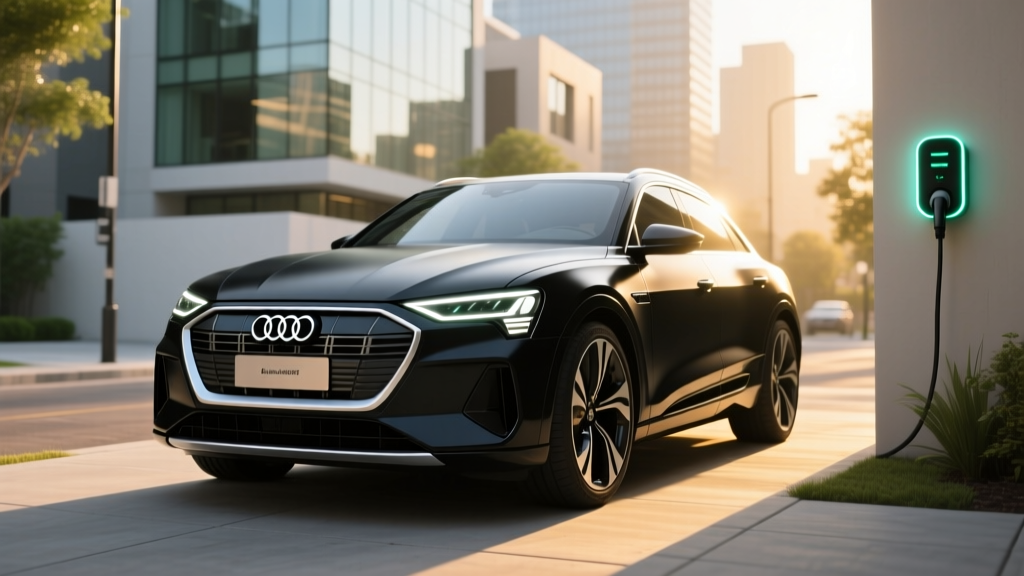
The 2021 Audi e-tron Premium Plus occupies a unique space in 2026's used-EV landscape. Originally priced above $70,000, it now trades between $28,000 and $38,000 depending on mileage and condition — and if you meet the income requirements, the $4,000 federal used-EV tax credit (IRS §25E) can bring the effective cost down further. It's a genuinely refined electric SUV that prioritizes comfort, build quality, and quiet highway cruising over maximum range or cutting-edge efficiency. If you can charge at home and your daily commute stays under 150 miles, the e-tron's 222-mile EPA range is perfectly livable. If you frequently road-trip through charging deserts or live in extreme cold, you'll want to weigh its real-world range limitations carefully.
| Spec | Value |
|---|---|
| EPA Range | 222 miles |
| Battery (gross / usable) | 95 kWh / ~84 kWh (NMC) |
| MPGe (city / hwy / combined) | 74 / 73 / 74 MPGe |
| Energy Consumption | 46 kWh/100 mi |
| Peak DC Fast Charge | 150 kW (CCS1) |
| 10–80% DC Charge Time | ~30 minutes |
| Level 2 Home Charge Rate | 9.6 kW (~21 mi/hr) |
| Drivetrain | Dual-motor AWD (quattro) |
| Horsepower (Boost Mode) | 402 hp / 490 lb-ft |
| 0–60 mph | 5.5 seconds |
| Cargo (rear seats up / folded) | 28.5 / 57.0 cu ft |
| Battery Warranty | 8 years / 100,000 miles |
| Original MSRP (Premium Plus) | $70,600 (before options) |
| Typical 2026 Used Price | $28,000–$38,000 |
Range and Efficiency: The 222-Mile Reality
EPA Estimated Range: 222 miles
Real-World Expectation: Plan for 185–200 miles on highway-heavy trips at 70+ mph. In freezing temperatures (below 30°F), expect 155–180 miles due to battery resistance and cabin heating demands. City driving with regenerative braking can push closer to the 222-mile sticker or slightly above.
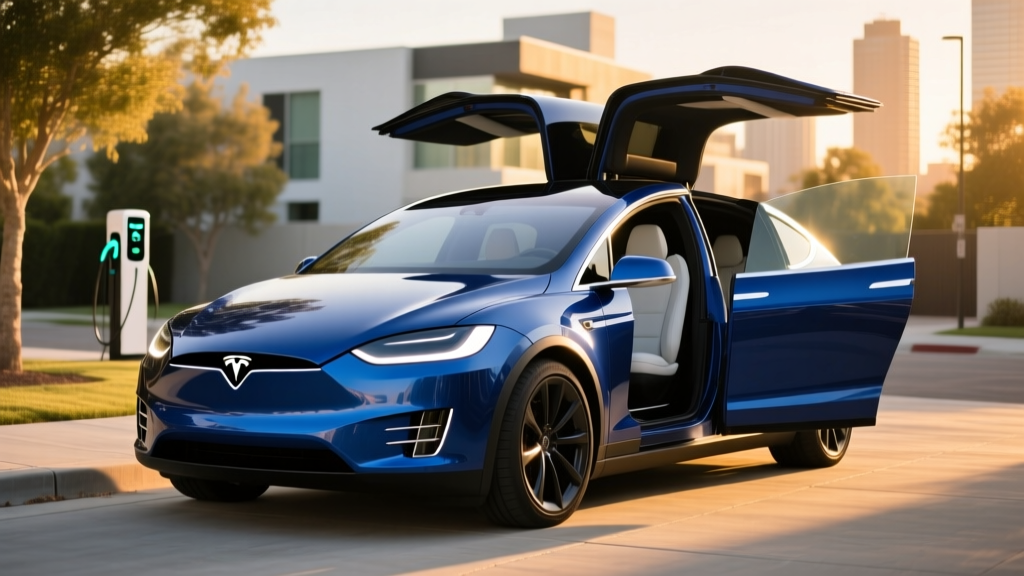
The e-tron's efficiency of 46 kWh/100 miles (74 MPGe combined per EPA) is its weakest competitive metric. For comparison, the 2021 Tesla Model X Long Range achieves 101 MPGe combined, and the 2021 Jaguar I-PACE manages 76 MPGe. The e-tron's heavy curb weight (~5,765 lbs) and conservative thermal management strategy trade efficiency for battery longevity and cabin comfort.
Audi deliberately buffers roughly 11 kWh of the 95 kWh gross battery (leaving ~84 kWh usable) to reduce degradation stress on the NMC cells. This is a smart longevity play — you'll see less capacity loss over time — but it directly limits range. The e-tron also runs a standard heat pump, which helps cold-weather efficiency compared to resistive heating, though not enough to fully offset the energy penalty of sub-freezing operation.
What This Means for Daily Driving
If your round-trip commute is 60–80 miles, you'll charge at home every night and rarely think about range. The e-tron is exceptionally comfortable as a daily driver — quiet, smooth, and well-isolated. For weekend road trips of 200+ miles, you'll need one DC fast-charge stop. The 150 kW peak charge rate (detailed below) makes that stop reasonably brief, but the e-tron's charging curve tapers noticeably above 80% State of Charge, so plan to charge to 80% and drive rather than wait for a full battery at the station.
Charging Speed: 150 kW DC and Home Level 2
| Charging Level | Power / Rate | Miles Added per Hour | Notes |
|---|---|---|---|
| Level 1 (120V outlet) | ~1.4 kW | ~3 mi/hr | Emergency/trickle only — 70+ hours for full charge |
| Level 2 (240V home) | 9.6 kW | ~21 mi/hr | Full charge in ~9 hours; ideal overnight |
| DC Fast Charge (CCS1) | 150 kW peak | ~163 mi/hr (peak) | 10–80% in ~30 min; tapers above 80% |
The e-tron's 150 kW DC fast-charging capability was competitive in 2021 but falls behind newer 800V architectures (Hyundai Ioniq 5 at 240 kW, Porsche Taycan at 270 kW). Still, 150 kW is practical: on a Electrify America or EVgo station, you'll add roughly 130–140 miles of range in a 25-minute stop when starting from 10% SoC.
Understanding the Charge Curve
The e-tron sustains its peak 150 kW rate from roughly 5% to about 55% SoC, then steps down to ~100 kW through 70%, and further tapers to 50–75 kW from 80% to 100%. This is why we quote 10–80% times rather than 0–100%: charging the final 20% can take nearly as long as the first 70%. On road trips, charge to 80% and get back on the road.
Home Charging Setup
At 9.6 kW on a Level 2 home charger (requiring a 48-amp circuit on a 60-amp breaker), the e-tron replenishes roughly 21 miles of range per hour. A full charge from near-empty takes about 9 hours — easily achievable overnight. The e-tron uses the CCS1 (J1772 combo) connector for both Level 2 and DC fast charging. If you're installing a home Level 2 charger, budget $500–$1,200 for the unit and $800–$2,500 for professional electrician installation, depending on whether your electrical panel needs an upgrade.
Performance and Driving Dynamics
The e-tron Premium Plus features a dual-motor all-wheel-drive layout Audi calls quattro. In normal driving, it produces 355 hp and 414 lb-ft of torque. Engaging Boost Mode (available in 60-second bursts via the shift lever) unlocks 402 hp and 490 lb-ft, dropping the 0–60 mph time to 5.5 seconds.
That's not sports-SUV quick (the Tesla Model X Plaid does 0–60 in 2.5 seconds), but it's more than adequate for highway merging and confident passing. The e-tron's strength isn't straight-line speed — it's ride quality. The standard adaptive air suspension soaks up road imperactions with a composure that few EVs match. Cabin noise levels are remarkably low, thanks to extensive sound deadening and acoustic glass.
Regenerative Braking
Unlike many EVs, the e-tron does not default to aggressive one-pedal driving. Instead, Audi offers three regen levels selectable via steering-wheel paddles, plus an "auto" mode that uses the front radar to adjust regen based on traffic ahead. This feels natural to drivers transitioning from gas cars but frustrates EV veterans who prefer strong one-pedal regen. You can achieve near-one-pedal driving in the highest regen setting, but it's not as aggressive as a Nissan Leaf or Tesla on maximum regen.
Interior, Cargo, and Technology
The e-tron's cabin is where Audi's premium positioning shows. The Premium Plus trim includes:
- Valcona leather seating surfaces with 12-way power front seats
- Tri-zone automatic climate control
- 10.1-inch upper touchscreen (infotainment) + 8.6-inch lower touchscreen (climate/shortcuts)
- Virtual Cockpit Plus 12.3-inch digital instrument cluster
- Bang & Olufsen 3D sound system (16 speakers)
- Wireless Apple CarPlay and Android Auto (wired was standard in early 2021 builds; wireless came mid-year)
- Audi Pre Sense Basic and Pre Sense City (forward collision warning with automatic emergency braking)
- Lane departure warning
Cargo and Passenger Space
Cargo volume is 28.5 cubic feet behind the second row and 57.0 cubic feet with the rear seats folded. That's competitive with a midsize luxury SUV but falls short of the Tesla Model X (up to 88 cu ft with seats folded). The e-tron has no frunk (front trunk) — the space under the hood houses electronics and the HVAC system. Rear legroom is 39.1 inches, adequate for adults on longer trips.
Driver Assistance (SAE Level 2)
The available Adaptive Cruise Assist with Traffic Jam Assist provides SAE Level 2 automation — it handles steering, acceleration, and braking on highways but requires the driver to remain attentive with hands on the wheel. This is not "self-driving." It's a competent highway companion but no more capable than Ford BlueCruise or GM Super Cruise in hands-free mode. Audi's system requires periodic steering-wheel torque input to confirm driver engagement.
Pricing, Trims, and Tax Credit Eligibility
| Trim | Original MSRP | Typical 2026 Used Price | After $4,000 Used-EV Credit |
|---|---|---|---|
| Premium Plus | $70,600 | $30,000–$36,000 | $26,000–$32,000 |
| Prestige | $77,400 | $33,000–$38,000 | $29,000–$34,000 |
On the used market, the 2021 e-tron has depreciated significantly — a boon for second owners. The Premium Plus trim is the volume seller, offering the best balance of features and value.
Federal Used-EV Tax Credit (§25E)
Because the 2021 e-tron is purchased used, it qualifies for the IRS §25E Previously-Owned Clean Vehicle Credit — not the §30D new-vehicle credit. Key rules for 2026:
- Credit amount: 30% of the sale price, up to a maximum of $4,000
- Vehicle price cap: Sale price must be $25,000 or less to qualify (this is a hard cap — a $26,000 e-tron gets $0)
- Income limits: Modified AGI must not exceed $75,000 (single), $112,500 (head of household), or $150,000 (joint filers)
- Vehicle age: Must be at least 2 model years old (the 2021 model qualifies in 2026)
- Dealer requirement: Must be purchased from a licensed dealer (private-party sales don't qualify)
- Frequency limit: You can only claim this credit once every 3 years
The $25,000 sale-price cap is the critical constraint. Many 2021 e-tron Premium Plus listings hover around $30,000–$36,000, which puts them above the threshold. However, negotiation or higher-mileage examples may fall at or below $25,000, unlocking the $4,000 credit. Always verify current IRS §25E rules before purchasing, as regulations can shift. Consult a tax professional to confirm your personal eligibility.
Ownership Costs and Battery Longevity
Audi backs the e-tron's battery with an 8-year/100,000-mile warranty covering defects and capacity loss below 70% of original. For a 2021 model, that warranty remains active through 2029 or 100,000 miles — whichever comes first. Given Audi's conservative 11 kWh buffer strategy, real-world degradation has been modest. Owner reports and fleet data suggest 3–5% capacity loss over the first 60,000 miles, meaning a 2021 e-tron with 40,000 miles likely retains 95–97% of its original usable capacity.
Charging Costs vs. Gasoline
At the U.S. average electricity rate of ~$0.16/kWh (2026), fully charging the e-tron's 84 kWh usable battery costs roughly $13.44. At 46 kWh/100 miles, that's about $0.074 per mile on home electricity. A comparable gas SUV getting 22 MPG at $3.50/gallon costs ~$0.159 per mile — more than double. Public DC fast charging is more expensive ($0.35–$0.50/kWh at Electrify America), bringing the cost to $0.16–$0.23 per mile, but most e-tron owners charge at home 80–90% of the time.
Insurance and Maintenance
Insurance premiums for the e-tron run 15–25% higher than a comparable gas Audi Q5, reflecting the vehicle's original MSRP and EV repair costs. Expect $1,800–$2,400 annually depending on your state and driving record. Maintenance is minimal — no oil changes, no transmission fluid, no spark plugs. Budget for cabin air filters, brake fluid checks, tire rotation, and wiper blades. Audi recommends a service visit every 10,000 miles or 12 months, typically costing $150–$250.
Pros and Cons
Pros
- Exceptionally quiet, refined ride quality with adaptive air suspension
- High-quality interior materials and build — genuine luxury feel
- Conservative battery buffer strategy yields strong long-term degradation performance
- 150 kW DC fast charging is practical for road trips
- Strong used-market depreciation makes it a luxury bargain
- Remaining factory battery warranty (through 2029/100k mi)
- Standard heat pump improves cold-weather efficiency
Cons
- 222-mile EPA range trails competitors (Model X: 360 mi, I-PACE: 234 mi)
- Low efficiency (46 kWh/100 mi) means higher electricity costs per mile
- No frunk — lost cargo opportunity
- Dual-touchscreen infotainment can be distracting and slow to respond
- Regen braking is weaker than most EVs — not true one-pedal driving
- Used-EV tax credit §25E price cap ($25,000) is hard to meet at current market prices
- CCS1 connector (not NACS) — may need adapter for Tesla Superchargers as networks open
How It Compares: e-tron vs. Key Rivals
| Spec | 2021 Audi e-tron Premium Plus | 2021 Tesla Model X Long Range | 2021 Jaguar I-PACE EV320 |
|---|---|---|---|
| EPA Range | 222 mi | 360 mi | 234 mi |
| Battery (usable) | ~84 kWh (NMC) | ~95 kWh | 84 kWh (NMC) |
| MPGe Combined | 74 | 101 | 76 |
| Peak DC Charge | 150 kW | 250 kW | 100 kW |
| 10–80% DC Time | ~30 min | ~22 min | ~45 min |
| 0–60 mph | 5.5 sec | 3.8 sec | 6.2 sec |
| Cargo (rear up) | 28.5 cu ft | 37.1 cu ft | 23.2 cu ft |
| Typical 2026 Used Price | $30k–$36k | $42k–$55k | $27k–$34k |
The Model X wins on range and charging speed but costs significantly more on the used market and can't match the e-tron's interior quality or ride comfort. The I-PACE is the closest rival in price and philosophy — also a comfort-oriented luxury EV with modest range — but it charges slower (100 kW peak) and has less cargo space. The e-tron splits the difference: better charging than the Jag, better interior than the Tesla, and a price that has dropped into genuine bargain territory.
Who Should Buy the 2021 Audi e-tron Premium Plus?
Choose the e-tron if:
- You prioritize ride comfort, cabin quietness, and build quality over maximum range
- Your daily driving is under 150 miles and you can charge at home (Level 2)
- You want a luxury EV at a mainstream price point ($30k–$36k used)
- You value remaining factory battery warranty coverage
- You take road trips 2–4 times per year and can plan DC fast-charge stops
Look elsewhere if:
- You need 300+ miles of range for frequent long-distance driving
- You live in an area with sparse DC fast-charging infrastructure
- You regularly drive in extreme cold (below 15°F) where range drops to 150–165 miles
- You want the fastest-charging EV for minimal road-trip downtime
- You need maximum cargo space or a third row (consider the Model X)
Frequently Asked Questions
What is the real-world range of the 2021 Audi e-tron?
The EPA rates the e-tron at 222 miles. In real-world highway driving at 70–75 mph, expect 185–200 miles. In freezing temperatures, range can drop to 155–180 miles. City driving with regenerative braking may match or slightly exceed the EPA estimate.
How fast does the e-tron charge at home and on DC fast chargers?
On a Level 2 home charger (9.6 kW / 240V), the e-tron adds about 21 miles of range per hour, fully charging in roughly 9 hours. On a 150 kW DC fast charger, it goes from 10% to 80% in approximately 30 minutes, though charging slows significantly above 80%.
Does the 2021 e-tron qualify for the federal EV tax credit?
As a used vehicle, it may qualify for the IRS §25E Previously-Owned Clean Vehicle Credit (up to $4,000), but only if the sale price is $25,000 or less, your income falls below IRS caps ($75k single / $150k joint), and you buy from a licensed dealer. Many e-tron listings exceed the $25,000 price cap. The new-vehicle §30D credit no longer applies. Always verify eligibility at IRS.gov and consult a tax professional.
Is the e-tron's battery chemistry LFP or NMC?
The 2021 e-tron uses NMC (nickel manganese cobalt) lithium-ion cells supplied by LG Energy Solution. NMC offers higher energy density than LFP but benefits from the e-tron's conservative 11 kWh buffer, which limits depth-of-discharge stress and slows degradation. Expect 3–5% capacity loss over 60,000 miles based on fleet data.
Is the 2021 e-tron worth buying in 2026 vs. newer EVs?
At $30,000–$36,000 used, the e-tron offers genuine luxury at a fraction of its original $70,600 MSRP. You sacrifice range (222 mi vs. 300+ on newer models) and charging speed (150 kW vs. 240+ kW), but gain ride quality, interior refinement, and remaining warranty that newer budget EVs can't match. It's an excellent choice for home-charging commuters who value comfort over cutting-edge specs.
What connector does the e-tron use?
The 2021 e-tron uses the CCS1 (J1772 combo) connector for both Level 2 AC charging and DC fast charging. As Tesla opens its Supercharger network to CCS vehicles, you may need a Tesla-provided CCS adapter (or NACS adapter, depending on network policy) to access Superchargers. Most public networks (Electrify America, EVgo, ChargePoint) natively support CCS1.