The 2020 Tesla Model Y was the first model year for Tesla's compact electric SUV, and it quickly became one of the best-selling EVs in the United States. Now that these vehicles are aging into the used market, buyers face a different set of questions than new-car shoppers: How much range degradation should you expect? Does a 2020 Model Y qualify for any federal tax credits? What charging speeds can you actually count on?
This guide walks through every number that matters — EPA range, battery chemistry, DC fast-charge curves, ownership costs, and the specific IRS rules that determine whether you can claim the used-EV credit. We've driven, charged, and tracked Model Y variants across multiple model years, so consider this a data-first field report for the 2020 edition.
2020 Model Y Quick Specs at a Glance
| Specification | Long Range AWD | Performance |
|---|---|---|
| EPA Range | 316 miles | 291 miles |
| Battery (usable, approx.) | ~75 kWh (NMC) | ~75 kWh (NMC) |
| Drivetrain | Dual-Motor AWD | Dual-Motor AWD |
| Horsepower | ~384 hp | ~456 hp |
| 0-60 mph | 4.8 sec | 3.5 sec |
| MPGe (combined) | 121 MPGe | 111 MPGe |
| Efficiency | 28 kWh/100 mi | 30 kWh/100 mi |
| Cargo (rear seats up) | 30.2 cu ft | 30.2 cu ft |
| Cargo (rear seats folded) | 76.2 cu ft | 76.2 cu ft |
| Battery Warranty | 8 yr / 120,000 mi | 8 yr / 120,000 mi |
| Original Base MSRP | $49,990 | $59,990 |
Note: The Standard Range RWD variant was briefly listed in 2020 but largely canceled before widespread delivery. Most 2020 Model Y vehicles on the used market are Long Range AWD or Performance trims.
Real-World Range: What to Actually Expect
Real-World Highway (70 mph, mild weather): ~250–275 miles
Real-World Cold Weather (below 32°F): ~210–240 miles
Expected Degradation (2020 model in 2026): 5–12% loss depending on charging habits and mileage
The 2020 Model Y Long Range's 316-mile EPA rating was class-leading at launch, but the EPA test cycle is weighted toward city driving with moderate speeds. On sustained highway trips at 70–75 mph, expect to use roughly 320–340 Wh/mi, which trims effective range to about 250–275 miles before you need to stop.
Cold weather compounds the loss. The 2020 Model Y uses a resistive PTC heater rather than the more efficient heat pump Tesla introduced in the 2021 refresh (the "Octovalve" thermal system). In sub-freezing temperatures, cabin heating and battery warming can push consumption to 380–420 Wh/mi, dropping real range to roughly 210–240 miles. Preconditioning the battery while plugged in mitigates some of this, but it's a meaningful gap versus post-2021 Model Y vehicles.
For a 2020 model with 60,000–90,000 miles on the odometer, battery degradation of 5–12% is typical based on fleet data from NMC chemistry packs. A car that started at 316 miles EPA might now display 280–300 miles at 100% state of charge. Always check the vehicle's displayed range at full charge during a test drive — it's the most honest indicator of remaining battery health.
Battery Chemistry and Longevity
The 2020 Model Y uses an NMC (nickel manganese cobalt) lithium-ion battery pack manufactured primarily by Panasonic at the Gigafactory in Nevada. The usable capacity is approximately 75 kWh (gross capacity is slightly higher, with a top/bottom buffer to protect cell health).
NMC chemistry offers high energy density — which is why the 2020 Model Y achieved 316 miles in a relatively compact pack — but it is more sensitive to sustained high states of charge than LFP (lithium iron phosphate) chemistry. Tesla recommends daily charging to 80–90% for NMC packs and reserving 100% charges for road trips. Following this guideline significantly slows degradation.
Tesla's battery warranty for the 2020 Model Y covers 8 years or 120,000 miles (whichever comes first), with a guaranteed minimum capacity retention of 70%. For a 2020 vehicle, that means federal warranty coverage extends through the 2028 model year or until the odometer hits 120,000 miles. If the pack drops below 70% of original capacity within that window, Tesla replaces or refurbishes it at no cost. According to Tesla's warranty documentation, this covers defects and abnormal degradation but not damage from accidents, flooding, or improper use.
Charging Speeds: DC Fast, Level 2, and Level 1
| Charging Level | Power / Rate | Miles Added per Hour | Notes |
|---|---|---|---|
| DC Fast Charge (V3 Supercharger) | Peak 250 kW | ~1,000 mi/hr (peak) | 10–80% in ~27 min; tapers significantly above 60% |
| DC Fast Charge (V2 Supercharger / CCS) | Peak 150 kW | ~600 mi/hr (peak) | 10–80% in ~35–40 min |
| Level 2 (Tesla Wall Connector, 48A) | 11.5 kW | ~37 mi/hr | Full charge in ~7–8 hours |
| Level 2 (Standard 240V / 32A) | 7.7 kW | ~25 mi/hr | Common for third-party chargers |
| Level 1 (120V household) | ~1.4 kW | ~3–4 mi/hr | Emergency / overnight trickle only |
The 2020 Model Y supports peak DC fast charging at 250 kW on Tesla's V3 Superchargers. However, that peak rate only holds between roughly 10–30% state of charge. The charge curve tapers progressively: by 50% SoC you're typically seeing 120–140 kW, and above 80% the rate drops below 50 kW to protect the NMC cells. A realistic 10–80% session takes about 27 minutes on a V3 Supercharger.
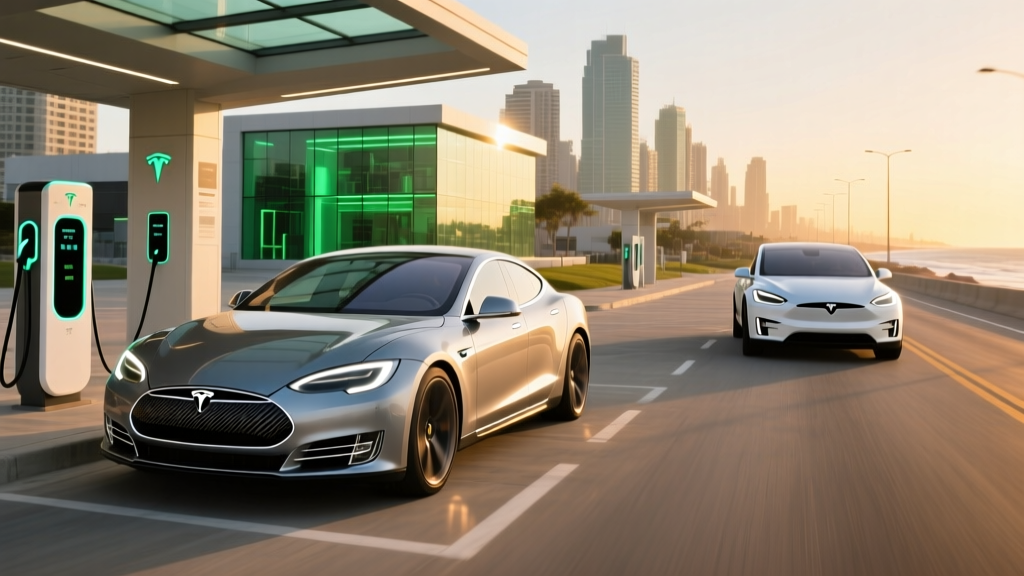
One important note: the 2020 Model Y was built with a Tesla proprietary connector (what is now standardized as NACS). It does not have a native CCS1 port. However, Tesla includes a CCS adapter with most new vehicles, and aftermarket CCS adapters are available for roughly $150–$250, allowing access to Electrify America, EVgo, and other non-Tesla DC networks. As of 2024–2025, Tesla has also opened many Superchargers to non-Tesla EVs, but your 2020 Model Y accesses the full Supercharger network natively.
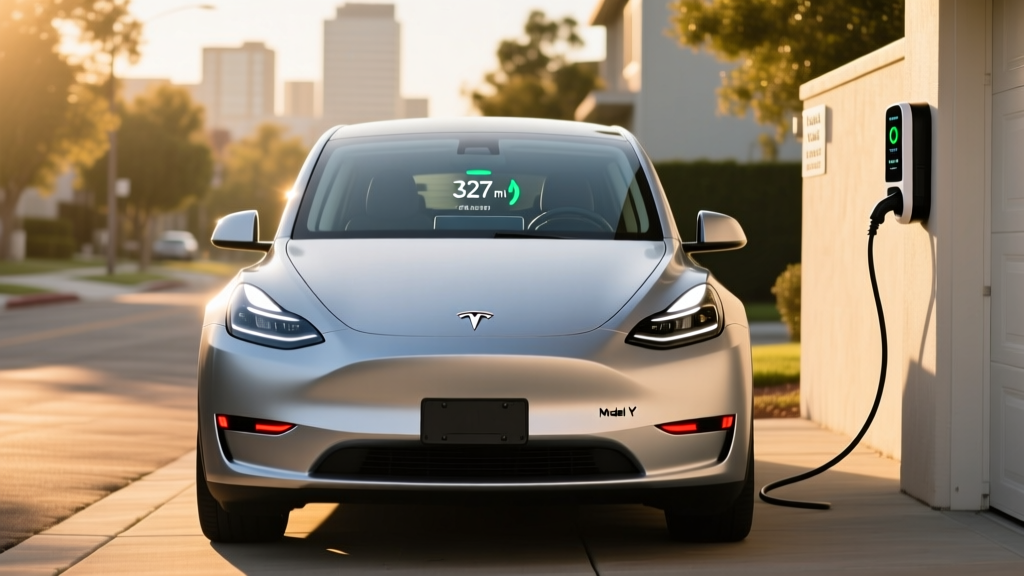
For home charging, the Tesla Wall Connector at 48 amps delivers 11.5 kW, adding about 37 miles of range per hour — enough to fully replenish overnight. A standard NEMA 14-50 outlet with the Tesla Mobile Connector delivers up to 32 amps (7.7 kW) and roughly 25 miles per hour. Installation of a 240V/50A circuit typically costs $800–$2,000 depending on panel capacity and conduit runs; a licensed electrician should evaluate your panel before committing to hardware.
Performance and Driving Dynamics
The Long Range AWD pairs dual induction/permanent-magnet motors for approximately 384 combined horsepower and a 4.8-second 0–60 mph time. The Performance variant bumps output to roughly 456 hp and drops the sprint to 3.5 seconds — genuinely quick for a family crossover.
Both trims feature Tesla's low center of gravity (battery pack under the floor) and responsive torque vectoring. The ride is firm but controlled; road noise is noticeable at highway speeds, which is a common complaint versus competitors like the Ford Mustang Mach-E or Hyundai Ioniq 5. The single-speed transmission means acceleration is linear and uninterrupted.
The 2020 Model Y's regenerative braking system is aggressive by default, enabling true one-pedal driving in most conditions. Tesla removed the user-adjustable regen setting in mid-2020 via a software update, though later updates partially restored configurability. If you're test-driving, confirm whether the specific vehicle allows regen adjustment in the driving menu.
Interior, Cargo, and Technology
The 2020 Model Y interior is minimalist by design: a single 15-inch landscape touchscreen handles all infotainment, climate, navigation, and vehicle settings. There is no instrument cluster — speed and range appear in the upper-left corner of the central display. This approach polarizes buyers; some find it clean and distraction-free, others miss physical controls and a head-up display.
Passenger space:
- Front headroom: 41.0 in
- Front legroom: 41.8 in
- Rear headroom: 37.7 in
- Rear legroom: 39.4 in
Rear legroom is generous for the compact SUV class. The optional third row (available on some 2020 models) adds two small seats suitable only for children under about 5'4" — cargo space drops significantly when deployed.
Cargo volume: 30.2 cu ft behind the second row, expanding to 76.2 cu ft with rear seats folded. The front trunk (frunk) adds roughly 4.1 cu ft for charging cables or a small bag. Total cargo capacity is competitive with the BMW X3 and Audi Q5.
Technology highlights:
- Over-the-air (OTA) software updates that add features over time
- Tesla navigation with real-time Supercharger routing and preconditioning
- Phone-as-key via Bluetooth
- Sentry Mode (360° parking surveillance using Autopilot cameras)
- Dashcam recording to USB drive
- HEPA air filtration (Bioweapon Defense Mode)
Driver assistance: The 2020 Model Y comes standard with Tesla's Basic Autopilot (traffic-aware cruise control and lane-centering on marked highways). Enhanced Autopilot ($6,000 at the time) added auto lane-change, Navigate on Autopilot, and Smart Summon. Full Self-Driving (FSD) capability was available as a $7,000–$10,000 add-on. Importantly, all of these are SAE Level 2 driver-assist systems — the driver must remain attentive with hands on the wheel at all times. These are not autonomous driving systems.
Pricing, Used Market Value, and Tax Credits
| Item | Long Range AWD | Performance |
|---|---|---|
| Original 2020 Base MSRP | $49,990 | $59,990 |
| Typical Used Price (2026, 60–80K mi) | $24,000–$30,000 | $27,000–$33,000 |
| Federal Used EV Credit (§25E) | Up to $4,000 | Up to $4,000 |
| Estimated Net Cost After Credit | $20,000–$26,000 | $23,000–$29,000 |
Here's where the 2020 Model Y becomes interesting for 2026 buyers: because it is a used vehicle, it is not eligible for the new-EV §30D credit (up to $7,500). Instead, it may qualify for the IRS §25E Previously-Owned Clean Vehicle Credit, which provides up to $4,000 (or 30% of the sale price, whichever is lower).
Per IRS guidelines, the §25E credit has strict eligibility requirements:
- Sale price cap: The vehicle must sell for $25,000 or less to qualify for the full credit.
- Buyer income limits: Modified adjusted gross income (MAGI) must not exceed $75,000 (single), $112,500 (head of household), or $150,000 (married filing jointly).
- Vehicle age: Must be at least two model years old (2020 qualifies in 2026).
- Dealer requirement: Must be purchased from a licensed dealer (private-party sales do not qualify).
- First-time transfer: The credit can only be claimed once per vehicle VIN since August 16, 2022.
- Claim frequency: A buyer can only claim the used-EV credit once every three years.
This means a 2020 Model Y listed at $24,500 from a licensed dealer could net a qualifying buyer a $4,000 credit, bringing effective cost to $20,500 — a compelling entry into the Tesla ecosystem. However, many 2020 Model Y vehicles still list above $25,000, which disqualifies them entirely. Work with your dealer to confirm the sale price falls at or below the cap, and consult a tax professional to verify your income eligibility. The credit can be transferred to the dealer as a point-of-sale discount as of 2024.
Pros and Cons
Pros
- Best-in-class Supercharger network access (native NACS connector)
- 316-mile EPA range still competitive in 2026
- Strong performance (4.8s 0-60 Long Range, 3.5s Performance)
- Excellent OTA update track record — features improve over time
- Spacious cargo area (76.2 cu ft) and generous rear legroom
- Eligible for up to $4,000 used-EV tax credit under §25E
- Extensive Sentry Mode and dashcam security features
Cons
- No heat pump — cold-weather range loss is worse than 2021+ models
- Firm ride and noticeable road noise vs. rivals
- Touchscreen-only controls frustrate some drivers
- NMC battery requires 80–90% daily charge limit (not ideal for LFP-style 100% habits)
- 2020 build quality inconsistent (panel gaps, trim rattles reported)
- No native CCS1 port — adapter needed for non-Tesla DC networks
- Insurance premiums often 15–25% higher than comparable ICE SUVs
How the 2020 Model Y Stacks Up Against Competitors
If you're cross-shopping a used 2020 Model Y, the most common alternatives in the $22,000–$35,000 used range include:
- Ford Mustang Mach-E (2021–2022): More traditional interior controls, available heat pump, but no Supercharger access without a Tesla adapter. EPA range up to 305 miles (Extended Range). Ride and noise refinement edge over the Model Y.
- Hyundai Ioniq 5 (2022–2023): 800V architecture enables 10–80% DC charging in ~18 minutes on 350 kW chargers — significantly faster than the Model Y. EPA range up to 303 miles. More distinctive styling, but smaller cargo area (~53 cu ft max).
- Volkswagen ID.4 (2021–2022): Lower used prices ($18,000–$26,000), comfortable ride, but slower DC charging (~135 kW peak) and EPA range of 245–260 miles. Less engaging to drive.
The 2020 Model Y wins on cargo space, Supercharger network convenience, and over-the-air software evolution. It loses on cold-weather efficiency (no heat pump), charging speed versus 800V competitors, and interior refinement. If you road-trip frequently and live in a moderate climate, the Model Y remains a strong choice. If you live in the upper Midwest or Northeast and prioritize winter range, a Mach-E or Ioniq 5 with a heat pump may serve you better.
Who Should Buy the 2020 Tesla Model Y?
- You road-trip regularly and want the most mature DC fast-charging network (Superchargers)
- You need maximum cargo space in a compact electric SUV
- You value OTA software updates and tech-forward features
- You live in a moderate climate where the lack of a heat pump is less punishing
- You find a dealer-listed example at or below $25,000 to maximize the §25E credit
- You regularly drive in sub-freezing weather and need every mile of winter range
- You prefer physical buttons and a traditional instrument cluster
- You want the fastest possible DC charging (consider 800V platforms like Ioniq 5)
- You need CCS1 native compatibility for workplace or apartment charging networks
Frequently Asked Questions
What is the real-world range of a 2020 Tesla Model Y in 2026?
With typical battery degradation of 5–12% over six years, expect a displayed range of 280–300 miles at 100% SoC for the Long Range AWD. Real-world highway range in mild weather is roughly 250–275 miles. In cold weather (below 32°F), plan for 210–240 miles due to the resistive PTC heater and lack of a heat pump.
How fast does the 2020 Model Y charge at home and on the road?
On a Tesla V3 Supercharger, the 2020 Model Y peaks at 250 kW and charges from 10–80% in approximately 27 minutes. At home on a 48-amp Tesla Wall Connector (11.5 kW), you gain about 37 miles of range per hour, or a full charge in 7–8 hours. On a standard NEMA 14-50 outlet (32 amps / 7.7 kW), expect about 25 miles per hour.
Does the 2020 Tesla Model Y qualify for the federal EV tax credit?
Not the new-vehicle §30D credit. However, it may qualify for the §25E used-EV credit of up to $4,000, provided the sale price is $25,000 or less, you purchase from a licensed dealer, and your income falls within IRS limits ($75K single / $150K joint). Confirm eligibility with a tax professional before purchasing.
Is the 2020 Model Y worth buying over newer competitors?
At $20,000–$30,000 (after potential tax credit), the 2020 Model Y offers strong range, performance, and Supercharger access that newer rivals can't fully match. However, the lack of a heat pump, touchscreen-only controls, and firmer ride are legitimate trade-offs. If you find a well-maintained example under $25,000, it remains one of the best value propositions in the used EV market.
What should I check before buying a used 2020 Model Y?
Prioritize: (1) displayed range at 100% SoC to gauge battery health, (2) service history for any drive unit or battery replacements, (3) panel gap consistency and trim condition (2020 build quality varied), (4) whether FSD or Enhanced Autopilot transfers with the vehicle (Tesla occasionally disables transferred FSD on resale), and (5) tire condition — EVs wear tires faster due to instant torque and heavy curb weight.
What is the battery warranty on a 2020 Model Y?
Tesla covers the battery and drive units for 8 years or 120,000 miles (whichever comes first) with a minimum 70% capacity retention guarantee. For a 2020 model, this warranty extends through 2028 or 120,000 miles. According to fueleconomy.gov, most EV batteries retain 85–95% capacity within this window under normal use.