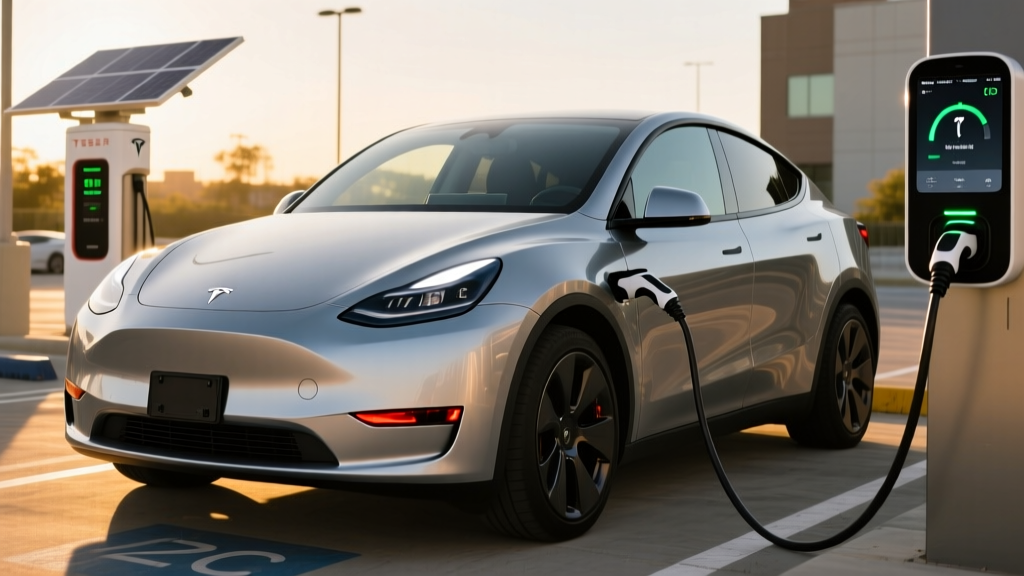
The 2020 Tesla Model Y launched as the electric crossover the market didn't know it needed — and quickly became the best-selling EV in America. Six years later, thousands of these early Model Ys are circulating on the used market, often at prices that make them compelling alternatives to newer, more expensive electric SUVs. But buying a first-year EV requires careful scrutiny of battery health, charging hardware, and shifting tax-credit rules.
This review dissects the 2020 Tesla Model Y Long Range and Performance variants with the data you need to evaluate one today: real-world range expectations, charging speeds on current infrastructure, battery chemistry nuances, and whether you can claim the up-to-$4,000 used-EV federal tax credit under IRS §25E. We'll also benchmark it against the competitors it faces on today's used-EV lots.
2020 Tesla Model Y Quick Spec Sheet
| Spec | Long Range AWD | Performance |
|---|---|---|
| EPA Range | 316 miles | 291 miles |
| Battery (usable) | ~75 kWh (NMC/NCA) | ~75 kWh (NMC/NCA) |
| Drivetrain | Dual-Motor AWD | Dual-Motor AWD |
| Horsepower | ~384 hp | ~456 hp |
| 0–60 mph | 4.8 sec | 3.5 sec |
| Max DC Fast Charge | 250 kW (V3 Supercharger) | 250 kW (V3 Supercharger) |
| 10–80% DC Time | ~27 min | ~27 min |
| Level 2 Charge Rate | 11.5 kW (44 mi/hr) | 11.5 kW (44 mi/hr) |
| MPGe (combined) | 121 MPGe | 111 MPGe |
| Efficiency | 28 kWh/100 mi | 30 kWh/100 mi |
| Cargo (rear seats up) | 30.2 cu ft | 30.2 cu ft |
| Cargo (rear seats folded) | 76.2 cu ft | 76.2 cu ft |
| Original MSRP (2020) | $52,990 | $60,990 |
| Typical Used Price (2026) | $22,000–$30,000 | $25,000–$34,000 |
Sources: EPA / fueleconomy.gov, Tesla archive specs.
Real-World Range: What to Expect Beyond the EPA Sticker
Long Range AWD: EPA 316 mi → Expect 260–285 mi on mixed highway driving; 220–250 mi in freezing temperatures with cabin heat.
Performance: EPA 291 mi → Expect 240–265 mi mixed highway; 200–230 mi in freezing conditions.
Real-world range depends on speed, temperature, terrain, and tire condition. Highway driving at 75+ mph and cold weather below 32°F are the biggest range killers.
The 2020 Model Y Long Range's 316-mile EPA rating was class-leading at launch, and it remains competitive today. But the EPA test cycle includes substantial low-speed city driving where regenerative braking recovers energy. On a flat 70-mph highway in 70°F weather, expect roughly 270 miles from a full charge — about 15% below the sticker.
Cold weather is the larger concern for used Model Y shoppers in northern climates. The 2020 Model Y uses a resistance heater supplemented by a heat pump in later production units (Tesla began integrating heat pumps during the 2020 model year, but early-build units may lack one). Without a heat pump, cabin heating in sub-freezing temperatures can pull 3–5 kW continuously, cutting range to as low as 220 miles on a Long Range. If the specific vehicle you're evaluating has a heat pump (check the build date — units built after approximately mid-2020 typically include one), cold-weather losses moderate to roughly 20–25% instead of 30–35%.
Battery degradation is another factor at six years old. Tesla's NMC/NCA packs in the 2020 Model Y typically show 8–12% degradation at 60,000–80,000 miles based on fleet data. A vehicle originally rated for 316 miles may display 280–290 miles at 100% State of Charge today. Request the car's battery health screen (Settings → Software → Additional Vehicle Information) or use third-party tools like TeslaFi or Tessie to pull State of Health (SoH) data before purchasing.
Charging Speed: DC Fast Charging and Home Level 2
The 2020 Model Y supports Tesla's V3 Supercharger architecture with a peak charge rate of 250 kW — still competitive with most 2026 EVs. However, peak rate is not sustained rate. The charging curve tapers aggressively above 50% State of Charge (SoC), which is why the 10–80% time matters more than the peak number.
| Charging Level | Power / Rate | Speed (Miles Added) | Notes |
|---|---|---|---|
| Level 1 (120V) | ~1.4 kW | ~4 mi/hr | Emergency/trickle only |
| Level 2 (240V, 48A) | 11.5 kW | ~44 mi/hr | Full charge in ~7–8 hours |
| DC Fast (V3 Supercharger) | Peak 250 kW | ~158 mi in 15 min | 10–80% in ~27 min |
| DC Fast (CCS adapter, non-Tesla) | Up to 150–170 kW typical | Varies | Requires Tesla CCS adapter (~$175) |
On a V3 Supercharger with a preconditioned battery (navigation routes to a Supercharger automatically triggers preconditioning), the 2020 Model Y sustains roughly 200–250 kW from 10–30% SoC, then steps down through the 30–60% range at approximately 120–170 kW, and drops further to 60–80 kW above 70%. The result: 10–80% takes about 27 minutes under ideal conditions. In cold weather without preconditioning, that time can stretch to 40+ minutes.
For home charging, the onboard charger maxes at 11.5 kW (48 amps) on a 60-amp circuit. That's roughly 44 miles of range per hour — enough to fully replenish the battery overnight. A Tesla Wall Connector or any J1772 charger with a Tesla adapter works. Installation typically costs $800–$2,000 depending on your electrical panel capacity and run distance.
Connector note: The 2020 Model Y uses Tesla's proprietary connector (now standardized as NACS). With Tesla opening the Supercharger network to non-Tesla EVs, the NACS plug is now the dominant standard. However, if you need to use Electrify America or other CCS-only networks, Tesla sells a CCS1 adapter for approximately $175.
Battery Chemistry, Degradation, and Warranty
All 2020 Model Y vehicles use NMC/NCA (nickel-manganese-cobalt / nickel-cobalt-aluminum) lithium-ion battery chemistry. This is important because NMC/NCA offers higher energy density than LFP (lithium iron phosphate) but is more sensitive to sustained high SoC. Tesla recommends daily charging to 80–90% for NMC packs and 100% only before long trips. If you're evaluating a 2020 Model Y whose previous owner routinely charged to 100%, expect slightly more degradation.
Tesla's battery and drive unit warranty for the 2020 Model Y is 8 years / 120,000 miles (whichever comes first), with a capacity retention threshold of 70%. That means if the battery drops below 70% of original capacity within the warranty window, Tesla covers replacement. For a 2020 vehicle, that warranty extends through the 2028 model year or 120,000 miles — meaning most used 2020 Model Ys still carry partial battery warranty in 2026.
Battery replacement cost outside of warranty is significant: approximately $12,000–$16,000 for a Model Y pack at current Tesla service pricing. However, catastrophic battery failure is rare; gradual degradation is the norm, and most Model Y packs outlast 200,000 miles before falling below the 70% threshold.
Performance, Interior, and Technology
The 2020 Model Y Performance variant's 3.5-second 0–60 mph time remains brisk by any measure. Even the Long Range's 4.8 seconds outpaces most gas-powered crossovers. Dual-motor AWD provides confident traction in rain and snow, and the low center of gravity (battery pack under the floor) keeps body roll well-controlled for a 4,400-lb vehicle.
Interior space is a genuine strength. With 30.2 cubic feet behind the second row and 76.2 cubic feet with seats folded, the Model Y offers cargo volume competitive with a Toyota RAV4. Rear legroom measures 40.5 inches — adequate for adults on longer trips. The optional third row (rare, and best suited for small children) reduces cargo space substantially and is not recommended for regular use.
The 15-inch center touchscreen handles all vehicle controls — there are no physical buttons for climate, mirrors, or glovebox. This minimalist approach divides buyers. The infotainment system remains fast and feature-rich, including streaming media, gaming, and over-the-air (OTA) updates that have added functionality to 2020 vehicles over the years (improved Sentry Mode, Dashcam, and UI refinements).
The 2020 Model Y comes standard with Tesla's Basic Autopilot (traffic-aware cruise control + lane centering). Full Self-Driving (FSD) was available as a paid option. Both are SAE Level 2 systems — the driver must remain fully engaged, hands on the wheel, eyes on the road. This is NOT autonomous driving. FSD (Supervised) can navigate highway interchanges and stop signs, but requires constant driver supervision and can make errors. Treat it as an advanced cruise-control system, not a chauffeur.
Pricing and Federal Tax Credit (Used EV, IRS §25E)
The 2020 Model Y originally started at $52,990 for Long Range and $60,990 for Performance. In today's used market, well-maintained examples with 40,000–80,000 miles typically list between $22,000 and $34,000 depending on trim, mileage, and condition.
| Scenario | Long Range AWD | Performance |
|---|---|---|
| Typical Used Price (2026) | $22,000–$30,000 | $25,000–$34,000 |
| IRS §25E Used-EV Credit (max) | Up to $4,000 | Up to $4,000 |
| Effective Price After Credit | $18,000–$26,000 | $21,000–$30,000 |
Critical tax-credit details (IRS §25E, current as of 2026):
- Credit amount: 30% of the sale price, up to a maximum of $4,000 for used EVs.
- Vehicle price cap: The sale price must be $25,000 or less to qualify. This means a Model Y listed at $26,000 does not qualify — negotiate to $25,000 or below.
- Buyer income caps: Adjusted gross income must not exceed $75,000 (single), $112,500 (head of household), or $150,000 (joint filers).
- Vehicle eligibility: Must be at least 2 model years old (2020 qualifies in 2026), purchased from a licensed dealer (private-party sales do not qualify), and the vehicle must not have been previously transferred under §25E after August 16, 2022.
- Point-of-sale transfer: The credit can be transferred to the dealer at purchase, reducing your out-of-pocket cost immediately.
Verify current rules at IRS.gov §25E. Tax eligibility is individual — consult a tax professional before relying on credit assumptions.
2020 Model Y vs. Used Competition: Is It Still Worth It?
- 316-mi EPA range still competitive in 2026
- 250 kW DC fast charging on V3 Superchargers
- Access to Tesla Supercharger network (most reliable)
- Strong OTA updates keep 2020 hardware current
- Spacious cargo area (76.2 cu ft)
- Qualifies for up to $4,000 used-EV credit at ≤$25,000
- Low maintenance costs (no oil, minimal brake wear)
- Early-build units may lack heat pump (cold-weather range loss)
- Panel gaps and build quality inconsistent on 2020 models
- No physical buttons — all controls via touchscreen
- Ride quality firm; road noise noticeable at highway speeds
- Insurance premiums higher than segment average
- FSD transferability to second owners is limited
- NMC battery requires 80–90% daily charge discipline
Against the 2020–2021 Ford Mustang Mach-E (used: $20,000–$28,000), the Model Y offers more range and a superior charging network, but the Mach-E provides a more conventional interior with physical controls and a slightly more comfortable ride. The Mach-E's 150 kW peak DC charging is noticeably slower.
Versus the 2020–2021 Hyundai Kona Electric (used: $15,000–$20,000), the Model Y is larger, faster, and charges faster — but costs significantly more. The Kona Electric's 258-mile EPA range and 50 kW DC charging limit it to city commuting and shorter trips.
The 2021+ Volkswagen ID.4 (used: $18,000–$25,000) offers comparable space and a more car-like driving experience, but its 125 kW peak DC charging and ~250-mile real-world range trail the Model Y.
Choose the 2020 Model Y if: You prioritize range and fast-charging capability for road trips, want access to the Supercharger network, value OTA software updates, and can find a qualifying example under $25,000 for the used-EV credit.
Look elsewhere if: You want physical buttons and a traditional dashboard layout, need the smoothest ride quality, live in an extreme cold climate and can't verify a heat pump is installed, or want a new-vehicle warranty rather than the remaining balance of the original 8-year coverage.
Frequently Asked Questions
What is the real-world range of the 2020 Tesla Model Y?
The Long Range AWD is EPA-rated at 316 miles, but real-world highway driving yields approximately 260–285 miles. Cold weather (below 32°F) can reduce that to 220–250 miles, especially on early-build units without a heat pump. The Performance trim rates at 291 miles EPA, with real-world highway figures around 240–265 miles.
How fast does the 2020 Model Y charge?
On a Tesla V3 Supercharger, it peaks at 250 kW and charges from 10–80% in approximately 27 minutes with a preconditioned battery. At home on a 240V Level 2 charger (48A), it charges at 11.5 kW, adding roughly 44 miles of range per hour — a full charge takes about 7–8 hours.
Does the 2020 Tesla Model Y qualify for any federal tax credit?
It does not qualify for the new-vehicle §30D credit. However, it can qualify for the IRS §25E used clean vehicle credit — up to $4,000 (30% of sale price) — if the purchase price is $25,000 or less, you buy from a licensed dealer, your income falls within the caps ($75K single / $150K joint), and the vehicle hasn't been previously transferred under §25E. Always verify eligibility at IRS.gov.
Is a used 2020 Model Y a good buy in 2026?
Yes, if you find a well-maintained example under $25,000 with verified battery health and remaining battery warranty. The Supercharger network access, 250 kW charging, and 316-mile EPA range remain competitive. Key risks include early-build quality inconsistencies, potential lack of a heat pump on very early units, and higher-than-average insurance costs. Always check battery SoH before purchase.
How long will the 2020 Model Y battery last?
Tesla warranties the battery for 8 years / 120,000 miles with a 70% capacity retention threshold. Fleet data suggests NMC packs in the Model Y typically lose 8–12% capacity in the first 60,000–80,000 miles, then degradation slows. Most packs should last 200,000+ miles before approaching the 70% threshold. Replacement cost outside warranty is approximately $12,000–$16,000.
Can I use non-Tesla chargers with the 2020 Model Y?
Yes, with a Tesla CCS1 adapter (approximately $175 from Tesla). The 2020 Model Y's native port is NACS (Tesla's connector), which is now the standard on most new EVs. For Electrify America and other CCS-only networks, the adapter is required. Charging speeds on non-Tesla networks may be slightly lower (typically 150–170 kW peak) depending on the station's capabilities.