Quick Verdict: Is the 2020 Model X Still a Smart Buy in 2026?
The 2020 Tesla Model X occupies an unusual spot in the used EV market. It's the last model year before Tesla's "Plaid" and "Refresh" overhaul (which arrived for 2021 with the yoke steering, horizontal screen, and rear entertainment display), meaning you get the legacy interior with the vertical 17-inch touchscreen, traditional round steering wheel, and the original Raven suspension architecture. For buyers who want a three-row electric SUV with falcon-wing rear doors and don't need the latest cabin aesthetics, the 2020 Model X can be a compelling used proposition — especially with potential eligibility for the up-to-$4,000 used-EV federal tax credit under IRS §25E.
But there are real trade-offs. The 2020 Model X predates Tesla's switch to NACS as a separate standard (it uses the Tesla connector natively), predates the structural battery pack, and its Supercharging speeds peak around 200 kW rather than the 250 kW+ seen on newer architectures. Let's break down exactly what you're getting.
Spec Table: 2020 Tesla Model X Long Range & Performance
| Specification | Long Range | Performance |
|---|---|---|
| EPA Range | 328 miles | 305 miles |
| Battery (usable) | ~100 kWh (NMC) | ~100 kWh (NMC) |
| Drivetrain | Dual Motor AWD | Dual Motor AWD |
| Horsepower | ~417 hp (combined) | ~534 hp (combined) |
| 0–60 mph | 4.4 sec | 2.7 sec (with Ludicrous) |
| Max DC Fast Charge | 200 kW (peak) | 200 kW (peak) |
| 10–80% DC Charge Time | ~38 min | ~38 min |
| Level 2 Charge Rate | 11.5 kW (48A) | 11.5 kW (48A) |
| EPA Efficiency | 92 MPGe (36 kWh/100mi) | 89 MPGe (38 kWh/100mi) |
| Cargo (behind 3rd row / max) | 26.6 / 88.1 cu ft | 26.6 / 88.1 cu ft |
| Seating | 5, 6, or 7 passengers | 5, 6, or 7 passengers |
| Battery Warranty | 8 yr / 150,000 mi | 8 yr / 150,000 mi |
| Original MSRP (base) | $84,990 | $104,990 |
Sources: EPA fueleconomy.gov, Tesla archive specs.
Real-World Range: What to Expect Beyond the EPA Sticker
EPA Sticker: 328 miles (Long Range) / 305 miles (Performance)
Real-World Expectation: Plan for approximately 260–290 miles on highway road trips at 70–80 mph in moderate temperatures. In cold weather (below 30°F), expect a 20–30% reduction, bringing usable highway range down to roughly 210–250 miles depending on cabin heat usage and whether you precondition.
The 2020 Model X uses a ~100 kWh NMC (nickel manganese cobalt) battery pack. Tesla does not publish an official usable capacity figure, but independent testing and telemetry suggest approximately 95–97 kWh is accessible to the driver, with the remainder held as a top/bottom buffer to protect long-term cell health.
The Model X's aerodynamic drag coefficient (Cd ≈ 0.25) is excellent for an SUV, but its 5,000+ lb curb weight and large frontal area mean highway efficiency drops noticeably above 75 mph. In mixed city/highway driving at moderate speeds, owners commonly report 300–320 miles on a full charge. City driving with heavy regenerative braking can actually exceed the EPA estimate thanks to Tesla's aggressive one-pedal regen tuning.
Cold-weather note: The 2020 Model X does not have a heat pump (that arrived with the 2021 refresh). It uses resistive cabin heating, which draws significantly more energy in winter. Preconditioning while plugged in is essential to preserve range in cold climates.
Charging Speed: DC Fast, Supercharger, and Home Level 2
| Charging Method | Max Power (kW) | Miles Added per Hour | Notes |
|---|---|---|---|
| Level 1 (120V / 12A) | ~1.4 kW | ~4 mi/hr | Emergency/trickle only |
| Level 2 (240V / 48A) | 11.5 kW | ~34 mi/hr | Full charge in ~9–10 hours |
| Tesla Supercharger V3 | 200 kW (peak) | Up to ~170 mi in 15 min | Peak only at low SoC; tapers significantly above 60% |
| Tesla Supercharger V2 | 150 kW | ~130 mi/hr at peak | Older stations; shared-stall splitting possible |
| CCS (via adapter) | ~150 kW | Varies | Requires Tesla CCS adapter (sold separately) |
The 2020 Model X charges natively via the Tesla connector. It can access the entire Tesla Supercharger network — the most reliable DC fast-charging infrastructure in the US as of 2026. For non-Tesla networks (Electrify America, EVgo, ChargePoint CCS stations), you'll need a Tesla-to-CCS adapter (approximately $200–250 aftermarket, or Tesla's official adapter when available).
Charging curve reality: The 200 kW peak only holds from roughly 10–30% state of charge. By 50% SoC, expect tapering to ~120 kW. Above 80%, charging slows to ~40–50 kW to protect battery health. A realistic 10–80% session takes approximately 35–40 minutes at a V3 Supercharger. On V2 stations, add 5–10 minutes.
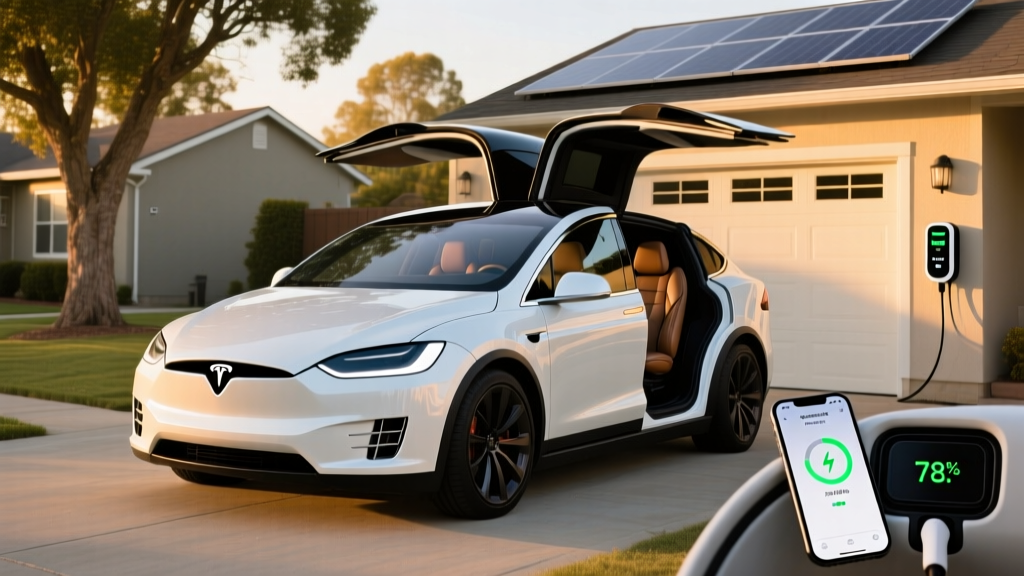
Home charging: With a Tesla Wall Connector or equivalent 48-amp Level 2 station on a 60-amp circuit, you'll recover roughly 34 miles of range per hour, meaning a full overnight charge from 10% to 100% takes about 9–10 hours. Most owners charging from 20–80% daily will wake up fully replenished every morning.
Performance and Driving Dynamics
The 2020 Model X comes in two trims, both dual-motor all-wheel drive:
- Long Range: ~417 combined horsepower, 0–60 mph in 4.4 seconds. This is genuinely quick for a 5,000-lb SUV and more than adequate for any real-world driving scenario.
- Performance (with Ludicrous Mode): ~534 combined horsepower, 0–60 mph in 2.7 seconds. The acceleration is violent and theatrical, though it comes at the cost of roughly 23 miles of EPA range and a significantly higher original MSRP.
The 2020 model year uses Tesla's "Raven" front suspension (adapted from the Model S), which provides a noticeably smoother ride than pre-2019 Model X vehicles. Adaptive air suspension is standard, allowing ride height adjustment for highway efficiency or rough-road clearance (up to ~8.0 inches of ground clearance at maximum lift).
Handling is competent but not sporty. The Model X's weight is always perceptible in corners, and the regenerative braking — while effective for one-pedal driving — takes a few days to modulate smoothly if you're transitioning from an ICE vehicle.
Tech, Interior, and the Falcon-Wing Experience
Infotainment: The 2020 Model X retains the portrait-oriented 17-inch touchscreen running Tesla's proprietary OS. It includes navigation, streaming media (Spotify, Netflix, YouTube while parked), a full web browser, and over-the-air software updates. As of 2026, Tesla continues to push OTA updates to 2020-era hardware, though some newer features (like the revamped UI in the refresh models) are not backported.
Driver Assistance — Autopilot and FSD:
SAE Level 2 — Driver Supervision Required. Tesla's Autopilot (standard) and Full Self-Driving / FSD Supervised (optional) are Level 2 driver-assistance systems. The driver must keep hands on the wheel and eyes on the road at all times. The vehicle does not drive itself. FSD adds features like automatic lane changes, Navigate on Autopilot, and traffic light/stop sign recognition, but it is not autonomous driving.
The 2020 Model X uses Tesla's Hardware 3 (HW3) computer, which Tesla has stated is capable of supporting FSD. However, the camera suite is the legacy setup (no cabin-facing camera for driver monitoring as in newer models). As of 2026, FSD Supervised is available as a subscription (~$99/month) or a one-time purchase, though its value proposition remains debated among owners.
Falcon-Wing Doors: The signature rear gullwing doors are the Model X's most polarizing feature. They provide excellent access to the second and third rows in tight parking spaces (they need only ~12 inches of lateral clearance), but they are mechanically complex and have been a source of reliability complaints (seal leaks, sensor issues, slow operation in cold weather). Budget-conscious used buyers should inspect door actuators and seals carefully during a pre-purchase evaluation.
Cargo Space: 26.6 cubic feet behind the third row, 88.1 cubic feet with both rear rows folded. The front trunk (frunk) adds approximately 6.6 cubic feet — useful for charging cables or a small bag.
Used Pricing, Tax Credit Eligibility, and Total Cost
| Factor | Details |
|---|---|
| Original MSRP (Long Range) | $84,990 (base, before options) |
| Original MSRP (Performance) | $104,990 (base) |
| Typical Used Price (2026) | $38,000–$55,000 depending on mileage, condition, trim |
| Federal Used EV Credit (§25E) | Up to $4,000 or 30% of sale price (whichever is lower) |
| §25E Income Caps (2026) | $75K single / $112,500 HOH / $150K joint (MAGI) |
| §25E Price Cap | Sale price must be ≤ $25,000 for used vehicles |
| Eligibility Caveat | Most 2020 Model X listings exceed $25K — credit unlikely for most buyers |
Critical tax credit reality: The federal used-EV credit (IRS §25E) caps eligible vehicles at a $25,000 sale price. In 2026, a 2020 Model X typically sells for $38,000–$55,000, which puts it above this threshold. Unless you find a high-mileage example priced at or below $25,000 (rare, and likely with significant wear), most buyers will not qualify for the used-EV tax credit on this vehicle. The §30D new-vehicle credit does not apply to used purchases. Always consult a tax professional and verify current IRS §25E rules before purchasing.
Insurance: Model X insurance premiums tend to run 20–40% higher than comparable ICE luxury SUVs due to repair costs and aluminum body panels. Expect $2,500–$4,000/year depending on your profile and location.
Maintenance: No oil changes, no spark plugs, no transmission fluid. Budget for cabin air filter replacement (~$150–200 every 2 years), tire rotation, brake fluid checks, and wiper fluid. Tesla's mobile service handles most routine items. The biggest potential expense is out-of-warranty battery or drive unit replacement — though the 8-year/150,000-mile battery warranty may still have remaining coverage on a 2020 model.
Pros and Cons
Pros
- Class-leading cargo and passenger space for an electric SUV
- Access to Tesla Supercharger network (most reliable in the US)
- Strong real-world range (260–320 mi depending on conditions)
- Over-the-air updates keep the vehicle improving post-purchase
- Falcon-wing doors offer unique access in tight parking
- Raven adaptive air suspension provides a smooth, adjustable ride
- Extensive Supercharger + OTA ecosystem retains value better than most used EVs
Cons
- No heat pump — significant winter range loss vs. refreshed models
- Falcon-wing doors are a known reliability concern (seals, sensors, actuators)
- 200 kW peak DC charging is slower than newer 250 kW+ architectures
- Legacy interior (vertical screen) feels dated vs. 2021+ refresh
- Likely ineligible for the used-EV federal tax credit due to the $25K price cap
- Insurance premiums are elevated vs. non-Tesla competitors
- Third-row space is tight for adults on long trips
Who Should Buy the 2020 Model X?
Choose the 2020 Model X if:
- You need three rows of seating in an electric SUV and want Supercharger access for family road trips
- You value cargo versatility (up to 88.1 cu ft with seats folded) and the frunk
- You're comfortable buying a vehicle with a pre-refresh interior and no heat pump
- You can inspect the falcon-wing doors thoroughly and budget for potential repairs
Look elsewhere if:
- You live in a cold climate and want maximum winter range (consider a 2021+ Model X with heat pump, or a Rivian R1S)
- You want the latest driver-assist hardware (HW4 cameras arrived with the refresh)
- You need fast CCS-native charging without an adapter (consider Hyundai Ioniq 9 or Kia EV9)
- You're counting on the $4,000 used-EV tax credit — the $25K price cap likely disqualifies this vehicle
FAQ: 2020 Tesla Model X
What is the real-world range of the 2020 Model X?
The EPA rates the Long Range at 328 miles and the Performance at 305 miles. In real-world highway driving at 70–80 mph, expect 260–290 miles. In cold weather (below 30°F), that drops to approximately 210–250 miles due to resistive cabin heating and battery chemistry limitations.
How fast does the 2020 Model X charge?
At a Tesla V3 Supercharger, it peaks at approximately 200 kW, achieving a 10–80% charge in about 35–40 minutes. At home on a 48-amp Level 2 charger (11.5 kW), you'll add roughly 34 miles of range per hour, with a full charge taking 9–10 hours.
Does the 2020 Model X qualify for the federal EV tax credit?
The §30D new-vehicle credit does not apply to used purchases. The §25E used-EV credit offers up to $4,000, but the vehicle's sale price must be $25,000 or less. Most 2020 Model X listings in 2026 exceed this cap, making the credit unlikely for most buyers. Check IRS guidelines and consult a tax professional.
Is the 2020 Model X worth buying vs. competitors?
Against a used 2020 Jaguar I-PACE (EPA 234 mi, slower charging) or 2020 Audi e-tron (EPA 204 mi, 150 kW charging), the Model X wins on range, charging speed, and Supercharger network access. Against a newer used Rivian R1S (EPA 316 mi, better off-road capability, CCS-native), the Rivian offers more modern hardware but lacks Supercharger access. The Model X's unique advantage remains Tesla's charging ecosystem and OTA update longevity.
What's the biggest risk of buying a used 2020 Model X?
The falcon-wing door mechanism is the most common reliability concern — inspect seals, hinges, and ultrasonic sensors. Battery degradation on 2020 NMC packs is generally modest (expect 8–12% loss at 80,000–100,000 miles based on fleet data), but verify the battery's State of Health via the Tesla app or a pre-purchase inspection. Ensure the 8-year/150,000-mile battery warranty still has remaining coverage.
Does the 2020 Model X have a heat pump?
No. The heat pump was introduced with the 2021 Model X refresh. The 2020 model uses resistive cabin heating, which consumes significantly more energy in cold weather and contributes to the 20–30% winter range reduction.