Quick Verdict: A Pre-Refresh Flagship With Staying Power
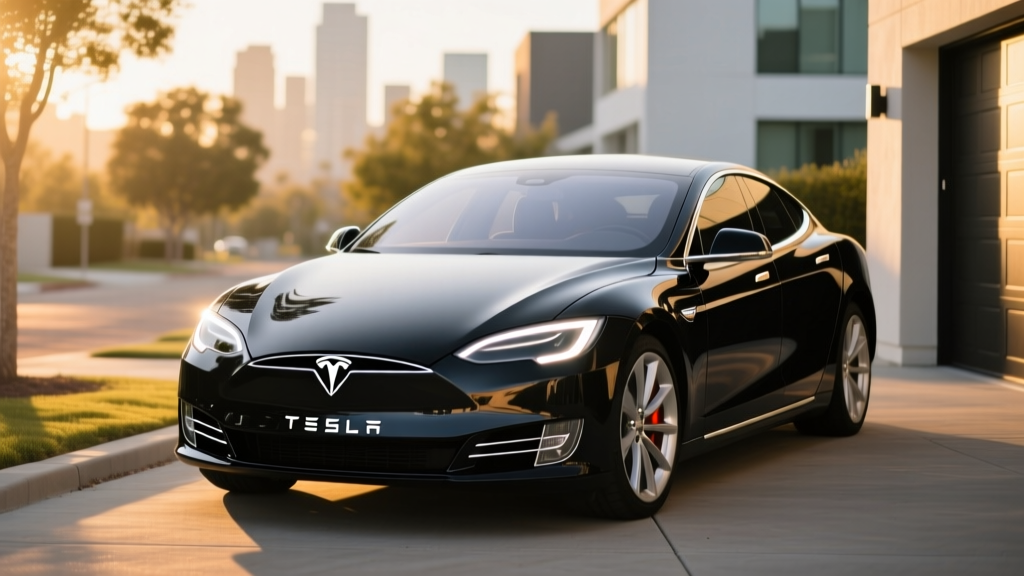
The 2020 Tesla Model S occupies a curious space in the used EV market. It's the last model year before Tesla's 2021 "Palladium" refresh brought the updated interior, yoke steering option, and tri-motor Plaid powertrain. That makes the 2020 model a bridge vehicle — it carries the older interior design and 100D/Performance dual-motor architecture, but still delivers executive-sedan range, Supercharger access, and over-the-air updates that keep it relevant six years later.
For buyers shopping the used luxury EV segment in 2026, the 2020 Model S Long Range Plus is the sweet spot: 402 miles of EPA-rated range (the highest of any 2020 model year EV), a usable ~95 kWh NMC battery, and used pricing that has settled into the $28,000–$42,000 range depending on mileage and condition. The Performance trim sacrifices about 30 miles of range for a 2.3-second 0–60 mph time that still embarrasses most new cars on sale today.
The catch? DC fast-charging tops out at roughly 150 kW — adequate for road trips but noticeably slower than the 250+ kW rates on newer EVs. And the pre-refresh interior, while spacious, shows its age next to a 2025 Lucid Air or refreshed Model S. Here's the complete breakdown.
Spec Sheet: 2020 Tesla Model S at a Glance
| Specification | Long Range Plus | Performance |
|---|---|---|
| EPA Range | 402 mi | 348 mi |
| Battery (Usable / Gross) | ~95 kWh / ~100 kWh | ~95 kWh / ~100 kWh |
| Battery Chemistry | NMC (Nickel Manganese Cobalt) | NMC |
| Drivetrain | Dual-Motor AWD | Dual-Motor AWD |
| Horsepower | ~518 hp (combined) | ~762 hp (combined) |
| 0–60 mph | 4.2 sec | 2.3 sec (w/ Ludicrous) |
| Top Speed | 155 mph | 163 mph |
| MPGe (City / Hwy / Combined) | 120 / 112 / 116 MPGe | 101 / 92 / 97 MPGe |
| Efficiency | 29 kWh/100 mi | 35 kWh/100 mi |
| Max DC Fast Charge | ~150 kW | ~150 kW |
| Level 2 Charge Rate | 11.5 kW (48A) | 11.5 kW (48A) |
| Base MSRP (2020) | $79,990 | $99,990 |
| Typical Used Price (2026) | $30,000–$40,000 | $35,000–$45,000 |
Sources: EPA fueleconomy.gov, Tesla 2020 press materials. Used pricing reflects Q1 2026 market averages from major used-EV listing platforms.
Range & Efficiency: 402 Miles EPA, But Plan for Reality
Long Range Plus: EPA 402 mi · Expect ~330–360 mi highway (75 mph), ~280–310 mi in freezing weather with cabin heat.
Performance: EPA 348 mi · Expect ~280–310 mi highway, ~240–270 mi in freezing weather.
Based on owner-reported data, third-party highway range tests, and typical NMC cold-weather loss of 15–25%.
The 2020 Model S Long Range Plus achieved its 402-mile EPA rating through a combination of software optimizations, weight reduction (roughly 70 lbs shed vs. the prior Long Range), and a revised front induction motor that reduces drag during coasting. On paper, it was the range king of 2020 — no other production EV came close.
In practice, the Model S's efficiency of 29 kWh per 100 miles (Long Range Plus) is impressive for a 4,900-lb luxury sedan. For comparison, the 2020 Porsche Taycan Turbo consumed roughly 49 kWh/100 mi, and even the 2020 Jaguar I-PACE sat at 44 kWh/100 mi. Tesla's powertrain efficiency was years ahead, and that advantage still shows on used examples.
Cold-weather reality: Like all NMC battery EVs, the 2020 Model S loses range in freezing temperatures. Tesla's battery preconditioning and heat pump (standard by this model year) mitigate the loss, but expect a 15–25% reduction in effective range when temperatures drop below 30°F. On a 250-mile winter highway trip, you'll want to plan a Supercharger stop — the EPA sticker won't save you.
Highway driving: At sustained 75–80 mph speeds, aerodynamic drag dominates. Owners consistently report 330–360 miles of real highway range on the Long Range Plus, which is still exceptional but a meaningful gap from the 402-mile sticker. The Performance trim, with its wider tires and more aggressive motor mapping, drops further to roughly 280–310 miles at highway speed.
Charging Speed: 150 kW Peak, Supercharger Reliability
| Charging Level | Power / Voltage | Speed (Miles Added) | Notes |
|---|---|---|---|
| Level 1 (120V household) | ~1.4 kW | ~3–4 mi/hr | Emergency/trickle only |
| Level 2 (240V, 48A Mobile Connector or Wall Connector) | 11.5 kW | ~34 mi/hr | Full charge in ~9 hours |
| DC Fast Charge (Tesla Supercharger V2) | ~150 kW peak | ~170 mi in 30 min | 10–80% in ~40 min |
| DC Fast Charge (Supercharger V3) | ~150 kW (car-limited) | Same as V2 for this model | V3 stalls deliver 250 kW, but 2020 Model S caps at ~150 kW |
The 2020 Model S charges at a peak rate of approximately 150 kW on DC fast chargers. This is a critical detail for used buyers: while Tesla's V3 Supercharger stalls can deliver up to 250 kW, the 2020 Model S's battery management system and thermal architecture cap its intake at roughly 150 kW. The newer Plaid and refreshed models accept up to 250 kW, but this pre-refresh generation does not.
What that means on a road trip: A 10–80% charge takes approximately 40 minutes at a Supercharger. The charge curve holds near peak power between 10–50% SoC, then tapers progressively — you'll see roughly 100 kW by 60% and 50 kW by 80%. This taper is normal for NMC chemistry but means the last 20% takes disproportionately long. Plan your stops to charge to 80% and move on.
Home charging: With Tesla's Gen 2 Wall Connector on a 60-amp circuit (48 amps continuous), the onboard charger accepts up to 11.5 kW, adding roughly 34 miles of range per hour. A full charge from empty takes about 9 hours — easily handled overnight. If your home has a standard NEMA 14-50 outlet, the Mobile Connector delivers up to 40 amps (9.6 kW), which is sufficient for daily use. Installation of a dedicated 60A circuit typically runs $500–$1,500 depending on panel proximity, per licensed electrician estimates.
Non-Tesla charging: The 2020 Model S uses Tesla's proprietary connector (now designated NACS). Adapters exist for CCS and CHAdeMO networks — Tesla sells a CCS adapter (~$250), and third-party CHAdeMO adapters are available but bulky. In 2026, the expanding NACS-standard Supercharger network remains the strongest charging ecosystem in the US, which is a significant ownership advantage.
Performance & Driving Dynamics
Even in its base Long Range Plus trim, the 2020 Model S delivers 518 combined horsepower and a 4.2-second 0–60 mph time from its dual-motor all-wheel-drive system. The front motor is a permanent-magnet unit optimized for efficiency at cruise; the rear is a performance-oriented induction motor. Torque vectoring between axles is seamless and instantaneous — there's no transmission to shift, no turbo lag, no drivetrain hesitation.
The Performance trim, equipped with Ludicrous Mode, hits 60 mph in 2.3 seconds. That figure was supercar territory just a few years prior, and in 2026 it still out-accelerates nearly every new vehicle you can buy under $150,000. Sustained performance is strong too — Tesla's thermal management keeps the battery and motors within operating temperature even during repeated hard launches, though you'll see power reduction after 3–4 consecutive full-throttle runs.
Ride quality: The 2020 Model S uses a conventional adaptive air suspension (not the redesigned unit from the 2021 refresh). Ride comfort is good but not class-leading — a 2020 Mercedes S-Class or BMW 7 Series rides more softly over broken pavement. The Tesla trades some ride refinement for sharper handling and a lower center of gravity courtesy of the floor-mounted battery pack.
Autopilot / FSD: All 2020 Model S vehicles shipped with Tesla's Enhanced Autopilot hardware (HW3). Basic Autopilot (adaptive cruise + lane centering) is standard and remains a capable SAE Level 2 driver-assist system. Full Self-Driving (Supervised) was available as a paid add-on ($7,000–$10,000 at the time). Important: FSD Supervised is not autonomous driving — it requires continuous driver attention and hands-on or eyes-on supervision at all times. It does not make the car self-driving.
Interior, Cargo & Technology
The 2020 Model S interior is where the pre-refresh design shows its age most visibly. The dashboard layout dates to the Model S's 2012 launch architecture: a 17-inch center touchscreen dominates, but the instrument cluster is a small, low-resolution display behind a conventional steering wheel. Materials are adequate but not luxurious — synthetic leather (Tesla calls it "vegan" leather), piano black plastic that attracts fingerprints, and panel gaps that vary widely from car to car.
Space and dimensions:
- Front legroom: 42.7 inches
- Rear legroom: 35.4 inches
- Cargo (rear trunk): 26.3 cu ft
- Cargo (frunk): 5.3 cu ft
- Total cargo with rear seats folded: 58.1 cu ft
- Seating: 5 passengers standard (optional rear-facing third-row jump seats were available but rare and very cramped — suitable only for small children on short trips)
The cargo capacity is a genuine strength. The liftback design opens wide, and 26.3 cubic feet of rear trunk space beats most luxury sedans and rivals some midsize SUVs. The frunk (front trunk) adds another 5.3 cubic feet — useful for charging cables, a laptop bag, or groceries you want to keep separate.
Infotainment: The 17-inch touchscreen runs Tesla's proprietary OS, which continues to receive over-the-air updates in 2026. Features include built-in navigation with Supercharger routing, Spotify/Apple Music integration, a full web browser, and Tesla Arcade (gaming while parked). There is no Apple CarPlay or Android Auto — a dealbreaker for some buyers. Bluetooth audio and phone connectivity work but have historically been less reliable than native smartphone integration in competing vehicles.
Pricing, Used Market Value & Tax Credit Eligibility
| Trim | Original MSRP | Used Price Range (2026) | After Used-EV Credit |
|---|---|---|---|
| Long Range Plus | $79,990 | $30,000–$40,000 | As low as ~$26,000 |
| Performance | $99,990 | $35,000–$45,000 | As low as ~$31,000 |
| Performance (w/ Ludicrous) | $119,990 | $38,000–$50,000 | As low as ~$34,000 |
Used prices vary significantly based on mileage, condition, FSD transfer status, and battery health. Data reflects Q1 2026 market averages.
Federal Used-EV Tax Credit (§25E)
Here's where the 2020 Model S becomes genuinely compelling for budget-minded buyers. Under the IRS §25E Used Clean Vehicle Credit, qualifying buyers can claim up to $4,000 (or 30% of the sale price, whichever is less) when purchasing a used EV from a licensed dealer.
- ✅ Sale price must be $25,000 or less — this is the hard cap. Many 2020 Model S examples price above this threshold.
- ✅ Buyer income limits: ≤$75,000 single / ≤$112,500 head of household / ≤$150,000 joint filers (modified AGI)
- ✅ Vehicle must be purchased from a licensed dealer (private-party sales do not qualify)
- ✅ Vehicle must be at least 2 model years old (2020 qualifies in 2026)
- ✅ Battery capacity must be at least 7 kWh (the Model S's ~100 kWh pack easily qualifies)
- ✅ Credit can be claimed once per vehicle (check VIN history — if a prior owner already claimed the credit on this specific VIN, it's ineligible)
- ⚠️ Tax rules are subject to change — consult a tax professional and verify current-year eligibility at irs.gov
The $25,000 cap problem: Most 2020 Model S vehicles on the used market in early 2026 are priced between $30,000 and $45,000 — above the §25E price cap. However, higher-mileage examples (80,000+ miles) or those with cosmetic damage occasionally dip to $24,000–$25,000 at auction or through certain dealers. If you find one at or below $25,000 and meet the income requirements, the $4,000 credit effectively drops the price by 16%, making it one of the best value-per-mile-of-range propositions in the used EV market.
Note: The 2020 Model S does not qualify for the §30D new-vehicle credit (that applies only to new purchases). The §25E used credit is the relevant incentive here.
Battery Health, Warranty & Longevity
The 2020 Model S uses an NMC (nickel manganese cobalt) lithium-ion battery pack with approximately 100 kWh gross capacity (~95 kWh usable). Tesla's battery management system maintains a thermal buffer at the top and bottom of the state-of-charge range to slow degradation.
Warranty: Tesla's original battery and drive unit warranty for the 2020 Model S is 8 years / 150,000 miles (whichever comes first), with a guaranteed minimum capacity retention of 70%. This is one of the more generous warranties in the EV space. For a 2020 model purchased in 2026, you have approximately 2 years or ~100,000+ miles of warranty coverage remaining (depending on the vehicle's current odometer reading).
Real-world degradation data: Based on aggregated fleet data from Tesla owners and third-party analyses, Model S/X battery packs typically retain 88–92% of original capacity at 100,000 miles. Degradation is non-linear: the steepest loss occurs in the first 20,000–30,000 miles (roughly 3–5%), then the curve flattens significantly. A 2020 Model S with 60,000 miles should still deliver roughly 350–370 miles of EPA-equivalent range on the Long Range Plus trim.
Replacement cost: Out-of-warranty battery replacement for the Model S runs $15,000–$22,000 depending on whether Tesla supplies a new or remanufactured pack. This is a meaningful risk for high-mileage used buyers — always check the battery's State of Health (SoH) via the car's service menu or a pre-purchase inspection before buying.
Ownership tips for NMC longevity:
- Set daily charge limit to 80–90% (Tesla's software makes this easy)
- Avoid leaving the car at 100% SoC for extended periods
- Minimize repeated DC fast-charging when Level 2 is available
- Use preconditioning before Supercharger stops to optimize charge speed and battery health
Who Should Buy the 2020 Model S?
- You want 350+ miles of real-world range in a luxury sedan
- Supercharger network access is a priority for road trips
- You value OTA software updates that keep a 6-year-old car current
- Cargo space matters (liftback + frunk beats most sedans)
- You can find one under $25K and qualify for the §25E credit
- Fast DC charging is critical (150 kW is slow vs. 250+ kW newer EVs)
- You want Apple CarPlay / Android Auto
- Interior material quality is a top priority
- You need a brand-new vehicle warranty
- You prefer a traditional luxury dealership service experience
Best use cases:
- Daily commuter: Excellent — 34+ miles of range added per hour on Level 2 means overnight charging covers virtually any commute. Regenerative braking and one-pedal driving reduce fatigue in stop-and-go traffic.
- Family sedan: Good — spacious rear seats, large trunk, and available (if rare) third-row jump seats. The large glass roof creates an airy cabin that kids appreciate. Lack of rear-seat entertainment screens (pre-refresh) is a gap vs. competitors.
- Road tripper: Very good — Supercharger routing in the nav system is seamless, and 330+ miles of highway range means fewer stops than most EVs. The 150 kW charge rate means slightly longer stops (~40 min 10–80%) vs. newer EVs at V3 stalls.
- Towing: Not recommended — the 2020 Model S is not rated for towing.
2020 Model S vs. Key Used-EV Competitors
| Attribute | 2020 Tesla Model S LR+ | 2020 Porsche Taycan 4S | 2021 Lucid Air Pure |
|---|---|---|---|
| Used Price Range | $30K–$40K | $40K–$55K | $45K–$58K |
| EPA Range | 402 mi | 203 mi | 406 mi |
| DC Fast Charge (peak kW) | ~150 kW | ~270 kW | |
| Efficiency (kWh/100mi) | 29 | 49 | 26 |
| 0–60 mph | 4.2 sec | 3.8 sec | 5.0 sec |
| Charging Network | Supercharger (NACS) | Electrify America (CCS) | CCS + NACS adapter |
| Interior Quality | Adequate | Excellent | Very Good |
The Taycan wins on charging speed (270 kW vs. 150 kW) and interior quality, but its 203-mile EPA range is a dealbreaker for road-trip-oriented buyers. The Lucid Air Pure offers slightly more range and better efficiency, but used examples are still $10K–$18K more expensive than a comparable Model S. The 2020 Model S occupies the value sweet spot: maximum range per dollar in the used luxury EV segment.
Frequently Asked Questions
What is the real-world range of the 2020 Tesla Model S?
The Long Range Plus achieves 402 miles EPA, but expect roughly 330–360 miles at highway speeds and 280–310 miles in freezing temperatures. The Performance trim delivers 348 miles EPA with real-world highway range of approximately 280–310 miles. Actual range depends heavily on speed, temperature, elevation changes, and climate control usage.
How fast does the 2020 Model S charge at home and on DC fast chargers?
On DC fast chargers (Superchargers), the 2020 Model S peaks at approximately 150 kW, achieving a 10–80% charge in about 40 minutes. At home on a Level 2 (240V, 48A) connection, it charges at 11.5 kW, adding roughly 34 miles of range per hour. A full overnight charge takes about 9 hours from empty.
Does the 2020 Tesla Model S qualify for the federal EV tax credit?
Not for the §30D new-vehicle credit (that applies only to new purchases). However, it may qualify for the §25E used clean vehicle credit of up to $4,000 if purchased from a licensed dealer for $25,000 or less, and the buyer meets income caps ($75K single / $150K joint). Many used 2020 Model S vehicles price above the $25K cap, so finding a qualifying example requires patience. Always verify eligibility at irs.gov and consult a tax professional.
Is the 2020 Model S worth buying over newer EVs?
It depends on your priorities. If maximum range per dollar and Supercharger access matter most, the 2020 Model S Long Range Plus is hard to beat in the used market. If you need fast DC charging (250+ kW), a modern interior, or Apple CarPlay, you'll want to look at newer alternatives like a used 2022+ Model S refresh, Lucid Air, or Hyundai Ioniq 6 — all of which command higher prices.
What should I check before buying a used 2020 Model S?
Request a battery State of Health (SoH) reading (ideally 90%+ at under 60,000 miles). Check remaining warranty coverage (8yr/150K mi battery warranty means ~2 years left in 2026). Verify whether Full Self-Driving transfers with the vehicle (Tesla's FSD transfer policy has changed multiple times — confirm with Tesla directly using the VIN). Inspect for suspension wear (air suspension repairs can cost $1,500–$3,000 per corner) and check for any open recalls at nhtsa.gov.
Does the 2020 Model S have Apple CarPlay or Android Auto?
No. Tesla uses its proprietary infotainment system exclusively. It supports Bluetooth audio streaming, Spotify integration, and a built-in web browser, but neither Apple CarPlay nor Android Auto is available. This is a common complaint among buyers switching from other brands.