Quick Verdict: A 2026 Perspective on the 2020 Model S Performance
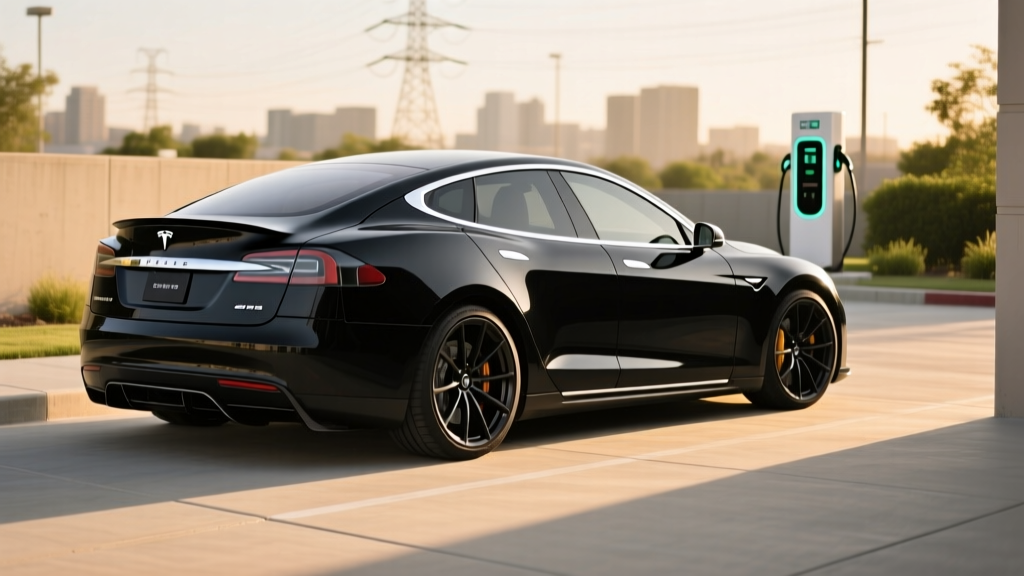
The 2020 Tesla Model S Performance remains one of the most capable used electric sedans on the market in 2026. With a 100 kWh NMC battery delivering an EPA-estimated 348 miles of range, a 2.3-second 0-60 mph time, and access to the Tesla Supercharger network, it still outperforms most new EVs costing twice its current used price. However, buyers should weigh its aging interior, pre-refresh styling, and battery degradation realities against newer alternatives like the Lucid Air Pure or the refreshed Model S. This review breaks down every spec that matters for a used purchase today.
| Spec | 2020 Model S Performance |
|---|---|
| EPA Range | 348 miles |
| Battery (usable) | ~100 kWh, NMC (Nickel Manganese Cobalt) |
| Drivetrain | Dual-Motor AWD |
| 0-60 mph | 2.3 seconds (with rollout) |
| Horsepower | ~778 hp (combined peak) |
| Top Speed | 163 mph |
| MPGe (combined) | 98 MPGe |
| Efficiency | 34 kWh / 100 mi |
| Max DC Fast Charge | 200 kW (V3 Supercharger) |
| 10-80% DC Charge | ~40 minutes |
| Level 2 Home Charge | 11.5 kW (~41 mi/hr) |
| Cargo Volume | 26.3 cu ft (rear) + 5.3 cu ft (frunk) |
| Rear Legroom | 35.4 inches |
| Battery Warranty | 8 yr / 150,000 mi (70% retention) |
| Original MSRP | $99,990 (before destination) |
Real-World Range: Beyond the EPA Sticker
EPA Estimate: 348 miles
Real-World Expectation: 280-310 miles highway at 70 mph; 250-280 miles in freezing conditions (below 32°F)
The 2020 Model S Performance's 348-mile EPA rating was class-leading when new. In real-world driving, expect closer to 300 miles on a warm-weather highway trip at moderate speeds. Tesla's thermal management system is among the best in the industry, but the NMC chemistry still loses roughly 15-20% of range in sustained sub-freezing temperatures. City driving with heavy regenerative braking can actually exceed the EPA number, with some owners reporting 360+ miles in stop-and-go traffic at moderate temperatures.
For a used 2020 example in 2026, battery degradation is a factor. Most well-maintained Model S vehicles from this era show 8-12% degradation at 60,000-80,000 miles, according to crowdsourced data from TeslaFi and Recurrent Auto. That means a realistic maximum range of roughly 305-320 miles on a full charge for a typical used example. Always check the vehicle's State of Health (SoH) via the Tesla app or a pre-purchase inspection before buying.
Charging Speed and Infrastructure
| Charging Level | Power | Speed (miles added) | Notes |
|---|---|---|---|
| Level 1 (120V) | ~1.4 kW | ~3-5 mi/hr | Emergency/trickle only |
| Level 2 (240V, 48A) | 11.5 kW | ~41 mi/hr | Full charge in ~9.5 hours |
| DC Fast (V3 Supercharger) | Up to 200 kW | ~170 mi in 15 min | Peak rate; tapers above 50% SoC |
| DC Fast (V2 Supercharger) | Up to 150 kW | ~130 mi in 15 min | More common at older stations |
The 2020 Model S Performance uses Tesla's proprietary connector (now designated NACS). It supports up to 200 kW on V3 Superchargers, but the charge curve is not flat. Peak charging speed is sustained only between roughly 10-30% State of Charge (SoC). By 50% SoC, the rate drops to approximately 120 kW, and above 80%, it falls below 50 kW. A 10-80% session takes roughly 40 minutes — adequate for road trips but noticeably slower than the 800V architectures in newer vehicles like the Hyundai Ioniq 5 or Porsche Taycan.
For home charging, the onboard charger accepts up to 11.5 kW on a 48-amp Level 2 circuit (requiring a 60-amp breaker). A full overnight charge from 20% to 100% takes approximately 9-10 hours. Installation of a Tesla Wall Connector or equivalent Level 2 station typically costs $800-$2,000 depending on electrical panel capacity and run length, according to Tesla's home charging guide.
With the 2025 industry-wide adoption of NACS, non-Tesla chargers from Electrify America and EVgo increasingly offer NACS cables, reducing adapter dependency for Model S owners.
Performance and Drivetrain
The "Performance" badge on the 2020 Model S is not marketing hyperbole. The dual-motor AWD system produces a combined peak output of approximately 778 horsepower, launching the 4,941-pound sedan to 60 mph in a staggering 2.3 seconds (with 1-foot rollout subtracted, as Tesla reports). The permanent-magnet front motor and induction rear motor provide both instant torque and efficient highway cruising.
Tesla's Ludicrous mode (standard on Performance trims) preconditions the battery and powertrain for maximum acceleration. In daily driving, even the default "Sport" acceleration mode delivers supercar-rivaling thrust. The adaptive air suspension adjusts ride height based on speed and GPS location, lowering at highway speeds for improved aerodynamics.
Braking is a known weak point. The 2020 Model S lacks the aggressive one-pedal driving feel of newer EVs, and the physical brake pedal modulation can feel inconsistent as the car blends regenerative and friction braking. The 2020 model year also predates Tesla's software-configurable regen settings, which were later added via OTA updates but subsequently limited due to a 2024 NHTSA recall resolution.
Interior, Tech, and Daily Usability
The 2020 Model S interior reflects Tesla's minimalist philosophy — for better or worse. The 17-inch portrait touchscreen handles nearly all vehicle functions, from climate control to glovebox release. The instrument cluster is a small secondary display behind the steering wheel. Build quality on 2020 examples is a step above earlier Model S years, but panel gaps and interior material quality still lag behind Mercedes-Benz or BMW rivals at this price point.
Standout tech features:
- Autopilot (standard): SAE Level 2 driver assistance with adaptive cruise control and lane centering. The driver must remain engaged at all times — this is not self-driving.
- Full Self-Driving (FSD) Supervised: Optional $15,000 package at the time (now $8,000). Still Level 2, requiring active supervision. Includes Navigate on Autopilot, Auto Lane Change, Smart Summon, and traffic light/stop sign recognition.
- Over-the-air updates: Tesla continues to push software updates to 2020 Model S vehicles, adding features and refinements years after purchase.
- Sentry Mode & Dashcam: Uses the car's external cameras for security recording and incident capture.
- HEPA air filtration: The optional "Bioweapon Defense Mode" uses a hospital-grade HEPA filter — genuinely useful in wildfire-prone areas.
ADAS Limitation Warning: Tesla Autopilot and FSD Supervised are SAE Level 2 systems. They do not make the vehicle autonomous. The driver must keep hands on the wheel and eyes on the road. Misuse has resulted in serious incidents. See NHTSA guidance on automated driving.
Cargo and passenger space: The Model S offers 26.3 cubic feet of rear cargo space (hatchback style, making loading easy) plus a 5.3-cubic-foot front trunk (frunk). Rear legroom measures 35.4 inches — adequate for adults on shorter trips but tighter than a Mercedes EQS or Lucid Air for tall passengers on long journeys. The flat floor and absence of a transmission tunnel improve the feeling of spaciousness.
Pricing, Tax Credits, and Used-Market Value
| Item | Amount |
|---|---|
| Original MSRP (2020, Performance) | $99,990 |
| Destination fee | $1,200 |
| FSD package (if equipped) | +$10,000-$15,000 |
| Typical used price (2026, 50k-80k mi) | $42,000-$55,000 |
| Federal used-EV tax credit (§25E) | Up to $4,000 (30% of sale price, max $4,000) |
| Estimated net cost (after credit) | $38,000-$51,000 |
The 2020 Model S Performance originally retailed for $99,990 before options. In the 2026 used market, well-maintained examples with 50,000-80,000 miles typically sell for $42,000-$55,000, depending on condition, FSD transfer status, and battery health.
Tax credit eligibility for used purchase: The IRS §25E used clean vehicle credit offers 30% of the sale price, up to $4,000, for qualifying used EVs. Key requirements:
- Sale price must be $25,000 or less to qualify for the full $4,000 (the car must be priced at or below $25,000 to max out the credit; at $42,000+, the 30% calculation exceeds $4,000, so the cap applies)
- Buyer income limits: $75,000 single / $112,500 head of household / $150,000 joint (modified AGI)
- Vehicle must be at least two model years old (2020 qualifies in 2026)
- Must be purchased from a licensed dealer (private-party sales do not qualify)
- Credit can be transferred to the dealer at point of sale as a price reduction
At typical 2026 used prices of $42,000+, most buyers will hit the $4,000 cap. The new-vehicle §30D credit does not apply to used purchases. Always verify current IRS rules with a tax professional, as incentive programs are subject to legislative change.
Pros, Cons, and Who Should Buy
Pros
- Class-leading 348-mi EPA range (even after mild degradation)
- Supercar-level 2.3-sec 0-60 performance
- Access to the mature Tesla Supercharger network (20,000+ stalls in North America)
- Continued OTA software updates in 2026
- Practical hatchback cargo area + frunk (31.6 cu ft total)
- Strong resale value retention relative to other luxury EVs
- Air suspension adjusts ride height automatically
Cons
- Interior quality and materials lag behind German luxury rivals
- Slower DC charging curve vs newer 800V EVs (40 min 10-80%)
- Rear seat comfort and legroom limited for tall adults on long trips
- No physical buttons — all controls via touchscreen
- Aging exterior design (pre-2021 Plaid refresh)
- Potential out-of-warranty battery replacement cost: $15,000-$22,000
- FSD package does not transfer reliably to new owners on all used examples
Who This EV Suits Best
Buy the 2020 Model S Performance if: You want supercar acceleration with genuine 300-mile road-trip capability, you value Supercharger network access, and you can accept an aging interior for the performance-to-price ratio.
Look elsewhere if: You prioritize luxury interior materials (consider a used Porsche Taycan or Mercedes EQS), you need maximum rear-seat space (Lucid Air or BMW i7), or you want the fastest possible DC charging (Hyundai Ioniq 5, Kia EV6, or 2022+ Model S Plaid with 250 kW capability).
Warranty and Long-Term Ownership
The 2020 Model S Performance came with Tesla's battery and drive unit warranty of 8 years or 150,000 miles, whichever comes first, with a guaranteed minimum 70% battery capacity retention. For a 2020 model in 2026, that warranty is approaching expiration based on the 8-year time limit (expiring in 2028 for most examples). Buyers should verify remaining warranty coverage via the Tesla app using the VIN.
If the battery degrades below 70% before the warranty expires, Tesla will repair or replace it at no cost. Out of warranty, a Model S battery replacement costs approximately $15,000-$22,000 at a Tesla Service Center, based on 2025-2026 pricing data. The drive units carry the same 8-year/150,000-mile warranty and have proven generally reliable, though front motor replacements have been documented at higher mileages.
According to fueleconomy.gov, the 2020 Model S Performance achieves 98 MPGe combined (34 kWh/100 mi), making it one of the more efficient large performance sedans despite its weight and power.
Frequently Asked Questions
What is the real-world range of the 2020 Tesla Model S Performance in 2026?
With typical battery degradation of 8-12% at 60,000-80,000 miles, expect approximately 305-320 miles on a full charge in moderate weather. Highway driving at 75+ mph reduces this to roughly 270-290 miles. In freezing conditions, plan for 250-280 miles. Preconditioning the battery before driving helps mitigate cold-weather losses.
How fast does the 2020 Model S Performance charge at home and on the road?
At home on a 48-amp Level 2 charger (11.5 kW), the car adds approximately 41 miles of range per hour, reaching a full charge from 20% in about 8 hours. On a V3 Supercharger (up to 200 kW peak), a 10-80% session takes roughly 40 minutes, with the charge rate tapering significantly above 50% SoC. Older V2 Superchargers (150 kW) add about 130 miles in 15 minutes.
Does the 2020 Model S Performance qualify for any federal tax credit when bought used?
Yes, under the IRS §25E used clean vehicle credit. If purchased from a licensed dealer for $25,000 or less, you may claim up to $4,000 (30% of sale price). At typical 2026 used prices above $42,000, the credit is capped at $4,000. Income limits apply: $75,000 (single), $112,500 (head of household), or $150,000 (joint filers). The new-vehicle §30D credit does not apply. Consult IRS.gov or a tax professional for eligibility.
Is the 2020 Model S Performance worth buying vs newer competitors?
It depends on priorities. At $42,000-$55,000 used, it offers more range and performance than nearly any new EV under $60,000. However, the 2022+ Model S Plaid refresh offers a modernized interior, 350 kW charging, and 1,020 hp for roughly $75,000-$85,000 used. The Lucid Air Pure (new from ~$70,000) offers superior interior luxury and 419 miles of range. For budget-conscious performance seekers who value the Supercharger network, the 2020 Performance remains a strong value.
What are the biggest risks of buying a used 2020 Model S Performance?
The primary risks are out-of-warranty battery replacement ($15,000-$22,000) and the aging interior/build quality. Verify battery State of Health before purchase, confirm remaining warranty status, and check for any outstanding recall work (including the 2024 NHTSA-required Autopilot software update). Also confirm whether the FSD package transfers with the vehicle — Tesla's FSD transfer policy has been inconsistent for used sales.
Can I charge a 2020 Model S at non-Tesla charging stations?
Yes, with an adapter. The 2020 Model S uses Tesla's proprietary connector (now NACS). Tesla sells a CCS-to-NACS adapter (~$250) that enables charging at Electrify America, EVgo, and other CCS stations. As of 2025-2026, many new non-Tesla charging stations include native NACS cables, reducing the need for adapters. Always check station compatibility in the Tesla app or PlugShare before traveling.