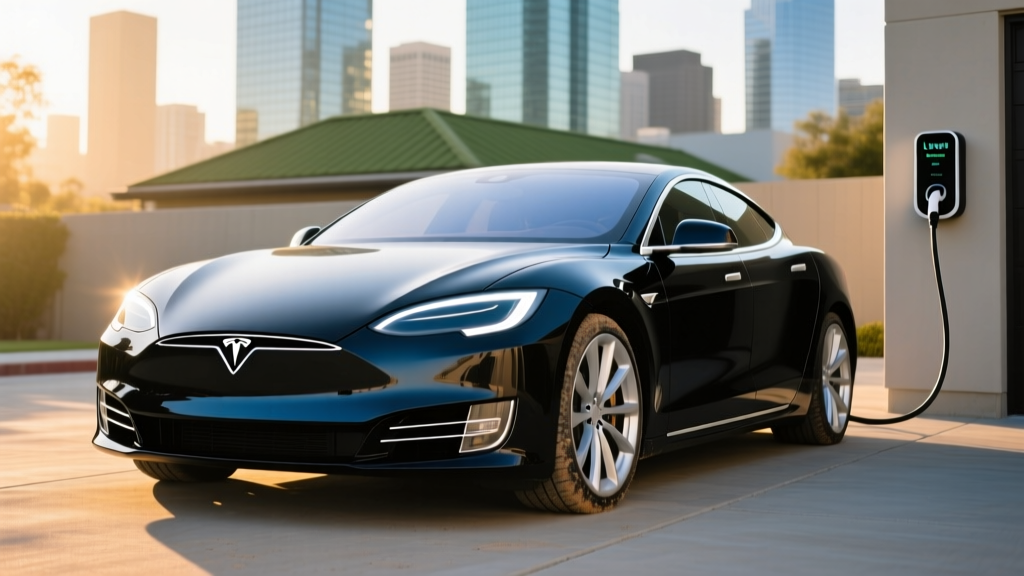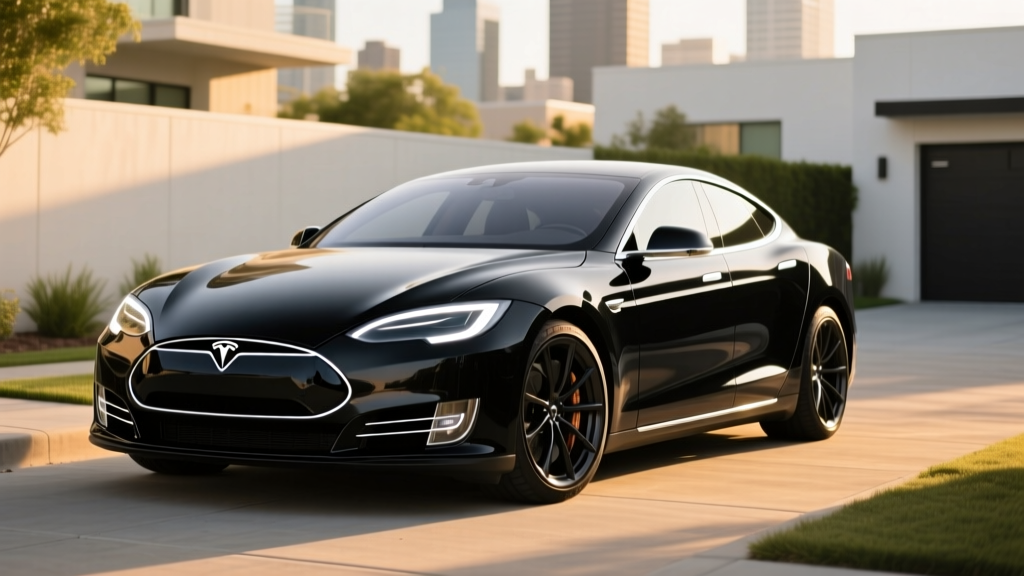
The 2020 Tesla Model S Performance AWD remains one of the quickest production sedans ever built. Even six years after its release, its 2.4-second 0-60 mph time and 348-mile EPA range place it among the elite in the luxury EV segment. But buying a used 2020 Model S Performance in 2026 requires careful evaluation of battery health, charging infrastructure compatibility, and how it stacks up against newer rivals. This review breaks down every spec that matters to a secondhand EV buyer.
2020 Tesla Model S Performance AWD 0-60, Horsepower, and Drivetrain
The headline number is the one that put this car on the map. The 2020 Model S Performance AWD achieves a manufacturer-claimed 0-60 mph time of 2.4 seconds with rollout subtracted (approximately 2.6 seconds without rollout adjustment). Independent testing by outlets like Car and Driver and Motor Trend has validated sub-2.5-second runs on prepped surfaces.
The dual-motor all-wheel-drive powertrain produces an estimated 762 horsepower and 723 lb-ft of torque. The front motor is a permanent-magnet synchronous unit (added for efficiency), while the rear is a higher-output induction motor optimized for peak acceleration. This combination gives the Model S Performance both brutal launch capability and reasonable highway efficiency.
| Metric | Value |
|---|---|
| 0-60 mph | 2.4 sec (with 1-ft rollout) |
| 1/4-mile | 10.6 sec @ 130 mph (est.) |
| Top Speed | 163 mph |
| Horsepower | 762 hp (combined) |
| Torque | 723 lb-ft |
| Drivetrain | Dual-motor AWD |
| Drive Modes | Sport / Chill / Ludicrous (w/ Cheetah Stance) |
The Cheetah Stance launch-control feature, introduced via OTA update in mid-2019, lowers the front suspension and pre-conditions the battery and motors for maximum traction. Engaging it requires a ~2-minute preparation cycle, so it's not an instant-on feature — plan accordingly if you're showing off at a stoplight.
Range, Efficiency, and Battery: 348 Miles EPA, but What About Real-World?
The 2020 Model S Performance carries a 100 kWh battery pack (approximately 95 kWh usable). Tesla uses NMC (nickel-manganese-cobalt) chemistry in this pack, which offers higher energy density than LFP but requires more careful state-of-charge management for longevity.
EPA Estimated Range: 348 miles
Real-World Highway (70 mph, 72°F): ~285–310 miles
Real-World Highway (32°F, no heat pump): ~230–260 miles
City/Mixed Commute: ~310–335 miles (regen recovers energy)
The 2020 Model S lacks a heat pump (introduced in the 2021 refresh), so cold-weather range loss is significant — expect a 25–35% reduction in freezing temperatures when using cabin heat.
Efficiency on the EPA cycle is rated at 111 MPGe combined, which translates to roughly 30 kWh per 100 miles. In real-world highway driving at 70-75 mph, expect consumption closer to 33–36 kWh/100mi, depending on temperature, elevation changes, and tire condition. The Model S's large frontal area and weight (~4,940 lbs) work against it at sustained highway speeds compared to more aero-efficient rivals like the Lucid Air.
| Metric | Value |
|---|---|
| EPA Range | 348 miles |
| EPA MPGe (combined) | 111 MPGe |
| Energy Consumption | ~30 kWh/100mi (EPA) |
| Battery Capacity (total) | 100 kWh |
| Battery Capacity (usable) | ~95 kWh |
| Battery Chemistry | NMC (Nickel-Manganese-Cobalt) |
| Heat Pump | No (resistive heater) |
For a comprehensive look at how this battery holds up over time, Tesla owners can monitor State of Health (SoH) through third-party apps like Tessie or TeslaFi, which log degradation data from the vehicle's BMS. Most 2020 Model S packs show 8–12% degradation at 60,000–80,000 miles based on aggregated owner data.
Charging Speed: DC Fast, Level 2, and Supercharger Access
The 2020 Model S Performance supports a maximum DC fast-charge rate of 200 kW at V3 Superchargers (250 kW-capable stations will throttle the car to its 200 kW ceiling). In practice, the charge curve peaks near 190–200 kW between 10–30% SoC, then tapers progressively. A 10–80% session takes approximately 36–40 minutes.
This is notably slower than newer 800V architectures (the Hyundai Ioniq 5 and Porsche Taycan can do 10–80% in ~18 minutes), but Tesla's Supercharger network reliability remains a significant advantage, especially for road-trippers.
| Charging Level | Power | Speed / Time |
|---|---|---|
| Level 1 (120V, 12A) | ~1.4 kW | ~3–4 mi/hr |
| Level 2 (240V, 48A) | 11.5 kW | ~34 mi/hr |
| Level 2 (240V, 32A Mobile Connector) | 7.7 kW | ~23 mi/hr |
| DC Fast (V3 Supercharger) | 200 kW peak | 10–80% in ~36–40 min |
| DC Fast (CCS adapter, Electrify America) | ~150–180 kW | 10–80% in ~45 min |
Home charging on a 48-amp Level 2 circuit (requiring a 60-amp breaker) adds roughly 34 miles of range per hour. An overnight 10-hour session restores about 340 miles — effectively a full charge for most daily needs. Installation of a Tesla Wall Connector typically costs $800–$2,000 including electrical work, depending on panel proximity and local permit fees. Always have a licensed electrician assess your panel capacity before installation.
The 2020 Model S uses Tesla's proprietary connector for Supercharging. For CCS-based public networks (Electrify America, EVgo), you'll need Tesla's CCS adapter ($250 when available), which enables charging at most non-Tesla DC fast stations. As of 2026, Tesla has opened many Superchargers to non-Tesla vehicles, but the reverse — Tesla vehicles using CCS stations — remains dependent on adapter availability and station compatibility.
Interior, Cargo, Tech, and Driver Assistance
The pre-refresh (2012–2020) Model S interior is the car's most debated attribute. The minimalist dashboard centers on a 17-inch portrait touchscreen running Tesla's infotainment OS, which in 2020 was already feature-rich: navigation, streaming media, Sentry Mode dashcam, over-the-air updates, and a full web browser. However, panel gaps, material quality, and seat comfort lag behind German luxury competitors like the Porsche Taycan and Audi e-tron GT.
Practical dimensions remain a strong point:
| Dimension | Measurement |
|---|---|
| Cargo (rear trunk) | 26.3 cu ft |
| Cargo (frunk) | 5.3 cu ft |
| Cargo (seats folded) | 58.1 cu ft |
| Front Legroom | 42.7 in |
| Rear Legroom | 35.4 in |
| Seating Capacity | 5 (optional rear-facing 3rd row for 7, rarely equipped) |
The hatchback-style rear liftgate makes the Model S far more practical for bulky cargo than traditional sedans. The frunk adds useful grocery or charging-cable storage.
Driver Assistance: The 2020 Model S ships with Basic Autopilot standard (adaptive cruise + lane centering). Enhanced Autopilot ($6,000 at the time) added auto lane-change, autosteer on highways, and Smart Summon. Full Self-Driving Capability ($7,000–$10,000 depending on purchase date) was available but remained a SAE Level 2 system — the driver must remain fully engaged, hands on or near the wheel, at all times. Despite the "FSD" branding, this is not autonomous driving. For context on SAE automation levels, Level 2 means the car assists with steering and speed but the human is the driver; Level 4 (true driverless) is only available in geofenced robotaxi services like Waymo.
All Tesla driver-assist features on the 2020 Model S are SAE Level 2. They do NOT make the car self-driving. The driver is legally and physically responsible for the vehicle at all times. Autopilot can fail to detect stationary objects, construction zones, and emergency vehicles. NHTSA has investigated multiple incidents involving Tesla Autopilot — always maintain active supervision.
Pricing, Tax Credits, and Used-Buying Economics in 2026
The 2020 Model S Performance originally carried an MSRP of approximately $99,990 (before destination and options). Well-equipped examples with FSD, premium interior upgrades, and 21-inch wheels pushed as-tested prices to $115,000+.
As a used vehicle in 2026, the federal §30D new clean vehicle credit does not apply. However, the used clean vehicle credit (IRC §25E) may provide up to $4,000 (30% of sale price, capped at $4,000) if the following conditions are met:
- Sale price is $25,000 or less (this is extremely unlikely for a 2020 Model S Performance — most list between $38,000–$55,000 depending on mileage and condition)
- Buyer's modified adjusted gross income does not exceed $75,000 (single) / $112,500 (head of household) / $150,000 (joint)
- Vehicle is purchased from a licensed dealer
- Vehicle has not been previously claimed for the used credit after August 16, 2022
In practice, the $25,000 sale-price cap effectively excludes the 2020 Model S Performance from the used EV credit in nearly all transactions. Always verify current rules at IRS.gov and consult a tax professional before relying on credit eligibility.
| Item | Amount |
|---|---|
| Original MSRP (2020) | ~$99,990 |
| Typical Used Price (2026, 50k–80k mi) | $38,000–$55,000 |
| Federal New EV Credit (§30D) | Not applicable (used vehicle) |
| Federal Used EV Credit (§25E) | Up to $4,000 (rarely qualifies — $25k cap) |
| Estimated Insurance (annual) | $2,800–$4,200 |
Insurance costs for the Model S Performance remain elevated due to repair costs, parts pricing, and the vehicle's performance classification. Get quotes before purchasing — premiums can vary by $1,000+ between carriers.
Warranty, Battery Longevity, and What to Check Before Buying Used
Tesla's original warranty on the 2020 Model S Performance includes:
| Component | Coverage |
|---|---|
| Basic Vehicle | 4 years / 50,000 miles |
| Battery & Drive Unit | 8 years / 150,000 miles (whichever comes first) |
| Battery Capacity Retention | Minimum 70% over warranty period |
For a 2020 model purchased in 2026, the basic warranty has expired, but the battery and drive unit warranty remains active until 2028 or 150,000 miles. This is a critical safety net. If the pack degrades below 70% of original capacity within that window, Tesla will repair or replace it. According to aggregated fleet data referenced by fueleconomy.gov, most Tesla 100 kWh packs retain 85–92% capacity at 80,000 miles.
Pre-purchase checklist for a used 2020 Model S Performance:
- Battery SoH: Request a battery health report via the Tesla app or a third-party tool. Look for degradation under 12%.
- Drive unit whine/noise: Early rear drive units on pre-2020 cars had failure issues; by 2020 most were resolved, but listen for unusual sounds.
- Air suspension: Test all ride-height settings. Compressor and strut replacements cost $1,500–$3,000 per corner out of warranty.
- MCU (Media Control Unit): 2020 models should have the MCU2 (Intel Atom) — confirm it's not the older, slower MCU1.
- Supercharger access: Verify the vehicle's Supercharger credits (some early Model S cars had free unlimited Supercharging that transferred; by 2020 this was rare).
- Title and accident history: Salvage or rebuilt titles void remaining Tesla warranty entirely.
2020 Model S Performance vs. Key Competitors
In the used luxury performance EV market of 2026, the Model S Performance faces credible alternatives:
| Metric | 2020 Tesla Model S Perf. | 2021 Porsche Taycan 4S | 2021 Lucid Air Touring |
|---|---|---|---|
| 0-60 mph | 2.4 sec | 3.8 sec | 3.0 sec |
| EPA Range | 348 mi | 227 mi | 406 mi |
| DC Fast Charge Peak | 200 kW | 270 kW | 300 kW |
| 10–80% DC Time | ~38 min | ~23 min | ~20 min |
| Build Quality | Average | Excellent | Good |
| Charging Network | Supercharger (native) | Electrify America (CCS) | CCS + NACS adapter |
The Porsche Taycan 4S offers far superior build quality, handling dynamics, and 800V fast-charging architecture, but sacrifices significant range. The Lucid Air Touring (if you can find a used example) beats the Model S on range and charging speed but is rarer on the used market and lacks Tesla's Supercharger network. The Model S Performance wins on raw acceleration, range, and over-the-air update maturity.
Pros and Cons
- Sub-2.5-second 0-60 mph — still elite in 2026
- 348-mile EPA range remains competitive
- Access to Tesla Supercharger network
- Hatchback cargo versatility (26.3 cu ft + frunk)
- OTA updates continue to add features
- Battery warranty active through 2028/150k mi
- No heat pump — severe cold-weather range loss
- 200 kW DC peak is slow vs. 800V competitors
- Pre-refresh interior quality lags luxury rivals
- Air suspension repairs costly out of warranty
- Insurance premiums remain high
- FSD is Level 2 only — not self-driving
Who Should Buy the 2020 Model S Performance?
- You want supercar-level acceleration at a used-EV price
- Road trips are frequent and Supercharger network access matters
- You need sedan practicality with hatchback cargo space
- You live in a moderate climate (cold-weather range loss is a real drawback)
Look elsewhere if:
- Interior luxury and build quality are top priorities (consider Taycan)
- You need the fastest possible DC charging for frequent long-distance travel (consider Ioniq 5 or Taycan with 800V)
- You live in a region with extreme winters and lack home charging (no heat pump is a significant limitation)
Frequently Asked Questions
What is the real-world range of the 2020 Tesla Model S Performance?
The EPA rates it at 348 miles. In real-world highway driving at 70 mph and moderate temperatures, expect 285–310 miles. In freezing weather without a heat pump, that drops to roughly 230–260 miles. City driving with regenerative braking recovers more energy, yielding 310–335 miles.
How fast does the 2020 Model S Performance charge?
On a V3 Supercharger, it peaks at 200 kW and charges from 10–80% in approximately 36–40 minutes. At home on a 48-amp Level 2 charger (11.5 kW), it adds about 34 miles of range per hour, fully recharging overnight in roughly 10 hours.
Does the 2020 Model S Performance qualify for the federal EV tax credit?
Not the new-vehicle §30D credit — it's a used car. The used-vehicle §25E credit offers up to $4,000, but only if the sale price is $25,000 or less, which is virtually never the case for this model. Check current IRS rules and consult a tax professional.
Is the 2020 Model S Performance worth buying in 2026?
If you prioritize straight-line performance, range, and Supercharger access, it's one of the best values in the used luxury EV market at $38,000–$55,000. However, buyers who value interior quality, fast DC charging, or cold-weather efficiency should cross-shop the Porsche Taycan 4S or newer 800V-platform EVs.
How long will the battery last?
Tesla's 100 kWh NMC packs typically retain 85–92% capacity at 80,000 miles. The battery warranty guarantees at least 70% retention through 8 years/150,000 miles (active until 2028 for a 2020 model). Battery replacement out of warranty costs approximately $15,000–$22,000 based on current service pricing.
What's the 0-60 mph time of the 2020 Tesla Model S Performance AWD?
Tesla claims 2.4 seconds with a 1-foot rollout subtracted. Independent tests confirm 2.4–2.6 seconds depending on surface preparation, tire condition, and whether Cheetah Stance launch control is engaged. This makes it one of the fastest production sedans ever produced.